

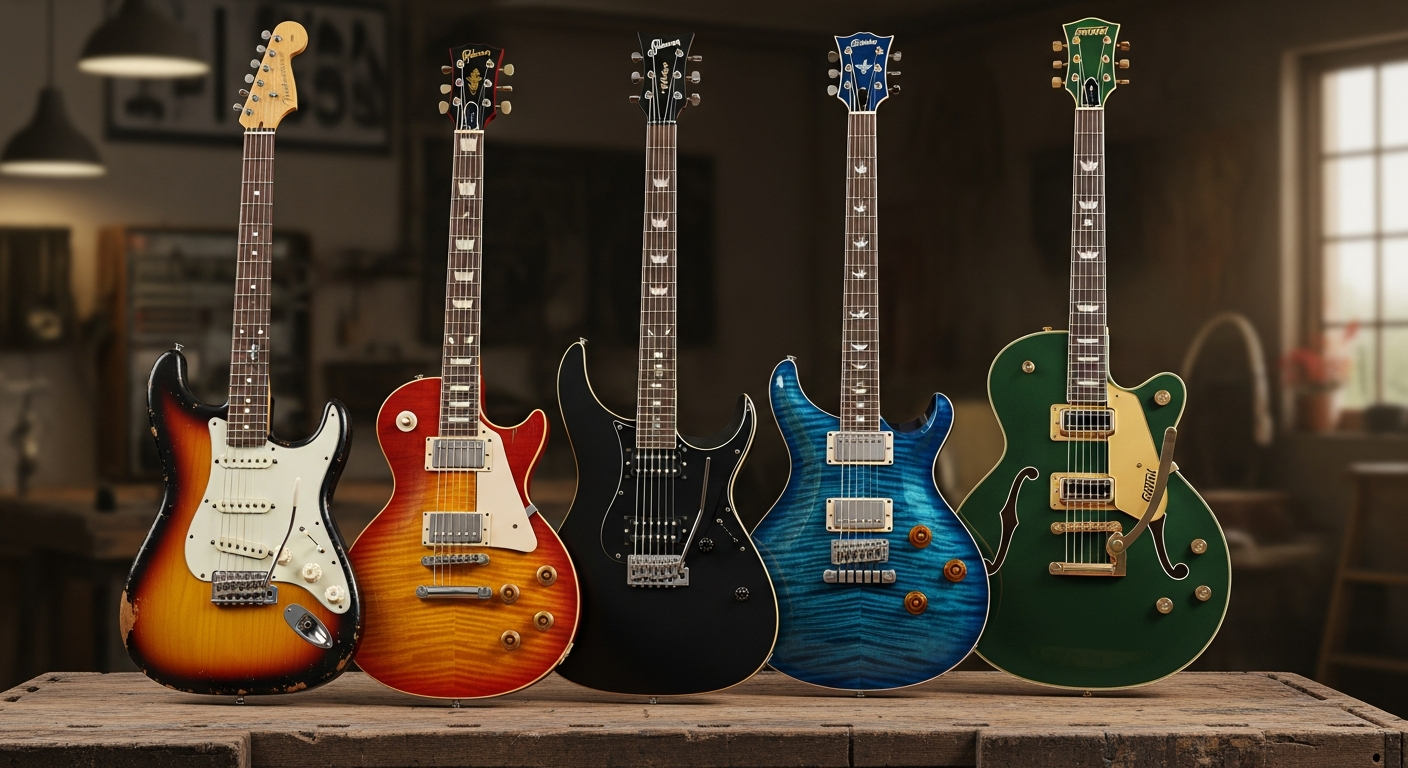


Main PRS Electric Guitars: The Guide
Every now and then, when it comes to guitars electric, A name comes up that sparks heated debate: PRS. Some revere them as the pinnacle of modern luthiery, others consider them a bit too "perfect," and others, like me, view them with a mixture of curiosity and pragmatism. As someone who's spent more time with a soldering iron in his hand than polishing nitro lacquer, the question is always the same: are these guitars really worth the money? And above all, are they suitable for those of us who aren't afraid to get our hands on one?Readers are usually there, hovering over an ad or staring at online displays, wondering whether the PRS legend is just marketing or the truth. The doubt is legitimate: plenty of people talk about it, but what do those who actually play them say, perhaps after modifying them or comparing them to other instruments? And if your budget isn't rock star-level, can you still take home a piece of this history?
In this article, we'll debunk the myth a bit. Let's look at the main PRS electric guitars, the ones that matter most to us who aren't afraid of a screwdriver or a file. I won't promise I'll tell you they're perfect, because nothing is. But I will tell you what to expect, where to find them, and whether, ultimately, it's worth the investment. In fact, I'll even tell you when it's best to give up and look elsewhere.
PRS: When Innovation Meets Tradition
Paul Reed Smith began his journey with a clear idea in mind: to create a guitar that combined the best of Fender and Gibson. He wanted the brightness and versatility of a Stratocaster, but with the sustain and power of a Les Paul. Not an easy task, believe me. I tried mixing different pickups on a body that wasn't designed for it, and the results didn't always live up to expectations.But Paul succeeded. The first PRS models, released in the 1980s, were a concentration of innovation. The 25-inch scale, a compromise between Gibson's 24.75" and Fender's 25.5", offered a unique feel and balanced string tension. The sculpted necks, flamed maple tops that looked like works of art, and obsessive attention to construction details immediately captured attention.
They weren't guitars for everyone, especially at the beginning. The price was, and in many cases still is, mind-boggling. I remember seeing the first Custom 24 in a store, years ago. It was out of my reach, but I was so curious to understand what made it so special. From there, my obsession with understanding the "why" behind certain design and construction choices was born.
The Main PRS Families: From Boutique to Garage
Before delving into specific models, let's clarify the structure of the PRS lineup. Not all guitars with the "PRS" logo on the headstock are created equal, and the differences lie not only in price, but also in construction philosophy and materials. Understanding these distinctions is crucial if you're looking for your next riffing partner.1. Core Series (USA Made)
These are the original PRSs, the ones that built the legend. Made in the United States, in Stevensville, Maryland, they represent the pinnacle of quality materials, craftsmanship, and innovation. The woods are meticulously selected, the finishes are often subtle and resonant (like nitrocellulose), and the hardware is proprietary and top-notch. If you hold a Core in your hand, you'll immediately feel the difference. The price is high, we're talking thousands of euros, but the quality is unquestionable. These are instruments for those who seek the best and have the budget to afford it.2. S2 Series (USA Made, Streamlined Production)
The S2 series (which stands for "Stevensville 2") was introduced to offer USA-made guitars at a more affordable price. The idea was to streamline production processes, using less labor and more efficient machinery, without compromising too much on quality. The woods are still good, but perhaps not as "exotic" as those of the Cores. The finishes are more standard, and some aesthetic details are simplified. They are still excellent guitars, with a very "PRS" feel and sound, but at about half the price of a Core. They are a great entry point for those who want an authentic American PRS without breaking the bank.3. SE Series (Import, Value for Money)
And here we are with the series that interests us most here on biafax.it: the SE. Produced in Asia (primarily Indonesia and South Korea), these guitars are PRS's flagship for the mass market. The goal is to offer the iconic design and key features of the PRS Core at an extremely competitive price. And I must say, they succeed remarkably. Sure, the woods aren't premium, the finishes are thicker (polyurethane), and the hardware isn't PRS's proprietary model on the 100%, but the quality-price ratio is often unbeatable. Many of us started with an SE, or have one as a "mule" to modify. They're the ideal starting point for those who want to experiment with the PRS world without sacrificing a kidney.4. Private Stock (Custom Shop)
These are the guitars of dreams. Made to order, with woods personally selected by the customer (often with the help of Paul Reed Smith himself), custom finishes, and unique details. They are works of art, the pinnacle of customization and craftsmanship. The prices are prohibitive for most of us, but it's nice to know they exist. I've only seen them in photos or behind glass cases at fairs, and every time I try to replicate some inlays, even if I know the result would be slightly different...For us, the focus will be on the SE and S2 series. They offer the best balance between quality, price, and the potential for customization.
The Main PRS Electric Guitars: Detailed Analysis
Now let's get to the heart of the matter. Let's look at some of the most representative and popular models, with an eye on technical details, community feedback, and, of course, value for money for those who aren't millionaire professionals.1. PRS SE Custom 24
The Custom 24 is the quintessential PRS, the guitar that defined the brand. The SE version is probably the PRS electric guitar best-selling and most appreciated, a true best-seller that introduced thousands of guitarists to the world of Paul Reed Smith.Technical Features
Body: Mahogany with a maple top (often with a flamed or quilted maple veneer, called "figured maple veneer"). This combination adds warmth and sustain to the sound, with a touch of brightness from the maple.Handle: Mahogany, set-neck (glued to the body), with a “Wide Thin” profile. This profile is fast and comfortable, ideal for those with medium-sized hands or who prefer a modern feel. The fingerboard is rosewood.
Pick-up: It typically features two proprietary PRS SE humbuckers (often the “85/15 S”). These pickups are versatile, capable of bright, clean tones, but also aggressive and powerful when distorted. Many SE Custom 24 models include a push/pull tone pot for coil splitting, turning the humbuckers into single coils for clearer, Strat-like sounds.
Stairs: 25 inches. PRS’s “sweet spot,” offering a good balance between the string tension of a Fender and the playability of a Gibson.
Hardware: PRS patented tremolo bridge (often called the “PRS Designed Tremolo”) and PRS Designed Tuners. The tremolo is generally stable and reliable when used sparingly.
Finish: Thick, glossy polyurethane. It protects well, but may slightly limit resonance compared to thinner finishes.
Relevant Construction Notes: The set neck ensures excellent sustain. The body shape, with its double cutaway and sculpted top, is ergonomic and comfortable both standing and sitting. The famous "bird" inlays on the fretboard are a PRS trademark.
Popular Sentiment
On forums and in communities, the PRS SE Custom 24 It's almost always praised for its incredible value for money. Many call it "the best guitar under $1,000." Its most cited strengths are its exceptional playability, comfortable neck, and versatile sounds. It's a guitar that's suitable for almost any genre, from blues to metal.However, there are some criticisms, and they're the ones we're most interested in. The "PRS Designed" tuning machines are often considered the primary weakness; many replace them with locking tuners for greater tuning stability, especially if the tremolo is overused. Even the pickups, while good, are sometimes replaced with more prestigious models (Seymour Duncan, DiMarzio, or true PRS Core) for those seeking a more specific sound or greater articulation. The polyurethane finish, while sturdy, is sometimes perceived as "thick" and less vibrant than the nitro finish.
Pros and Cons in Relation to Price (around €800-1000 new)
PROS: Playability: The Wide Thin neck is a dream for many, and the action is often excellent from the factory.Sonic versatility: From crystal-clear cleans to powerful distortion, it covers a wide range of genres. The split coil is a plus.
Aesthetics: The flamed maple top and bird inlays give it a much higher-end guitar look.
Solid construction: Despite being an “import”, the build quality is generally excellent and reliable. AGAINST: Hardware: The mechanics and sometimes the potentiometers can be the first target for an upgrade.
Finish: Polyurethane is often durable but will not please all sound purists.
Pick-up: Good, but not exceptional. Many feel the need for an upgrade to achieve "their" sound.
Tremolo: While stable for moderate use, it is no Floyd Rose and will not take extreme abuse without fading.
Who is it suitable for / Who should avoid it?
Suitable for: Intermediate or advanced guitarists looking for a versatile, reliable, and well-built guitar for stage or studio use, without breaking the bank.DIY enthusiasts looking for a solid foundation for experimenting with pickup, tuners, and electronics upgrades. I've seen incredible transformations on a relatively modest budget.
Those looking for a “premium” look without the price of a Core.
Guitarists who play different genres and need an instrument that adapts easily. Better to avoid it if: You're looking for the sound and resonance of a guitar with a nitro finish and premium woods (you'll need to upgrade to the Core series).
You’re a Fender or Gibson purist and can’t stomach the compromise of the 25″ scale or the PRS aesthetic.
You have a very limited budget (under €500), in that case you will have to look at other brands or used SE models.
You need a tremolo that can handle extreme dive bombs without falling out of tune (you'll need a Floyd Rose).
2. PRS SE Standard 24/22
The PRS “Standard” series is distinguished by its more basic construction, often featuring an all-mahogany body without a flamed maple top. This translates into an even more affordable price point, while maintaining the trademark PRS build quality and playability. The 24 and 22 versions refer to the number of frets.Technical Features (Focus on the SE Standard 24)
Body: One-piece mahogany. This gives a warmer, rounder, mid-range-focused sound than maple-top models. Less bright attack, more sustain and punch.Handle: Mahogany, set-neck, “Wide Thin” profile (for the 24) or “Wide Fat” profile (for the 22, which feels fuller in the hand and is somewhat reminiscent of Gibson necks from the 1950s). Rosewood fingerboard.
Pick-up: Two proprietary PRS SE humbuckers (often the “85/15 S” or equivalent). Again, versatility and coil-splitting capability (depending on the specific model).
Stairs: 25 inches.
Hardware: PRS Designed tremolo bridge and PRS Designed Tuners.
Finish: Glossy polyurethane.
Relevant Construction Notes: The lack of a maple top simplifies construction and reduces costs, but not the overall quality. The mahogany's resonance is evident.
Popular Sentiment
There PRS SE Standard It's prized as a true workhorse. Less flashy than the Custom 24, but just as reliable and playable. Many prefer it for its more understated aesthetic and the woodier, warmer sound of pure mahogany. It's often recommended as a first PRS for those on an even tighter budget.The same criticisms leveled at the Custom 24 apply here: the tuners and pickups are prime candidates for upgrades. However, given the lower price, the perceived “value” of these upgrades is even higher, making the Standard an excellent base for a customization project.
Pros and Cons in Relation to Price (around €600-800 new)
PROS: Price: It is one of the PRS electric guitars cheaper, offering even easier access to the brand.Warm sound: The mahogany body offers a rich, full tone with great sustain, ideal for rock, blues and jazz.
Playability: Excellent neck and action, as expected from PRS.
Base for upgrade: At this price, spending €100-200 on higher quality tuners and pickups turns it into an instrument that can compete with much higher-end guitars. AGAINST: Less “bling”: It lacks the flamed maple top, which makes it less flashy than the Custom 24, but that's subjective.
Hardware and Pickups: Same weak points as the Custom 24.
Versatility: The sound is a little less bright and ’open“ than the Custom 24, which might not be to everyone's liking.
Who is it suitable for / Who should avoid it?
Suitable for: Advanced or intermediate beginners looking for an above-average quality guitar, on a budget.Guitarists who prefer a warmer, fuller sound than mahogany.
Anyone looking for a solid, reliable guitar to carry around, perhaps as a backup or for rehearsals.
DIY designers who want a great base for a project guitar modification significant, starting from a low cost. Better to avoid it if: You want the flame aesthetic and sonic brilliance of a maple top (in that case, the SE Custom 24 is the better choice).
You don't care about the idea of upgrading in the future and you want everything “perfect” out of the box (difficult at this price range for any brand).
3. PRS S2 Custom 24
If the SE Series is an excellent appetizer, the S2 is the main course for those who want an authentic American PRS without having to mortgage the house. PRS S2 Custom 24 It's the bridge between import guitars and high-end Cores, offering true Made in USA craftsmanship while keeping an eye on your wallet.Technical Features
Body: Mahogany with a maple top (often a “beveled” top, less sculpted than the Core, but still a real piece of maple). This maintains the classic PRS tonal combination with a more efficient manufacturing process.Handle: Mahogany, set-neck, with “Pattern Regular” or “Pattern Thin” profiles. These profiles are similar to the Core ones, offering an extremely comfortable feel. Rosewood fingerboard.
Pick-up: It often features proprietary PRS S2 humbuckers (e.g., the “85/15 S” or “HFS S2”), designed specifically for this series. They have a character closer to the Core pickups than the SEs, with greater clarity and dynamics. Again, a push/pull coil splitter is used.
Stairs: 25 inches.
Hardware: PRS patented tremolo bridge (often the same design as the Core, but with slightly different materials) and PRS S2 locking tuners. The locking tuners are a huge plus for tuning stability.
Finish: Polyurethane, but often thinner and with a more careful application process than SE, which contributes to better resonance.
Relevant Construction Notes: Made in the USA. Optimized manufacturing process to reduce costs without significantly sacrificing quality materials and playability. The beveled top is a distinctive feature.
Popular Sentiment
There PRS S2 Custom 24 It's seen as a great middle ground. Many consider it a real bargain for a USA-made guitar. The feel is undeniably PRS, with superior build and sound quality over the SEs. The standard locking tuners are a much-appreciated plus. The main criticism, if there's one, is that it doesn't have the same mojo or visually stunning tonewoods as a Core, but it's an acceptable compromise for the price. Some tone purists still prefer the Core pickups, but the S2 pickups are a great starting point.Pros and Cons in Relation to Price (around €1800-2500 new)
PROS: Made in USA: The build quality and attention to detail are on a higher level than the SEs.Improved hardware: The standard locking tuners are a huge plus for tuning stability. The tremolo is excellent.
Sound: The S2 pickups are more refined and dynamic, approaching the character of the Cores.
Playability: The handle profiles are extremely comfortable and refined.
Aesthetics: While not at Private Stock level, the maple tops are still beautiful and well-finished. AGAINST: Price: It's a significant investment, almost double that of an SE.
It's not a Core: It doesn't have the more exotic woods or nitro finishes of the Cores,
it's the same level of “boutique” craftsmanship.
Finish: Even if better than the SE, it is still polyurethane.
Who is it suitable for / Who should avoid it?
Suitable for: Professional or serious amateur guitarists looking for a high-quality USA-made guitar without reaching Core prices.For those who want a “real” PRS but don’t need the absolute top of the range or the most elaborate finishes.
Musicians who play live or in the studio and need reliability and high-end sound.
Those who appreciate the PRS philosophy and want to combine build quality, design and a touch of Made in USA exclusivity. Better to avoid it if: Your budget is limited; in that case, an SE represents a better value.
You're looking for the ultimate in resonance and vintage mojo, which is often only found with nitro finishes and premium tonewoods (Core or Private Stock).
You don’t care about “Made in USA” origin and prefer to maximize pure value for money (SEs still offer exceptional value at a lower cost).
Considerations on “Do It Yourself” and Upgrades
This is where the problem lies, or rather, this is where our philosophy at biafax.it comes into play. PRS electric guitars, especially the SEs, are a fantastic canvas for DIY. I've seen SE Custom 24s transformed into war machines with just a few targeted modifications.The truth is that, for the price range of the SE, some compromise must exist. Often, these compromises concern easily replaceable components. 1. Mechanics: PRS Designed tuning machines, while functional, aren't always the most precise or stable. Upgrading to a set of locking tuners (such as Grover, Gotoh, or Hipshot) is one of the most common and cost-effective modifications. They dramatically improve tuning stability, especially if you use a tremolo. Installation is fairly simple for those with minimal manual skill. Pick-up: The PRS SE pickups are good, but a pair of higher-end humbuckers (Seymour Duncan JB/Jazz, DiMarzio PAF Pro/Super Distortion, or even some real PRS Core 58/85/15) can take the sound to the next level. It's no small modification, requiring soldering and a bit of care, but the results can be amazing. I put a set of Seymour Duncans on a friend's SE Standard, and the sound opened up in a way you wouldn't expect.n3. Electronics: Potentiometers and capacitors are often standard on SEs. Replacing the pots with quality CTS or Bourns and the capacitors with Orange Drop or paper-in-oil can improve the responsiveness of the tone and volume controls and the overall clarity of the signal. It's a relatively inexpensive upgrade that can make a difference.n4. Capo: A well-carved Tusq or bone nut improves tuning stability and sustain. It's a precision job, but it can be done with the right tools.
These upgrades not only improve the guitar's performance, but also give you the satisfaction of having customized it. And don't underestimate the importance of a good setup: truss rod adjustment, saddle height, intonation. A good setup can make a cheap guitar much more playable than an expensive one with a bad setup. If you're interested in learning more, I've written a lot about how to improve your instrument in the section guitar modification of the blog.
Final Advice and Alternatives
So, at the end of the day, it's worth taking a PRS electric guitarThe answer is a resounding “it depends.”.If you're on a budget but want a versatile, playable guitar with an attractive aesthetic, the PRS SE Custom 24 or the SE Standard These are excellent choices. They're solid instruments that will last you years and, with a few thoughtful upgrades, can compete with higher-end guitars. They're my recommendation for most intermediate guitarists looking to take a step up.
If you are looking for a real Made in USA, with an even more refined build quality and feeling, but without breaking the bank, the PRS S2 Custom 24 It's a fantastic option. It's a bigger investment, but it gives you a high-quality American guitar, ready for any situation. Who should avoid them? If you're a total Fender or Gibson purist and can't stand the idea of a "middle ground," you might not find your happiness with PRS. Even if you're looking for an ultra-vintage or ultra-modern, specific sound, you might prefer brands that specialize in that field. Alternatives to consider: Ibanez: For those looking for speed, slim necks and modern sounds, Ibanez offers a wide range of excellent quality guitars at competitive prices, especially in the Premium and Prestige series.
Schecter: Another brand offering excellent value, focusing on rock and metal, but offering versatile models. Often featuring brand-name hardware and pickups as standard.
Epiphone Les Paul/SG: If your heart beats for classic Gibson shapes but your wallet says no, modern Epiphones (especially the Inspired by Gibson series) have improved tremendously and offer incredible value.
* DIY Kit: And let's not forget the most fun option of all! If you want to get your hands dirty, a good guitar kit can give you amazing results, customizable to the 100%, and it teaches you a lot about how your instrument works. I built my first Telecaster from a kit, and I haven't stopped since.
My final advice? Try it out. Go to a store and pick up an SE Custom 24, an S2, and maybe even a Core if they have one. Feel the neck, listen to the sound, try out the controls. Every guitar is an extension of the player.
See also
Download the Luthier Survival Kit
Free PDF with checklist, problem-cause table and project card template.
 English
  Italiano
Stuck on your build?
If you ran into the same problem or have a question, drop it in the comments. I read and reply to every one.
Write a comment