

Jackson Electric Guitars: Buying Guide
When it comes to electric guitars designed for speed, for metal, or simply for pulling out nice thick riffs, one name pops up almost immediately: Jackson. I'm not a stage shredder, you know that. My daily bread is more the garage, a soldering iron in hand and a body to sand. However, I've had Jacksons in my hands, I've disassembled them, fixed them, and even heavily modified a couple. And every time, they've left me with something.If you're here, you probably already have a clear idea: you want a guitar that won't betray you on the nastiest riffs, that keeps up with your right hand, and that won't drive you crazy when you're looking for the perfect intonation. But the world of Jackson electric guitars is vast, full of series, models, options. And the budget, let's face it, is not infinite for everyone. So, how do you choose the right Jackson without throwing away money or ending up with something that doesn't meet expectations?
The problem, often, is that you read a thousand reviews, watch videos on YouTube, but in the end, you don't understand if that guitar “perfect for metal” is really perfect for you and for your wallet. I've been there. I've bought guitars that on paper were a dream and then, in hand, turned out to be a nightmare to set up. Or, on the contrary, I've found real gems in price ranges I would never have considered.
For this reason, I've put together this guide. I won't give you the absolute truth, but I'll tell you what I've learned, what people who actually play these guitars say, and how you can navigate among the main Jackson electric guitars without being fooled by marketing. Let's start with the basics, the Jackson philosophy, and then we'll look at some specific models.
The Jackson Philosophy: Speed and Power
Advertisement
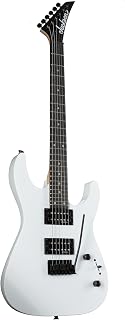
JACKSON JS DINKY JS12 | Beginner shred guitar, dual high-output humbuckers, tremolo bridge, 24 frets, metal-ready tone
See on Amazon

Jackson is a name that immediately evokes images of thin necks, fast fretboards, powerful pickups, and Floyd Rose bridges. Born in the 80s, in the midst of the heavy metal and shred boom, the company made a name for itself by providing instruments that were not only beautiful to look at but also met very specific needs: Speed: Necks with compound radius, jumbo frets, and thin profiles to facilitate runs on the fretboard.
Stability: We often find graphite-reinforced necks, stable bridges (fixed or floating), and reliable tuners.
Aggressive Sound: High-output pickups, designed to push the amplifier and deliver a compact and powerful sound.
Aesthetics: Aggressive, pointed shapes, often with flashy or dark and menacing finishes.
It's not a guitar for everyone. If you're looking for crystal-clear blues sound or the twang of a Telecaster, Jackson is probably not your first choice. But if your genre ranges from hard rock to extreme metal, passing through progressive or modern fusion, then you're in the right place. Jackson offers instruments that are true workhorses, designed for uncompromising performance.
Now, let's see what the most popular series are and what they offer, starting from the entry-level and moving up in quality and price.
Jackson JS Series: The Entry into the World of Shred
Advertisement
JACKSON JS DINKY JS12 | Beginner shred guitar, dual high-output humbuckers, tremolo bridge, 24 frets, metal-ready tone
See on Amazon
Technical Specifications (Example: Jackson JS22 Dinky DKA HT)
I'll take the JS22 Dinky DKA HT as an example, one of the most widespread. Specifications may vary slightly between different models of the JS series (Dinky, Rhoads, Kelly, King V), but the basic idea is this. Body: Poplar (Poplar). A light and tonally quite neutral wood, which helps keep costs down.Handle: Maple (Maple), bolt-on, with graphite reinforcement and scarf joint. The profile is thin, very fast.
Keyboard: Amaranth (Amaranth) or Laurel (Laurel), with a compound radius from 12″ to 16″. This means it's more curved at the nut for chords and flatter towards the body for bends and fast solos.
Keys: 24 Jumbo frets.
Stairs: 25.5″ (typical Jackson/Fender).
Pick-up: Two Jackson High-Output humbuckers (passive).
Bridge: Jackson HT6 string-through-body (fixed) or Floyd Rose Licensed (for models with floating bridge).
Mechanics: Jackson Sealed Die-Cast.
Finish: Often Gloss Polyurethane, in classic or more aggressive colors.
Construction Notes: The bolt-on neck is a classic, offering good attack and ease of replacement in case of problems. The compound radius is a gem at this price.
Popular Sentiment: What Guitarists Say
The JS Series is a bit of a “workhorse” for beginners or those looking for a battle-axe guitar. The price: Everyone agrees that the quality/price ratio is astonishing. For what they cost, they offer a lot.Playability: The thin neck and compound radius are a hit. Even more experienced guitarists appreciate the feeling of speed. “Finally a guitar that doesn't slow me down,” a friend told me.
The pickups: Here comes the first “but”. The stock Jackson High-Output pickups are decent to start with, but many find them a bit generic and muddy, especially on clean sounds or with very heavy distortions. They are the first upgrade almost everyone makes.
The hardware: The tuners and fixed bridge are generally reliable. Floyd Rose Licensed, however, can be a weak point. They tend to lose tuning more easily than their older siblings, the Floyd Rose 1000 Series or Original. They require more attention and maintenance.
Quality control: Being guitars produced in large volumes, some units may have small imperfections. Sometimes the frets are not perfectly finished, or there are small paint blemishes. Nothing serious, but it's good to check the unit before purchasing. A good setup and maybe a fret polish can transform a good guitar into an excellent one.
PROS and CONS (in relation to Price)
PROS: Affordable price: The main strong point. It allows everyone to approach the Jackson world.Exceptional neck and playability: For the price, the neck is very fast and comfortable.
Great base for modifications: If you like to tinker, it's a perfect blank canvas to change pickups, hardware, and make it “yours”.
Sturdy construction: Despite the price, these guitars hold up well to wear and tear. AGAINST: Upgradeable stock pickups: They are often the first element to replace for those seeking a more defined sound.
Hardware (Floyd Rose Licensed): While functional, it's not on par with superior Floyd Rose models. For those who use the vibrato a lot, it can be frustrating.
Variable Quality Control: Occasionally, you might come across a unit that needs a bit of extra work (fretwork, setup).
Who is it suitable for / Who should avoid it?
Suitable for: Beginners who want a metal-oriented guitar, intermediate guitarists with a limited budget, those looking for a workhorse or modifiable guitar, those who want a reliable backup.Avoid if: You're looking for a “boutique” sound right away, you don't want to do upgrades or setup work, and you demand an impeccable Floyd Rose without spending more.
Jackson X Series: The Intermediate Step
The X Series represents a leap in quality compared to the JS, while maintaining an still affordable price for many. Here we start to see more complex constructions like neck-through, better woods, and more refined hardware. Often Jackson's most iconic models, like the Soloist or the Warrior, find their most accessible incarnation in this series.Technical Specifications (Example: Jackson X Series Soloist SLX DX)
Here too, specifications vary between models (Soloist, Warrior, Rhoads, King V), but the SLX DX is a good reference. Body: Poplar (Poplar) or Basswood (Basswood), often with a maple center section for neck-through construction.Handle: Maple (Maple), neck-through-body construction with graphite reinforcement. This type of construction, where the neck and the central part of the body are a single piece, offers remarkable sustain and easy access to the upper frets.
Keyboard: Laurel (Laurel) or Ebony (Ebony for some models), with a compound radius from 12″ to 16″.
Keys: 24 Jumbo frets.
Stairs: 25.5″.
Pick-up: Often Jackson High-Output humbuckers, sometimes with active options (e.g., EMG for some X Series models).
Bridge: Floyd Rose Special Double-Locking Tremolo (for floating models) or Jackson HT6/HT7 string-through-body (for fixed models).
Mechanics: Jackson Sealed Die-Cast.
Finish: Gloss Polyurethane or Satin.
Construction Notes: The neck-through is the star here. It improves sustain and resonance, giving a more “premium” feel.
Popular Sentiment: What Guitarists Say
The X Series is seen as an excellent compromise for those who want something more than the JS but are not ready for the leap to the Pro Series. Sustain and Resonance: The neck-through is a game-changer. Many notice significantly superior sustain compared to bolt-on models. “You feel the guitar vibrate differently,” a musician told me.Build Quality: Generally more consistent and refined than the JS. The finishes are more precise, the fretwork better.
The Pickups: Here too, the stock Jackson pickups are a step up from the JS, but they remain the most debated point. For some they are sufficient, for others they continue to be the first upgrade. The inclusion of EMG on some models is a plus for those looking for active sounds.
Floyd Rose Special: It's an improvement over the JS's Licensed, but it's not yet a Floyd Rose 1000 Series or Original. It's more stable, but the saddles and blocks can wear out more quickly if abused. It still requires good maintenance to keep it in tune.
Comfort: Access to the upper frets is fantastic thanks to the neck-through construction.
PROS and CONS (in relation to Price)
PROS: Neck-Through Construction: Superior sustain and resonance, easier access to the upper frets.Improved build quality: Generally more refined and reliable than the JS.
More robust hardware: The Floyd Rose Special is a step up.
Excellent value for money: An excellent mid-range for those who want quality without overdoing it. AGAINST: Standard pickup: Still a point of discussion for some, even if better than the JS.
Floyd Rose Special: It's not top-of-the-range, and may require more attention than a Floyd 1000 or Original.
Variety of woods: Mostly poplar or basswood, which are good, but not the “premium” ones found on higher-end models.
Who is it suitable for / Who should avoid it?
Suitable for: Intermediate guitarists looking for a significant upgrade, gigging musicians with a medium budget, those who appreciate the sustain of the neck-through and want a reliable guitar for metal.Avoid if: You have a very limited budget (the JS is more suitable), or if you are looking for maximum quality without compromise (then look at the Pro Series).
Jackson Pro Series: The Stage Beast
We have arrived at the range that for many represents Jackson's true “sweet spot”: the Pro Series. These guitars are often produced in Mexico or Indonesia (depending on the specific model) and offer a level of quality, components, and finish that comes very close to the USA Select, but at a much more humane price. Here you will find the true workhorses for professionals or for those who demand the maximum without spending thousands of euros.Technical Specifications (Example: Jackson Pro Series Soloist SL2)
I'm taking the Soloist SL2 as an example, a classic of the series. Body: Mogano (Mahogany) or Tiglio (Basswood), often with flamed or quilted maple top for an extra aesthetic touch. Neck-through-body construction.Handle: Acero (Maple) in a single piece or with multiple laminations, neck-through-body with graphite reinforcement and scarf joint. Often with a satin finish on the back for greater smoothness.
Keyboard: Ebano (Ebony), with compound radius from 12″ to 16″.
Keys: 24 Jumbo frets in acciaio inossidabile (Stainless Steel) on many recent models, which is a huge plus for durability and smoothness.
Stairs: 25.5″.
Pick-up: Here we get serious. We often find Seymour Duncan (e.g. JB/Jazz, Distortion) or Fishman Fluence (e.g. Modern), reference brands in the world of metal guitars.
Bridge: Floyd Rose 1000 Series Double-Locking Tremolo or Gotoh 510 HT (for fixed bridge models). The Floyd Rose 1000 is practically identical to the Original in terms of materials and tolerances, ensuring stability and reliability.
Mechanics: Jackson Sealed Die-Cast, often with locking tuners on specific models.
Finish: Gloss Polyurethane or Satin, often with binding on the body and headstock.
Construction Notes: The use of more precious woods, branded pickups, and a true Floyd Rose 1000 Series elevates these guitars to a semi-professional level. The stainless steel frets are a detail that makes a difference for longevity and feel.
For a reference on specifications, you can take a look directly at the official Jackson Guitars website, which has detailed sheets for each model: Jackson Guitars Pro Series.
Popular Sentiment: What Guitarists Say
The Pro Series is acclaimed as the “true Jackson” by many, offering high-level performance at a competitive price. Premium Components: The consensus is unanimous: Seymour Duncan or Fishman pickups are excellent and the Floyd Rose 1000 Series is rock solid. “Finally a guitar that plays and stays in tune as it should,” is a phrase I often hear.Playability and Comfort: The necks are incredibly fast, the ebony fretboard and jumbo frets (especially if stainless steel) make the playing experience smooth and satisfying. Access to the upper frets is impeccable.
Build Quality: Quality control is much more stringent. The finishes are impeccable, the fretwork is generally perfect right from the start. These are guitars that feel solid and well-built.
Woods: The use of mahogany or basswood for the body, and often figured maple tops, contributes to a richer tone and a more refined aesthetic.
Value for money: Many consider them a very valid alternative to USA guitars from other brands (or from Jackson itself) that cost double or triple.
PROS and CONS (in relation to Price)
PROS: High-quality components: Branded pickups (Seymour Duncan, Fishman), Floyd Rose 1000 Series, stainless steel frets.Excellent playability: Fast neck, ebony fretboard, impeccable fretwork.
High-level construction and finish: Better woods, precise assembly, refined aesthetics.
Professional reliability: Stage and studio-ready instruments without the need for immediate upgrades. AGAINST: Higher price: Although excellent for the quality offered, it is a significant investment for those with a limited budget.
Not USA-Made: For purists, the fact that they are not produced in the United States might be a factor, even if the quality is not affected in the slightest.
Who is it suitable for / Who should avoid it?
Suitable for: Semi-professional and professional guitarists, demanding enthusiasts looking for maximum performance, anyone who wants a reliable and high-quality guitar for metal or similar genres, without having to spend astronomical sums.Avoid if: Your budget is less than 1000 euros (then X or JS Series are more suitable), or if you prefer the charm and resale value of a Made in USA guitar.
Final Advice and Alternatives
If you've made it this far, I hope you have a little more clarity on the main Jackson electric guitars. The choice, as always, depends on you, your budget, your level, and what you're looking for.My sincere advice is always the same: try the guitar before buying it. Even if the specifications are identical, each instrument has its own soul. Feel the neck, the balance, the weight. Play a couple of riffs, a bending, feel how it responds. Even if you're not a professional, your hands will tell you a lot. If you have a tight budget and you're the type who isn't afraid to get your hands dirty with a setup or a pickup change, go for the JS Series. It will be an excellent base for learning and customizing. And if I can do a good setup, you can too.
If you're looking for a step up in terms of sustain and build quality, but want to stay under a thousand euros, the X Series is your way to go. Neck-through is a great thing, and the hardware is more reliable.
If you are a demanding musician, play live or in the studio, and want an instrument that gives you no worries, the Pro Series is the right choice. Here you have top components, impeccable construction, and a sound that rivals much more expensive guitars.
Alternatives to consider
Jackson is a leader in its segment, but it's not the only one. If you don't find the Jackson that's right for you, or if you want to explore other options with a similar philosophy, I recommend taking a look at: Ibanez: The RG, S, and Iron Label series offer thin necks, floating tremolos, and powerful pickups. They have a slightly different aesthetic, but the philosophy is similar.Schecter: Models like the Demon, Omen, or Hellraiser are extremely well-made guitars, often with active pickups and great sustain, at very competitive prices.
* ESP LTD: The M, H, or EC series offers guitars with an aggressive aesthetic and high-level components, very popular in metal.
Remember, the right guitar is the one that inspires you to play more. Don't rush, do your research, try the instruments, and choose with your head, but also with your heart. And don't be afraid to make mistakes, it's the best way to learn.
See also
Download the Luthier Survival Kit
Free PDF with checklist, problem-cause table and project card template.
 English
  Italiano
Stuck on your build?
If you ran into the same problem or have a question, drop it in the comments. I read and reply to every one.
Write a comment