

Classical Guitar Frets: 3 Materials Compared
I still remember the first time I had to refret a guitar. It wasn't a classical one, to be honest, but an old Stratocaster that a friend had left me in pitiful condition. The frets were flat like highways after a steamroller had passed over them. I was terrified. The idea of having to plant those small metal bars, make them fit perfectly, and then level them without ruining the fretboard, seemed like a surgeon's task. But instead, with time, making mistakes and redoing, I understood that it's not a dark art. It's technique, patience, and the right tools. And, of course, the right material.If you've already worked on a few guitars, you know what I'm talking about. Maybe you've already installed a pickup, done some wiring, or changed a bridge. But the frets for classical guitar, or for any guitar, are a different kettle of fish. They are the point of contact between your fingers and the instrument, influencing the feel, intonation, and even a bit of the sound. Making a mistake here can make an instrument unplayable, frustrating. The classic “buzz” that drives you crazy, or notes that sound out of tune even if the tuner says otherwise. It happens, right? It certainly happened to me.
Today we're talking about exactly this: the materials for classical guitar frets. It's not a minor choice, and I assure you that not all metals are equal. Each option has its pros and cons, especially for us who work in the garage, perhaps with a limited budget and without professional luthier equipment that costs as much as a used car. Let's see together what's out there, why one choice is as good as another, and above all, what I've learned from making mistakes.
Why Frets Matter (and how to choose the right fret wire)
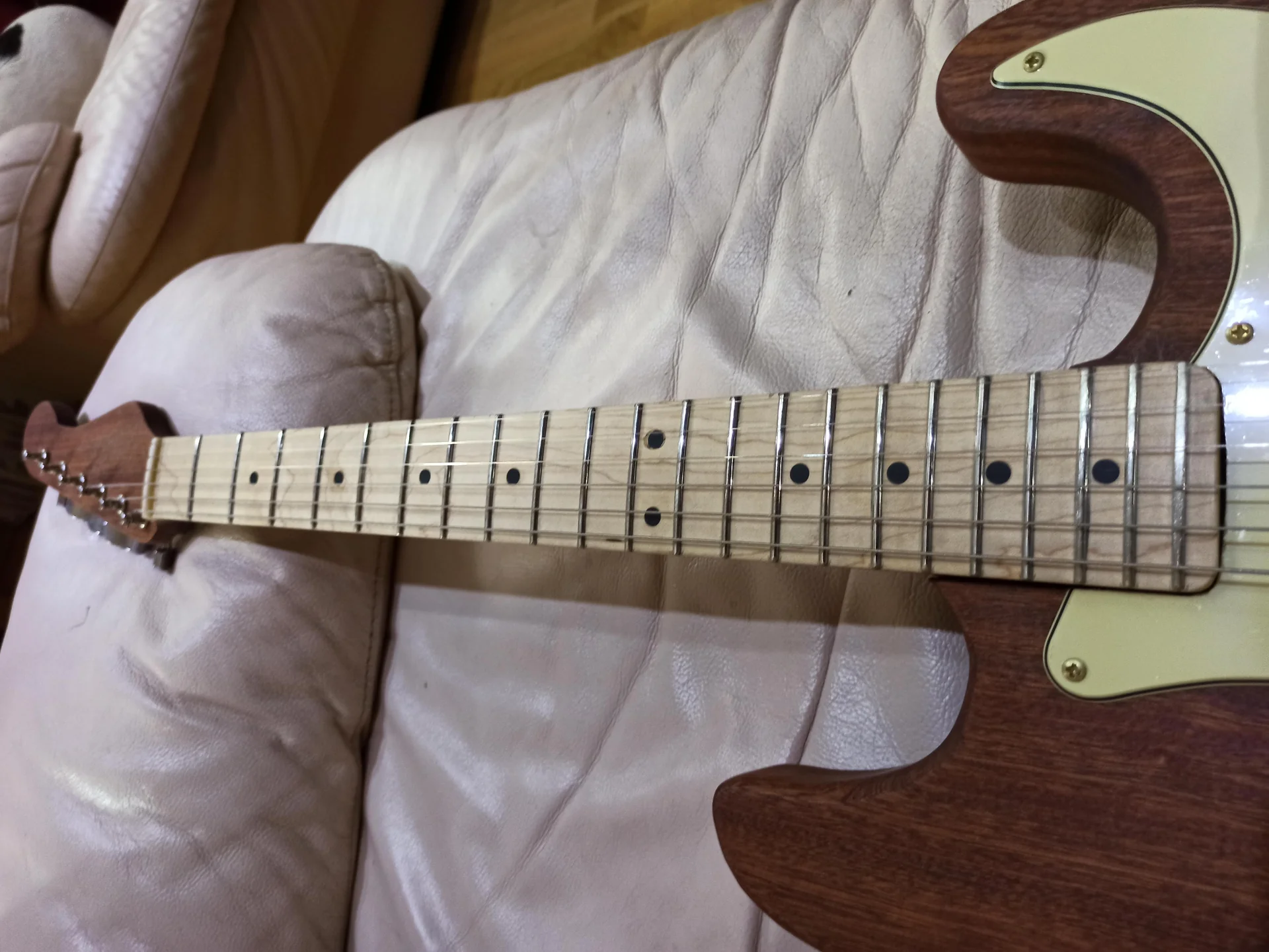
Let's start with the progenitor, the one you find on the vast majority of guitars, classical and otherwise: the nickel silver. Warning: the name can be misleading. There is no actual silver in this alloy. It is usually an alloy of copper (about 60-65%), nickel (12-18%, hence the name) and zinc. The percentage of nickel is what determines its hardness and corrosion resistance. The more nickel there is, the harder and more resistant it is. The most common fret wires contain 18% nickel, considered a good quality standard.
I started with this material, of course. It's what everyone uses, the easiest to find. The first time I bent one of these metal rods, it felt almost like butter. Then I realized that bending is just the beginning.
Characteristics and Advantages of Nickel-Silver
Why is nickel-silver so widespread and loved? Well, there are several reasons: Neutral Tone and Good Resonance: It's a material that doesn't “color” the sound too much. It allows the nuances of the wood and strings to emerge. It doesn't add excessive brightness

nor does it take it away. It's a good compromise. Many purists prefer it precisely for its neutrality. In my tests, I noticed that it contributes to a balanced sustain, without strange peaks.
Affordable Cost: Compared to other alloys, nickel-silver is decidedly more economical. This is no small factor for those of us who don't have an unlimited budget and might be building their first guitar. You can buy a nice roll of fret wire without breaking the bank.
Workability (Relative, for the Hobbyist): This is its strong point for DIY. It's soft enough to be cut with normal fret nippers (the flat-head ones, mind you!), bent with relative ease (even by hand with a bit of care or with a small manual fret bender), filed and polished without destroying your tools. It's not a walk in the park, to be clear, but it's manageable. You don't need very expensive specialized equipment. All you need is a good double-sided file (the one with the concave part, specific for frets), some fine-grit sandpaper, and a bit of polishing paste.
Disadvantages and Things to Know About Nickel-Silver
No one is perfect, and neither is nickel-silver. It has its flaws, and knowing them helps you understand if it's the right choice for your project of frets for classical guitar. Durability (Wear): This is its Achilles' heel. Nickel-silver is relatively soft. With constant use, especially if you play a lot or have a heavy touch, the frets tend to wear down. Small indentations (the “divots”) form under the strings, which can cause buzzing and intonation problems. This means that, sooner or later, you'll have to do a fret level and crown (leveling and crowning) or, in more extreme cases, a refret complete. It's the price to pay for its workability.Oxidation/Allergies: Nickel, although a stable metal, can oxidize slightly over time, taking on a duller appearance. Nothing serious, a polish solves it. But for some people, nickel is an allergen. If you or the future owner of the guitar know you have nickel allergies, it's better to consider other options. Processing Tips: 1. Folding: Always bend the frets slightly more than the fretboard radius. This helps the ends stay firmly seated and reduces the chance of them lifting. I learned the hard way that a fret wire that's too flat tends not to adhere well to the edges, and then you have to hammer like a blacksmith.n2. Pressing/Hammering: I prefer the press, but a good fretting hammer (the one with a plastic or brass head) works perfectly. The important thing is to apply uniform and gradual pressure. I ruined a couple of frets trying to seat them too quickly, creating bends in them.n3. Leveling: Take your time. Use a straight leveling bar and mark the frets with a permanent marker. File until the marker disappears from all the crowns. It's a meticulous job of patience, but it's what makes the difference between a guitar that plays well and one that makes you want to throw it out the window.n4. Polishing: After leveling and crowning (the crowning), you need to polish the frets. Start with fine sandpaper (800, 1000, 1500, 2000) and then move on to polishing pastes. Well-polished frets are not only nice to look at, but they reduce friction and improve the bend of the strings.
Practical Tip: To prevent excessive wear of nickel-silver frets, especially if you play a lot, clean them regularly. Dirt and oxidation can act as abrasives. And if you feel the strings “scratch” a bit, a quick pass with a specific abrasive eraser for frets can extend the life of your fret job.
The Modern Alternative: Stainless Steel
When stainless steel, or stainless steel, began to make its way into the world of lutherie, I was skeptical at first. “It'll just be a fad,” I thought. Then I tried a guitar with these frets, and the feeling was undeniable: incredible smoothness, a kind of “glassy” sensation under the fingers. And then, the promise of almost eternal durability. For those of us who hate redoing work, it's a strong temptation.Stainless steel is an iron alloy with a minimum of 10.5% chromium, which gives it its famous corrosion resistance. There are several stainless steel alloys, but those used for frets are typically from the 300 series, such as 304 or 302, known for their hardness and resistance.
Features and Benefits of Stainless Steel
Why you should consider stainless steel for your next frets for classical guitar? Extreme Duration: This is the main selling point. Stainless steel frets are incredibly hard. They will resist wear for decades, even with intense use. If you are tired of seeing your frets wear out, stainless steel is the ultimate solution. For a hobbyist who no longer wants to worry about the refret for a long time, it's a dream come true. I have had a guitar with stainless steel frets for years, and they are still like new.Bright Sound: Many guitarists describe the sound of stainless steel frets as brighter, with a more defined attack and slightly more sustain. This can be an advantage for those seeking clarity and articulation. On classical guitars, where sweetness of sound is often a priority, it might not be the default choice, but for a crossover or an amplified guitar, it could add an interesting touch. In my tests, I noticed that it makes the sound a bit more “open”, almost crystalline.
Corrosion Resistance: Stainless steel does not oxidize or corrode. Your frets will remain shiny and bright forever, without the need for special cleaning. Great for those with acidic perspiration or living in humid environments.
Disadvantages and Hard-Learned Lessons with Stainless Steel
And here we come to the flip side, which for us hobbyists can be a real nightmare. Stainless steel is a beast to tame. Processing Difficulty: Get ready. Stainless steel is hard. And I mean, Truly hard.Cut: Normal nickel-silver fret cutters won't make it. You'll ruin them or, worse, hurt yourself. You need specific stainless steel cutters, with reinforced cutting edges. They cost more, and not a little.
Folding: It's harder to bend. It requires more force and a robust fret bender. If you try to do it by hand, you'll get tired quickly. And if you don't bend it well, it will be hell to make it adhere to the fretboard.
Filing: This is the real tool massacre. Normal files dull quickly. You need specific steel files, often with carbide or diamond coating. They are expensive. A fret level with stainless steel is an exhausting and slow job, and it will make you sweat buckets. I literally burned a file trying to go too fast.
Polishing: Polishing is also more strenuous. It requires more time and more aggressive abrasive pastes. If you don't polish well, the frets will remain rough and won't have that smooth feeling you're looking for.
Rigidity and Impact on the Neck: Being so rigid, stainless steel can be more difficult to insert into fret slots. Sometimes, it requires slightly wider slots or a very powerful press. It's not a problem for the neck itself, but the workmanship is more delicate.
Tonal Impact (for some, too “cold”): While brightness can be an advantage, for some guitarists, especially on classical guitars where a warm and round sound is sought, stainless steel can be too “cold” or “sterile”. It’s a matter of personal preference, but it’s an aspect to consider.
Common Mistake to Avoid: Never use the tools you use for nickel-silver on stainless steel frets. Not only will they not work well, but you will irreparably ruin your files, cutters, and fretsaw. If you decide on stainless steel, factor in the purchase of a dedicated set of tools. It's an investment, but it will pay off in time and saved frustrations.
If you want modify your guitar with stainless steel frets, the budget for specific tools is an item not to be underestimated.
The Hidden Gold: EVO Gold (or Gold-colored Fretwire)
Then there's a third option, which for me was a real discovery and an excellent compromise: EVO Gold. It's not real gold, let's be clear, we're not talking about jewelry on the keyboard! It's a proprietary alloy, developed by the Jescar company, but by now the term “EVO Gold” has become almost generic to indicate this type of fret wire gold color. It is a copper alloy with additions of titanium and other metals, which give it significantly greater hardness and wear resistance compared to nickel-silver, while maintaining good workability.I tried it on a couple of projects and was really impressed. Aesthetically it’s appealing, but it’s its functionality that convinced me.
Features and Benefits of EVO Gold
Why EVO Gold might be the right choice for your frets for classical guitar? Excellent Durability (the “Sweet Spot”): This is its strong point. EVO Gold is positioned between nickel-silver and stainless steel in terms of hardness and wear resistance. It offers durability that is about double or triple that of nickel-silver, but without the extreme hardness of stainless steel. This means less worry about long-term wear, but without having to face the difficulties of working with steel. For me, it’s the “sweet spot” between durability and practicality.Aesthetic Color: Well, it’s gold colored! And on a classical guitar, with dark fretboard woods (ebony, rosewood) and perhaps a light binding, it can give a touch of elegance and distinction. It’s not for everyone’s taste, but if you’re looking for something that stands out aesthetically, it’s an excellent choice. Personally, I really like the combination with rosewood.
Workability (Almost like Ni-Ag): This is the true magic of EVO Gold. Despite being much harder than nickel-silver, it works very similarly. You can use the same tools (cutters, files) that you would use for nickel-silver, although files might wear out a bit faster. It requires a bit more force to bend and file than nickel-silver, but it’s infinitely more manageable than stainless steel. It won’t give you a nervous breakdown.
Warm Sound and Good Resonance: Being a copper-based alloy, EVO Gold tends to offer a slightly warmer and rounder sound compared to stainless steel, while still maintaining good clarity and sustain. Many describe it as a more “organic” or “vintage” sound compared to the perceived coldness of stainless steel. For a classical guitar, where softness and warmth of sound are often sought after, this characteristic can be a great advantage. In my tests, I noticed that it helps to slightly smooth out more aggressive attacks, making the timbre more velvety.
Disadvantages and Considerations for EVO Gold
Even EVO Gold is not without some small compromises. Higher Cost: EVO Gold is more expensive than nickel-silver, although usually less expensive than stainless steel. It’s an investment, but considering its durability and ease of processing, for me it’s worth it.Availability: Not all lutherie suppliers stock it like nickel-silver. It may be necessary to order it online or from specialized suppliers.
Aesthetics (Not Everyone Likes the Gold Color): The gold color is distinctive, but not everyone appreciates it. It’s a strong stylistic choice. If your project requires a more traditional look, nickel-silver might be preferable.
FAQ: “Is it real gold? Does it get damaged?”
No, it’s not real gold, but a high-strength alloy. And no, it doesn’t get damaged easily. It doesn’t rust and doesn’t oxidize. Its gold color is intrinsic to the alloy, so it’s not a coating that can “peel off”. It will maintain its shiny, golden appearance for a long time. It was designed to be aesthetically durable as well as functional.
The Right Choice for Your Project (and Your Garage)
So here we are. We have explored the three main contenders for the frets for classical guitar. But what is the right choice for you? The truth is that there is no absolute “best”. It all depends on what you are looking for, your level of experience, the tools you have available and, of course, your budget.Let me guide you through some typical scenarios, based on what I've learned firsthand (and on my guitars). Scenario 1: First project, limited budget, you want to learn the process. My recommendation: Nickel-Silver. It's the cheapest, the easiest to work with standard tools, and allows you to practice without too much worry if something goes wrong. You won't have eternal durability, but you'll learn the basics of fret job in a more “permissive” environment. It's a great starting point. You won't feel like a failure if the first attempt isn't perfect.
Scenario 2: “Battle” guitar, aggressive sounds, you want maximum durability and you're not afraid of hard work. My recommendation: Stainless Steel (Stainless Steel). If you're a musician who plays hours a day, or if you're building a guitar that needs to withstand anything, and you're willing to invest in specific tools and put in a lot of sweat, stainless steel is unbeatable for durability. But be prepared: it will be a struggle. It's not for the faint of heart or for those in a hurry.
Scenario 3: You're looking for a balance between quality, durability, aesthetics, and workability, with a medium budget. My recommendation: EVO Gold. For me, it's the ideal compromise. It offers significantly superior durability to nickel-silver, more friendly workability compared to stainless steel, a warm sound, and a distinctive look. If you've already done some fret job* and want an upgrade without going crazy with tools, EVO Gold is the choice I feel most confident suggesting. A heartfelt advice, whatever material you choose: Don't skimp on specific tools for frets. Good nippers, a good fret file, and a straight leveling bar are investments that will pay off in precision, fewer errors, and, believe me, less frustration. You don't have to buy the top of the range, but avoid the cheapest tools you find on Amazon, unless they are from well-known brands in the lutherie sector. My selection process (the one I use now, after years of attempts): 1. I define the budget: How much can I spend on filaments and extra tools (if necessary)?n2. I consider the desired durability: Will this guitar be played every day for hours, or is it a collector's item?n3. I think about the sound and aesthetics: What tone am I looking for? And the appearance, is it important that the frets are a certain color?n4. I evaluate my experience and available tools: Am I ready to fight
 English
  Italiano