So, let's put it straight away without beating around the bush. If you're here, it's because you have a budget, you want a guitar that rocks for rock and metal, and you've come across the Jackson JS32 Dinky. Maybe you've seen some videos, read a couple of comments, and now you're asking yourself: “But is it worth it? Is it a rip-off or a good deal for what it costs?”
I've been there too, believe me. That crazy desire for a new guitar, with an aggressive look and a floating bridge that allows you to do dive bombs like crazy, but without emptying your bank account. And then you see the price of the JS32 Dinky and you think: “Will it be a toy?”. The truth is in the middle, as almost always, and I'm telling you this as someone who has disassembled and reassembled more guitars than he has played decently.
This is not the perfect guitar, and whoever tells you otherwise either has never held it or has commercial interests. However, for its price, it offers a package that can be truly interesting for many. Especially if you're willing to get your hands a little dirty, as we DIY enthusiasts like.
The matter is clear: you want a workhorse guitar, with a look that doesn't go unnoticed and specific hardware for certain sounds. The Jackson JS32 Dinky promises all this. Let's see together if it keeps its promises and, above all, if it's the right choice for you and your garage.
Technical specifications of the Jackson JS32 Dinky
Advertisement
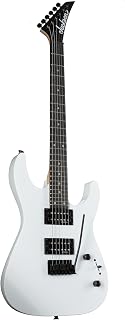
JACKSON JS DINKY JS12 | Beginner shred guitar, dual high-output humbuckers, tremolo bridge, 24 frets, metal-ready tone
First of all, let's put the specifications on the table. When talking about affordable guitars, materials are the first point where costs are cut. This doesn't necessarily mean they are poor quality, but rather that they are chosen for production efficiency and low cost.
Here's what you find on the Jackson JS32 Dinky, with data in hand:
Body: Usually Poplar. It's a light wood, quite resonant, and easy to work with. It doesn't have the density and resonance of high-end mahogany or alder, but it does its job. For a guitar designed for gain and aggressiveness, it's more than adequate. It's not a featherweight, but not a boulder either. Neck: Maple with graphite reinforcement. The construction is bolt-on. This choice is standard on many guitars, even higher-end ones, for its stability and ease of replacement in case of problems. The graphite reinforcement is a significant plus for neck stability, especially with the stresses of a floating bridge. Handle Profile: Here Jackson plays it safe with its “Speed Neck”. It's a thin, flat-backed profile, designed for speed. Perfect for those who churn out fast riffs and solos. When I first tried a JS32, it reminded me a bit of Ibanez necks, but with a more “rocky” feel. Fretboard: Amaranth. It's an economical alternative to Ebony or Rosewood, with a similar feel and appearance to Rosewood, but often harder and with a more purplish color. In some batches, you might find Laurel, which is equally valid. The important thing is the Compound Radius, which goes from 12″ at the nut to 16″ at the bridge. This means it's more rounded near the nut for chords and flattens out as you go up towards the higher frets, facilitating bends without “fret out” (the strings choking). A technical detail that makes a difference for playability. Frets: 24 Jumbo frets. Perfect for those with a “heavy” hand or for those seeking maximum sustain and ease in bending. I won't hide that on guitars in this range, sometimes, the frets might need a slight leveling after a while. But it's a job that can also be done at home with the right tools. Scale (Scale Length): 25.5″ (648 mm). The most common scale for Fender-type guitars, it offers good string tension and balanced sustain. Ideal for standard or drop tunings. Pick-up: Two Jackson High-Output humbuckers (passive). They are designed to push the amplifier well, with a powerful sound loaded with mids, ideal for aggressive distortions. Don't expect the world, but for metal and hard rock, they do their dirty work. Hardware:Bridge: Jackson-branded Floyd Rose Licensed Double-Locking Tremolo. This is the beating heart of the guitar for those looking for a floating bridge. It's a licensed version, so it's not an Original Floyd Rose. Tuning stability depends heavily on how well it's set up and how carefully it was assembled. We'll see shortly what the community says about it. Mechanics: Jackson Sealed Die-Cast. Sealed tuners, neither good nor bad. They do their job, but they're not the most precise. Capo: Floyd Rose R3 Locking Nut. Essential for tuning stability with the floating bridge. Controls: One Volume potentiometer, one Tone potentiometer, 3-way selector for the pickups (neck, bridge, both). Simplicity made instrument. Finish: Gloss polyurethane. Durable, but not exactly “premium” to the touch. The Dinky is available in various colors, often with bright or faded finishes that highlight the body shape. Relevant Construction Notes: The Dinky shape is a Jackson classic, compact and comfortable. The deep cutaways allow easy access to all 24 frets. It's a guitar designed for performance, even if entry-level.
These are the raw facts. Now, let's move on to what they mean in real life, the one made of rehearsals, garage gigs, and some late-night modifications.
Popular sentiment: what enthusiasts and buyers say
Advertisement
JACKSON JS DINKY JS12 | Beginner shred guitar, dual high-output humbuckers, tremolo bridge, 24 frets, metal-ready tone
This is where it gets serious. Let's put aside the brochures and talk about what's really being said in forums, among those who bought the guitar with their own money and played it for months. The Jackson JS32 Dinky is one of those guitars that somewhat polarizes opinions, but with a common thread.
The merits that everyone recognizes (or almost):
1. Playability and neck: Practically unanimously, the “Speed Neck” and compound radius are a godsend for those seeking speed. Many say the guitar plays itself, especially for fast riffs and solos. The jumbo frets help. For such a price, having such a comfortable neck is a huge plus.n2. Aggressive look: There's no denying it, the Dinky has an aesthetic that doesn't lie. It's a guitar that screams “metal” from every pore. For those looking for a shredder image, it's perfect. The finishes, despite being polyurethane, are often beautiful to look at.n3. Sound for the genre: The Jackson High-Output pickups, while not boutique, are effective for rock, hard rock, and metal. They push amplifiers well, have a good amount of gain, and decent definition on distorted sounds. “They do their job without frills,” is a phrase often read.n4. Price: Undeniably, the basic quality-price ratio is good. For less than 400 euros (often even less on offer), you take home a guitar with a floating bridge, 24 frets, and a fast neck. It's an attractive option for beginners or for those looking for a reliable workhorse.
The most common (and often well-founded) defects and complaints:
1. The floating bridge: Ah, the Floyd Rose Licensed. This is the Achilles' heel for many. Tuning stability can be an issue. It's not an Floyd Rose Original, and you can feel it. The saddles can be made of less durable material, the screws strip more easily, and the bridge knife edge can wear out sooner. Many complain that, after a few months of intense use, the bridge starts to not hold tuning as it should. It's not a surprise, it's the price to pay for having a floating bridge in this price range. However, with a good initial setup and a bit of attention, you can live with it.n2. The pickups: While they are suitable for the genre, they don't shine in terms of versatility or nuances. They are 'on-off': they either sound distorted or clean, but without particular character. Many buyers, after a while, think about an upgrade. It's a classic modification for a guitar in this range, and often it's the first thing done.n3. The quality of the potentiometers and the selector: They are not the best. Often you hear crackles, and the lifespan is not eternal. The selector can sometimes cause contact problems. Here too, we are talking about components cheap. They are easy to replace, but it's an extra expense to consider.n4. Fret finish: As I mentioned, it's not uncommon to find frets that need a little leveling or polishing. It's not a serious defect, but for those who are meticulous, it can be annoying. Sometimes, even the edges of the fretboard can be a bit 'rough'.n5. The factory setup: Here, variability is high. Some receive the guitar decently set up, others find themselves with very high action, an unbalanced bridge, and out-of-phase intonation. A good luthier (or yourself, if you have the skills) is almost a must for a serious initial setup, especially for the floating bridge.
In short, the 'popular sentiment' is clear: it's a guitar with great potential and an excellent starting point, but with obvious compromises in terms of hardware and electronic components. It's not a perfect 'plug and play', but it's an excellent 'platform' for those who want to get their hands on it.
Enjoying this article? Subscribe to the newsletter: one email a week, zero spam.
Jackson JS32 Dinky DKA-M | Featured Demo | Jackson GuitarsPlayed by Jackson Guitars
Pros and Cons in relation to the price
When evaluating a guitar like the Jackson JS32 Dinky, price is the dominant factor. We are talking about a guitar that new costs between 300 and 400 euros. With these figures, you cannot expect artisanal perfection or top-quality components. The goal is to maximize value.
Here's a summary of the PRO And AGAINST seen through the eyes of someone who knows every euro counts:
PROS:Neck and Playability: The 'Speed Neck' with compound radius is a real highlight. For the price, the smoothness and comfort are exceptional. This is fundamental for those who study or play fast genres. You won't easily find such a comfortable neck in this price range. Look and Style: The Dinky shape is iconic, aggressive, and immediately recognizable. If you're looking for a guitar that makes an impression on stage (or in the rehearsal room) and suits a certain musical genre, this is perfect. High-Output Pickups: For metal, hard rock, and punk, the stock pickups do an excellent job. They are powerful, direct, and don't get lost in the mix. If your sound is primarily based on distortion, you'll be satisfied. Floating Bridge (provided you know its limits): Having a Floyd Rose Licensed at this price is an opportunity. It allows you to experiment with extreme vibratos, dive bombs, and flutter. It's an experience that other inexpensive guitars don't offer. Great base for modifications: This is the strong point for us DIY enthusiasts. The guitar is a solid frame to build upon. With a minimal investment in better pickups, potentiometers, and perhaps a higher quality bridge, you can transform it into a real war machine, spending less than what a pre-equipped mid-range guitar would cost. It's an excellent guitar for modify a guitar, learning to solder and set up.
AGAINST:Floating Bridge Quality: The Jackson-branded Floyd Rose Licensed is the biggest compromise. It requires attention, a meticulous setup, and is not as robust as an Floyd Rose Original. If you don't have patience or don't want to learn how to set it up, it could give you headaches. The parts tend to wear out. Limited Pickups: Although good for their purpose, they lack versatility and nuances. For crystal clear clean sounds, bluesy crunch, or more complex sonorities, they are not ideal. They are a bit 'one-dimensional'. Electronic Components: Potentiometers and selector are cheap. They work, but don't expect eternal durability or impeccable smoothness. Often they are the first to be replaced. Variable Factory Setup: It's a lottery. It might arrive well set up or not. For a beginner, a poor setup can be frustrating and discouraging. Factor in having to take it to a luthier or learning to do it yourself. Fret Finish and Details: Sometimes, the fret edges can be a bit rough or sharp. It's not a playability issue, but one of comfort and aesthetic finish. With a bit of fine sandpaper and patience, it can be resolved.
In short, the Jackson JS32 Dinky offers you a powerful engine (the neck and the look) with a decent frame (the Poplar body), but with some parts (bridge, electronics, pickups) that were chosen to keep costs down. It's like buying a used sports car: it has potential, but you know you'll have to work on it to make it perform at its best.
Who is the Jackson JS32 Dinky suitable for? And who should avoid it?
Understanding if a guitar is right for you isn't just a matter of 'beautiful/ugly' or 'expensive/cheap'. It's about needs, patience, and willingness to get involved. The Jackson JS32 Dinky, with all its pros and cons, fits into a very specific context.
This guitar is for you if:You are a beginner or intermediate who loves metal/hard rock: You want a guitar with an aggressive look and a powerful sound for your first riffs or to refine your technique. The fast neck will help you a lot. You have a limited budget but don't want to give up the Floyd Rose: You want the floating bridge experience without spending a fortune. You are aware that it will require maintenance and perhaps some upgrades, but you are willing to learn. You're looking for a 'mod platform': You love tinkering with guitars. You see the JS32 Dinky as a solid base on which to mount better pickups, a more reliable bridge, and more performing electronics. You know that with a few hundred extra euros and a bit of work, you can have a guitar that sounds far beyond its original price. This is my preferred approach, I admit. You need a workhorse: You already have an expensive main guitar and you need an instrument to take around without too many worries, but one that still has a certain character and playability. You appreciate fast necks and jumbo frets: If the comfort of a thin neck and the ease of playing with large frets are a priority for you, the JS32 Dinky will give you great satisfaction.
You should think twice (or avoid it) if:You don't have patience with floating bridges: If the idea of having to set up a Floyd Rose gives you hives, and you want a guitar that stays perfectly in tune with minimal effort, the JS32 Dinky is not for you. It will frustrate you. Looking for sonic versatility? If your repertoire ranges from jazz to blues, from funky to country, and you need a wide range of clean sounds and nuanced crunch, Jackson's high-output pickups will not be enough. You will feel limited. You don't want to work on the guitar: If you buy it and expect it to be perfect out of the box, without needing a setup or future upgrades, you might be disappointed. It's a “raw” guitar in some details. You're looking for a “boutique” or high-quality sound right away: The pickups and electronics are functional, but they won't give you the rich and complex tone of higher-end instruments. If your ear is already accustomed to certain subtleties, you might find it “flat”. You don't have a trusted luthier (or you're not the luthier!): A good setup is crucial, especially for the bridge. If you don't know anyone who can do it well and you don't have the skills, you might have intonation and stability problems.
In short, the Jackson JS32 Dinky it’s a bit like a racing car sold to you at a bargain price: it has the engine and aerodynamics to go fast, but you know you’ll have to get your hands under the hood to make it perform at 100%. If you like the idea of getting your hands dirty and seeing the results of your efforts, then it’s a great adventure companion. Otherwise, it’s better to look elsewhere.
Final advice and alternatives
Here we are. After dissecting the Jackson JS32 Dinky far and wide, the question is: would you buy it, Mimmo?
Yes, I would buy it. But with a clear awareness: it's not the guitar that solves all your problems as soon as you take it out of the box. I see it as a blank canvas, or rather, a solid base with enormous potential, especially for those who want to learn and do.
My advice is this: if you like the look, the neck is comfortable for your hands, and your musical genre is rock/metal, then go for it. But immediately factor in an extra budget for a couple of things:
1. A professional setup: If you can't do it yourself (and setting up a Floyd Rose is an art, I assure you), invest in a good luthier who will adjust the action, intonation, and, above all, the floating bridge. Once properly set up, the bridge, despite being a licensed one, will give you fewer problems.n2. Replacement pickups: Not immediately, maybe after a few months. But if you're looking for a real leap in sound quality, a pair of aftermarket humbuckers (EMG 81/85, Seymour Duncan JB/Jazz, DiMarzio D Activator, or even Roswell pickups which are affordable and sound decent) can completely transform the guitar. It's an upgrade worth every penny and will make you feel a huge difference.n3. Potentiometers and selector: If they cause problems, don't think twice. Replace them. They cost little and save you a lot of headaches.
With these measures, the Jackson JS32 Dinky from an entry-level guitar it becomes an instrument that can compete with mid-range models, still spending less and with the satisfaction of having worked on it yourself.
Alternatives to consider (always staying within budget or slightly beyond):
If the JS32 Dinky doesn't completely convince you, or if its compromises aren't for you, there are other valid options:
Ibanez GRG/GRX Series: Similar in price range, they offer fast necks and are often more versatile in terms of pickups. If you're looking for a fixed bridge, you'll find many options. If you want a floating one, Ibanez has its “Edge” or “FAT” licensed bridges, which are sometimes a bit more reliable than Jackson's in this range, but again with due reservations. Squier Contemporary Series: Squier has made huge strides. Their Contemporary Strat or Tele HH are often well-built, with powerful humbuckers and comfortable necks, sometimes with compound radius options. They have less of a “metal” aesthetic, but they are very solid guitars. Harley Benton Fusion-III: If you really want to push the value for money and have no prejudice against the “budget” brand, Harley Benton's Fusion-III guitars are surprising. They often have better woods (mahogany, flamed maple), roasted maple necks, Roswell pickups (which are a good starting point), and sometimes even good quality Wilkinson bridges. These are the guitars that made me say “how can they cost so little?”. They require a setup, but the base is excellent. Schecter Omen/Demon Series: If you can stretch your budget a bit further (say around 450-550 euros), lower-end Schecter guitars offer superior build quality, more performant pickups (often with coil split), and more robust hardware. They are a significant step up.
The choice, as always, is yours. But I hope I've given you all the tools to make an informed decision, without letting marketing promises deceive you. The Jackson JS32 Dinky is an honest guitar for its price, with its strengths and weaknesses. If you're willing to get your hands dirty, it will give you great satisfaction. Otherwise, there are other paths.
Ultimately, the beauty of DIY is precisely this: understanding what you have in your hands, what you can do with it, and how to make it your. And the Dinky is perfect for this kind of journey.
To provide the best experiences, we use technologies such as cookies to store and/or access information on your device. Consent to these technologies will allow us to process data such as browsing behavior or unique IDs on this site. Not consenting or withdrawing consent may negatively impact certain features and functions.
Functional
Always active
Technical storage or access is strictly necessary for the legitimate purpose of enabling the use of a specific service explicitly requested by the subscriber or user, or for the sole purpose of carrying out the transmission of a communication over an electronic communications network.
Preferences
Technical storage or access is necessary for the legitimate purpose of storing preferences that are not requested by the subscriber or user.
Statistics
Technical storage or access which is used exclusively for statistical purposes.Technical storage or access that is used exclusively for anonymous statistical purposes. Without a subpoena, voluntary compliance by your Internet Service Provider, or additional records by third parties, the information stored or retrieved for this purpose alone cannot usually be used for identification.
Marketing
Technical storage or access is necessary to create user profiles for sending advertising, or to track the user on a website or across different websites for similar marketing purposes.
To provide the best experiences, we use technologies such as cookies to store and/or access information on your device. Consent to these technologies will allow us to process data such as browsing behavior or unique IDs on this site. Not consenting or withdrawing consent may negatively impact certain features and functions.
Functional
Always active
Technical storage or access is strictly necessary for the legitimate purpose of enabling the use of a specific service explicitly requested by the subscriber or user, or for the sole purpose of carrying out the transmission of a communication over an electronic communications network.
Preferences
Technical storage or access is necessary for the legitimate purpose of storing preferences that are not requested by the subscriber or user.
Statistics
Technical storage or access which is used exclusively for statistical purposes.Technical storage or access that is used exclusively for anonymous statistical purposes. Without a subpoena, voluntary compliance by your Internet Service Provider, or additional records by third parties, the information stored or retrieved for this purpose alone cannot usually be used for identification.
Marketing
Technical storage or access is necessary to create user profiles for sending advertising, or to track the user on a website or across different websites for similar marketing purposes.




 English
  Italiano
Stuck on your build?
If you ran into the same problem or have a question, drop it in the comments. I read and reply to every one.
Write a comment