So, let's put it this way: you've got it in your head to get a new guitar, maybe something a little more aggressive, with a look that won't go unnoticed. You've surfed the web, watched videos, read a few forums, and finally you've come up with the idea. Jackson Pro Series Monarch. And now you're here, wondering: "Mimmo, is this guitar worth the money? Is it really a good deal or am I about to get ripped off?"“
I totally understand. I've been there, too. How many times have I seen guitars that seemed incredible on paper, but then, once you got them in your hands, they just made you drop? Or vice versa, instruments you weren't expecting that turned out to be real surprises. With the Jackson Pro Series Monarch, the discussion is a little more nuanced. It's not a guitar for everyone, and it's not one of those that will change your life, but it has its very specific strengths.
If your goal is to find a solid, reliable guitar with a distinctive sonic character and rock/metal aesthetic, without having to mortgage your house, then you've come to the right place. The Monarkh fits right in, in that price range where competition is fierce and choices can make the difference between a successful purchase and a regret. Let's take a look at what's under the hood of this axe and, more importantly, who it's really suited to.
Jackson Pro Series Monarkh Technical Features
[GRIGLIA FOTO]
Before diving headlong into my impressions and "popular sentiment," it's right to put the facts on the table. When talking about a Jackson Monarch, there are some specifications that define it, and they're the ones that give us the first clue as to what to expect. Jackson, with its Pro Series, aims to offer instruments with semi-professional-level features at a still affordable price. And the Monarkh is no exception.
Body and neck wood
Advertisement
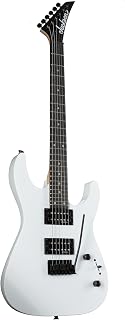
JACKSON JS DINKY JS12 | Beginner shred guitar, dual high-output humbuckers, tremolo bridge, 24 frets, metal-ready tone
The body of the Monarch it is usually mahogany (Mahogany). It's a classic choice, which has its own precise logic in electric lutherie. Mahogany is known for its warm sound, with good sustain and good resonance in the mid-frequencies. It's not a very light wood, but it's not a boulder either. It gives you that feeling of solidity, of an instrument that “is there”.
The neck, on the other hand, is often a single piece of graphite-reinforced mahogany. This is a detail I always appreciate. Graphite makes the neck more stable, less prone to twisting or movement due to temperature or humidity changes. Anyone who's ever had necks that move like jelly knows how important this is. The construction is usually neck-through or set-neck, which improves sustain and access to the higher frets.
The fretboard is ebony. And here Jackson hits the mark for this guitar's target audience. Ebony is a dense, dark wood, smooth to the touch, and offers a lightning-fast playing surface. Perfect for those who love playing fast, shredding, or complex passages. The frets are often 22 or 24, jumbo or medium jumbo, and nickel-silver.
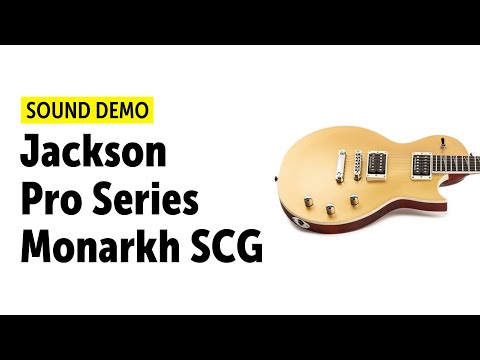
Jackson Pro Series Monarkh SCG - Sound Demo (no talking)Review by Guitar Bonedo
Handle type and profile
The handle of the Pro Series Monarkh It's a Jackson classic: the "Speed Neck." It's thin, with a C-shaped profile, designed for speed. It's not one of those super-thin, ironing-board-like ones, but it's sleek and comfortable. The compound radius fingerboard is another nice touch. It means the radius is more curved at the nut (for more comfortable chording) and flattens out toward the bridge (for smooth bending and low action). It's a feature that, once you've tried it, is hard to let go.
Pick-up
Regarding pickups, Jackson doesn't skimp and often mounts quality humbuckers. The most common configurations include Seymour Duncan humbuckers, often a JB in the bridge and a ’59 in the neck, or sometimes a Nazgûl and a Sentient from Seymour Duncan, especially on models more oriented towards metal. These pickups are known for their power, clarity, and versatility. The JB is a classic rock/metal, aggressive but with a nice tone. The ’59 is more vintage, warm and defined, excellent for lead or clean sounds. The other options, like the Nazgûl and Sentient, are decidedly more modern and push for aggressiveness and definition for extreme genres.
it's not uncommon to find models with proprietary Jackson pickups, which should not be underestimated. They are often designed to replicate the classic sounds of the most famous models, but with an eye on cost containment. In my experience, stock Jackson pickups have never been an insurmountable weakness, quite the opposite.
Staircase and Bridge
The scale is usually 24.75 inches (628 mm), the classic Gibson scale. This means slightly less string tension than the Fender scale (25.5 inches), which makes for softer bends and a more springy playability. It's a choice that many appreciate, especially those accustomed to Les Pauls or SGs and looking for a similar feel.
For the bridge, most of the Monarch The Pro Series features a Gibson-style Tune-o-Matic bridge with a stopbar tailpiece. It's a super reliable system, which holds tuning well and transmits plenty of vibration to the body, contributing to sustain. Then there are the Floyd Rose 1000 Series variants, but they're less common on this specific model, more often reserved for other Jackson series.
Hardware and Finishing
The hardware is generally black nickel or chrome, sturdy and functional. The tuning machines are often Jackson die-cast locking tuners. This is a great plus, as it greatly improves tuning stability, especially if you bend a lot or play aggressively.
The finishes of the Jackson Pro Series Monarch They vary, but they're almost always polished, well-maintained, and come in eye-catching colors. Jackson excels at offering eye-catching paint jobs, often with glitter or metallic colors, but also with more subtle finishes. Don't expect the "vintage relic" or super-thin finish of a custom shop; here, the focus is on practicality and durability.
Relevant construction notes
The construction is solid. I've had the chance to disassemble a couple of these Jacksons, and I can tell you, they're not badly made at all. The joints are clean, the electronics are neatly wired. Sure, it's not the obsessive perfection of a guitar costing thousands of euros, but you won't find any haphazard soldering or stray wires either. The attention to detail is more than acceptable for the price range. The nut saddle is often made of Graph Tech TUSQ XL, a synthetic material that improves sustain and tuning stability.
Popular sentiment on the Jackson Pro Series Monarkh
[BOX AFFILIAZIONE]
Now, let's get to the interesting part, the one that almost everyone looks for when reading a review: what do people say? What do enthusiasts who actually use it think, perhaps after buying it with their hard-earned money? I've scoured a lot of forums, online reviews, YouTube comments, and I can tell you that the picture on the Pro Series Monarkh it's pretty clear.
The most cited qualities by the community
Playability and neck: Practically everyone agrees that the neck is an incredible strong point. The “Speed Neck” with compound radius and ebony fretboard is a winning combination. “It's a highway,” many say, “perfect for those who play fast.” For powerful riffs and intricate solos, they say it never gets tiring.
Standard pickup: Many appreciate the choice of Seymour Duncan pickups. For the price, having a JB and a ’59 (or Nazgûl/Sentient) as standard is a great advantage. You don't have to immediately think about an upgrade, which often happens with guitars in this price range. The sound is powerful, defined, and versatile for rock and metal.
Solid construction: The general feeling is of a robust and well-assembled instrument. It's not a “cheap” guitar; you can feel it's built to last. The mahogany of the body and neck contributes to this perception of solidity.
Aesthetics: The look of the Monarch It's popular. That single-cut body, slightly more aggressive than a Les Paul, with its often dark or metallic colors, appeals to those looking for a guitar with a strong image. It doesn't go unnoticed on stage.
The most common defects and complaints
Weight: It's not a very light guitar. The mahogany body and solid construction can make it a bit heavy, especially for those accustomed to Stratocaster or guitars with poplar or basswood bodies. “After an hour standing, your shoulder starts to feel it,” is a comment often read.
Factory Setup: Here's a classic among mid-range guitars. Many complain that the factory setup isn't always impeccable. The action is a bit high, the intonation needs work, and sometimes a few frets are a bit fizzy. Nothing unsolvable, but it means that as soon as you take it out of the box, you'll probably have to get to grips with it. And here, those of us who enjoy doing these things aren't afraid. In fact, it's a good opportunity to get to know your instrument better. If you don't know where to start, you'll find plenty of guides on biafax.it. guitar setup and modification.
Sonic versatility (for some): Although the pickups are good, some find the Monarkh a bit too “directed” towards rock/metal sounds. It's not that it can't do clean or blues sounds, but it's not its strong suit. If you're looking for a guitar that transitions from a jazz sound to extreme metal with the same naturalness, you might have to look elsewhere or consider a push-pull selector to split the pickups.
Generic hardware (sometimes): While the locking tuners are a plus, the hardware overall, while functional, lacks the premium feel found on higher-end instruments. The potentiometers, for example, are good but not exceptional. Nothing problematic, but it's an area where improvement is always possible.
In short, the Jackson Pro Series Monarch the community sees it as a solid, high-performing guitar with excellent value for money for those looking for a rock/metal instrument without spending a fortune. The flaws are mostly solvable with a good setup and a few small modifications, which for a hobbyist like us is certainly not an insurmountable obstacle.
Enjoying this article? Subscribe to the newsletter: one email a week, zero spam.
When evaluating a guitar like the Jackson Pro Series Monarch, Price is the deciding factor. We're talking about a guitar that typically ranges between 800 and 1200 euros, depending on the specific model and current offers. In this range, expectations are high, but compromises are also inevitable.
The Pros of the Monarkh (considering the cost)
Exceptional handle: For the asking price, the neck is truly an unbeatable asset. A compound radius, ebony fingerboard, and a "Speed Neck" profile are features often found on much higher-end guitars. For those who play fast, it's an investment that pays off immediately in terms of comfort and fluidity.
Pickup brand: Having a Seymour Duncan pickup (JB/59 or Nazgûl/Sentient) as standard means saving a lot of money you'd otherwise have to spend on an upgrade. These pickups have a proven, powerful, and versatile sound for the genres the guitar is aimed at. It's a real added value.
Solid construction and sustain: The mahogany and neck-through/set-neck construction contribute to remarkable sustain and a solid feel. This isn't a guitar that sounds "hollow" or "brittle." It feels like you're holding a serious instrument.
Distinctive aesthetics: If you like the look, the Monarkh has its own personality. It's not a blatant copy of other models; it has that Jackson touch that makes it recognizable and aggressive.
Tuning stability: With locking tuners and a well-made Tune-O-Matic bridge, the guitar holds its tuning well. You can play for hours without having to worry about tuning every other song.
The CONS of the Monarkh (considering the cost)
Initial setup almost mandatory: As mentioned, you'll likely have to spend an hour or so getting it set up properly as soon as you unbox it. This isn't a flaw per se, but it's a cost in time (or money, if you take it to a luthier) that you should factor in. This is a common sore point in the mid-range range.
Weight: It's not a guitar you can take with you on the go. If you're used to lightweight instruments or have back problems, the Monarkh's weight might be a problem. Try it out first, if possible, or be prepared to carry a wide, well-padded strap.
Limited versatility (for some): While the pickups are good, the guitar is optimized for powerful sounds. If your repertoire is wide-ranging and you need crystal-clear cleans or very warm jazz sounds, you might find it a little too "bad" or compressed. It's not a jack-of-all-trades.
Potential small imperfections: While the construction is good, it's not uncommon to find some small imperfections in the finish or fretwork, which shouldn't be the case on higher-end guitars. We're talking about details, but it's worth knowing.
Availability: It's not always easy to find in all physical stores. Sometimes you have to order it online, which makes it harder to try it before buying, which is crucial for me.
In short, the Jackson Pro Series Monarch It offers a very competitive package for the price. Its strengths are truly solid and specific, while its weaknesses are mostly common compromises for the price range, and often solvable with a little elbow grease.
Who is it suitable for / Who should avoid it?
Okay, we've explored the technical features and people's opinions. Now, let's sum it up: who should seriously consider buying one? Jackson Pro Series Monarch and who would do better to look elsewhere?
Who should buy it?
The Rock/Metal Guitarist: If your genre ranges from hard rock to more extreme metal, this guitar is designed for you. The pickups, scale, fast neck: everything is optimized for aggressive sounds, powerful riffs, and lightning-fast solos.
Those looking for a fast and comfortable handle: If neck speed and comfort are your absolute priority, the “Speed Neck” with compound radius and ebony fretboard of the Monarkh will make you happy. It's a pleasure to play.
The hobbyist who wants a solid tool without breaking the bank: If you already have some experience with guitars, know how to do a setup, and perhaps aren't afraid of making a few small modifications, the Monarkh will give you an excellent base to work with or to play as is. It's a great upgrade from entry-level guitars.
Those looking for an aggressive and distinctive look: If you want a guitar that stands out, that isn't the usual Strat or Les Paul, the Monarkh's design has its own character that fits well with a more “heavy” image.
Who already has a more versatile guitar: If you already have a Stratocaster or Telecaster for cleaner or vintage sounds, the Monarkh can be your secret weapon when you need power and aggression. It's a great second specialized guitar.
Who should avoid it?
The absolute beginner: If you're a beginner, the initial setup might be an obstacle. It's better to start with something simpler to manage or with a lower budget, and then level up. Not that you can't learn on a Monarkh, but let's say there are more “plug and play” options.
Those looking for extreme sonic versatility: If you need a guitar that does everything, from jazz to funk to extreme metal, with the same excellence, the Monarkh might disappoint you on cleaner or “delicate” sounds. It's not its calling.
Those with weight or back problems: If weight is an issue for you, or if you have to play standing for many hours, the mahogany of the Monarkh might prove a bit too heavy. Always try it first, if possible.
Those looking for a “vintage” or “classic” sound: If your goal is to emulate the sound of Jimmy Page, Eric Clapton, or David Gilmour, the Monarkh, despite being mahogany, has a sound signature that is too modern and aggressive for those territories.
Who doesn't want to mess with the setup: If you expect a perfect guitar straight out of the box, with no fuss, you might be disappointed. Setup is almost mandatory in this price range.
Ultimately, the Jackson Pro Series Monarch It's a guitar with a very distinct personality. It's not a jack-of-all-trades, but what it does, it does well—in fact, very well, considering the price.
Final advice and alternatives
Here we are. After having analyzed it from top to bottom, having listened to the voice of the community and having weighed the pros and cons, what is the final verdict on the Jackson Pro Series Monarch?
If you fall into the category of those who should buy it—that is, if you're a rock/metal guitarist looking for a fast neck, a powerful sound, and a solid guitar without breaking the bank—then yes, the Monarkh is a purchase I recommend. It will give you a lot of satisfaction. It's not the most versatile guitar in the world, but for what it's designed for, it does its job admirably.
My advice is always the same: if you can, try it. Pick up the specific model you're interested in, feel the weight, the shape of the neck, the balance. Plug it into a familiar amp and see if you like the sound. If you can't try it in person, rely on reliable reviews (like this one, I hope!) and comparison videos.
Alternatives to consider
If the Jackson Pro Series Monarch hasn't fully convinced you, or if you want to explore similar options, here are some alternatives you might consider in the same price range or slightly above:
Epiphone Les Paul Prophecy: This one also offers a mahogany body, fast neck, and active pickups (often Fishman Fluence) for a modern and powerful sound. It has a more classic look but with a decidedly aggressive soul. It often has a mahogany neck with an ebony fretboard, like the Monarkh.
Schecter C-1 Hellraiser Hybrid: Schecter is another brand that offers excellent value for money for rock/metal. It often features EMG or Seymour Duncan pickups, with fast necks and solid constructions. The C-1 is a very popular and versatile model.
PRS SE Standard 245: If you're looking for a single-cut alternative but with a slightly more “classic” and versatile rock feel, without the same aesthetic aggressiveness as the Monarkh, PRS SE guitars are very high-quality instruments for the price. The neck is comfortable and the pickups are very musical. It's not the same “axe”, but it's a fantastic guitar.
Charvel Pro-Mod San Dimas Style 1 HH FR: If your focus is more on pure shredding, with a Floyd Rose bridge and ultra-fast necks, Charvel's Pro-Mod series is an excellent choice. They have a more "superstrat" aesthetic but with remarkable build quality.
Remember, the perfect guitar doesn't exist. The perfect guitar exists. for you, for your hands, for your style and for your budget. The Jackson Pro Series Monarch It's a great choice if you know what you're looking for and are willing to give it some love with a good setup. It's not the guitar that will make you a pro, but it's one that will give you a lot of fun in your garage or on stage at your favorite venue. And for me, that's what matters.
I hope this review has helped you clarify your thoughts. If you have any questions or want to share your experience with Monarkh, leave a comment below! That's what the community is here for.
External reference: For detailed and updated technical specifications, it is always advisable to consult the manufacturer's official website, such as the page dedicated to Jackson Pro Series Monarkh on the Jackson Guitars website.
FAQ
Is the Jackson Pro Series Monarkh suitable for playing genres other than rock and metal?
Although the stock pickups are optimized for powerful and aggressive sounds, the Monarkh can also handle cleaner or blues sounds, but it's not its main strong point. If you're looking for extreme versatility across all genres, you might need to consider other options or plan for electronic modifications.
How difficult is it to set up a Jackson Pro Series Monarkh?
If you already have some experience, a basic setup (action adjustment, intonation) is quite feasible. If you are an absolute beginner, you might find it a bit difficult. There are many online guides, including our blog, that can help you step by step. Otherwise, an experienced luthier can do an excellent job.
To provide the best experiences, we use technologies such as cookies to store and/or access information on your device. Consent to these technologies will allow us to process data such as browsing behavior or unique IDs on this site. Not consenting or withdrawing consent may negatively impact certain features and functions.
Functional
Always active
Technical storage or access is strictly necessary for the legitimate purpose of enabling the use of a specific service explicitly requested by the subscriber or user, or for the sole purpose of carrying out the transmission of a communication over an electronic communications network.
Preferences
Technical storage or access is necessary for the legitimate purpose of storing preferences that are not requested by the subscriber or user.
Statistics
Technical storage or access which is used exclusively for statistical purposes.Technical storage or access that is used exclusively for anonymous statistical purposes. Without a subpoena, voluntary compliance by your Internet Service Provider, or additional records by third parties, the information stored or retrieved for this purpose alone cannot usually be used for identification.
Marketing
Technical storage or access is necessary to create user profiles for sending advertising, or to track the user on a website or across different websites for similar marketing purposes.
To provide the best experiences, we use technologies such as cookies to store and/or access information on your device. Consent to these technologies will allow us to process data such as browsing behavior or unique IDs on this site. Not consenting or withdrawing consent may negatively impact certain features and functions.
Functional
Always active
Technical storage or access is strictly necessary for the legitimate purpose of enabling the use of a specific service explicitly requested by the subscriber or user, or for the sole purpose of carrying out the transmission of a communication over an electronic communications network.
Preferences
Technical storage or access is necessary for the legitimate purpose of storing preferences that are not requested by the subscriber or user.
Statistics
Technical storage or access which is used exclusively for statistical purposes.Technical storage or access that is used exclusively for anonymous statistical purposes. Without a subpoena, voluntary compliance by your Internet Service Provider, or additional records by third parties, the information stored or retrieved for this purpose alone cannot usually be used for identification.
Marketing
Technical storage or access is necessary to create user profiles for sending advertising, or to track the user on a website or across different websites for similar marketing purposes.



 English
  Italiano
Stuck on your build?
If you ran into the same problem or have a question, drop it in the comments. I read and reply to every one.
Write a comment