

The History of the Electric Guitar: The 7 Key Stages
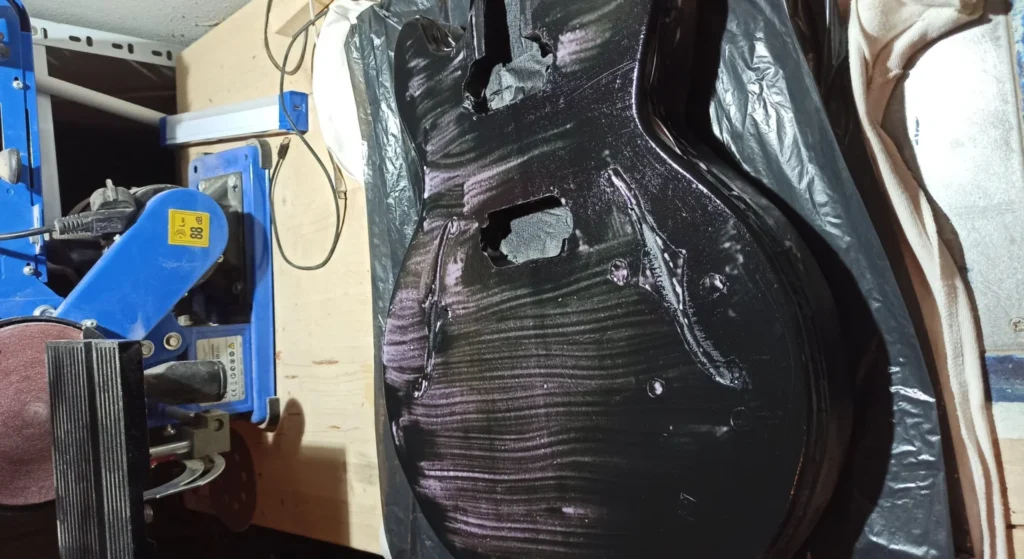
I don't know about you, but every time I pick up a guitar electric, it makes me think about how far we've come. I'm not just talking about mine, the one assembled in the garage with parts found online, which sometimes sounds better than it should. I'm talking about the history behind this incredible instrument.
It's a story made of brilliant intuitions, of trials and errors (how many I've made too, I assure you!), and of people who, in a garage, just like us, tried to solve a problem. The problem was simple: how do we make the guitar heard in the middle of an orchestra? Or in a noisy band?
What follows is not a boring documentary on the history of the electric guitar. It's more like a chat between friends, a journey through the seven stages that, in my opinion, truly changed the game. Every time something moved, a world of new sounds opened up. And I assure you, they're stories worth telling.
1. Electrified Acoustic Origins: When Volume Was Everything (1920s-1930s)



Even before the guitars we recognize today as “electric” existed, there was a problem: the guitar, especially in jazz ensembles and big bands, was literally drowned out. Wind instruments and drums were much more powerful. Guitarists desperately sought a way to be heard.
The idea of amplifying the guitar was not new, but the first solutions were rudimentary. Attempts were made to attach microphones to acoustic soundboxes, often with unsatisfactory results and a lot of unwanted noise. The real breakthrough came with electronics, particularly with the first experiments on magnetic pickups.
George Beauchamp, along with Adolph Rickenbacker and Paul Barth, was one of the true pioneers. In 1931, they developed the “Frying Pan”, an aluminum lap steel guitar with two “V” pickups that collected the vibrations of the metal strings. It wasn't a guitar played on the lap as today, but it was the first string instrument truly and effectively electronically amplified. The sound was still raw, but it was a start.
Then came 1932 and the birth of the Electro String Instrument Corporation (which later became Rickenbacker). Their first true electric guitar, the Electro Spanish, was equipped with the pickups designed by Beauchamp. It was a hollow body guitar, but with electronics that allowed it to be amplified. It was a huge step forward.
These early instruments were primarily designed for jazz and country musicians who needed more volume. The sound was still linked to that of acoustics, but with unprecedented projection and definition. The electric guitar was beginning to carve out its own space, no longer just as a rhythmic instrument, but as a potential solo instrument.
The basic idea was simple yet revolutionary: to transform the mechanical vibrations of the strings into an electrical signal, which an amplifier could then make audible. The first pickups were simple coils of wire wrapped around magnets. When the metal strings vibrated in the magnetic field, they generated a small electric current in the coils. It was pure magic for the time.
Think of the era: radio was becoming a mass medium, electricity was entering homes. The idea of amplifying a musical instrument followed this wave of technological progress. Musicians began to see in the electric guitar a possibility to express themselves with a new, more powerful and modern voice.
The History of the Electric Guitar: The 7 Key Milestones


Once we realized that magnetic pickups were the way to go, the next problem was feedback. You know that high-pitched, uncontrollable whistle when the guitar gets too close to the amplifier? In acoustic guitars with pickups, it was a nightmare. The soundboard would resonate and amplify the unwanted sound.
The solution? Eliminate the soundboard. Or at least minimize it. This is how the first "solid body" guitars were born. The idea was simple: if there's no soundboard to resonate, there's no feedback.
Charlie Christian and His Unmistakable Sound
Even before true solid bodies, Gibson had already made a significant breakthrough with the ES-150 in 1936. ES stood for “Electric Spanish,” and the 150 was the price in dollars. It featured a pickup designed by Walter Fuller, which became known as the “Charlie Christian pickup.”.
Charlie Christian, a phenomenal jazz guitarist, used this guitar, and his sound was instantly recognizable. It was warm, full, with a percussive attack but an incredible sweetness. For the first time, the electric guitar wasn't just an accompaniment, but a fully-fledged lead instrument. It was a semi-acoustic, however, and feedback was still a problem at high volumes.
Les Paul and “The Log”: The First True Solid Body Prototype
And this is where Les Paul enters the scene. A genius, an innovator, an amazing guitarist. Tired of the feedback and lack of sustain of semi-acoustic guitars, Les Paul set to work in his laboratory (which, guess what, was his garage!).
In 1941, he created “The Log”. He took a 4×4 piece of pine wood, mounted two homemade pickups on it, and then, to give it a more “normal” look, he sawed an Epiphone acoustic guitar in half and attached the two side wings to the central block. It looked like an acoustic guitar, but it was a solid body.
The result? Zero feedback, infinite sustain compared to electric acoustics, and a powerful sound. It was a rudimentary prototype, sure, but it proved the idea worked. Les Paul tried to pitch it to Gibson, but at the time they didn't grasp the scope of the innovation. "It sounds like a broom with a pickup attached," they told him. Ah, the unheard visionaries!
Paul Bigsby: Another Pioneer
While Les Paul was experimenting, another pioneer, Paul Bigsby, was working on something similar. Bigsby was a mechanic and engineer, and in 1948 he built a solid-body guitar for musician Merle Travis. It had a modern design, with a headstock that mirrored the body shape, and a single, powerful pickup. Bigsby's guitar is considered by many to be the first true solid-body electric guitar ever produced.
These first experiments with solid bodies and powerful magnetic pickups opened the doors to a new world. They demonstrated that the guitar could be a versatile instrument, capable of keeping pace with the evolutions of music. The sound was becoming more defined, more controllable, and above all, louder. The idea of a solid body, without a resonant soundbox, would forever change the timbre and possibilities of the electric guitar, paving the way for more aggressive sounds and unprecedented sustain.
3. The Fender Revolution: The Massive Solid Body (1950s)
If Les Paul and Bigsby had shown the way, it was Leo Fender who transformed the solid-body guitar from a laboratory curiosity to an accessible, reliable, mass-produced instrument. Leo wasn't a guitarist, but an electronics engineer and radio repairman. He had a brilliant intuition: the guitar had to be easy to build, repair, and modify.
The Birth of the Broadcaster (later Telecaster)
In 1950, Leo Fender launched the Broadcaster (which soon had to be renamed Telecaster due to a trademark already registered by Gretsch). It was a simple, almost Spartan guitar. Two single coils, a solid wood body, and a bolt-on neck.
The screwed handle, or bolt-on neck, It was a revolutionary choice. It wasn't glued to the body like a Gibson, but fixed with screws. This made construction simpler, costs lower, and repairs (like replacing a broken neck) a breeze. How many of us have disassembled and reassembled a Fender neck? It's a job you can do in the garage without any problems. If you're curious to see how it can be done modify a guitar, take a look here.
The Telecaster's sound was bright, twangy, with a precise attack. Perfect for country, blues, and rock.’
‘'roll that was emerging. It was a battle-ready instrument, sturdy and reliable. And it was inexpensive, making it accessible to many emerging musicians.
The Telecaster was designed to be practical. The ash or alder body, the maple neck, everything was designed for mass production and ease of maintenance. Even the single coil pickups, although noisy, had a clear and sharp sound that made it unique. It was the people's guitar, the instrument that would accompany the birth of many musical genres.
The Stratocaster: The Definitive Icon
But Leo didn't stop there. In 1954, he introduced the Stratocaster. This was another story. Three single coils, a larger headstock, a body contoured for greater ergonomics, and most importantly, a tremolo system called "Synchronized Tremolo.".
The tremolo allowed the player to vary the pitch of the strings, creating previously unthinkable vibrato effects. The three pickups, with their three-way selector switch (which musicians quickly changed to five for more sound options), offered incredible versatility.
The Stratocaster's sound was crystalline, almost ethereal, but it could also scratch. It was perfect for surf rock, bluesmen, and rockers. From Jimi Hendrix to Eric Clapton, David Gilmour to John Frusciante, the Stratocaster became an icon. Its modularity and ease of customization made it the queen of DIY modifications. I've seen Stratocasters with every type of pickup, bridge, and electronics. It's a veritable playground for those who love to tinker.
The Stratocaster represented a leap in quality in ergonomic and functional design. Its curves, balanced weight, vibrato, and three pickups with their sound combinations made it an incredibly versatile instrument. It was the definitive guitar for many, capable of adapting to almost any genre and style. Its influence is so profound that even today, countless manufacturers try to replicate its sound and feel.
Fender's lesson was clear: simple construction, modularity, and intelligent design can create instruments that define an era. Its guitars weren't just musical instruments, they were platforms for creative expression, open to endless interpretations.
4. Gibson and the Humbucker: A Bigger Sound (Late '50s)
While Fender dominated with its brilliant single-coils, Gibson, its historic rival, had a problem: single-coils were noisy. A background hum at 60 Hz (or 50 Hz, depending on the power supply) was an inherent characteristic of these pickups. In the recording studio or on brightly lit stages, it could be annoying.
Seth Lover and the Humbucker Solution
Enter Seth Lover, a Gibson engineer. His mission: eliminate hum. And he succeeded with a brilliant idea, patented in 1955 and marketed in 1957: the humbucker pickup.
The name itself, "humbucker," means "hum canceler." How does it work? Instead of a single coil, the humbucker uses two, side by side and wired in counterphase. The two coils are wound in opposite directions, and the magnets are polarized oppositely. When an external electrical signal (hum) passes through them, it is canceled because the two coils detect it in counterphase. However, the string signal, generated by the movement of the strings themselves on both sets of magnets, is summed and amplified.
The result wasn't just a silent pickup. The humbucker produced a thicker, warmer sound, with higher output and greater sustain than single-coils. It was perfect for rock, aggressive blues, and guitarists looking for a fatter sound.
This pickup radically changed the sound of the electric guitar. Gibson's P90 pickups, despite having great character, suffered from background noise. The humbucker, with its clarity and power, opened the doors to heavier and more distorted genres. The sound became more defined even with high levels of gain, allowing guitarists to explore new sonic frontiers.
The Impact on the Les Paul, ES-335, and Other Icons
Gibson began mounting humbuckers on its flagship guitars. The Les Paul, which had been introduced in 1952 with P90 pickups (thicker single coils), found its definitive voice with humbuckers. The “PAF” (Patent Applied For), Gibson's first humbucker, is still one of the most sought-after and copied pickups today. That combination of mahogany body, maple top, and two humbuckers created a monster of sustain and tone.
In 1958, Gibson also introduced the ES-335, a semi-acoustic thinline with a mahogany center block. This block combined the resonance of a semi-acoustic with the feedback resistance of a solid body. And with humbuckers, the ES-335 became another legend, beloved by blues and rock guitarists for its versatility and rich sound.
The Les Paul with humbuckers became synonymous with rock’
‘powerful roll. Its warm, full-bodied sound, with an almost infinite sustain, was perfect for powerful riffs and expressive solos. The combination of woods (mahogany for the body, maple for the top) and the electronics contributed to creating a timbre rich in harmonics. From the 1950s onwards, the Les Paul became one of the most desired and influential instruments in the history of popular music.
The humbucker wasn't just a solution to a technical problem; it was a new sonic palette. It allowed guitarists to explore more aggressive, more powerful territory. If Fender single-coils were the crystalline voice, Gibson humbuckers were the punch in the gut. And the great thing is, they have always balanced each other, creating a rich soundscape for us enthusiasts.
5. The Era of Semi-Acoustics and Rock Guitars’
‘'Roll (1950s-1960s)
While Fender and Gibson were carving up the solid body and humbucker market, there were other players who were defining the sound of emerging genres, especially rock.’
‘'roll, surf, and beat. I'm talking about brands like Gretsch and Rickenbacker, which have left an indelible mark with their semi-acoustics and unique designs.
Gretsch: The Twangy Sound of Rockabilly
Gretsch guitars were already popular in the 1950s, especially among country and rockabilly guitarists. They were semi-acoustic, often with large bodies and bright finishes. With pickups like the DeArmond Dynasonic or, later, the Filter'Tron (a thinner, brighter type of humbucker), Gretsch guitars had a distinctive sound: a pronounced, bright twang with natural compression.
Think of guitarists like Chet Atkins or Eddie Cochran. Their unmistakable sound is closely linked to Gretsch. These guitars had a strong character, often equipped with a Bigsby vibrato (yes, the same Bigsby who made the first solid body), which added a touch of elegance and surf to the music.
Gretsch guitars, with their hollow bodies and specific pickups, offered a particular sound: a cross between acoustic and electric, with a resonance and attack that made them ideal for fast and rhythmic genres. Their flashy look made them perfect for an era where image mattered as much as music. The Gretsch 6120, Eddie Cochran's guitar, is a perfect example of this combination of sound and style.
Rickenbacker: The Sound of the British Invasion
Rickenbacker, after their pioneering “Frying Pan” models, continued to innovate. In the 1960s, their semi-acoustic guitars, often with smaller bodies and ’Toaster“ or ”Hi-gain“ pickups (single coils with a bright, defined sound), became the emblem of the British Invasion.
The Beatles, especially John Lennon and George Harrison, were heavy users of Rickenbackers. The crystalline, almost jingle-jangle sound of the 325 and 360/12-strings (George Harrison's 12-string is legendary) defined the sound of an entire generation. That sound is still a reference today for those seeking a bright, harmonic-rich tone.
Rickenbackers were elegant instruments, with a futuristic design for the’ era. They were light, comfortable and had an unmistakable aesthetic. And like Gretsch, they were different from the usual Gibson and Fender, offering musicians a stylistic and sonic alternative. The Rickenbacker 330/12, with its double strings, created a choral and shimmering effect that became the hallmark of many songs by the Beatles and other British Invasion bands.
This phase reminds us that variety is the spice of music. There weren't just two giants dictating the rules. There were companies with their own vision, which helped shape musical genres and inspire millions of guitarists with unique and recognizable sounds. The introduction of specific pickups, such as Gretsch's Filter’Tron or Rickenbacker's Toaster, greatly expanded the sonic palette available to guitarists, demonstrating that each brand could have its own well-defined sonic identity.
6. Psychedelia and Hard Rock: Effects and Sustain (1960s-1970s)
The '60s and '70s were an explosion of creativity, and the electric guitar was at the center of it all. With the advent of psychedelia and then hard rock, guitarists were no longer satisfied with the "clean" or slightly distorted sound of tube amplifiers. They wanted more: more sustain, more distortion, spatial effects.
The Explosion of Effect Pedals
This is the period when effect pedals became an integral part of the guitarist's arsenal.
- Fuzz: The first effect to become popular, the fuzz, produced extreme, almost broken distortion. The Maestro Fuzz-Tone, used by Keith Richards for the riff in "(I Can't Get No) Satisfaction," is an iconic example. The Big Muff, the Fuzz Face, the Tone Bender… each fuzz had its own personality and opened up new sonic possibilities.
- Wah: The wah-wah pedal, which allowed the guitar to "talk" to you, became a staple of psychedelia and funk. Jimi Hendrix used it to create vocal and psychedelic sounds, turning the guitar into an extension of his voice.
- Overdrive: Then came overdrives, which simulated the distortion of a tube amp cranked to the max, but at more controllable volumes. The Tube Screamer, though later, is the perfect example of how a pedal can define a genre.
These pedals weren't just "accessories." They were real tools that allowed guitarists to sculpt their sound in ways previously unthinkable. When I first started, I spent hours experimenting with different pedal combinations, trying to recreate that particular sound I heard on records. It's a never-ending treasure hunt!
The introduction of effects like fuzz, wah-wah, and phaser has allowed guitarists to manipulate the guitar sound in radical ways. Fuzz, in particular, gave birth to the sound of hard rock and proto-metal, creating aggressive distortions and prolonged sustain. The wah-wah, with its ability to modulate frequencies, gave the guitar an expressive and almost human voice, making it perfect for virtuous solos and psychedelic moments.
Sustain and Volume: The New Needs
With hard rock, volume and sustain became crucial. Guitarists wanted notes that lasted a long time, that could be bent and shaped without dying immediately. This led to:
- More powerful amplifiers: Marshall, Vox, Hiwatt, all pushed the envelope to give guitarists the power to fill stadiums and shake the walls.
- Guitars with multiple outputs: Even though humbuckers were already powerful, guitarists were looking for even “hotter” pickups to saturate their amplifiers.
- New guitar shapes: Gibson responded with models like the SG, Flying V, and Explorer. Ergonomic, lightweight, and boasting remarkable sustain thanks to their humbuckers, they became icons of hard rock and nascent metal. The SG, in particular, with its easy access to the upper frets, was perfect for virtuosity.
Hard rock required instruments capable of handling high volumes and heavy distortions. More powerful amplifiers, often based on EL34 tubes and designed to provide a saturated and dynamic sound, became the standard. This also influenced guitar design, with more powerful pickups and mahogany bodies providing excellent natural sustain. The SG, with its thin body and double cutaway, offered unprecedented access to the higher frets, ideal for fast and technical solos. Its lightweight nature and powerful sound made it a preferred choice for many rockers.
This phase demonstrated that the electric guitar was a living, breathing instrument, constantly evolving, and that musicians were ready to push the limits of its sound. It was the period when the guitar began to scream, cry, and soar, thanks to a combination of innovative instruments and creative minds.
7. Continuous Innovation and Modernity (1980s to Today)
From the 1980s onwards, the history of the electric guitar It hasn't stopped, on the contrary. Innovation has continued to push forward, often in unexpected directions. The desire for greater control, greater versatility, and, at times, simply more aggression, has led to new milestones.
Floyd Rose and the “Superstrats”
The '80s were the era of guitar virtuosity and shredding. For guitarists who wanted to play extreme dive bombs and wild vibratos without losing their tune, the Floyd Rose tremolo system was a revolution. With its double locking system (at the nut and bridge), it ensured stable tuning even after the wildest acrobatics.
This bridge gave birth to a new type of guitar: the "Superstrat." These were guitars inspired by the Stratocaster but with thinner bodies, faster necks (often with flat fingerboards and jumbo frets), powerful humbucking pickups (often in HSS or HH configurations), and, of course, the Floyd Rose. Ibanez, Jackson, and Charvel became the go-to brands for these sonic war machines.
Superstrats were designed for speed and extreme performance. The thinner and flatter neck, the flatter fretboard radius, the jumbo frets, everything was designed to facilitate the execution of fast and complex passages. The Floyd Rose, despite being a nightmare for some when changing strings, offered unparalleled tuning stability, essential for those who used the vibrato in an extreme way. High-output humbucker pickups provided the necessary power for genres like heavy metal and hard rock.
Active Pickups and Other Electronics
Around the same time, active pickups like EMGs became popular, especially in metal. Unlike passive pickups (which generate a signal directly from the vibrations of the strings), active pickups have a built-in preamp powered by a 9V battery. This allows for much higher output, a more compressed and quieter sound, and a more controlled frequency response.
This opened up new possibilities for ultra-distorted and defined sounds, perfect for genres like thrash metal and death metal. While not for everyone (many prefer the warmth and dynamics of passive pickups), active pickups certainly have their place in guitar history.
Active pickups, such as EMG 81/85 or Seymour Duncan Blackouts, offer a more “tight” and defined sound, with less background noise and a greater ability to cut through the mix. They are ideal for genres that require precision and power, where the sound of the strings must be clear even with extreme distortions. The need for a battery has introduced an additional element in maintenance, but for many guitarists, the compromise is worth it for the sound achieved.
The Advent of Digital and Modeling
The last few decades have seen the explosion of digital technology. From the first amp and effects simulations, we've arrived at multi-effects processors and amp models so sophisticated they faithfully replicate the sound of hundreds of vintage amps and pedals. Line 6, Fractal Audio, Kemper, Neural DSP: these names have become familiar to many guitarists.
This has democratized access to a wide range of sounds, allowing anyone to have a dream virtual rig without spending a fortune on physical amps and pedals. Sure, some still prefer the warmth and tactile response of tubes, but digital has changed the way many guitarists approach sound.
Modeling amplifiers and digital processors have made an enormous library of sounds accessible. The ability to have simulations of classic amplifiers, vintage pedals, and different microphone and room configurations, all in a single device, has revolutionized the way of playing live and in the studio. Although the debate between analog and digital is still ongoing, the impact of this technology on modern music is undeniable.
The Return to Vintage and DIY
Along with all this innovation, there's also been a strong return to vintage. Many guitarists still seek the sound and feel of guitars from the '50s and '60s. This has led to a boom in reissues, replicas, and a market for "relics" (artificially aged guitars).
And then there's the DIY world, our world. With the availability of kits, replacement parts, and tons of information online, building or modifying a guitar has become more accessible than ever. We can take the best of each era, mix it up, experiment, and create our own unique instrument. This is the very essence of the electric guitar: an instrument born of innovation and the desire to never settle.
The trend towards “vintage” and “boutique” has led many to rediscover the charm of original instruments or their faithful replicas. At the same time, the “Do It Yourself” (DIY) culture has flourished. The availability of high-quality components, wiring diagrams, and online tutorials has made it possible for anyone, with a bit of patience and manual skill, to build or modify their own guitar, creating unique instruments that reflect their personality and sound needs. This spirit of personalization is perhaps the most important legacy in the entire history of the electric guitar.
Conclusions: A Story Without End
We started from an acoustic guitar that was unlistenable in an orchestra and arrived at instruments that can replicate any imaginable sound. history of the electric guitar It is a testament to ingenuity, passion, and a constant search for the perfect sound (which, obviously, doesn't exist, because everyone has their own!).
Every milestone, every innovation, every mistake made by the pioneers (and by us in the garage!) has helped shape the instrument we love. And the best part is that this story isn't over. There's always someone, somewhere, trying something new, soldering a different circuit, milling a body with a never-before-seen shape.
So, the next time you pick up your guitar, think about all this. Think about George Beauchamp, Les Paul, Leo Fender, Seth Lover, and all those who made possible that sound we love so much. And then, don't be afraid to experiment. Who knows, maybe you'll write the next key stage in history, in your garage.
Frequently Asked Questions about the History of the Electric Guitar
When was the first electric guitar invented?
The first commercially produced electric guitar is considered the “Frying Pan” by Rickenbacker, introduced in 1932. However, the true evolution towards the guitars we know today, with solid bodies and more powerful pickups, occurred in the 1940s and 1950s.
What was the most important innovation in the history of the electric guitar?
It's difficult to choose just one, but the invention of the magnetic pickup made amplification possible, while the development of solid body guitars eliminated feedback and paved the way for new sounds and higher volumes. The humbucker, with its ability to reduce noise and provide a fuller sound, was also a fundamental step.
External sources and further information:For those who want to delve deeper into history, I recommend checking out the website of the Metropolitan Museum of Art in New York, which has a very interesting section on the history of musical instruments, including the electric guitar and its development. You can start here: The Metropolitan Museum of Art – The Electric Guitar.
Download the Luthier Survival Kit
Free PDF with checklist, problem-cause table and project card template.
 English
  Italiano
Stuck on your build?
If you ran into the same problem or have a question, drop it in the comments. I read and reply to every one.
Write a comment