

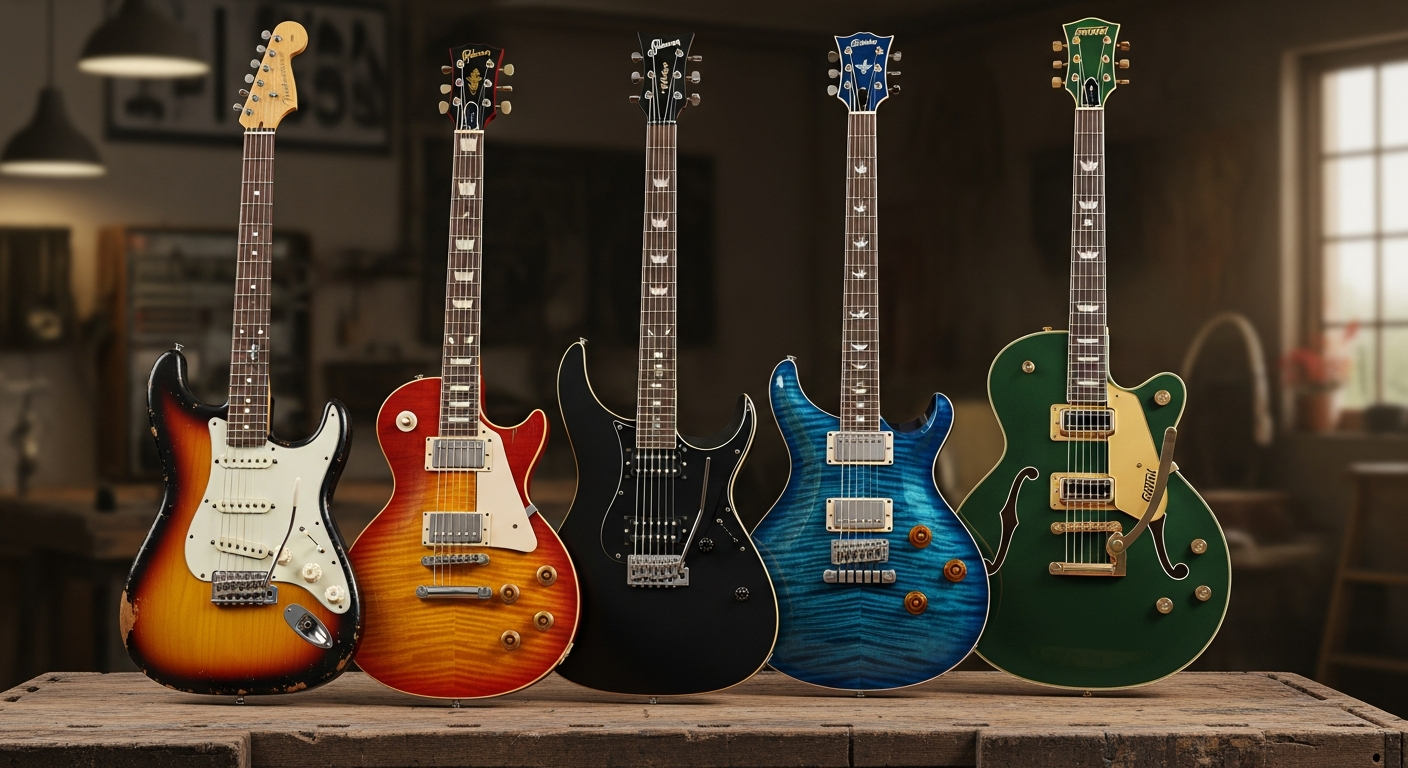
Bolt On vs Set Neck Guitar: Comparison
When approaching the world of lutherie electric, or even just when you're about to buy a new guitar, one of the first things that catches the eye (and sparks endless debates on forums) is the type of neck-to-body joint. We're talking about bolt-on neck (bolt-on) and set-neck (set-neck). It seems like a minor thing, a technical detail, but I assure you it has significant implications, both for the sound, for practicality, and for your wallet.I, who have disassembled, reassembled, built, and even broken guitars in my garage, have dealt with both systems. I've bought cheap necks that didn't fit the pocket, glued necks with too much glue, got angles wrong, and had to redo everything. In short, I've been through it, and I'll tell you right away that there's no absolute 'best'. There's what's most suitable for you, your project, your playing style, and, not least, your budget.
In this comparison between bolt on vs set neck guitar, I don't want to give you the usual theoretical spiel. I want to make you understand the practical differences, the ones that matter when you have a soldering iron in your hand or sandpaper on wood. We'll see what really changes, what enthusiasts say, and above all, what it means for those of us who love to get our hands dirty.
What is a Bolt-On Neck?
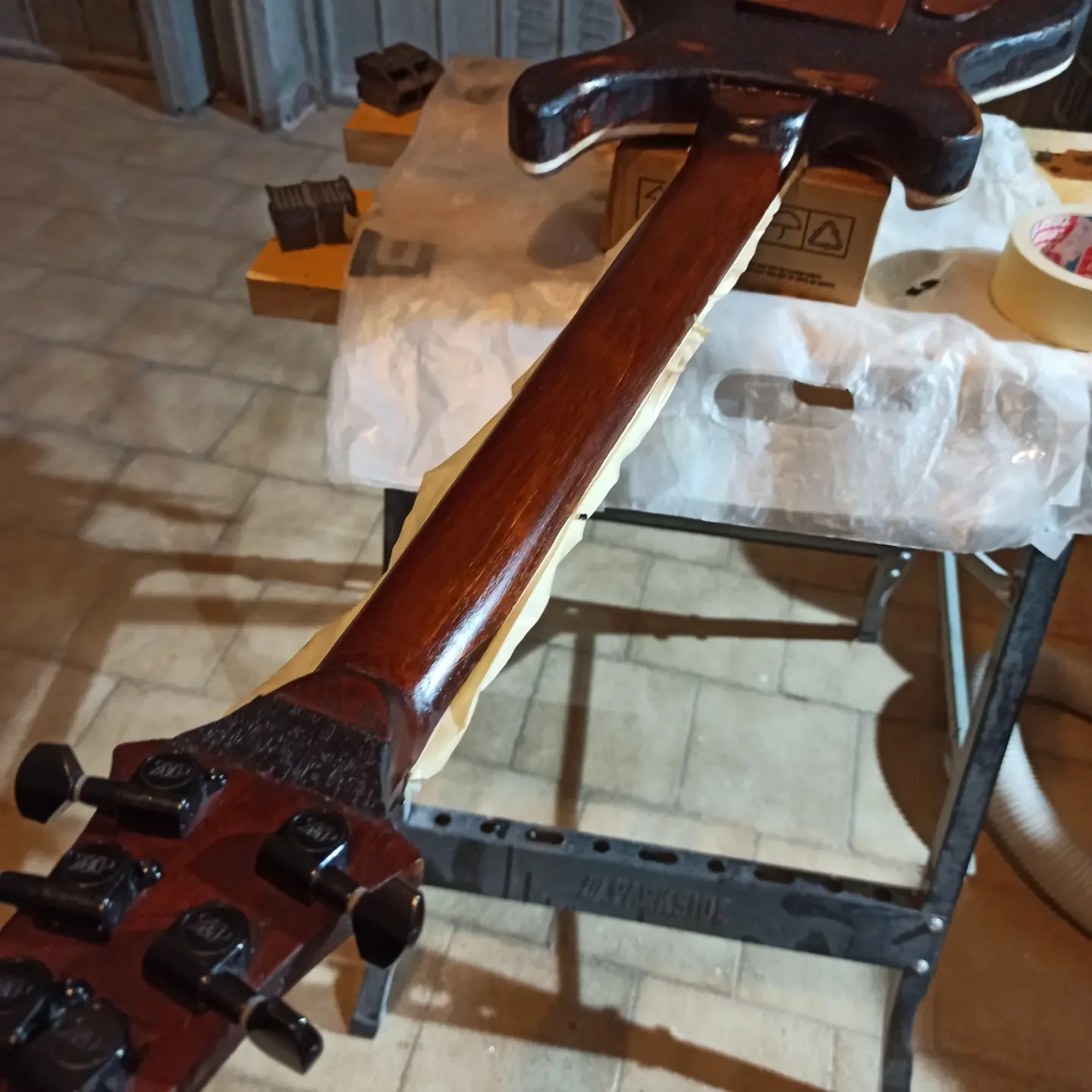
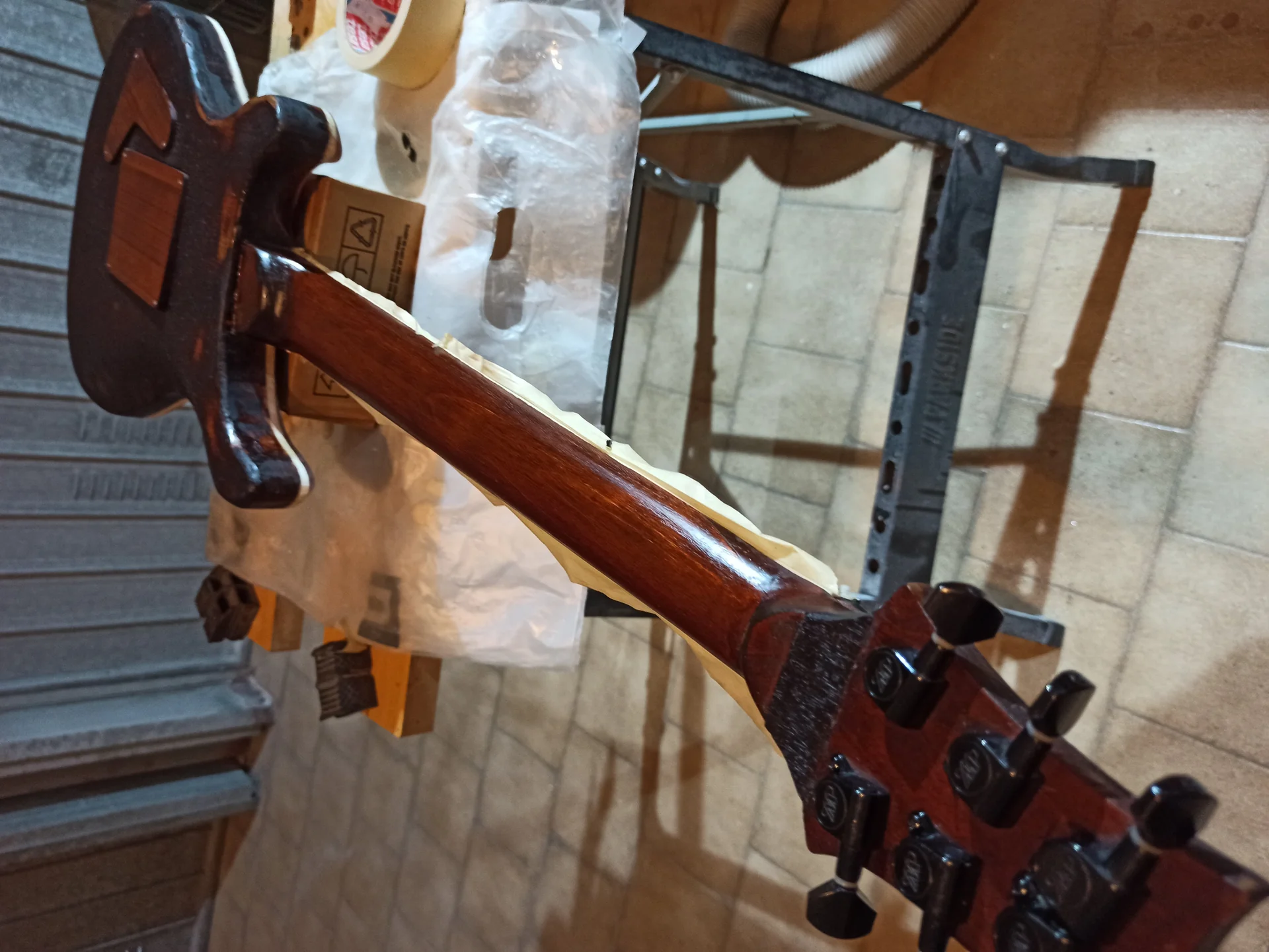
On the other side of the ring, we have the set-neck, or glued. Here the philosophy is different. The neck is not bolted, but glued directly to the body. Tradition holds that this method is more 'noble', more artisanal.
The most striking example is the Gibson Les Paul. Here the neck has an end part, called tenon, which fits into a corresponding cavity in the body, the mortise. Once inserted, the whole thing is glued with a powerful adhesive, such as hide glue or epoxy glues. The result is a single block, or almost.
This system requires greater precision from the start. You can't unscrew and reposition. Once glued, it's there. Often, in set-neck models, the neck is not parallel to the body but forms a slight angle (the neck angle). This allows for a low action with a higher bridge, like the Tune-o-matic, typical of Gibson. It's an elegant solution, but it adds complexity to the construction. And, as I learned the hard way, getting the angle wrong means having to unglue, clean, and start over. Not exactly a five-minute job.
Is There Also the Neck-Through (Through the Body)?
Just for completeness, and because you never know if you might go crazy and try it, there's also a third type of construction: the neck-through (neck through body). In this case, the neck does not stop at the joint, but passes through the entire body of the guitar, from the headstock to the strap pin. The body 'wings' (the body wings) are glued to the sides of this central neck.

Think of certain BC Rich, Jackson, or Rickenbacker models. The idea is to maximize resonance and sustain, given that the neck wood is continuous with the bridge. It's a complex construction, much more difficult to achieve in a garage without specific tools, but the aesthetic and functional result can be remarkable. For now, however, let's focus on our two main contenders.
Technical Specifications Compared (Generic)
Understanding the differences between bolt on vs set neck guitar is not just a matter of how the pieces are attached. Often, these two construction approaches bring with them an entire package of characteristics that define the instrument's character. Here's an overview of the typical specifications you might find in guitars with these joints, keeping in mind that these are generalizations and there are always exceptions.Guitar with Bolt-On Neck (Typical example: Stratocaster/Telecaster-style)
These guitars are often designed for versatility and ease of production, which is reflected in their specifications. Body wood: Typically light and resonant. The most common are theAlder (Alder), the Ash (Ash, especially Swamp Ash), or the Poplar (Poplar). These woods contribute to a bright sound with good attack.Handle wood: Almost always Maple (Maple), which offers stability and a bright sound.
Fretboard wood: It can be Maple (Maple) for a snappier and brighter sound, Rosewood (Rosewood) for a warmer and softer tone, or Pau Ferro, an alternative to rosewood.
Handle type: Often, thinner and faster profiles are found, such as the “Modern C” or the “D”. They are designed for playability and for those looking for a comfortable grip across the entire fretboard.
Pick-up: Generally Single Coil, like the iconic ones on Stratocasters (with their crystalline and “twangy” sound) or the specific pickups on Telecasters. However, HSS configurations (Humbucker at the bridge, Single Coil in the middle and at the neck) or HH for those seeking more power are also available.
Stairs: Most bolt-on guitars, especially those inspired by Fender, have a scale of 25.5 inches (648mm). This longer scale contributes to greater string tension and a brighter, more defined sound.
Hardware: Bridge: Very common is the synchronized tremolo (like on Strats), which allows for vibrato effects. Or, for Telecasters, a fixed bridge with individual saddles or three brass saddles.
Mechanics: They can be vintage-style (with the hole on the headstock for winding the string) or modern (with locking or more precise gears).
Finish: Often polyurethane, which is durable and offers good protection. Nitrocellulose is rarely found on budget models, but it is present on replicas or high-end models.
Relevant construction notes: The precision of the neck pocket is crucial. A tight, play-free coupling is fundamental for vibration transmission. The possibility of adjusting the action via shims in the pocket is an option for DIY luthiers.
Guitar with Set-Neck (Typical example: Les Paul-style)
These guitars are often associated with a fuller sound and a more traditional and “premium” construction. Body wood: Often Mahogany (Mahogany), known for its warm, resonant sound, with good sustain. Many models also have a top made of Maple (Maple), sometimes figured (flamed or quilted), which adds brightness and attack to the tone.Handle wood: Almost always Mahogany (Mahogany), in continuity with the body for tonal homogeneity.
Fretboard wood: Typically Rosewood (Rosewood) or Ebony, both dense woods that contribute to a defined attack and prolonged sustain. Ebony, in particular, is very hard and smooth.
Handle type: Often thicker and “chunky” profiles compared to bolt-ons, like “50s” or “60s” necks. They offer a more “full” feeling in hand.
Pick-up: Almost exclusively Humbucker, known for their high output, full-bodied sound, and ability to reduce background noise (hum). Ideal for rock, blues, metal.
Stairs: The shorter scale, typically 24.75 inches (628mm), is a trademark. It contributes to lower string tension, making bends easier and giving a warmer, less “snappy” sound.
Hardware: Bridge: The Tune-o-matic with Stopbar tailpiece is the standard. It allows for precise adjustment of intonation and action.
Mechanics: Often Grover or Kluson type, which ensure tuning stability.
Finish: Traditionally nitrocellulose, which allows the wood to “breathe” and age characteristically. Today, on less expensive models, polyurethane is also found.
Relevant construction notes: The gluing of the tenon In the mortise must be impeccable. A good neck angle is fundamental for the correct setup with the Tune-o-matic bridge. Repairs in case of neck breakage are much more complex and expensive.
As you can see, it's not just a matter of screws or glue. These two constructive philosophies have shaped entire families of instruments, each with its own sonic and functional peculiarities. And for those who enjoy DIY, these differences translate into different challenges and opportunities.
The Great Debate: Sound and Sustain
Ah, sustain! If there's one topic that makes guitar enthusiasts argue more than any other, it's this one. “The glued neck has more sustain!” one shouts. “But no, the bolt-on is brighter and sharper!” retorts the other. And I, who have spent hours trying, disassembling, and reassembling, have a good laugh.The legend of sustain
The theory behind the greater sustain of the glued neck is quite intuitive: a single block of wood, without mechanical interruptions like screws or plates, should transmit vibrations better. Less “dispersion” of energy, more resonance propagating from the neck to the body and vice versa. This should result in notes that last longer, with a slower decay. For genres like rock, metal, or blues with long, lyrical notes, generous sustain is often desired.The reality of the garage
Now, let's get to practice. In my hands, with my garage-assembled guitars, I tell you that the difference in sustain between a good bolt on guitar and a good set neck guitar is often minimal, if not entirely imperceptible. And, when it is there, it is almost always influenced by other much more important factors. Wood quality: A good piece of resonant mahogany on a Les Paul will make a difference, as will good alder on a Strat. If the wood is dead, no glue or screw will hold it.Hardware quality: A massive bridge well-coupled to the body, well-made saddles, stable tuners… all this contributes enormously to sustain and vibration transmission.
Pick-up: The type of pickup and its height can influence the perception of sustain. A humbucker with high output can make the guitar seem to have more sustain than a single coil, even if it's not intrinsically true for the construction.
Setup: An impeccable setup, with the right action, perfect intonation, and new strings, will make any guitar sound good, regardless of the neck joint type.
Musician's technique: Let's never underestimate this aspect. A good guitarist can get sustain out of a broomstick. The right hand, vibrato, feedback control… everything counts.
I've had Stratocaster bolt-ons in my hands that resonated for minutes, and Les Paul set-necks that, due to poor wood or hasty gluing, died in an instant. So, yes, theory is nice, but practice is another thing. Don't be fooled by myths.
The resonance
The key point is not so much “screws vs glue”, but rather the quality of the coupling. For the bolt-on: a neck pocket milled with millimeter precision, where the neck fits without the slightest play, is fundamental. The screws must pull strongly and uniformly. This creates a solid wood-to-wood contact that effectively transmits vibrations. If there is play, vibrations disperse and the sound suffers.For the set-neck: the gluing must be perfect. There must be no air gaps between tenon and mortise, and the glue must be applied uniformly. A “cold” or poorly done gluing can create dead spots that absorb vibrations.
In both cases, the goal is the same: to create a unit as solid and resonant as possible. The difference is in how as this goal is achieved. And for us who get our hands dirty, this “how” has very different practical implications.
Practicality and Maintenance for DIY
Here, the difference between bolt on vs set neck guitar is no longer a matter of sound perceptions, but of the raw, hard reality of the workbench. And I tell you right away that, for those like me who love to tinker, one type of joint has an overwhelming advantage.Replacement and repair
This is the field where the bolt-on wins hands down, no discussion. Bolt-on neck: Did you break the headstock? Is the truss rod stuck? Do you want to try a neck with a different profile, or maybe a maple fretboard instead of rosewood? No problem. Grab a screwdriver, unscrew the four screws, remove the old neck, and put on a new one. Easy, fast, economical. I've changed necks on Telecaster and Stratocaster more times than I can remember, sometimes just to try a different feel. It's a blessing for those who do guitar modifications or for those on a limited budget who prefer to repair it themselves.Glued neck: Here the story changes radically. If you break the neck of a set-neck guitar, especially at the headstock (a classic Gibson issue), you're in trouble. The repair is complex, requires specific tools, a lot of patience, and some experience. Often you have to unglue the neck, which is a very delicate operation that can damage the body. And if the break is severe, the cost of repair by a professional luthier can exceed the value of the instrument, especially if it's an inexpensive guitar.
So, if you're the type who loves to experiment or who wants maximum peace of mind in case of an accident, the bolt-on is the most practical and forgiving choice.
Action and neck angle adjustment
Here too there are differences. Bolt-on: The neck angle relative to the body is, basically, fixed. If you need to lower the action and can't do it by acting only on the bridge, you can insert some shims (shims) in the neck pocket. They are small strips of wood, plastic, or metal that are placed under the neck heel to tilt it slightly. It's a common practice and, if done well, very effective. I've solved action problems on many guitars this way.Set-neck: If a set-neck guitar was glued with the correct neck angle from the beginning, there are usually no problems. If the angle is wrong, or if the neck moves (rare but possible with poor gluing), the situation is much more complicated. You cannot add shims and the modification requires significant structural intervention.
Fretting and refretting
This is a job that sooner or later everyone has to do, if they play a lot. Removable neck (bolt-on): Working on the fretboard of a bolt-on neck is much more convenient. You can detach it from the body, place it in a specific jig on the workbench, and work on the frets with much more freedom, without the guitar body getting in the way.Glued neck (set-neck): For the refretting of a set-neck, you have to work with the neck attached to the body. This means having a more cumbersome instrument to handle, and you have to be careful not to damage the body's finish while working on the fretboard. It's feasible, of course, but less convenient.
Modifications and customization
For those, like us at biafax.it, who live for modifications and customizations, the bolt-on is king. Do you want to try a flamed maple neck with an ebony fretboard on a guitar that originally came with rosewood? With a bolt-on, it can be done.Do you want to completely change the neck profile? Take a raw neck, work it as you wish, and mount it.
For a set-neck, any radical modification to the neck is a titanic undertaking that is often not worth the effort.
In short, if you like to get your hands dirty, experiment, and have the possibility to fix mistakes without destroying the instrument, the bolt-on neck is your best friend. It forgives you, teaches you, and allows you to dare.
Popular Sentiment: What Does the Community Say?
The world of guitars is full of opinions, myths, and legends. And the debate on bolt on vs set neck guitar is no exception. Listening to forums, shop talk, and discussions among friends, some popular sentiments can be identifiedSee also
Download the Luthier Survival Kit
Free PDF with checklist, problem-cause table and project card template.
 English
  Italiano
Stuck on your build?
If you ran into the same problem or have a question, drop it in the comments. I read and reply to every one.
Write a comment