

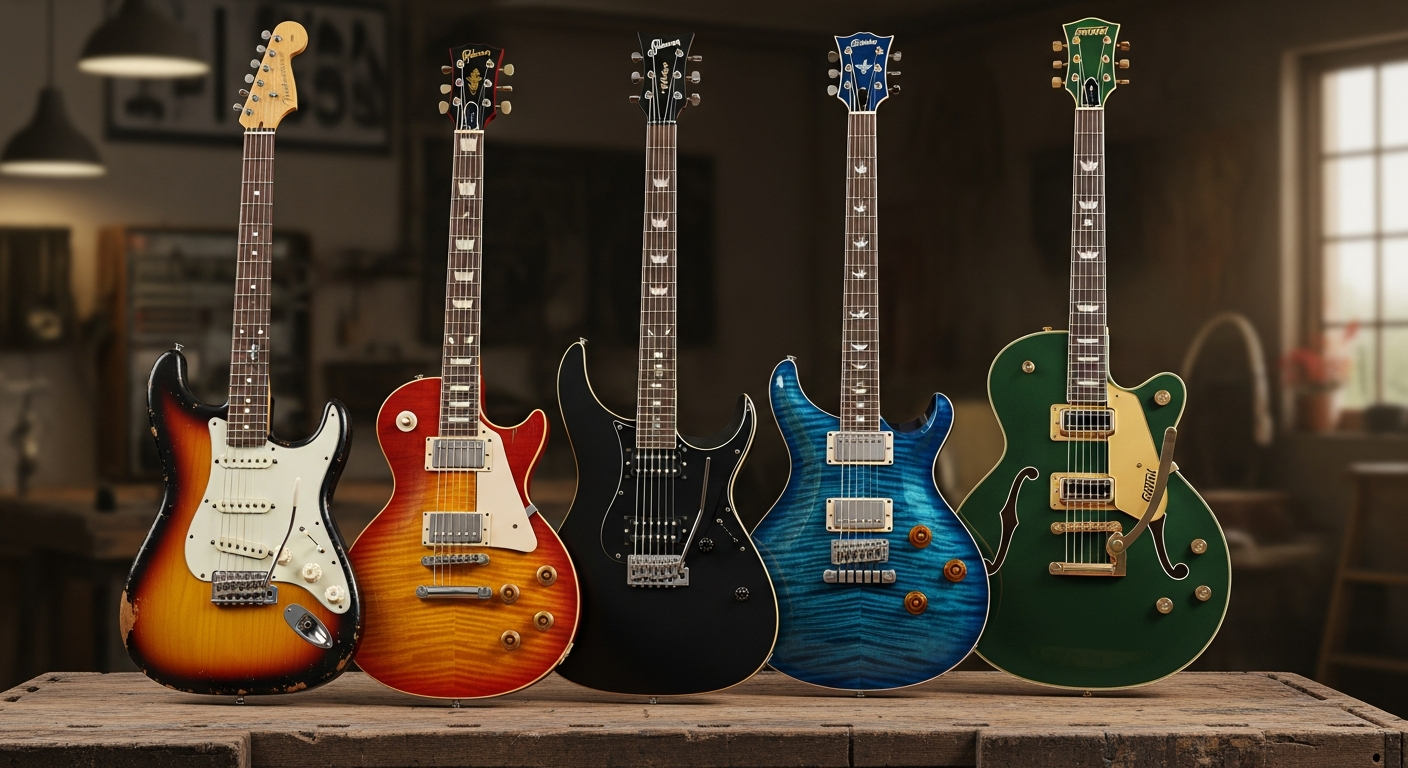
Acoustic guitars electrified: The 5 best quality/price
So, guys, let's be clear: finding a good electrified acoustic guitar that doesn't empty your wallet is a bit like looking for a needle in a haystack, or at least that's how it seems at first. When I started tinkering with my first guitars, I remember that the jump from pure acoustic to something that could come out of the amplifier decently seemed like a leap in the dark. And often, an expense I couldn't afford. I made my mistakes, I bought things that looked fantastic on paper but then made you cry live, and I learned the hard way that a high price doesn't necessarily mean quality, and vice versa.The idea is precisely this: you don't necessarily have to mortgage your house to have an instrument that sounds good both unplugged and amplified. This article is not a scientific laboratory ranking, but rather a series of insights based on what I've seen around, what other guitarists say (the real ones, not paid influencers) and, of course, on my experience as someone who has spent hours disassembling, reassembling, and figuring out how to make things work best, perhaps with two tools and a lot of patience.
If you're looking for a guitar for pub nights, to record some demos, or simply for more versatility, and you don't want to spend a fortune, you're in the right place. I've selected five models that, in my opinion and the popular sentiment vibe among enthusiasts and budget-conscious buyers, offer an excellent compromise between quality and price. They're not perfect, no guitar is, but they are honest and do their job.
Before we dive into the models, however, let's take a moment to review what to look for when evaluating one of these guitars with preamplifier. It's not just the wood that matters, but also the electronics, playability, and how the whole package performs when you connect it to an amp.
What to look for in a good electrified acoustic (without spending a fortune)
Here's a rundown of instruments that, in my experience and widespread opinion, are worth every penny spent. Don't expect perfection, but reliability and good sound, both at home and on stage.
1. Yamaha FGX800C
Advertising

Guyker Guitar Locking Tuners (6 for Right) - 1:18 Lock String Tuning Key Pegs Machine Head with Hexagonal Handle Replacement for ST TL SG LP Style Electric, Folk or Acoustic Guitars - Chrome
See on Amazon

Technical features
- Body: Dreadnought with cutaway.
- Top: Solid Sitka Spruce.
- Sides and Back: Laminated Nato/Okoume.
- Handle: Nato, with comfortable profile.
- Keyboard: Rosewood or Walnut, 20 frets.
- Stairs: 25″ (634 mm).
- Pick-up: Yamaha System 66 with piezo undersaddle pickup.
- Preamplifier: Volume controls, 3-band EQ (Low, Mid, High), Mid-Frequency (adjustable), built-in tuner.
- Hardware: Die-cast chrome tuners.
- Finish: Glossy.
- Construction notes: New scalloped bracing for a more powerful and resonant sound.
Popular sentiment
There Yamaha FGX800C it is often described as a true “workhorse”. Enthusiasts praise it for its robustness and balanced sound, both unplugged and amplified. Many define it as “indestructible” and a safe choice for beginners or for those looking for a guitar to take around without too many worries. The electronic system, while not the most sophisticated on the market, is considered reliable and easy to use for live performances in small contexts. Don't expect a boutique sound, but an honest and solid performance.Pros and Cons (in relation to price)
- PROS:
- Incredible value: Difficult to find a solid top with electronics at this price.
- Balanced sound: Good acoustic projection, versatile for different genres.
- Robust and reliable: Solid construction, suitable for those who use it often.
- Functional electronics: The built-in tuner is a godsend live.
- AGAINST:
- Simple aesthetics: It's not the most flashy guitar in the lot.
- Electronics not exceptional: The amplified sound is good but can be a bit generic.
- Factory action: Sometimes it needs a small setup to be perfect.
Who it's suitable for / Who should avoid it
This guitar is perfect for students who want to take a step up in quality, for those looking for a reliable guitar to take to jam sessions or pub nights, and for those starting to perform live. It's a guitar that will accompany you for a long time.Those who are looking for a super warm and complex sound with a thousand nuances, or who want a particular and distinctive look, should avoid it. If aesthetics are your absolute priority, perhaps there's something better.
2. Ibanez AEWC300N
If you are looking for something different, a bit more modern and comfortable, the electrified guitars Ibanez AEWC series guitars are worth a look. I, for example, am someone who appreciates the comfort of a thin neck, not having giant hands. When I tried it for the first time, I immediately noticed the difference. The AEWC300N stands out for its thin body and ergonomic design, designed for electric guitarists who want an acoustic that is easier to hold.Technical features
- Body: Thin AEWC with cutaway.
- Top: Solid Sitka Spruce.
- Sides and Back: Flamed Maple laminated.
- Handle: Nyatoh, with a thin and fast profile.
- Keyboard: Walnut, 20 frets.
- Stairs: 25″ (634 mm).
- Pick-up: Fishman Sonicore.
- Preamplifier: Ibanez AEQ-SP2 with volume controls, 2-band EQ (Bass, Treble) and integrated tuner.
- Hardware: Die-cast chrome tuners with black buttons.
- Finish: Glossy.
- Construction notes: Walnut bridge, bone nut and saddle, abalone rosette.
Popular sentiment
There Ibanez AEWC300N it is loved for its extraordinary comfort. Many electric guitarists choose it precisely for its slim neck and thin body, which makes it less bulky on stage. The amplified sound, thanks to the Fishman Sonicore, is generally appreciated for its clarity and its ability to be heard in the mix. Unplugged, the volume is a bit more contained compared to a traditional dreadnought, but the sound quality is still good, especially for fingerstyle.Pros and Cons (in relation to price)
- PROS:
- Exceptional comfort: Thin body and fast neck, ideal for those coming from theelectric.
- Modern and attractive look: The flamed maple gives it a distinctive aesthetic.
- Effective electronics: The Fishman + Ibanez system is reliable for live performances.
- Playability: Excellent for fingerstyle and fast passages.
- AGAINST:
- Reduced acoustic volume: Unplugged, it doesn't have the same projection as a standard dreadnought.
- Delicate finish: The flamed maple is beautiful, but the glossy finish can attract fingerprints and small scratches.
- Non-traditional sound: If you're looking for the classic acoustic “boom”, you might be disappointed.
Who it's suitable for / Who should avoid it
This is the ideal guitar for electric guitarists looking for an acoustic to integrate into their set, for fingerstylists who appreciate a fast neck, and for anyone who wants a comfortable guitar to play for long live sessions.It should be avoided by those looking for maximum pure acoustic volume or those who prefer a more traditional and full-bodied acoustic sound.
3. Epiphone Hummingbird Studio (or Inspired by Gibson Hummingbird)
Ah, the Epiphone Hummingbird Studio! Gibson charm at an honest price. I saw a used one in a small shop that looked like it came straight from a bluesman's concert; it was worn but with incredible character. Epiphone, as you know, is Gibson's “sister” brand, and often offers accessible versions of iconic models. The Hummingbird Studio is a perfect example: it gives you the aesthetics and a bit of the “mojo” of the legendary Gibson Hummingbird, but without making you sell a kidney.Technical features
- Body: Square Shoulder Dreadnought.
- Top: Solid Sitka Spruce.
- Sides and Back: Laminated Mahogany.
- Handle: Mahogany, with SlimTaper D profile.
- Keyboard: Indian Laurel (Indian Laurel), 20 frets.
- Stairs: 24.72″ (628 mm).
- Pick-up: Fishman Sonitone undersaddle.
- Preamplifier: Fishman Sonitone with discrete volume and tone controls inside the soundhole.
- Hardware: Grover Rotomatic 18:1 tuners.
- Finish: Glossy Cherry Sunburst.
- Construction notes: Iconic Hummingbird pickguard with graphics, cream binding on body and neck.
Popular sentiment
There Epiphone Hummingbird Studio It's a hit among buyers who want the look and warm sound of a Gibson, but on a limited budget. Enthusiasts appreciate its sustain and resonance, especially for the price. The sound is described as warm, full-bodied, and suitable for folk, acoustic rock, and blues. The Fishman Sonitone electronics are simple, no-frills, but do their job honestly to amplify the instrument's natural sound. Not everyone likes the controls in the soundhole, but it's a matter of getting used to it.Pros and Cons (in relation to price)
- PROS:
- Iconic aesthetics: The Hummingbird pickguard and Cherry Sunburst finish are unmistakable.
- Warm and full-bodied sound: Mahogany and solid spruce top offer good sustain.
- Good playability: The SlimTaper neck is comfortable for most guitarists.
- Quality hardware: Grover tuners are a plus at this price.
- AGAINST:
- Essential electronics: The Fishman Sonitone is basic, without a tuner or multi-band EQ.
- Finish not always flawless: Sometimes small imperfections can be found.
- Soundhole controls: They can be awkward to reach on the fly.
Who it's suitable for / Who should avoid it
This guitar is perfect for those who love the sound and look of Gibsons, for folk/rock singer-songwriters, for those looking for a warm sound and good sustain. It's a solid choice for anyone who wants a guitar with character without spending a fortune.Those seeking maximum definition and versatility from the electronics, or those unwilling to sacrifice some features for an iconic aesthetic, should avoid it.
4. Fender CD-60SCE
I've had the Fender CD-60SCE in my hands countless times; it's a workhorse often seen around, in stores, in music schools. It's one of those electrified acoustic guitars that give you a lot for what they cost. Fender, as with electrics, has understood that there's a huge market for reliable and accessible instruments, and the Classic Design series is proof of that. The CD-60SCE is the electrified cutaway version of the popular CD-60S, designed for those who want to play live or record without too much hassle.Technical features
- Body: Dreadnought with cutaway.
- Top: Solid Sitka Spruce.
- Sides and Back: Laminated Mahogany.
- Handle: Mahogany, with an “Easy-to-Play” profile and rolled fretboard edges.
- Keyboard: Walnut, 20 frets.
- Stairs: 25.3″ (643 mm).
- Pick-up: Fishman.
- Preamplifier: Fishman CD Preamp with volume controls, 2-band EQ (Bass, Treble), integrated tuner.
- Hardware: Die-cast chrome tuners.
- Finish: Glossy.
- Construction notes: Walnut bridge, nut and saddle in Graph Tech NuBone.
Popular sentiment
There Fender CD-60SCE is universally recognized as an excellent starting point for those who want a robust and versatile guitar. Buyers appreciate its solid construction and ability to play well for the price. The “Easy-to-Play” neck is a plus for beginners or those looking for comfort. The Fishman electronics are considered reliable and sufficient for performances in pubs or similar contexts, with the integrated tuner always being welcome. The sound, both acoustic and amplified, is honest but doesn't have particular character “peaks”, it's a good all-rounder.Pros and Cons (in relation to price)
- PROS:
- Unbeatable price: It's hard to find something so well made at this price.
- Robustness: Built to last, it's an excellent “battle guitar”.
- Comfortable handle: The “Easy-to-Play” profile makes it very accessible.
- Electronics with tuner: Functional and practical for live performance.
- AGAINST:
- Somewhat generic sound: It doesn't have a very strong tonal personality, it's a good “middle-grounder”.
- Basic finish: There's nothing particularly “premium” about its aesthetics.
- Initial setup: Like many inexpensive guitars, a good luthier can improve it a lot.
For
See also
Download the Luthier Survival Kit
Free PDF with checklist, problem-cause table and project card template.
Download the Luthier Survival Kit
Free PDF with checklist, problem-cause table and project card template.
 English
  Italiano
Stuck on your build?
If you ran into the same problem or have a question, drop it in the comments. I read and reply to every one.
Write a comment