

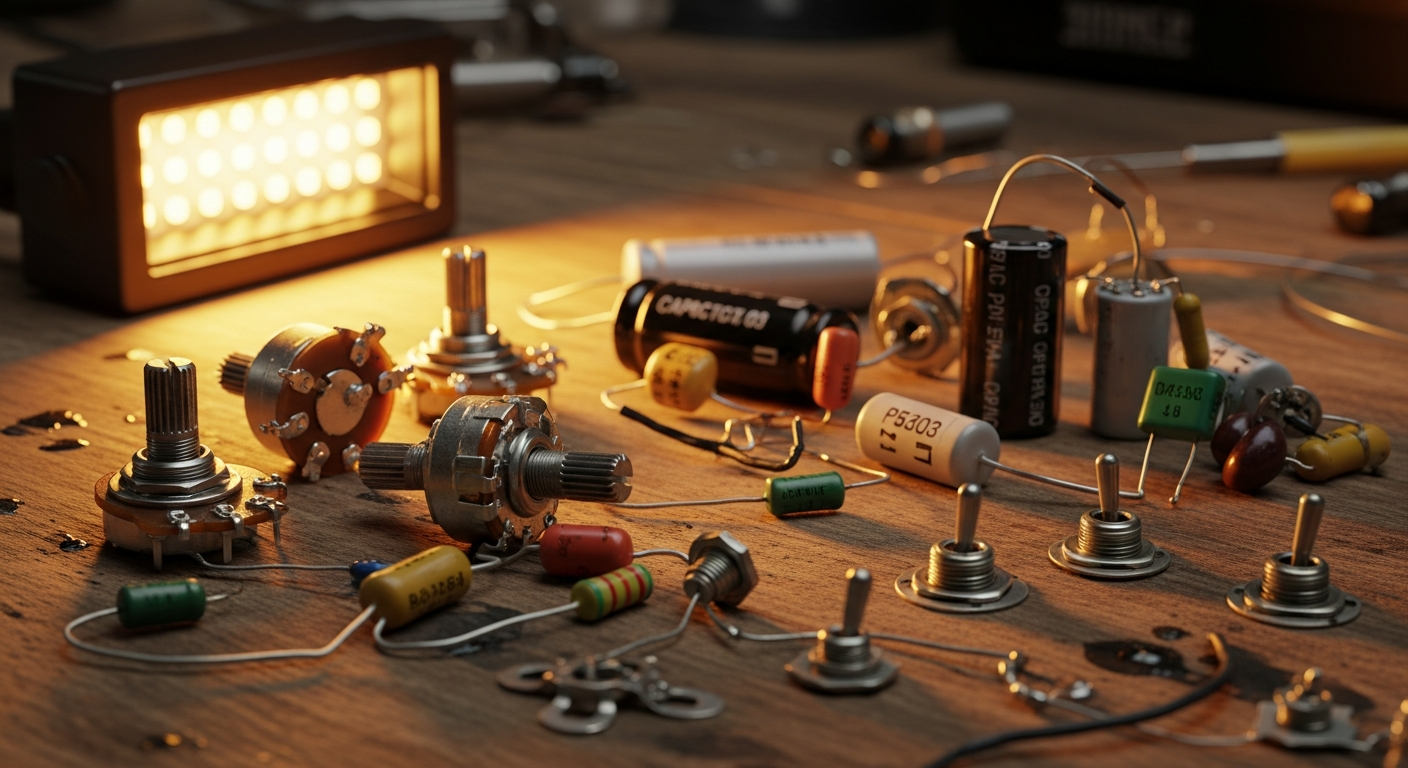
Modding Pickup: Alnico or CeramicThe Perfect Tone Dilemma
How many times have I found myself in front of the workbench with two pickups in my hand, one with an “Alnico V” label and the other an anonymous “Ceramic”, wondering which of the two would give me the best sound? that Sound? If you're here, you've probably already tried changing a string or adjusting the action of your guitar. Maybe you've even played with a potentiometer or two. Well, get ready, because today we're going a little deeper.The world of pick-up It's a universe of nuances, and the choice of magnet is one of the fundamental pillars that define the tonal character of your instrument. We're not talking about "better" or "worse," but "different," choices that open the door to specific sounds. And I assure you, it's not science fiction, it's physics. The kind of physics that, with a little garage patience, you can bend to your will.
The Heart of Sound: How a Pickup Works Electric
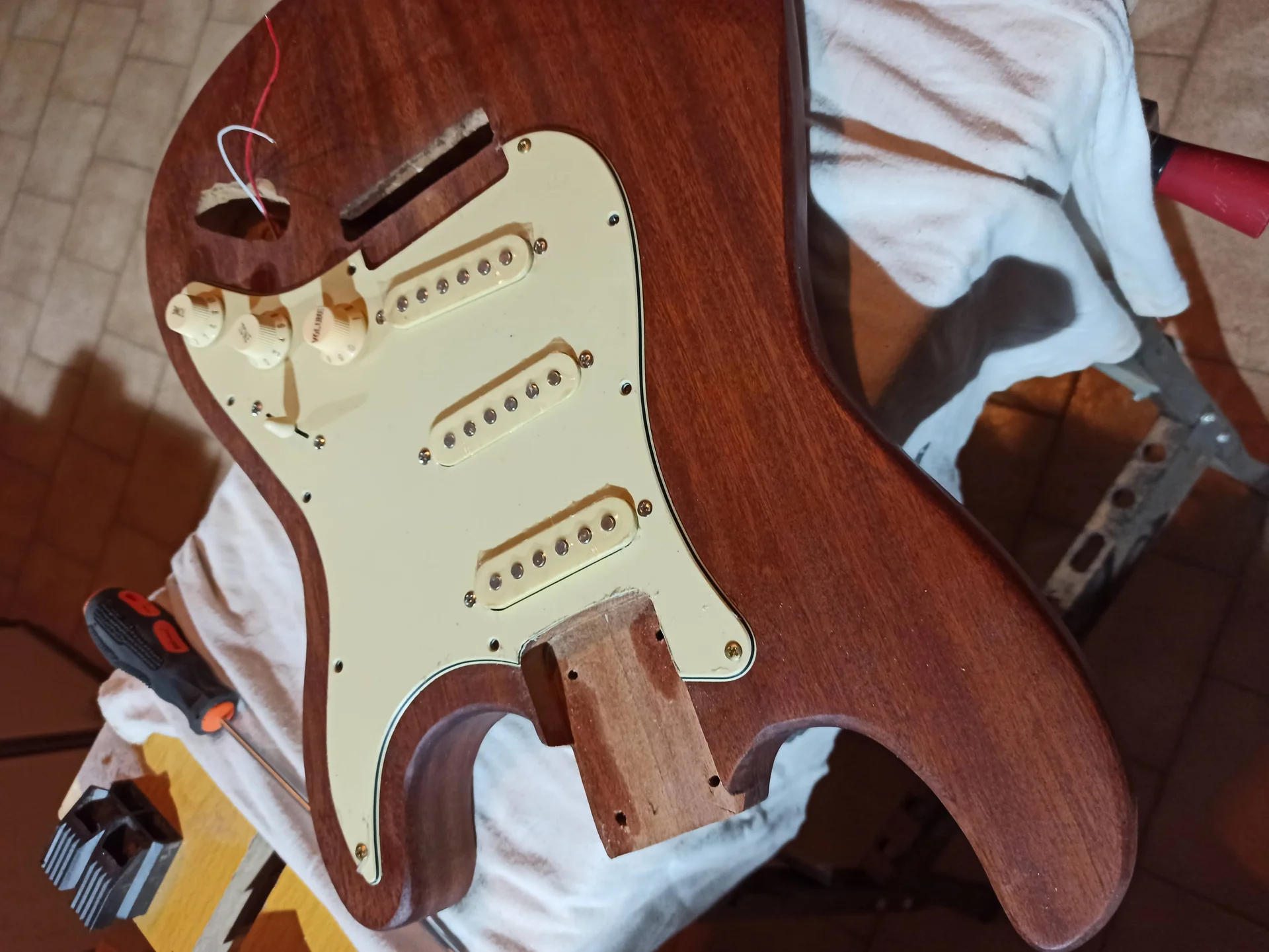
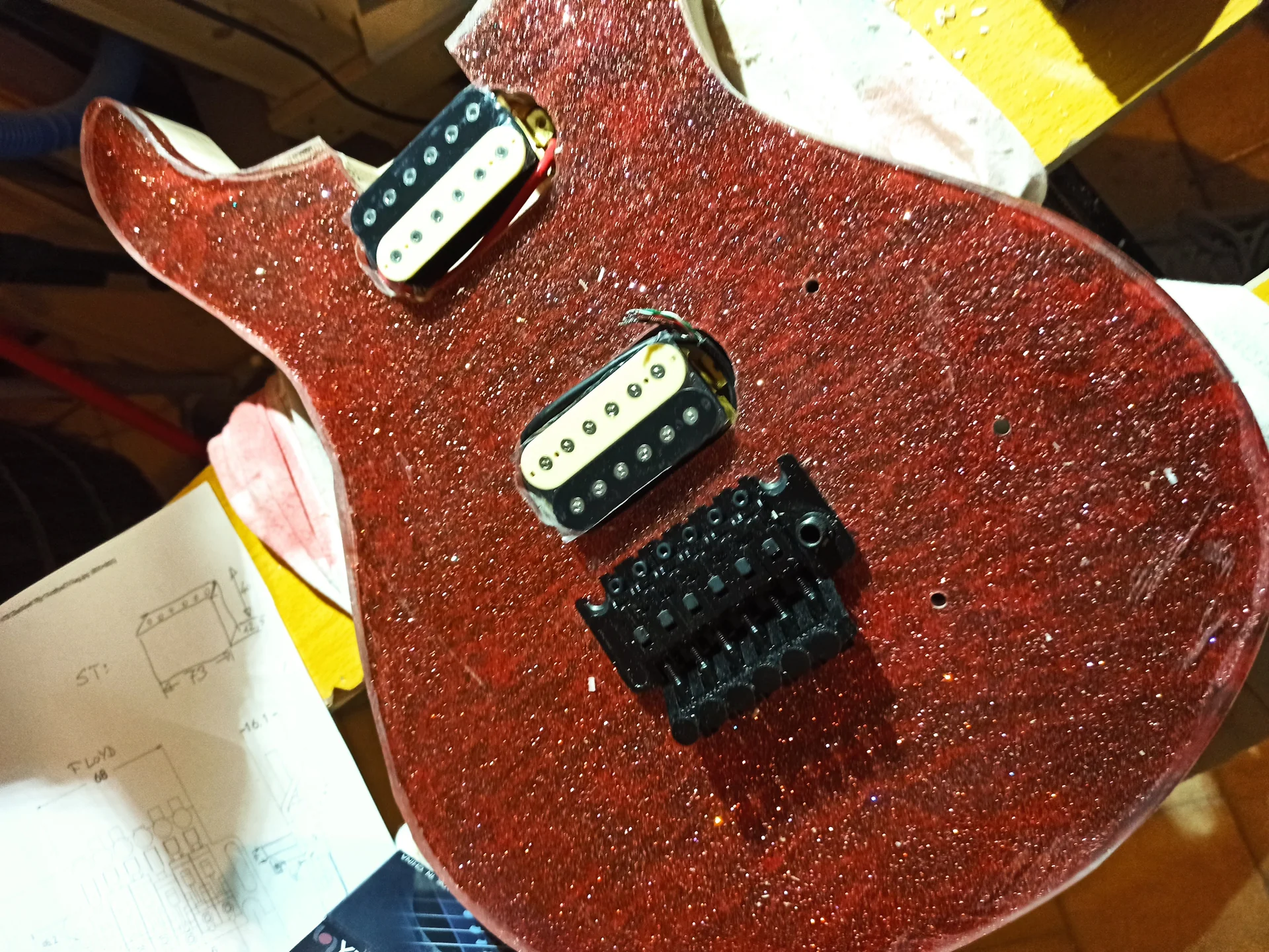
Alnico is a name that immediately brings to mind vintage, the sound of guitars that made history. And there's a reason. The magnets in Alnico They were among the first to be used in electric guitar pickups, and even today they are the preferred choice for those looking for a warm tone, rich in harmonics and with exceptional dynamics.
But what does Alnico mean? It's an acronym for Aluminum, Nickel, and Cobalt, the main metals that make up this alloy, along with iron. There are different Alnico "recipes," identified by Roman numerals: II, III, IV, V, and VIII are the most common in the world of pickups. Each has its own unique characteristics.
The Shades of Alnico
Advertising

Gavitt Pushback Cloth Wire for Electric Guitar, 22awg Pre-tinned Stranded Copper Wire, 10 feet of Each Color, Black/White/Yellow
See on Amazon

Alnico III (A3): Even weaker than the A2, the A3 is rare to find, often used in faithful replicas of very specific vintage pickups. It offers an even smoother, more open sound, with a less defined bass response but exceptional clarity in the highs. Ideal for neck positions where a crystal-clear, unobtrusive sound is desired.
Alnico V (A5): This is the workhorse, the most common of the alnico pickups. It's significantly more powerful than the A2 and A3. Pickups with A5 pickups offer a brighter sound, with tighter, more defined lows, present mids, and bright highs. The attack is more assertive and the output is higher. It's a versatile choice, perfect for rock, pop, country, and even hard rock when paired with the right amp. If you're looking for a modern rock sound with a vintage soul, the A5 is almost always the answer. In my tests, a good A5 in the bridge position always gave me that extra punch without sacrificing the harmonic richness I love.
Alnico VIII (A8): A more modern and powerful Alnico, the A8 approaches the strength of ceramic magnets, but retains the complex tonal characteristics of Alnico. It offers high output, an aggressive attack, and a dense sound, with pronounced mids and excellent definition. It's an interesting middle ground for those looking for power without sacrificing the typical "mellowness" of Alnico. I once mounted it on a guitar intended for hard rock, and the result was a wall of robust sound, but with more warmth than a ceramic pure.
Why does Alnico sound like that?
The metallic composition of Alnico and its magnetization process give it a relatively weaker and “softer” magnetic field than ceramic. This has several practical implications: 1. Less “String Pull”: The reduced magnetic pull on the strings allows them to vibrate more freely, prolonging sustain and improving intonation. Too much pull (called "string pull") can cause intonation problems and a distorted or out-of-phase sound, especially at the higher frets.n2. Dynamics and Touch Response: Alnico pickups are known for their excellent dynamic response. This means they react very well to changes in the intensity of your playing. Playing softly produces a clean, delicate sound, while playing hard opens up the pickup, producing more gain and natural compression.n3. Harmonic Wealth: The sound of alnico is often described as more "organic" or "complex." This is due to the magnet's ability to capture a wider range of harmonics produced by the freely vibrating string.In short, if you're looking for a warm, expressive sound with pronounced dynamics and natural sustain, Alnico is the way to go. It will give you that "vintage" feel even on a modern guitar.
Ceramic: Modern Power and Clarity
If Alnico evokes tradition, the ceramic pickup It is the child of the modern era, born to satisfy the need for greater power, clarity and aggression, especially in high-gain contexts.Ceramic magnets are not metal alloys like Alnico. They are composed of ferrite powders (iron oxides) mixed with ceramic binders, then pressed and magnetized. Their production process is more economical and allows for the production of magnets with very high magnetic strength.
The Characteristics of the Magnet Ceramic
Power and High Output: This is the most obvious feature. Ceramic pickups are known for their high output, which pushes the amplifier into saturation more easily. If you're looking for a loud, direct, and uncompromising sound, this is the one for you.Clarity under Distortion: Despite their high output, ceramic pickups maintain remarkable clarity, especially at high gain. The lows remain tight and defined, while the highs are bright and cutting. This makes them perfect for genres like metal, hard rock, shred, and any situation where clarity and riff definition are crucial, even under a wall of distortion.
Frequency Response: They tend to have a more extended high and low frequency response, with a midrange that can sometimes be a little "scooped" compared to alnicos. This contributes to that "modern" and aggressive sound.
Less Touch Dynamics: Due to their very strong magnetic field, ceramic pickups tend to compress the signal more quickly. This means the difference between playing softly and playing loudly is less pronounced than with an alnico pickup. They have a more on-off sound, which can be an advantage for precise and powerful rhythm riffs, but can lack expressiveness for more melodic leads.
Why the Ceramic does it sound like this?
The intrinsic strength of ceramic magnets is the key to their sound: 1. Strong “String Pull”: The stronger magnetic field "grips" the strings more forcefully. This leads to a greater current induction in the coil (more output), but can also slightly dampen string vibrations, reducing sustain and the wood's natural resonance.n2. Quick and Precise Attack: The strong magnetic field ensures a very direct and precise attack, ideal for fast riffs and tight palm mutes that must not get muddy.n3. Ideal for High Gain: Their ability to maintain definition and clarity even at high levels of distortion makes them the preferred choice for extreme genres. The sound remains focused and does not turn into an indistinct hum. In my garage, for the most aggressive riffs and palm mutes that need to make the windows rattle, there is no comparison. A good ceramic pickup At the bridge, it delivers a wall of sound unlike any other. But be careful, don't expect the nuance and roundness of an alnico on a clean channel. It might sound a little sterile or too bright for your tastes.Compromise and Choice: What to Put Where?
Now that we've covered the basics, the question is: which one do I choose? And the answer, as always in the guitar world, is "it depends." It depends on the sound you have in mind, the genre you play, your guitar, and even your amplifier. There's no absolute "winner" between Alnico and Ceramic. There are just different tools for different purposes.Practical Considerations for Choosing
Musical Genre: Alnico: Blues, Jazz, Classic Rock, Country, Pop, Indie Rock. Wherever warmth, dynamism, and expressiveness are needed.Ceramic: Hard Rock, Metal, Shred, Nu Metal. Anywhere you need power, aggression, and clarity under distortion.
Pickup Position: Alnico on the neck: Often an excellent choice for warm, rounded lead tones with nice sustain. An Alnico II or III can produce a smooth sound.
Ceramic at the bridge: The classic combination for those looking for a powerful and defined wall of sound for rhythmic riffs and aggressive solos.
Hybrid Setups: Many guitarists opt for a “hybrid” setup, combining the two types. For example, a Alnico pickups at the neck for smooth, clean solos, and a ceramic pickup At the bridge for powerful rhythm riffs and a more cutting lead sound. This is a very versatile solution that allows you to have the best of both worlds. I've done it several times and the results are often surprising.
Guitar Woods: A mahogany body (darker, resonant) might benefit from a brighter pickup (like an Alnico V or a ceramic) to balance the tone. An ash or alder guitar (brighter) might instead welcome an Alnico II or III to add warmth.
Amplifier: If your amp is already very bright, you might want a warmer pickup. If your amp is dark, a brighter pickup might give you the punch you need.
Your Touch: Are you a guitarist with a light touch and looking for nuance? Alnico will give you more satisfaction. Are you a hard-hitter and want every note to pack a punch? Ceramic might be a better fit.
My heartfelt advice? Don't be afraid to experiment. That's the beauty of DIY: you don't have to accept whatever they sell you; you can create your own sound. And if you're new to modding, check out our guide on how to modify your guitar. It takes a lot of the guesswork out of the basics.
Welding and Schematics: Don't Be Afraid!
Okay, you've made up your mind. You want to replace your pickups. Now what? Maybe the thought of getting your hands on a soldering iron and wiring diagrams scares you. I totally understand; the first time I had to solder a pickup, I felt like a surgeon undergoing his first open-heart surgery. But I assure you, it's much simpler than it seems.Guitar pickup circuits are relatively simple. We're not building a quantum computer. It's just a matter of connecting wires, and the hardest part is getting a clean, solid solder connection.
Garage Patience: Simple Steps to Modding
1. Basic Equipment: You'll need a soldering iron (a 30-40W is fine to start with), good-quality solder (with a flux core), wire cutters, needle-nose pliers, and perhaps a multimeter for testing. And a little calm. n2. The Electrical Diagram: Almost every pickup you buy comes with its own wiring diagram. If it doesn't exist, you can easily find it online by searching for "wiring diagram [pickup name/brand]." It's not a hieroglyph: it tells you which wires to connect to which points (potentiometers, switches, ground). The "hot" wire (signal) and the "ground" wire (ground) are the basics. 3. Desoldering: To remove the old pickup, heat the soldering iron tip where the wire is connected to the solder. When the solder melts, gently pull the wire away. Repeat for all connections. 4. Preparing the New Threads: The wires on the new pickup will likely have plastic insulation. Carefully strip them back to about 5-7 mm. If the wires are twisted (as is often the case with ground wires), twist them tightly. 5. To weld: This is the crucial part.Clean Tip: Make sure the tip of the soldering iron is clean and tinned (with a thin layer of tin).
Heat the Component: Place the tip of the soldering iron on the point where you need to solder (e.g. the lug of a potentiometer).
Apply the Tin: Once the component is hot, place the solder on the contact point between the soldering iron tip and the component itself. The solder should melt and flow, forming a small, shiny, conical "mound" around the wire.
Remove: Remove the solder first, then the soldering iron. Don't move the wire until the solder has cooled and solidified (a few seconds).
“Good” Welding: A well-made weld is shiny, smooth, and cone-shaped. If it's dull, grainy, or ball-shaped, it's not good. Redo it.
The first solder will suck, the second a little less so. After ten, you'll be a master. Trust me, I did it myself with a €15 soldering iron I bought at the supermarket. The key is practice and not being afraid to make mistakes. Every mistake is a lesson.
Beyond the Magnet: Facts That Matter
It is not Alone the magnet that makes the pickup. There are other factors that heavily influence the final sound and that must be considered when modding. Number of Windings: This is crucial. More windings means more output, but also a darker frequency response (less highs, more mids). A pickup with a weak magnet but many windings can have similar output to a pickup with a strong magnet and fewer windings, but the tonal character will be different. The magnet defines the quality of the field, the windings amount of induced signal.Thread Type: The diameter of the wire used for the coil (gauge) and its insulation (plain enamel, heavy formvar, poly) influence the capacitance and resistance of the coil, and therefore the sound.
Poles (Pole Pieces): They can be blade, bar, or single cylinder (staggered or flat). Staggered pole pieces (i.e., with different heights to compensate for the radius of the fretboard and the volume of the individual strings) were common on older single-coil pickups. Today, many prefer flat ones for a more even balance. Blade or bar pole pieces are typical of humbuckers and some modern single-coil pickups.
Potentiometers and Capacitors: These components, although not part of the pickup itself, are its interface with the rest of the circuit and influence very much the sound. A Alnico pickups A very bright pickup might sound better with a 250k Ohm tone pot, which rolls off the highs a bit, while a dark ceramic pickup might benefit from a 500k Ohm to let more high frequencies through. Capacitors then, with their value in nanofarads (
F), determine “how much” and “where” to cut frequencies when using tone.
Understanding how all these elements interact is an ongoing learning process. For a deeper dive into the different types of magnets and their physical properties, you can check out resources like this page from Seymour Duncan, which explains the differences between various Alnico and ceramic magnets well: Seymour Duncan: Alnico Magnets Explained. It's a good starting point for understanding the science behind sound.
Conclusions and Your Next Step
We've come to the end of this journey into the magnetic heart of pickups. I hope you now have a clearer idea of what we mean when we talk about Alnico or Ceramic and, above all, of the Why they sound different.To recap, the magnet Alnico It offers warmth, dynamics, harmonic richness, and that vintage feel that lets you hear every nuance of your touch. It's the ideal companion for those seeking expression and classic sounds.
The magnet Ceramic, on the other hand, is synonymous with power, clarity, aggressive attack and granite definition, especially when the gain is turned up to 1000. It's the choice of those who want a wall of modern and incisive sound. There is no absolute "best", but only the right pickup for tea, for your setup and the sound you want to sculpt. My advice, as always, is to don't be afraid to get your hands dirty. Buy a used pickup, trade it with a friend, try, listen, try again.
Every solder, every screw tightened, every test will bring you one step closer to your ideal sound. And the satisfaction of hearing That sound coming out of your guitar, modified by your own hands, is priceless. Go, try it, and let me know what you come up with!
See also
Download the Luthier Survival Kit
Free PDF with checklist, problem-cause table and project card template.
 English
  Italiano
Stuck on your build?
If you ran into the same problem or have a question, drop it in the comments. I read and reply to every one.
Write a comment