

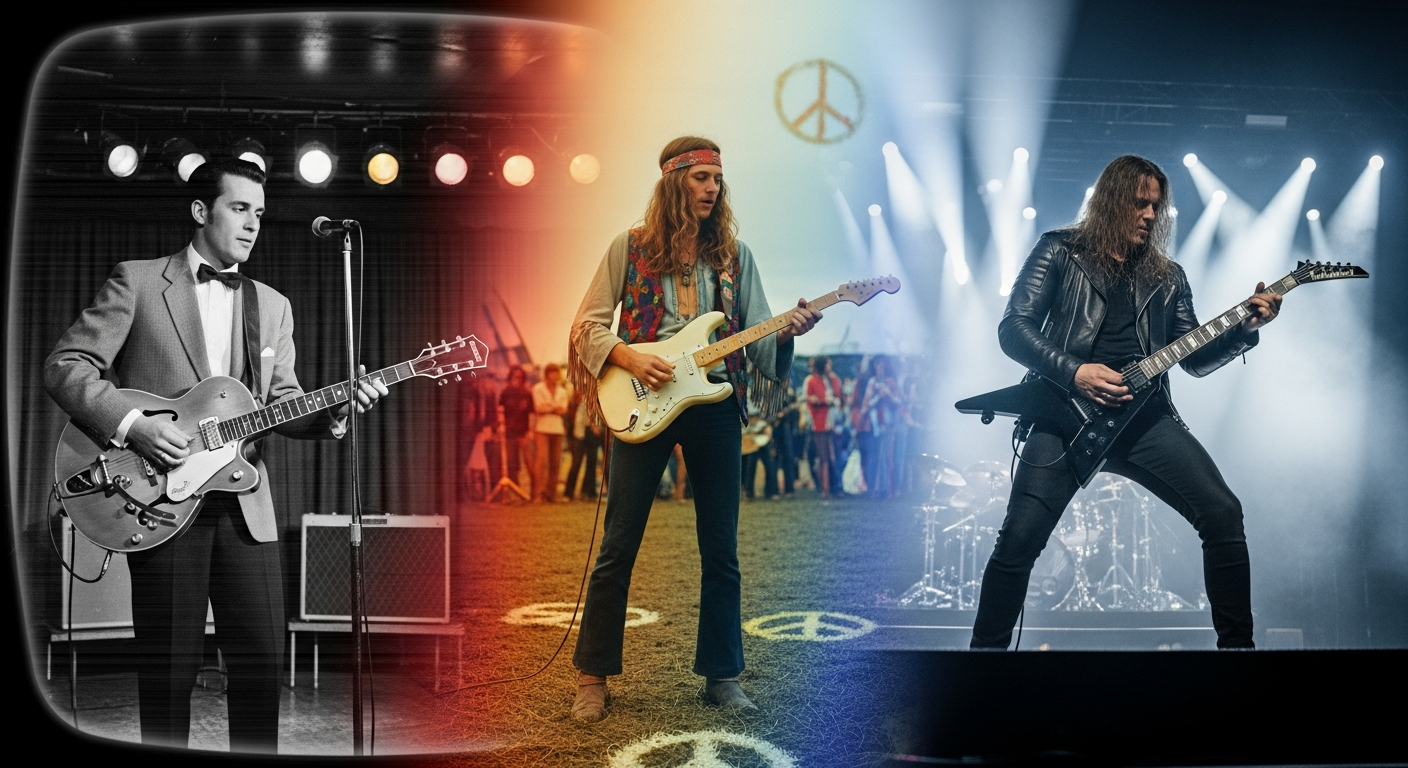
The History of the Les Paul: 5 Fundamental Stages
Every time I see a Les Paul, whether it's a shiny Goldtop or a battered black Custom with the marks of a thousand battles, one thing comes to mind: it's not just a guitar. It's a piece of history, certainly, but also a symbol of perseverance, insight, and, let's face it, some missteps that ultimately paid off. I'm not a Gibson luthier, I don't have the hands of a master craftsman, but I've spent enough hours in my garage disassembling, reassembling, and trying to understand the guts of these wonders to feel like I can tell you its story, not from an encyclopedia, but from someone who has felt the wood dust on their skin.This is not the usual aseptic chronicle. I want you to leave here with a story to tell, with the “why” behind that iconic sound, and maybe even with the desire to get your hands on your next Les Paul electric guitar. Because if I succeeded, in understanding and getting my hands on it, you can do it too.
1. From the garage boards to the stage: Les Paul's idea and the birth of “The Log”
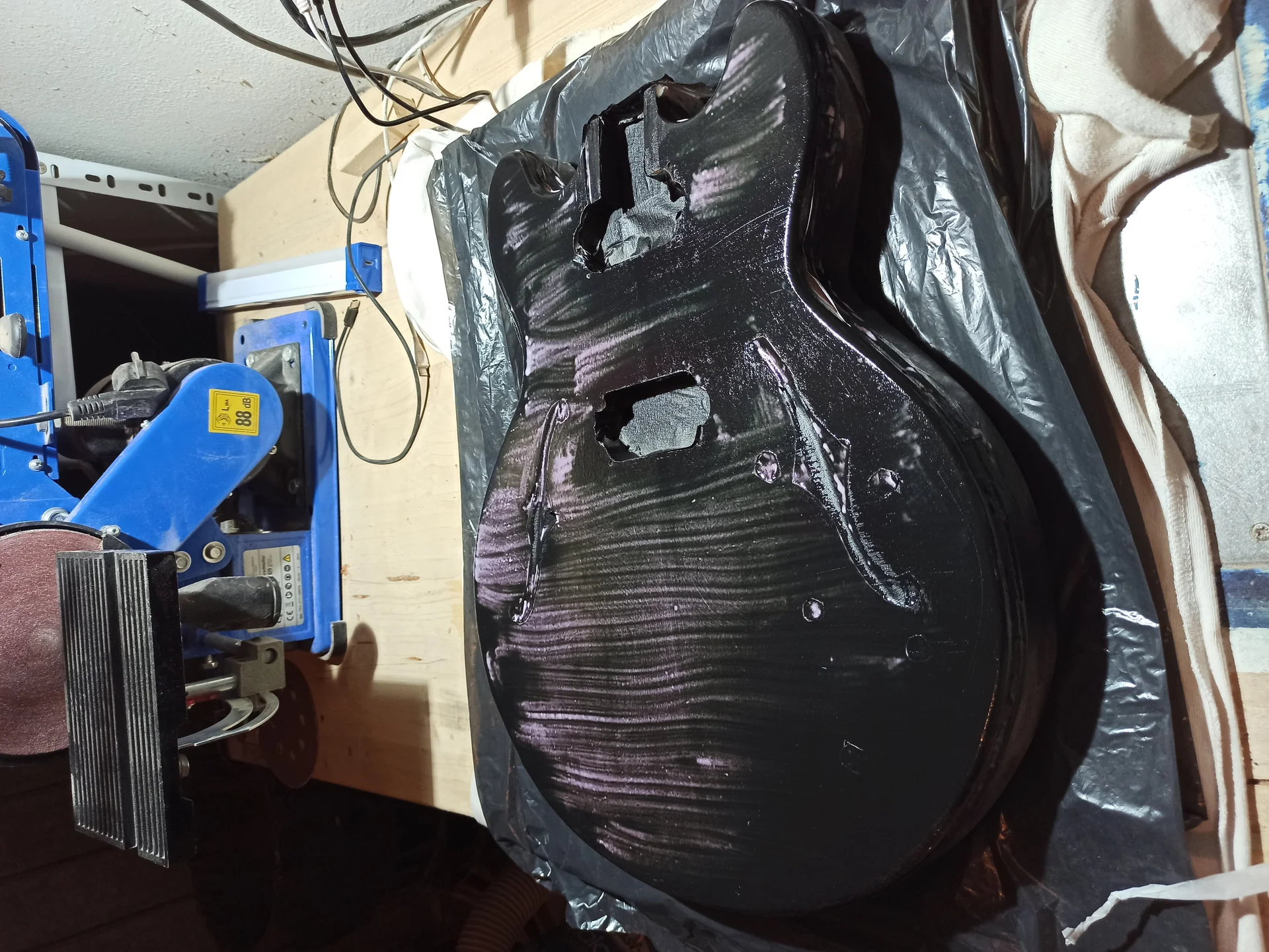
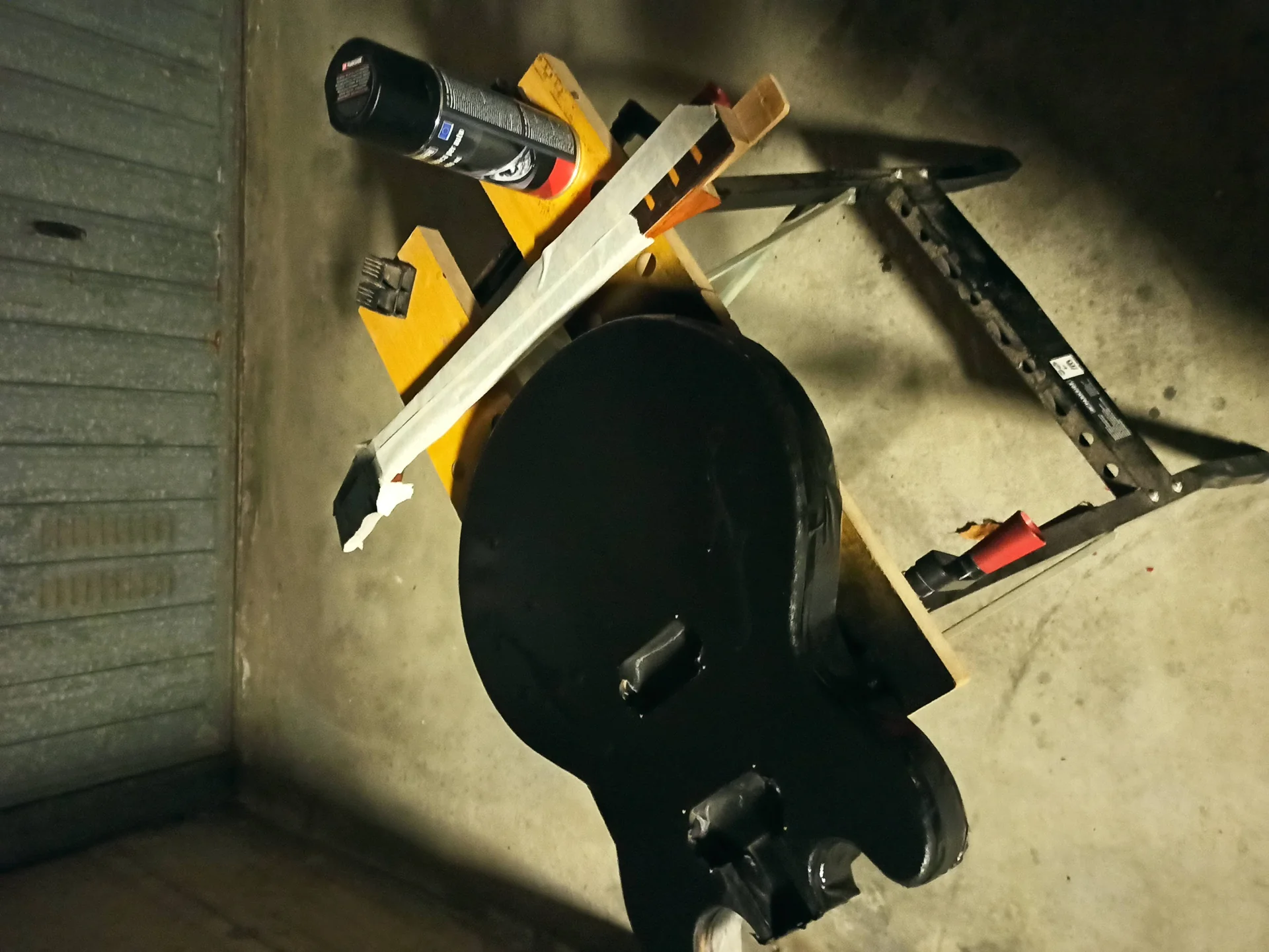
When the first Les Paul arrived in stores in 1952, it was a golden beauty. The Goldtop finish, with its shimmering metallic paint, gave it an air of luxury and distinction. It was a heavy, massive guitar that immediately conveyed a sense of robustness. But the true soul of this instrument, at least initially, was enclosed in two key components: the P90 pickups and the bridge.
The pickups were the famous P90s. If you've never tried a P90, do it. It’s an experience. It's a single coil, but not like classic Fenders. P90s have a wider and flatter coil, and this results in a completely different sound. They are big, full, with a punch in the mid-frequencies that makes you feel every note in your chest. They are not “thin” like certain single coils, and they are not “compressed” like humbuckers. They have a character all their own: a round crunch when you push them, but also a crystalline and dynamic clarity if you play more delicately.
I remember the first time I got my hands on a replica of a P90 in a project of guitar modification for a friend. Of course, I had read everything there was to read, but until you hear that big, round signal, with a punch in the mids that makes your ribs vibrate, you don't really understand. It looks like a single coil, but it has the soul of a humbucker, a bit like a boxer who dances but knows how to throw an uppercut that knocks you out. They were perfect for the blues and jazz of the time, and even today many prefer them for their organic and “live” sound.
The other distinctive element of the early models was the bridge. Initially, the '52 Goldtop featured a trapezoidal bridge, sometimes called a “wrap-around”. It was a single piece of aluminum, where the strings were wrapped around and passed over. It was simple, robust, and contributed to the guitar's sustain. The problem? Intonation. Adjusting the intonation string by string was practically impossible. You could only adjust the general height and the approximate intonation of the entire bridge. This meant that, however good it might sound, intonation precision was a significant weakness.
Gibson soon realized this limitation. So, in 1954, it introduced an innovation that would forever change the world of electric guitars: the Tune-o-matic bridge, designed by Ted McCarty. This bridge, with its individually adjustable saddles for each string, finally allowed for precise and reliable intonation. It was a game changer. Most of the Les Paul guitars subsequent, and countless other models from other brands, would adopt variations of this design.
This first incarnation of the Les Paul, with its Goldtop and P90s, laid the groundwork for everything that would come after. It was a guitar with a strong character, an unmistakable sound, and enormous potential, despite some initial “flaws” in the bridge design. But as with any good DIY project, you learn from mistakes and improve. And Gibson, in this, was no exception.
3. The silent roar: The arrival of the PAF Humbucker and the sonic turning point
The Les Paul with P90s was already a great guitar, but there was still a problem that plagued all single coil pickups of the era: noise. That annoying 60-cycle (or 50, depending on the electrical grid) “hum” was a constant, especially when the amplifier volume was turned up or a bit of distortion was added. It was the price to pay for that bright and dynamic sound, but it was a price that many guitarists, and especially sound engineers, were tired of paying.

Here enters another genius: Seth Lover, a Gibson engineer. His mission was clear: eliminate noise without sacrificing tone. And his intuition was brilliant in its simplicity: use two coils instead of one. But it wasn't enough to put two single coils in parallel. The trick was to wind them in opposite directions and connect them out of phase. In this way, the noise picked up by one coil was canceled out by the noise picked up by the other, while the string signal was summed. “Humbucker” in fact, literally means “hum eliminator”. In 1957, Gibson introduced these new pickups on the Les Paul. Initially they didn't have a specific name, but since Gibson had filed the patent (“Patent Applied For”), they were labeled on the back with a sticker that read “Patent Applied For”, or more simply “PAF”. This name, almost by chance, has become legendary, synonymous with a warm, full, and powerful sound.
The sound of the PAFs was a revolution. It was big, with incredible sustain, and above all, silent. This allowed guitarists to push amplifiers to higher volumes and achieve richer, more controlled distortion, without the annoyance of background hum. Suddenly, the doors of rock, more aggressive blues, and genres that required sonic power swung open. The Les Paul with humbuckers was no longer just a guitar for clean jazz or blues; it was a war machine for rock ‘
‘' roll.
The Les Pauls produced between 1957 and 1960, with their PAFs, have become the most sought-after and expensive ever. Each specimen had small variations in the amount of windings and the type of magnets (often Alnico II, V, or IV), which made each pickup unique and contributed to the legend of the “magic tone” of the original PAFs.
Personally, I've spent hours trying to replicate that sound. Not with original pickups, which cost as much as a used car, but with replicas and variants that promise to come close. I've discovered that it's not just the pickup itself, but also the wood, the bridge, the wiring… it's a combination of factors. I've tried installing mini-humbuckers, which have a different, brighter soul, but the impact of a good bridge humbucker on a Les Paul is something that changes the way you play. It gives you a confidence, a drive that makes you feel invincible.
The introduction of PAFs was not just a technical innovation; it was a cultural catalyst. It gave guitarists the instrument they desired to explore new sounds, to break the barriers of volume and distortion. Without PAFs, the history of rock as we know it would have been very different. And it's a powerful reminder of how a small, clever technical modification can have a gigantic impact on the world of music and beyond.
4. The forced metamorphosis: When the Les Paul became an SG (and then returned)
Despite the introduction of PAF humbuckers and the improvement of the Tune-o-matic bridge, sales of the Les Paul did not take off as Gibson had hoped. Towards the end of the 1950s, the guitar was still considered too heavy, too expensive, and, for some, too “old school” in design. Models with flashy finishes like the Goldtop or black Customs were beautiful, but the market was changing and tastes were shifting towards lighter instruments with a more modern and bold design.Fender, with its Stratocasters and Telecasters, was dominating the market, offering cheaper, more manageable guitars with a more contemporary aesthetic. Gibson found itself in difficulty. It needed a response, and the response was drastic: in 1961, production of the original Les Paul was discontinued. Yes, you heard that right. What is today the most iconic rock guitar was retired after less than ten years of production.
In its place, Gibson introduced a completely new model, initially also called “Les Paul”, but with a radically different design. It was thinner, lighter, with two pointed “horns” and much easier access to the upper frets. This new guitar, later renamed SG (Solid Guitar), was Gibson's answer to changing times: a lighter body, a more aggressive look, and, above all, a more competitive price.
The problem was that Les Paul himself did not approve of the new design. His objections were both aesthetic and structural (he said the neck was too thin and prone to breaking), and he asked for his name to be removed from the model. Thus, in 1963, the '61 “Les Paul” officially became the Gibson SG. Ironically, the SG would become an icon in its own right, chosen by legends like Angus Young and Tony Iommi. But that's another story.
For the original Les Paul, it seemed like the end. Guitars produced between ’52 and ’60 remained unsold in many stores for years. But fate, as often happens, had other plans. In the ’60s, especially in England, a new wave of blues and rock guitarists was emerging. Artists like Eric Clapton, with his Bluesbreakers and then Cream, were looking for a fatter, warmer sound, more sustain. They needed guitars that could withstand the impact of amplifiers pushed to the limit.
And so they began to rediscover those “old” Les Pauls from the ’50s, often found at bargain prices in second-hand shops. The powerful and silent sound of the humbuckers, combined with the sustain of the solid body, was exactly what they were looking for. Peter Green of Fleetwood Mac, Jimmy Page of Led Zeppelin, Mike Bloomfield… all fell in love with that guitar that Gibson had hastily set aside.
The demand for original Les Pauls began to skyrocket. Gibson, seeing the sudden popularity of a model it had written off, could not ignore the market's call. So, in 1968, the Gibson Les Paul made its big comeback, with a design faithful to the originals of the ’50s. It was a triumphant rebirth, dictated not by a new project, but by the rediscovery of its value by a generation of musicians who had sensed its potential.
This story is a reminder for all of us working on DIY projects: sometimes, what seems like a failure or a misstep can turn into an unexpected success, just because someone, somewhere, sees the true value in what you've created, even if you had forgotten it in the attic. Never throw away an old project!
5. The rock icon: The big comeback and the lasting legacy
The return of the Les Paul in 1968 was a triumph. It was no longer just a guitar; it had become an icon. Its image was inextricably linked to the rock and blues giants who had brought it back into the spotlight. From that moment on, its ascent was unstoppable, solidifying its place as one of the most beloved and recognizable electric guitars of all time.With the reissue, Gibson offered several models that would become equally legendary. The Les Paul Standard, often with its “Burst” finish (sunburst), was the flagship model, a direct heir to the glorious ’59. The Les Paul Custom, with its elegant finishes (often black or white), ebony fretboard, and multiple bindings, was the “Black Beauty” par excellence, a guitar to proudly show off. Then there was the Les Paul Deluxe, which often featured “mini-humbuckers”, smaller pickups that offered a brighter and more defined sound compared to traditional humbuckers, somewhat a middle ground between the P90 and the PAF in some respects.
The versatility of the Les Paul is one of its strengths. From the deep and gritty blues of B.B. King and Gary Moore, to the energetic rock of Jimmy Page and Slash, to the more jazz sounds of Les Paul himself or George Benson (who, although not primarily using it, recognized its value). This guitar has adapted to every genre, always maintaining its sonic identity: infinite sustain, a warm and powerful tone, and an unmistakable stage presence.
But the charm of the Les Paul is not limited to vintage models or expensive reissues. For us, garage people and DIY enthusiasts, the Les Paul is also an incredible platform for experimentation. How many times have I seen projects where an Epiphone Les Paul (or a cheap replica) was taken and transformed with new pickups, new wiring, maybe a homemade fret job? It's a guitar that lends itself to modifications, to customizations. Its simple but effective design allows you to get your hands dirty without too many complications, if you know what you're doing and aren't afraid to solder a crooked potentiometer or drill a little off-center (it happens, I assure you!).
Think of the potential: changing pickups to get a more vintage or modern sound, experimenting with different types of capacitors to shape the tone, installing push-pull potentiometers for coil split or phase shifting. Every small modification can open up a world of new sonic possibilities. And the beauty is that you don't need to be a professional to do these things. You just need a little patience, the right tools (and I'm not talking about CNC milling machines, but a good soldering iron, a screwdriver, and a bit of courage) and the desire to learn.
There history of the Les Paul electric guitar is a fascinating journey, made of brilliant intuitions, initial rejections, rediscovery, and a legacy that continues to inspire generations of musicians and amateur luthiers. It is a story that reminds us that passion, experimentation, and the ability not to give up in the face of obstacles are the fundamental ingredients for creating something truly lasting and meaningful.
FAQ: Common questions about the Les Paul
Despite its long history, there are always curiosities and doubts about Les Paul. Here are some of the questions I get asked most often, or that I've asked myself during my projects: Why are Les Pauls so heavy?Well, mainly due to the type of wood and its density. The body is traditionally solid mahogany, often with a maple top. Mahogany is a dense wood that contributes enormously to the guitar's sustain and warm tone. Over the years, Gibson has introduced “weight relief” (tonal chambers or holes in the body) to lighten some models, but the more traditional Les Pauls remain quite massive instruments. The weight is not a defect; it's a characteristic that contributes to its unique sound. What is the difference between a Les Paul Standard and a Custom?
The main differences are aesthetic and material, which then reflect on the sound and price. The Standard is the more “classic” model, with a flamed or quilted maple top, rosewood fretboard, and simpler finishes. The Custom, on the other hand, was born as a luxury model: black or white finish, multi-ply binding everywhere (body, neck, headstock), ebony fretboard, and gold hardware. It often featured three pickups instead of two, and the body was entirely mahogany without a maple top, at least in the early models. The Custom's sound tends to be a bit darker and “rounder” due to the ebony fretboard and different wood masses. Did the original PAFs all sound the same?
Absolutely not! This is the beauty (and madness) of PAFs. They were hand-wound, and the number of windings could vary quite a bit from one pickup to another. Even the magnets, despite all being Alnico (II, IV, or V), could have small differences in charge. This created a legend around the “magic tone” of PAFs, where each specimen had its own personality. Today, when you buy a replica, manufacturers try to emulate these variations to offer different sonic nuances. It's a bit like searching for the Holy Grail of sound, and believe me, you can get lost for years! Can I install different pickups on a Les Paul?
Of course you can! In fact, it's one of the most common and rewarding modifications. You can switch from humbuckers to P90s (perhaps with suitable adapters), or vice versa. You can try humbuckers with different output levels (vintage-style, hot-rodded, modern). It's a great way to customize your sound without overhauling the guitar. Just remember to check the pickup dimensions and make sure they fit the existing cavities, or be prepared for a bit of extra work with a Dremel.
I hope this journey into the history of the Les Paul has given you some interesting insights and made you appreciate this legendary instrument even more. And remember, whether it's a very expensive model or a replica you modified in your garage, the important thing is that it sounds good in your hands and that you have fun with it. The rest is just history, and as you've seen, even history sometimes needs a few tweaks!
To further explore the history and technical details of this icon, you can consult the page dedicated to the history of the Les Paul on the official Gibson website, an excellent resource for more precise details and technical specifications. [Gibson Les Paul History](https://www.gibson.com
See also
Download the Luthier Survival Kit
Free PDF with checklist, problem-cause table and project card template.
 English
  Italiano
Stuck on your build?
If you ran into the same problem or have a question, drop it in the comments. I read and reply to every one.
Write a comment