

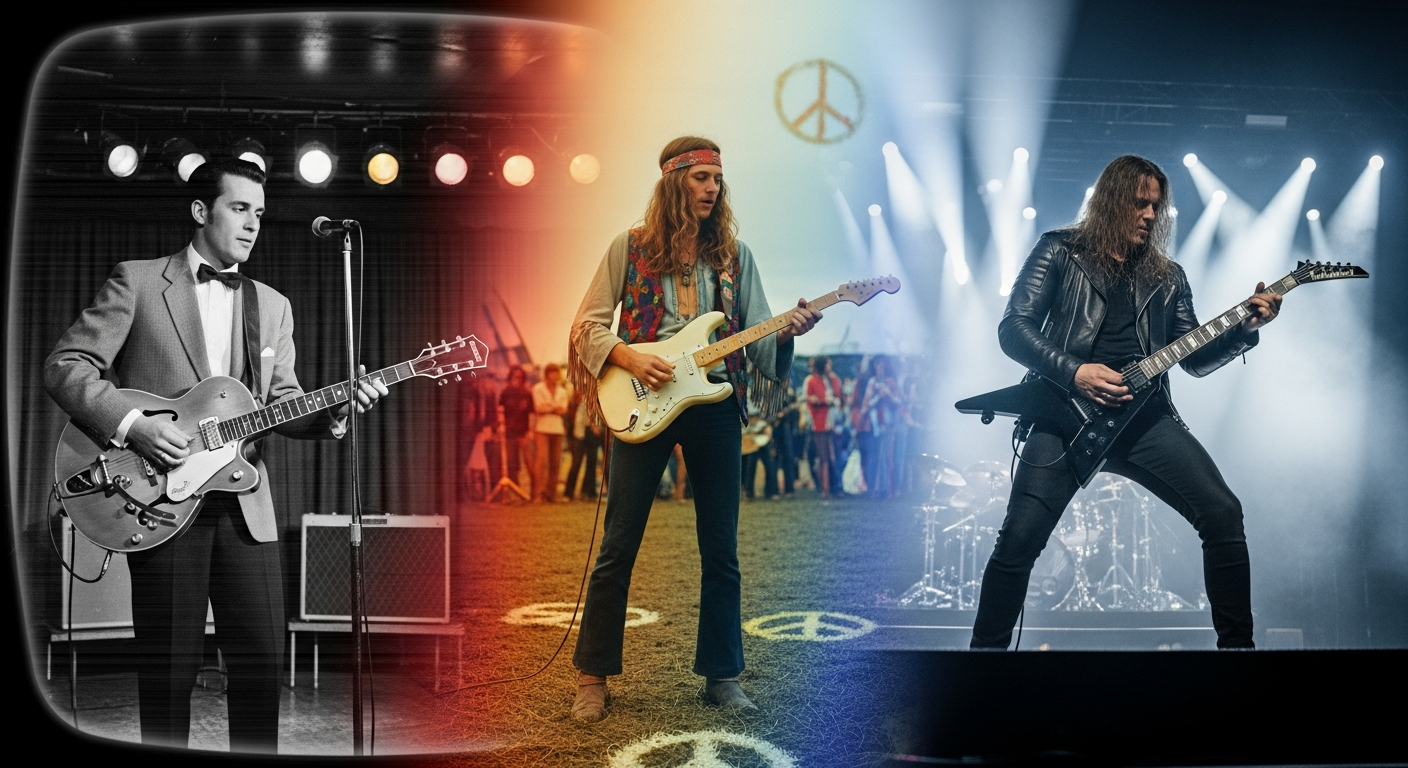
Les Paul History: The 5 Truths That Matter
When it comes to electric guitars, there are instruments that are not just wood and strings, but real pieces of history, legends that have shaped genres and sounds. history of the Les Paul guitar It's one of them. It's not just the story of a tool, but of a visionary man, of a company that sometimes saw things through and sometimes didn't, and of how mistakes or intuitions created an icon.The first time I picked up a Les Paul, a '90s Standard, I immediately felt its weight, its solidity, that feeling of holding a piece of history in my hands. It wasn't mine, it belonged to a friend, and I remember thinking: “Wow, this is serious stuff”. It wasn't like the lighter, quicker Stratocasters I was used to. It was another beast. And from there, the curiosity to understand more about its genesis, about why it was like that, became a kind of obsession.nI'm not a professional luthier, you know. I'm someone who, like you, has spent hours in the garage disassembling, reassembling, soldering, sometimes swearing because a wire wouldn't stay in place. I've made my mistakes, bought the wrong body, poorly painted a neck. But each time I learned something. And the history of this iconic guitar, believe me, is full of trials and errors, of obstinacy and that bit of luck that sometimes helps.
So, enough with the encyclopedia chatter. I don't want to give you an academic history lesson. I want to tell you the five truths that, in my opinion, really matter to understand why the Les Paul got where it is, and why it continues to make generations of guitarists dream. Ready to get your hands dirty with some anecdotes and wood dust? Let's go.nn
1. The Les Paul wasn't an instant success (and Gibson didn't want it)
nn nnnnnn
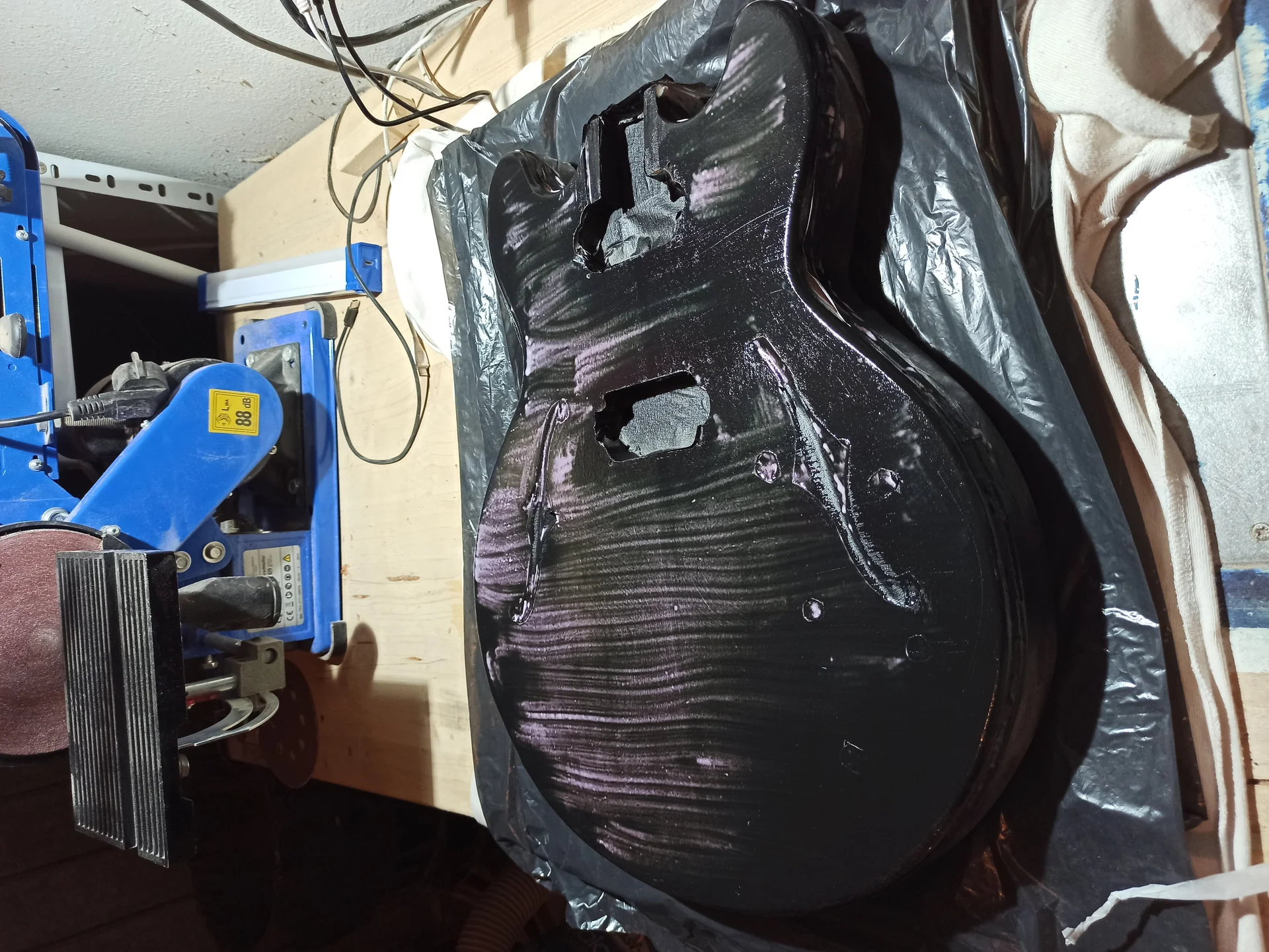
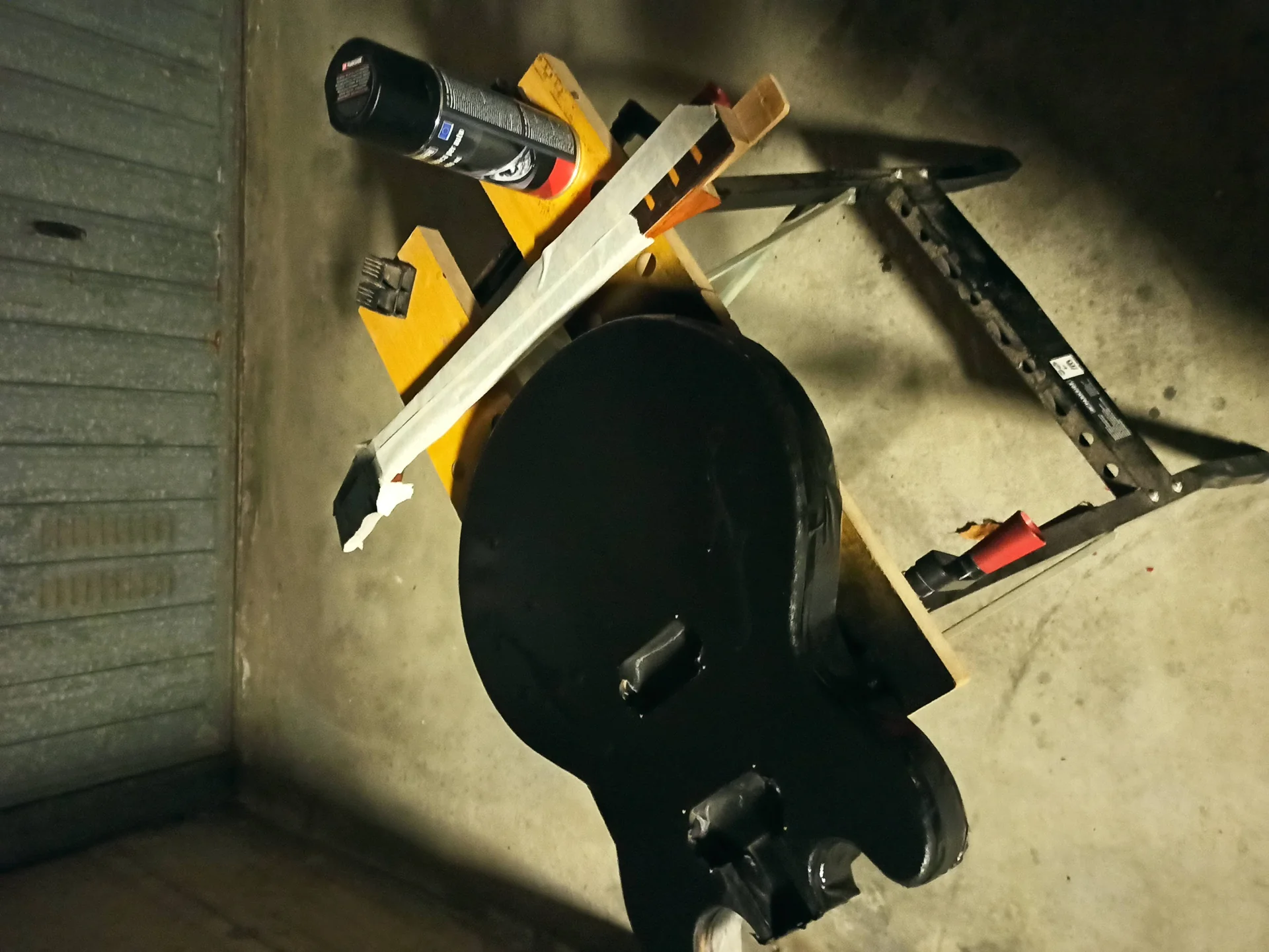
If there is a period in the history of the Les Paul guitar The so-called "Burst" guitar, which created the myth and value we know today, was developed. But the truth is that many of the features that made these guitars legendary weren't the result of a brilliant plan, but rather a series of circumstances, sometimes fortuitous, sometimes dictated by the need to cut costs.
Let's talk about the period between 1958 and 1960. Until then, Les Pauls were famous for their Goldtop finish. Beautiful, sure, but Gibson wanted something new, something that could aesthetically compete with the bright, colorful finishes of its rivals. The solution? Sunburst. A gradient of color, from yellow in the center to red, then dark brown at the edges.
The key, however, wasn't just the color. It was the wood. Gibson began using figured maple tops, with spectacular grain, under the sunburst finish. Each piece of maple was unique, and the sunburst highlighted this grain incredibly. The problem? Figured woods, at the time, were considered "defective" by some, less valuable than "clean" wood. Gibson used them to save money, or simply because they had it on hand. Ironically, it's precisely that grain that drives collectors crazy today.
But the real sonic revolution of the "Burst" was the introduction of the humbucker. The P-90s, while excellent pickups, had the classic hum of single coils. Gibson commissioned Seth Lover to solve the problem. And in 1955, Lover patented the humbucker pickup: two coils wound in counterphase, which canceled out the noise.
When these new pickups, the “PAF” (Patent Applied For, because the patent was pending), were installed on the Les Paul Standards starting in 1957, the sound changed radically. Fatter, warmer, more powerful, with even greater sustain and no hum. It was the perfect sound for the blues-rock that was about to explode.
But there's another "but." The aniline-based varnishes Gibson used at the time weren't entirely stable. The red of the sunburst, exposed to sunlight, tended to fade over time, turning more orange or even almost transparent, leaving only yellow and brown. This phenomenon, called "fading," created what are now known as "Lemon Drop" or "Honey Burst" finishes. Once again, a technical flaw became a distinctive and highly sought-after feature.
The Les Paul “Burst” produced between '58 and '60 are few, about 1700 units. And they are among the most expensive and desired guitars in the world. Why? Not only for their rarity, but because they have a soul. Each “Burst” is unique for its wood, for its “fading”, for its sound. It's proof that sometimes, in DIY as in industrial production, imperfection can create something unrepeatable. This always makes me think of when, in my garage, I made a small painting error on a body I was building. Instead of redoing everything, I tried to integrate it, to make it part of the instrument's character. And the result, in the end, I liked more than the original idea.nn
3. The “SG” era and the triumphant return of the real Les Paul
nnnnnnnn

nn
nIf you think that the history of the Les Paul guitar If you think it was an unstoppable rise, you're sorely mistaken. There was a dark period, a time when the original Les Paul almost disappeared, replaced by a completely different model. And, once again, history teaches us that the market, at times, is strange and unpredictable.It's the early 1960s. Les Paul sales, despite the introduction of the humbucker, were not exactly stellar. They were heavy guitars, expensive to produce, and their design, with that massive body, was no longer so “modern” in the eyes of younger guitarists. Gibson, always looking for innovation and new market segments, decided to refresh the model.nIn 1961, they introduced a completely new Les Paul. Thin body, sharp double cutaway, very light. It was a radically different guitar, much more “futuristic” for the time. The problem? Les Paul himself did not approve of it at all. He didn't like the design, he didn't feel it represented his name. So, his endorsement was withdrawn. The guitar, while remaining in production, was renamed “SG” (Solid Guitar) starting in 1963. And the original Les Paul? It was removed from the catalog. Gone.
Imagine: the guitar that is now an icon was out of production for a few years! A true black hole in its history. It seemed the era of the solid body, with that curved top and single cutaway, was over forever.
But history, as we know, is made of ebbs and flows. And the fate of the Les Paul was inextricably linked to that of a new musical genre that was exploding: blues-rock. Bands like the Rolling Stones, Cream, and Led Zeppelin were conquering the world, and their guitarists needed a powerful, full-bodied sound with infinite sustain.
It was Eric Clapton who sparked the renaissance. When "Blues Breakers with Eric Clapton" (the "Beano" album) was released in 1966, the sound of his '59 Les Paul Standard, plugged into a Marshall JTM45 amplifier, shocked the world. That fat, distorted, harmonically rich sound became the benchmark for everyone. Suddenly, everyone wanted a Les Paul.
Then came Jimmy Page with Led Zeppelin, Peter Green with Fleetwood Mac, Mike Bloomfield, Jeff Beck… all wielding vintage Les Pauls. Demand for those old guitars skyrocketed. Gibson, which had stopped producing them, found itself with enormous demand for an instrument it no longer made.nIn 1968, Gibson was forced to backtrack. The Les Paul Standard and Les Paul Custom returned to production, resuming the shapes and specifications of the pre-SG models. From that moment on, the Les Paul's path was downhill. It became there rock guitar, a symbol of power and unmistakable sound.
This is the third truth: sometimes, even the most iconic objects need a bit of “rest” and an unexpected endorsement to re-emerge and claim their place in history. And sometimes, short-sighted business decisions are corrected by the wisdom of the market, or rather, by the wisdom of guitarists who know what they really want. This story reminds me of the importance of not blindly following trends in DIY. Sometimes, an “old” design or a “traditional” approach can prove to be the best choice, even if everyone else is going in another direction.nn
4. Weight and sustain: a complicated and debated relationship
If you've ever held a Les Paul electric guitar, you know they're instruments with a certain presence. They weigh. And quite a lot. This is one of the most debated and, at times, cursed characteristics of this model. But it's also one of the keys to its unmistakable sound.The fourth truth is that weight isn't a flaw, but an intrinsic feature of the original design, and it brings both advantages and disadvantages. Early Les Pauls, especially the "Burst" models of the 1950s, were built with solid mahogany bodies, often without any form of lightweighting. The maple top, then, added further mass.
This massive block of wood is one of the secrets to the Les Paul's legendary sustain. The density and mass of the body allow the string vibrations to resonate longer and more consistently, without quickly dissipating. It's pure physics: more mass, more inertia, more sustain. This is why, when you play a chord on an unamplified Les Paul, you feel a deep, lasting resonance.
However, the downside is, of course, weight. Les Pauls can easily exceed 4 kg, and in some cases even reach or exceed 5 kg. Imagine playing for hours on stage with a boulder like that hanging around your neck! Many guitarists have complained of back and shoulder pain.
Over the years, Gibson has attempted to address the weight problem without compromising sound. In the 1980s, they introduced the first forms of "weight relief," or body lightening. Initially, this involved drilling holes in the mahogany body (called "Swiss cheese holes") to reduce mass. This sparked endless debate among purists: did weight relief compromise sustain? Did it change the tone?
Personally, I've had the opportunity to get my hands on several Les Pauls, both solid and lightweight. And my experience is that, yes, there is a difference. A non-weighted Les Paul has a more lively and direct resonance. But the difference is often subtle, and the comfort of a lighter guitar shouldn't be underestimated, especially if you play a lot. In my garage, when I ventured to modify a guitar Since it felt too heavy, I tried a wider cavity routing to lighten the body, following the idea of weight relief. It's not the same as professional lightening, but I noticed a change.
Later, Gibson developed the "chambering" (hollow body) and then the "modern weight relief" design, with more controlled and specific chambers. The goal was always the same: to retain the iconic Les Paul sound, but make it more ergonomic.
Today, Les Pauls are found with different weight and lightening configurations. The choice depends heavily on personal preferences. There are those who would never give up the weight of a massive “plank” for that extra sustain, and those who prefer lightness to move freely on stage. There is no absolute right or wrong. There is the guitar that resonates best with your hands and your back. And this is an important lesson for builders too: every design choice has a compromise.nn
5. The Les Paul as a blank canvas: an icon for modifications and DIY
The ultimate truth about history of the Les Paul guitar It's perhaps the one that comes closest to our DIY spirit: the Les Paul, despite its iconic status and its aura of untouchability, has become one of the most modified, customized, and copied guitars of all time. It's a true blank canvas for those who love to experiment.Think about it: how many of you, including me, have dreamed of having a Les Paul, but maybe the budget didn't allow it, or you wanted something more TheyThis is where the world of replicas, construction kits and modifications comes into play.
The basic design of the Les Paul, while complex in its original execution (the carved top, the angle of the neck), lends itself relatively well to being reproduced in simpler forms or to being adapted. There are thousands of DIY kits that allow you to assemble your own Les Paul starting from a pre-worked body and neck. And believe me, the satisfaction of installing the pickups, soldering the electronics and finishing the guitar is truly worth it. your The Les Paul is priceless. It may not be a '59 Gibson, but it will be your.
But it's not just a matter of building from scratch. The Les Paul is also one of the most modified guitars. How many guitarists have changed the pickups on their Standard or Custom to find a more specific sound? How many have replaced the pots, capacitors, and bridges? I myself have experimented with different pickup combinations on my Epiphone Les Paul, searching for that particular sound I had in mind. I've tinkered with the electronics, trying different capacitor values for tone, and I assure you, every little change is audible.
This aptitude for modification stems, in part, from its ruggedness and sonic versatility. The solid design and generous sustain offer an excellent foundation on which to build. Whether you want a warmer, more vintage sound or something aggressive and modern, there's a combination of pickups and components that can transform your Les Paul.
Even aesthetically, the possibilities are endless. From custom finishes to hardware replacements (knobs, tuners, pickguards), everyone can leave their own mark. I've seen Les Pauls transformed into unique works of art, with custom paint jobs that would make the production models pale in comparison. It's a testament to the power of the original design: it's so iconic that it can be reinterpreted in a thousand ways without losing its identity.
That's the beauty of DIY, isn't it? Take something, understand its principles, and then add your own. The history of the Les Paul shows us that even the great classics aren't untouchable. They're starting points, inspirations. And the real magic happens when you pick up a soldering iron or a file and decide to do things your way. If you'd like to learn more about how you can customize your guitar, perhaps by changing the pickups or electronics, check out our section on how to modify your guitar. There are plenty of ideas for those who are not afraid to experiment.nn
The Myth Continues: The Les Paul Today
We have travelled quite a bit of road in the history of the Les Paul guitar, From Gibson's initial laughter to the dark years and triumphant rebirth. We've seen how accidental innovations and controversial decisions shaped an instrument that has become synonymous with rock, blues, and so much more.Today, the Les Paul remains one of the most desirable and best-selling guitars in the world. Gibson produces a myriad of variations, from faithful reissues to more modern models with updated features. And the used market is a veritable treasure trove for those seeking the perfect piece, with its history and soul.
But beyond the sales figures or the price of vintage models, the true importance of the Les Paul lies in its cultural impact. It has inspired countless guitarists, defined the sound of generations of music, and continues to do so. Every time you hear that full-bodied sustain, that warm, powerful crunch, you're hearing echoes of Les Paul, Seth Lover, Eric Clapton, and all those who believed in this instrument.
For those of us who get our hands dirty in the garage, the Les Paul is an inexhaustible source of inspiration. It's proof that with a little persistence, curiosity, and a desire to experiment, you can create extraordinary things. It doesn't matter if you don't have the tools of a professional luthier or the budget of a rock star. What matters is passion, the desire to understand how it works, and the courage to try and do things your own way.
The next time you pick up a Les Paul, or even just see one in a store, think about this story. It's not just a piece of wood with strings. It's a slice of life, of mistakes and triumphs. And if they did it, you can too, building or modifying your dream guitar.
To further explore the history and evolution of the Gibson Les Paul, you can consult the dedicated section on the official Gibson website, an authoritative and detailed source: Gibson Official Website – Les Paul History.nn
nnnn
See also
nnDownload the Luthier Survival Kit
Free PDF with checklist, problem-cause table and project card template.
 English
  Italiano
Stuck on your build?
If you ran into the same problem or have a question, drop it in the comments. I read and reply to every one.
Write a comment