

Best Funk Guitar: Buying Guide
So, let's say it right away: the search for the best guitar funk It's not like buying bread. There's no one-size-fits-all answer, no "perfect" guitar that makes you sound like Nile Rodgers right out of the box. If there were, I'd have bought it already and stopped messing around in my garage!
The point is that the funk sound, the one that makes you move your head and your foot, is not just a matter of woods or pickups. It's in the touch, in the groove, in rhythm. However, it's clear that having the right instrument in hand gives you a great boost. If you've already played guitar, you know that each instrument has its own character. For funk, we look for a very specific character: brightness, quick attack, clarity between notes, and that "thump" that gets to your bones.
Over the years, I've tried a lot of stuff. I've modified guitars, I've tried to bring out that quack Typical of tools that weren't designed for that, and I've realized that sometimes it's easier to start with the right foundation. This article won't give you a magic wand, but it will give you direction. Let's see together what to look for and, above all, what those who, like us, have hands covered in wood dust and solder on the tip of their soldering iron, have to say.
What Sound Should You Look For in Funk? The Quick Diagnosis


Before we dive into the models, let's understand what we want to hear. Funk requires a sound that stands out in the mix, without getting muddy. You need a percussive, almost "rubbery" attack and enough separation between notes to ensure each individual strum is defined.
Let's talk about:
- Clarity and Brilliance: The notes should be crisp, almost crystalline, especially in the high notes. This helps define chords and fast melodic lines.
- Quick Attack (Attack): The note must explode and decay quickly. Funk doesn't need infinite sustain; in fact, sometimes it's counterproductive. Think of whiplash.
- “Quack” or Bell Tone: That hollow, slightly nasal sound often achieved with single-coil pickups in the middle positions. It's the trademark of many funk riffs.
- Dynamics: The guitar should respond well to changes in your touch. If you strike it harder, it should sound louder and more aggressive; if you caress the strings, it should be softer.
- Punch in the mids: Despite the brilliance, it needs some body, a ’punch“ in the mids that gives substance to the rhythmic sound.
These are the cardinal points. If the guitar you have in mind strays too far from these, you might have a harder time getting that sound, or you'll have to compensate significantly with the amp and pedals. And we know that starting off on the right foot saves us a lot of headaches.
Solutions in Order of Increasing Risk (and Portfolio)

Like any good DIY project, we start with a solid foundation and then build up the complexity. I'm not going to throw a €3,000 guitar at you right now, because I know that's not the goal of anyone reading this. The question is: how do we get that sound without breaking the bank?
Option 1: The Timeless Classic (and for many, the recommended solution)
There's no escape from here: the Fender Stratocaster. It's no coincidence that it's the most used guitar in funk. It has everything you need: single-coil pickups, a tremolo (though it's rarely used in funk, the spring-loaded bridge contributes to the sound), a comfortable neck, and an aesthetic that screams "groove.".
The beauty of the Stratocaster is that you can find it in every type and for every budget. From the cheapest Squier models, perfect for starting out or for modification, to the US Fenders costing thousands of euros. For our search for the best funk guitar affordable but high-performing, the Squier Classic Vibe or Fender Player models are an excellent starting point.
In-Depth Review: Squier Classic Vibe '60s Stratocaster
I've had several Squier Classic Vibes in my hands, and every time I'm surprised. They're not the guitars I would have found twenty years ago, when a Squier was little more than a toy. These instruments today are serious, and often offer unbeatable value. For funk, the Classic Vibe '60s Stratocaster is a real ace up your sleeve. I'll tell you why.
Technical Features (Squier Classic Vibe '60s Stratocaster)
Here we get down to business, numbers and materials that matter.
- Body: Usually made of Nato or Poplar, depending on the batch and year of production. These woods are lightweight, resonant, and have good tonal balance. Nato, in particular, has a sound very similar to mahogany, with good warmth and sustain, but with a hint of added brightness, which is ideal for funk. Poplar is lightweight and offers a balanced tone with good attack.
- Handle: Acero (Maple) con profilo a “C”. È un classico Fender, comodo e veloce. Non è troppo spesso,
It's too thin, ideal for complex rhythms and for those who spend hours with the guitar in their hands. - Keyboard: Indian Laurel or, in some lots, Maple. Indian Laurel is a common choice on mid-range guitars, aesthetically similar to Rosewood and offering a warm, rounded tone. The frets are "Narrow Tall," meaning they are narrower and taller than vintage frets, making bending easier and the action more comfortable.
- Pick-up: Three Fender Designed Alnico single-coil pickups. These pickups are the heart of the sound. Alnicos (usually Alnico V) deliver that bright, crisp sound with a great quack in positions 2 and 4 (neck+middle, middle+bridge). They were designed to emulate the pickups on '60s Stratocasters, so they're aimed squarely at that vintage funk tone.
- Stairs: 25.5 inches (648 mm). The long scale is crucial for string tension and tone clarity. It contributes to the crisp attack we seek.
- Hardware: Vintage-style 6-bolt synchronized tremolo bridge, vintage-style tuners. The 6-bolt bridge is the original Stratocaster design, and while you won't be using the tremolo for exaggerated vibrato, the mass of the block and springs contributes to the overall resonance of the instrument. Vintage-style tuners are sometimes a little less precise than modern ones, but they get the job done.
- Capo: Bone. A bone nut is a significant detail on a guitar of this price range. It improves sustain and open string resonance, and ensures a smoother string ride than cheap plastic.
- Finish: Gloss Polyurethane. A glossy finish that protects wood well and gives it a beautiful appearance.
Popular Sentiment: What the Fans Say
I've spent hours reading forums, Facebook groups, and online store reviews. The Squier Classic Vibe '60s Stratocaster is a real cult among hobbyists and musicians on a budget. The general consensus is that it offers incredible value for the price.
The most cited advantages:
- The Sound: Virtually everyone agrees that pickups sound Really good for funk, blues, light rock. That "quack" is all there, and the clarity of the notes is surprising. Many call it one of the best guitars to start with funk precisely because of its authentic timbre.
- The Handle: The comfortable “C”-shaped neck and the feel of the narrow-tall frets are often praised. It’s a neck that invites you to play and doesn’t tire you out.
- The Vintage Look: The '60s aesthetic with its gloss finish and darker headstocks is highly appreciated. It looks like a much higher-end guitar.
- The Base for Upgrade: Many buy it knowing it's an excellent base for future upgrades. A change of electronics, a new set of pickups (if you really want to push it), a higher-mass steel tremolo block... the possibilities are endless. It's the ideal guitar for those who want modify the guitar without fear of ruining an expensive instrument.
The flaws (and I'm honest, there are always some):
- The Mechanics: They're not the most stable. They tend to go out of tune a bit, especially if you use the tremolo hard. They're not horrible, but an upgrade with locking tuners or even just some good vintage-style tuners from another brand can make a difference.
- The Tremolo: It works, but don't expect the stability of a double-pivot bridge or a Floyd Rose. If you use it for light vibrato, it's fine, but for extreme dive bombs, the tuning will suffer. The tremolo block, often made of a cheap alloy, doesn't offer the resonance of a steel one.
- Minor Finishes: Sometimes, the fret edges aren't perfectly finished, and you can feel them a bit "bulging" when you run your hand over the neck. This is a common flaw on budget guitars and can be easily fixed with a fret file and a little patience (or by a luthier, but Mimmo would advise you to try it yourself!).
- Standard Electronics: The potentiometers and switches are functional, but not top-quality. They may be a bit noisy or have a spongy feel. Again, an upgrade is simple and not too expensive.
Pros and Cons in relation to Price
Considering that a Squier Classic Vibe '60s Stratocaster costs around 400-500 euros (prices are indicative, they may vary), the picture is this:
PROS:
- Authentic Tone: The sound is incredibly close to what you'd expect from a vintage Stratocaster, ideal for funk. The pickups are a real highlight.
- Feeling Vintage: The aesthetics and feel of the neck are reminiscent of more expensive guitars.
- Comfortable Handle: It facilitates rhythmic playing and long sessions.
- Price: It's hard to find something this well-made and sounding for this price. This guitar is worth every penny and more.
- Upgrade Potential: A solid foundation for improving over time, learning to get to grips with the instrument.
AGAINST:
- Hardware Can Be Improved: The tuners and tremolo are the main weak points. They're not broken, but they're not excellent.
- Not Perfect Finishes: Small aesthetic or finishing details, typical of the price range.
- It's not a perfect "Plug & Play": It may require a good initial setup to sound its best. This includes adjusting the truss rod, string height, and intonation. But a good setup is always helpful, even on expensive guitars.
Who is the Squier Classic Vibe '60s Stratocaster suitable for?
- The Advanced Beginner or Hobbyist: If you've outgrown your first guitar and want something more serious without breaking the bank, it's perfect.
- The Funk (and Blues/Rock) Enthusiast: If you're looking for that specific sound, it's already equipped to give you great satisfaction.
- The Modder/Experimenter: If you enjoy tinkering with your guitar, swapping out pickups, or upgrading the electronics, this is a fantastic blank canvas. You won't feel guilty about dismantling it.
- The Budget-Conscious Musician: You want stage or studio quality sound without breaking the bank.
Who is best advised to avoid it?
- Those who seek absolute “out-of-the-box” perfection: If you expect a guitar that is flawless in every detail right out of the box, you might be disappointed by small finish flaws or standard hardware.
- The Demanding Professional (without upgrade): A musician who uses it every night for gigs might want something more robust and reliable, unless they are willing to invest in substantial upgrades.
- Who Wants an Extreme Tremolo: If you're a fan of Satriani-style dive bombs, the vintage tremolo isn't for you.
Option 2: The Little Sister, But With a Big Punch
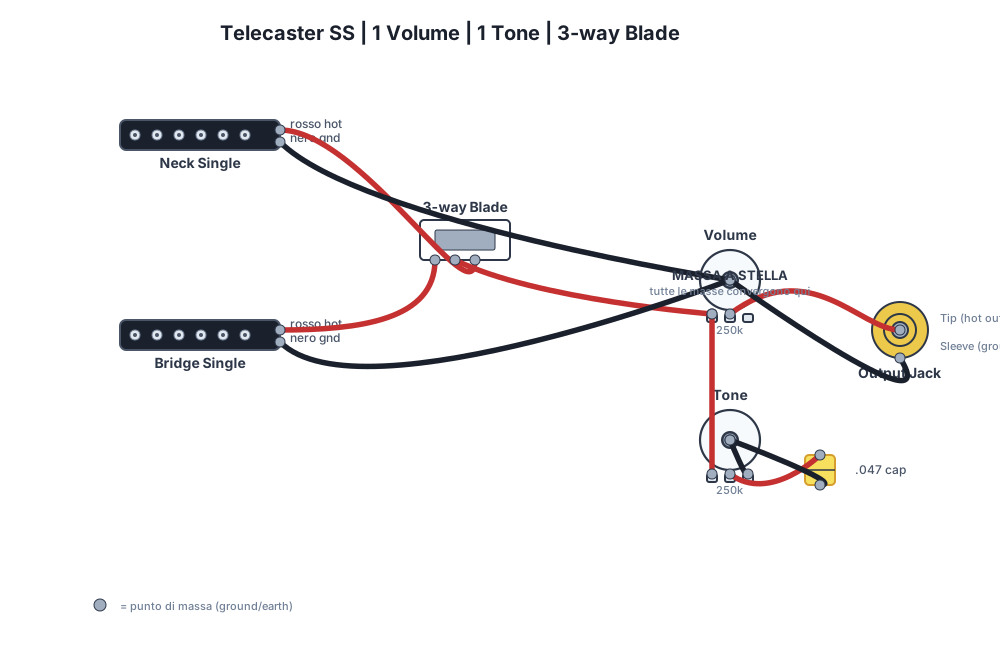
let's not forget about the Fender Telecaster. Less “quacky” than the Stratocaster, but with a percussive attack and scary clarity. The Telecaster has a more direct, “woodier” sound, and its single coils are known for their twang and their aggression. Many funk guitarists use the Tele precisely for this extra punch.
Here too, the Squier Classic Vibe '50s or '60s Telecaster It's a great alternative to the Strat. The pickups are different, more country/blues-oriented, but with a character that's perfect for rhythmic funk. It's a simpler guitar, without a tremolo, which some find advantageous in terms of tuning stability and resonance.
Option 3: The Versatile (and Often Underrated) Alternative
Here we enter a slightly different, but no less interesting, territory. We're talking about guitars that aren't "Fender clones" but that offer a very valid package. Yamaha Pacifica It's a name that often comes up when talking about value for money.
Models like the Pacifica 311H or 611FM are a prime example. They often offer an HSS configuration (humbucker in the bridge position, single coil in the middle and neck positions), which gives you the versatility of a humbucker for fuller, more powerful sounds, but also the brightness of single coils for funk. Pacificas are known for their solid construction, comfortable necks, and surprisingly high-quality hardware for the price.
Why might it be a good choice for funk?
- Versatility: If you don't play Alone funk, but also other genres, HSS has you covered a lot of bases.
- Build Quality: Yamaha has an unwavering reputation for the quality of its instruments, even in the budget range. The finish is often impeccable.
- Quality Pickups: Many models feature Seymour Duncan pickups (such as the 611FM), which are a significant upgrade over many stock pickups.
- Reliable Hardware: They often feature Wilkinson-style tremolo bridges or Grover tuners, which are a step up from the basic Squier hardware.
The downside?
- Less “Vintage Vibe”: Aesthetically and in terms of feel, they're more modern guitars. If you're looking for the look and feel of a '60s Strat, the Pacifica might not be your first choice.
- Bridge Humbucker: Although versatile, the bridge humbucker will never give that twang or quack pure than a single coil. For more traditional funk, you might prefer three single coils.
Option 4: The Second-Hand Market – The Hidden Gold
Here we're talking about risk, but also about potential gain. The used car market is a gold mine for finding your perfect fit. funk guitar. Sometimes, for the same budget as a new Squier Classic Vibe, you can take home a used Fender MIM (Made in Mexico).
Used Fender Player Stratocasters or Telecasters are often a fantastic deal. They're a cut above Squiers in terms of build quality, hardware, and sometimes even pickups.
What to look for in used cars:
- Fender MIM (Made in Mexico): The Standard or Player series are excellent. They have a more premium feel and are often reliable instruments.
- G&L Tribute Series: G&L are Leo Fender's guitars after he sold Fender. The Tribute series (import) offers incredible quality for the price, and their versions of the Strat and Tele (Legacy and ASAT) are often overlooked.
- Always check carefully: Scratches, dents, a loose truss rod, rattling electronics. If you're not an expert, take someone who knows what to look for. Don't be afraid to haggle if you find any flaws!
The risk: Buying a used guitar without seeing it or trying it out is a lottery. It could have hidden problems that will cost you more than the initial savings. But if you find it in a reputable shop with a warranty, or from a private individual who lets you try it out thoroughly, it could be the best solution for getting the best. best guitar for funk on a limited budget.
Final Advice and Alternatives
If your intention is to play funk, and you have a budget of around 400-600 euros, my recommendation goes straight to the Squier Classic Vibe '60s Stratocaster. It gives you the sound, feel, and rhythmic versatility you need without breaking the bank. It's a guitar that allows you to grow, learn how to set it up, and perhaps even swap out a few components to make it even more your own.
But if you're not convinced or want to explore something else:
- Fender Player Stratocaster/Telecaster (used): If you find a good deal, that's a significant step forward.
- Yamaha Pacifica 611FM: If you're looking for more versatility and aren't afraid of having a humbucker in the bridge position, this is a solid, well-built choice.
- G&L Tribute Legacy/ASAT Classic: Often overlooked, but they offer excellent value for money and a characterful sound.
- Harley Benton Fusion-T (or ST): For true tinkerers on a shoestring budget. These guitars offer incredible potential for modification, but they almost always require extensive setup and component work to bring out the best in them. I owned one, and after some serious tinkering, it became a fun instrument. But don't expect miracles straight out of the box.
Remember, the guitar is just an instrument. The funk sound comes from your hands, from your sense of rhythm. But having an instrument that responds well, that inspires you, and doesn't hold you back makes all the difference in the world. Don't be afraid to make mistakes, to try, to get your hands dirty. That's how you learn. And if I did it, you can do it too.
Oh, one last thing: don't underestimate the importance of a good setup. Even an expensive guitar, if poorly set up, will sound like crap. A well-set up Squier, on the other hand, can give even more prestigious instruments a run for their money. So, once you have your guitar, take it to a good luthier for a professional setup, or better yet, learn how to do it yourself. There are tons of guides online (and maybe one day I'll write a comprehensive one here on Biafax!) that show you how. It's one of the most rewarding parts of DIY guitar making.
I hope this guide helps you on your quest. Go, pick your weapon, and let's feel that groove!
To learn more about the technical specifications of the Squier Classic Vibe '60s Stratocaster, you can visit the official product page on the Fender website. here.
FAQ
Qual è la differenza principale tra una Stratocaster e una Telecaster per il funk?
La Stratocaster offre più sfumature sonore grazie ai suoi tre pickup single coil e al selettore a 5 vie, con quel tipico “quack” nelle posizioni intermedie, ideale per il funk più morbido. La Telecaster, con i suoi due pickup single coil (spesso con un humbucker al manico nei modelli più moderni), ha un suono più diretto, tagliente e con un attacco più percussivo, ottimo per un funk più aggressivo o per emergere meglio nel mix.
Quanto è importante la scala della chitarra per il suono funk?
La scala più lunga, tipica della Stratocaster (25.5 pollici), contribuisce a una maggiore tensione delle corde e a una brillantezza intrinseca del suono. Questo si traduce in un attacco più definito e una maggiore chiarezza tra le note, elementi fondamentali per il funk. Anche se una scala corta può essere comoda, per il suono funk la scala lunga è generalmente preferibile.
Download the Luthier Survival Kit
Free PDF with checklist, problem-cause table and project card template.
 English
  Italiano
Stuck on your build?
If you ran into the same problem or have a question, drop it in the comments. I read and reply to every one.
Write a comment