


Leo Fender's Guitar: 5 Secrets Behind Its Creation
When I find myself in the garage in the evening, hands covered in wood dust and the smell of tin in the air, installing a pickup or fret-dressing a neck, I often stop to think about who started it all. Not the luthiers of centuries ago, who carved precious woods for violins and lutes. I think of a different kind of genius, one who changed music not with age-old art, but with the practicality of a radio engineer: Clarence Leonidas Fender, known to all as Leo.
The history of his creations, the first Leo Fender electric guitars, it's not that of a craftsman who masterfully carved wood. It's the story of an inventor who, starting from scratch, rethought the musical instrument to adapt it to a world that was becoming increasingly electric and noisy. And he did it with an approach that, upon reflection, is incredibly close to our DIY spirit. No frills, just effective solutions.
I am not an expert in music history, let alone ancient lutherie. I learned to do things by getting my hands dirty, making mistakes, and redoing them. And when I study the genesis of the Fullerton icons, I find the same spirit. Leo was not a musician, he didn't play the guitar. This, paradoxically, was his greatest advantage. He was not tied to tradition, he had no prejudices. He saw a problem and looked for the most direct, most logical, most buildable.
If you enjoy tinkering with circuits, are thrilled by the idea of giving new life to an old axe, or even just curious to understand why certain guitars sound the way they do, then Leo's story and his five secrets are for you. It will give you a perspective that goes beyond the simple "buy and play" approach, and will make you appreciate the piece of wood and iron you hold in your hands even more.
The Context: When Music Demanded to Be Amplified


Before Leo Fender entered the scene with his revolutionary ideas, the world of music was already changing by leaps and bounds. The ’30s and ’40s saw the explosion of jazz, blues, and country, genres that increasingly demanded more volume to be heard in crowded concert halls or orchestral big bands. Acoustic guitars, however beautiful and nuanced, simply couldn't keep up. Their sound was too delicate, too easily overwhelmed by brass and percussion.
Early attempts at amplification focused on adding pickups to existing acoustic guitars. These first “electrified” instruments had a raw sound, often with limited volume, and, above all, suffered from a huge problem: feedback. The hollow body of the acoustic guitar acted like a megaphone in reverse, capturing the amplifier's sound and making it resonate endlessly, creating a sharp, annoying whistle that made it impossible to play at high volumes.
Musicians were frustrated. They wanted to be heard, they wanted to push the boundaries of their sound, but their traditional instruments limited them. It was a time of ferment, where technology was beginning to influence every aspect of life, and music was no exception. The need for a new instrument, capable of keeping pace with the power and energy of the emerging music, was in the air. It was the perfect fertile ground for an inventor like Leo Fender, who wasn't afraid to break the rules.
Leo, with his background as a radio technician, had a different perspective. He wasn't tied to centuries-old luthier traditions. He saw problems in terms of physics, electronics, engineering. And his pragmatic mind began to work on how to solve the limitations of existing instruments, not just by improving them, but by reinventing them from scratch.
Secret #1: The Solid Body – Goodbye Feedback, Welcome Sustain
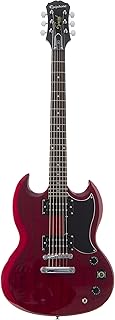

The first, and perhaps most revolutionary, of Leo's secrets was the idea of completely abandoning the soundboard. It seems trivial now, but at the time it was heresy. A guitar was, by definition, an acoustic instrument that produced sound through the resonance of the wood. Leo said, "What if it didn't?"“
His first Leo Fender guitars, The Broadcaster (later Telecaster) and the Stratocaster had a solid body. This solved two huge problems in one fell swoop:
- Goodbye Feedback: Without a resonating body that could interact with the amplifier's sound waves, feedback was virtually eliminated. You could turn the volume up as much as you wanted, and the guitar wouldn't whistle. It was an incredible freedom for musicians. Think of how many times we had to contend with feedback in live situations, perhaps with a poorly amplified acoustic. Leo cut to the chase.
- Sustain and Attack: A solid body, made of dense wood like ash or alder, transmitted string vibrations directly to the bridge and pickups more efficiently. This resulted in greater sustain and a more assertive attack, perfect characteristics for blues, country, and the nascent rock and roll.
From a construction standpoint, a solid body was also much simpler to make. No complex curvatures or internal bracing. It was a block of wood, milled to house pickups and electronics. This is a crucial point for us tinkerers. When you sit down to modify a guitar, you immediately understand the value of a good solid body. It's a stable, sturdy foundation that's forgiving of many small errors and allows you to focus on electronics or minor guitar work. You don't have to worry about resonance, just the mechanical transmission of vibrations.
I had one of my first DIY guitars in my hands, a Telecaster-like structure with a poplar body I shaped myself. It may not have been the finest wood, but its solidity allowed me to experiment with different pickups and electronic configurations without the body becoming an unknown quantity. It was a blank canvas, sturdy, ready for anything. And that's Leo's genius: he gave musicians, and us hobbyists, a solid foundation on which to build our own sound.
Secret #2: Screw-On Handle – The Modular Revolution
If the solid body was heresy, the bolt-on neck was pure provocation for traditional luthiers. Before Leo, the vast majority of guitars had the neck "glued" to the body (set-neck), a technique that required mastery and time, typical of classical luthiery. Leo looked at it with the eyes of an engineer and thought: "Why not bolt it?"“
This seemingly simple choice had enormous implications:
- Ease of Production: Screwing a handle together was infinitely faster and cheaper than gluing it and then finishing the joint. This allowed for much more efficient mass production, reducing costs and making the Leo Fender guitars accessible to more people.
- Substitutability: If a neck broke, became irreparably bent, or the guitarist simply wanted one with a different profile, all they had to do was unscrew the screws and snap on a new one. No complex lutherie work, no unsalvageable necks. For us DIYers, this is a blessing. How many times have we seen guitar kits with bolt-on necks? If you mess up a fret job or a finish, it's not the end of the world. Just order another neck and off you go.
- Adjustability: The bolt-on joint, though criticized by some for its supposedly lower sustain (a topic still debated and often disproved by the facts—just listen to a Telecaster), offers great flexibility. Shims can be used to adjust the neck angle and achieve perfect action, which is much more difficult with a glued neck.
Personally, I've had to deal with bolt-on necks since my first guitar. I remember the frustration of having the action too high on a cheap Stratocaster. Instead of taking it to the luthier for an expensive neck reset (which wouldn't have made sense on a €200 guitar), I learned to use shims. I cut a strip of fine sandpaper, put it in the neck pocket, and re-bolted it. A few minutes, a few tries, and the action was perfect. That's the power of Leo's modularity. It gives you the tools to fix problems yourself, without having to be a master luthier.
The bolt-on neck, usually made of maple, with or without a separate fingerboard (often rosewood or maple), became a trademark, a symbol of practicality and accessibility that democratized the instrument. It wasn't just an engineering solution, but a true manifesto of the DIY philosophy ante litteram.
Secret #3: Simple and Effective Electronics – The Heart of the Sound
Leo Fender was an electronics engineer, not a luthier. This is crucial to understanding the third secret: the electronics in his guitars, while revolutionary, were incredibly simple. No complex circuits, no esoteric magic. Just components chosen for their effectiveness, robustness, and ease of production.
The first ones Leo Fender guitars They featured single-coil pickups. These pickups, with their single coil of wire wrapped around magnets, produced a bright, crystalline sound with a percussive attack and exceptional clarity. They were perfect for the twang of country, aggressive blues, and the emerging rock and roll. Sure, they had the “defect” of picking up 50/60Hz hum, but their sound was unmistakable and defined generations of music.
The basic circuit was equally simple:
- Pick-up: One, two or three single coils.
- Potentiometers: One for overall volume, and one or two for tone (often one tone for the neck and middle pickups, and one for the bridge pickup, or an overall tone).
- Pickup Selector: A simple 3 or 5 position switch to choose which pickups to use or combine them.
- Capacitors: Few, but good, to shape the response of the tone controls.
This simplicity is a godsend for those of us who enjoy tinkering with electronics. Open the pickguard of a Stratocaster or the control plate of a Telecaster and you'll find a clean, intuitive layout. There are no complex schematics to decipher. It's easy to swap out a potentiometer, change a capacitor to alter the tone, or experiment with different pickups.
I remember when I wired my first guitar from scratch. I had a schematic of a Telecaster, two potentiometers, a three-way selector switch, and two single-coil pickups. It seemed like a mountain, but by following the schematic step by step, solder by solder, I saw the circuit take shape. When I plugged everything into the amplifier and heard the sound come out, clean and powerful, it was incredibly satisfying. And much of that ease is thanks to Leo, who designed circuits that worked well without being a nightmare to assemble or repair.
A little practical tip: if you have a single-coil guitar and the hum bothers you, you can significantly improve things by shielding the electronics cavities with copper tape. It's a painstaking job, but I assure you, you'll hear the difference. It's a classic garage repair that Leo, with his practical mindset, would certainly have appreciated.
Secret #4: The Functional Bridge – Stability and Intonation
The bridge of a guitar is a fundamental component. It's the point where the strings anchor to the body and where the vibrations are generated that the pickups then capture. Here too, Leo Fender applied his philosophy of functionality and simplicity, creating solutions that have become standards.
Take the Telecaster bridge, a true masterpiece of minimalist engineering. It was a sturdy metal plate, often steel, that anchored the strings through the body (string-through-body). This not only provided exceptional sustain, but also incredible stability. The three brass saddles, each holding two strings, were adjustable for height and intonation. Simple, sturdy, effective. The Telecaster's twangy, crisp sound owes much to this bridge.
Then came the Stratocaster, and with it another innovation: the synchronized tremolo bridge. The idea of giving the guitarist the ability to vary the intonation of the strings for vibrato effects wasn't new, but Leo created a system that was stable, reliable, and would return to its original pitch after use. Each string had its own independent saddle, allowing for even more precise intonation.
The Stratocaster tremolo design is a perfect example of how practicality can generate art. It required careful configuration of springs and tension, but once set up well, it was a powerful tool for expressiveness. Many complain about the stability of vintage tremolos, but if well set up, especially with good saddle locking and careful material selection, they can work wonders. I myself have seen guitarists perform incredible dive bombs with original ’50s tremolos without losing tuning.
For those of us who work on guitars, understanding the bridge is crucial. Intonation, string height (action), and stability all depend on a good bridge and proper setup. I've spent hours adjusting saddles, balancing tremolo springs, and finding that sweet spot where the guitar sounds good, holds its tune, and responds to my touch. It's a finely tuned job that requires patience and a good set of hex keys, but the satisfaction of a perfectly intonated guitar is priceless.
A well-designed bridge, like those Leo created, simplifies your life. It allows you to focus on the sound, on your technique, without worrying about the guitar going out of tune with every bend. And if something breaks, like a saddle, it's easy to replace. This is Leo's practical genius: robust and repairable solutions. To delve deeper into the evolution of these designs, you can check out authoritative sources like the historical section on the official Fender website, where technical details and anecdotes about early models and their components are often published. Another valuable resource is Tony Bacon's book “The Fender Electric Guitar Book”, which delves deep into the technical specifications and history of each model.
Secret #5: Mass Production – The Guitar for Everyone
Last but not least, Leo Fender's secrets didn't concern a single component, but the entire approach to creating his guitars: mass production. Leo wasn't a luthier who built one piece at a time. He was a man with an industrial mindset, accustomed to efficient and standardized production processes.
His goal wasn't to make a thousand-euro guitar for a select few. He wanted to create an instrument that was reliable, functional, and, above all, accessible to the masses. And to do so, he applied the principles of mass production that were gaining ground in other sectors.
- Standardization of Components: Every part, from the body to the neck, from the pickups to the hardware, was designed to be interchangeable. This meant you could assemble guitars faster and repair them easily by replacing the defective part with a standard one.
- Simplified Processes: Body shapes were simple, often slab-shaped, and easy to cut and mill. Bolt-on necks eliminated the need for complex joints. The finish was also often more industrial than the glossy, delicate lacquers of traditional guitars.
- Quality control: Despite mass production, Leo was obsessed with quality and reliability. Each instrument had to function perfectly and withstand the musicians' intensive use.
The impact of this mentality has been gigantic. The Leo Fender guitars They were the first truly mass-produced electric guitars. They put a professional instrument in the hands of thousands of musicians, from Nashville pros to kids dreaming of starting a band in their garage. They fueled the rock and roll revolution because they were guitars you could buy, play, and abuse without too much fuss.
For those of us who enjoy DIY, this philosophy is the foundation of everything. Think of the guitar kits available today: pre-drilled bodies, ready-made necks, and electronics to assemble. It's the modern embodiment of Leo's philosophy. It allows us to build decent-quality instruments with hobby tools, without having to own a full-fledged lutherie workshop. We don't have to be master carvers, but careful assemblers and skilled welders.
Leo demonstrated that artisanal perfection is not needed to create a functional masterpiece. What's needed is ingenuity, practicality, and the ability to think outside the box. And, let's face it, this is a message that gives us a lot of courage when we face a project that seems too big for our hands. If they succeeded, with the technologies of the time, think about what we could achieve, armed with a soldering iron and a lot of passion. The garage awaits, and the next guitar is there, eager to be assembled or modified.
Leo's Legacy: Beyond the Secrets, the Sound
The five secrets we've explored—the solid body, the bolt-on neck, the simple electronics, the functional bridge, and mass production—aren't just technical details. They were the pillars on which Leo Fender built an empire, but above all, he built a sound. The sound of hundreds of thousands of Leo Fender guitars who shaped modern music.
Think of the unmistakable "twang" of a Telecaster, its percussive attack and crystalline clarity. Or the bright, versatile, almost "liquid" tone of a Stratocaster, capable of shifting from a rasping blues to an ethereal clean. These sounds didn't happen by chance. They're the direct result of those design choices, that mix of engineering and practicality.
His guitars weren't just instruments; they were platforms. Platforms on which generations of musicians could express themselves, experiment, and invent new genres. From Muddy Waters' blues to Jimi Hendrix's psychedelic rock, from Dick Dale's surf to Nile Rodgers' funk, Leo's creations were at the center of it all. They gave voice to an entire culture.
For me, every time I pick up one of these icons, or even a guitar inspired by his designs, I don't just see a piece of wood and metal. I see the story of a man whose pragmatic vision enabled me and millions of others to make music. I see proof that you don't have to be an academic genius to leave an indelible mark. You have to observe, listen, try, and, above all, not be afraid to do things differently.
And this, ultimately, is the true spirit of DIY. It's not just building something with your own hands. It's understanding how things work, why they were made a certain way, and then maybe, with a little courage, trying to improve them or make them your own. Leo's guitars aren't just instruments; they're a living lesson in design, innovation, and entrepreneurial spirit. And if a man who didn't play the guitar managed to revolutionize the world of music, imagine what we could do, armed with a soldering iron and a lot of passion. The garage awaits, and the next guitar is there, itching to be assembled or modified.
FAQ
What makes Leo Fender guitars so iconic and durable?
Their iconic status and lasting popularity stem from a combination of innovative designs, impeccable functionality, and a distinctive sound that adapts to a wide range of musical genres. Leo Fender's pragmatic approach to construction, focused on modularity and ease of production, made his guitars accessible and easily repairable, contributing to their longevity.
What was the real difference between Fender and Gibson guitars at the time?
The main difference lies in the design approach: Fender focused on mass production, construction simplicity (solid body, bolt-on neck) and a bright and sharp sound, ideal for emerging genres like rock and roll. Gibson, on the other hand, maintained a more luthier-craft tradition, with set necks, semi-hollow or more massive solid bodies and a warmer, deeper sound with greater sustain, perfect for blues, jazz and more traditional rock.
For further technical details you can consult this external resource.
The five secrets of Leo Fender are not just technical details, but the demonstration that functional design and accessibility can create icons. His pragmatic approach has made his guitars sound platforms for generations, inspiring not only musicians, but also us hobbyists to get to work. If a man who didn’t play the guitar could revolutionize the musical world, think about what you can do with a little passion and the right tools.
Download the Luthier Survival Kit
Free PDF with checklist, problem-cause table and project card template.
 English
  Italiano
Stuck on your build?
If you ran into the same problem or have a question, drop it in the comments. I read and reply to every one.
Write a comment