

Songs for electric guitar from the '50s: 5 milestones that changed everything
When we think of the 1950s, many immediately picture black and white images, full skirts, jukeboxes, and cars with exaggerated spoilers. But for those of us who tinker with wood, wire, and solder, the 1950s were much more. They were the 00s, the time when the electric guitar it has gone from curiosity to a true force of nature. It is here that the music that still makes us tap our feet today was born. It's not just a matter of notes or chords. It's the story of how a piece of wood with pickups on it became the voice of an entire generation. And, believe me, there's a lot to learn from those pioneers, even if today we build or modify instruments with techniques they could only dream of. That desire to experiment, to bring out a new sound, is the same one that drives us in our garage.
The noise that woke the world: electric takes center stage



It is often debated which was the first true rock and roll song. Many point to “Rocket 88”. Listening to it today, it might not seem like much of a sonic revolution. But put yourselves in the shoes of those who heard it in 1951. The guitar riff, played by Willie Kizart, is raw, distorted, almost angry. The story behind that sound is legendary, and a bit “alla Mimmo” too. It is said that the amplifier, a Fender Deluxe, fell from the car roof during the trip to Sam Phillips' recording studio (yes, the one from Sun Records). The speaker cone was torn. Instead of changing it, they thought: “Oh well, let's try it anyway”.
The sound of damage
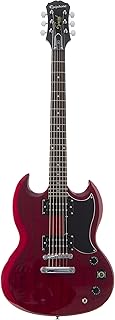

That damage created a signal saturation, a harmony rich in odd harmonics that today we call distortion. An "error" that opened up a world. This is the beauty of the DIY: sometimes the best solutions are born by mistake, or out of necessity. How many times have we tried a circuit that went wrong and discovered that “it sounds strange, but it's interesting”? Kizart probably used a Gibson ES-125 or a Harmony H44, semi-acoustic archtop guitars with P-90 or similar pickups. Nothing special for the time, but with that mistreated amp, the result was a dirty, bad, screaming sound. It laid the groundwork for everything that came after in terms of sonic aggression.
What we learn
From “Rocket 88” we learn that perfect or pristine equipment is not always necessary. Sometimes, a small defect, a torn cone, a component a bit out of spec, can be the key to a unique sound. It's a lesson I also learned in my garage: don't be afraid to experiment, even with what “shouldn't” work. Maybe you'll come up with your next big idea for a modification. For those who want to try to replicate some of that “grit” from the '50s without wrecking an amp (which would be a bit of a shame), a good light overdrive, set almost like a boost, can do the trick. Look for something that doesn't “compress” the sound too much, but lets it breathe, with a touch of fuzz.
2. “Johnny B. Goode” – Chuck Berry (1958): the immortal riff
If there is one song for electric guitar which is the emblem of the 50s, is “Johnny B. Goode”. Chuck Berry didn't invent rock and roll, but he certainly wrote its instruction manual. His playing style was an explosive mix of blues, country, and contagious energy that spoke directly to young people. The opening riff, those double stops that jump up and down the fretboard, has become one of the most recognizable in history. It's a must-learn for anyone who picks up an electric guitar and wants to learn to play something iconic. And it's not just the riff: it's his way of playing the verses with a rhythmic and melodic accompaniment at the same time, of fitting in bends and vibratos.
Chuck's Guitar: A Gibson with a Secret
Chuck Berry was almost always seen with his trusty Gibson ES-350T, a thin-body semi-acoustic guitar with two P-90 pickups. It was an elegant guitar, but he made it scream. P-90s are single coils with a higher output than traditional Fenders, capable of a bright sound but also with good body when pushed a bit. Chuck’s peculiarity was his approach: he used the amplifier as an integral part of the sound, not just as a megaphone. He often relied on small combo amps, pushed to their limit. The result was a sound that cut through the mix, with a certain “crunchiness” that made it unmistakable.
The art of the “lick”
His style was not made of very long and complex solos, but of “licks” memorable, small musical phrases that got into your head and never left. He was a master of melody and rhythm, capable of making the guitar “sing” like few others. Even today, every time I hear that riff, I feel like picking up my Strat and trying to get a similar sound. It's not easy, because there's a lot of feeling in there, but it's a great exercise for timing and precision. When talking about guitar modification, I often think of Chuck Berry. He didn't have any sophisticated effects pedals. His "effect" was in his hands, his touch, and the way he pushed his Gibson and his amp. This reminds us that sometimes, before buying yet another pedal, it's useful to focus on how we interact with the basic instrument.
3. “Hound Dog” – Elvis Presley (with Scotty Moore on guitar) (1956): Rockabilly takes flight
one cannot speak of 50s electric guitar songs without mentioning Elvis Presley. Or rather, Scotty Moore, the guitarist who defined the sound of the King. “Hound Dog” is a perfect example of his style: clean but with incredible energy, full of bends and fast patterns that seemed almost country, but with a rock attitude. Scotty Moore was one of the first true “guitar heroes”. His way of playing, with those lightning licks and impeccable timing, influenced generations of musicians. He wasn't just an accompanist, he was a fundamental part of Elvis's sound, a true co-star.
The Gibson ES-295 and Scotty's amp
His most famous guitar, at least during that period, was a golden Gibson ES-295. It was a hollow body, therefore a guitar with a soundbox, but with P-90 pickups that gave it a bright and powerful sound. The ES-295, with its unmistakable look and Bigsby vibrato, was a gem. For amplifiers, Scotty often used a Ray Butts EchoSonic combo, an amplifier that also had a built-in tape echo effect. This allowed him to have that slight slapback delay that became a trademark of rockabilly. This is an example of how equipment, even if “rudimentary” by our standards, could be used creatively to define a genre.
The rockabilly touch
His style was a fusion of country fingerpicking, blues, and an incredible ability to create short but incisive solos. Listen to his solos: they are full of character, with notes that 'speak'. The beauty is that they are not technically impossible. They require precision, yes, but above all, feeling. When in my workshop I happen to get my hands on a guitar with P-90s, I always think of that sound. They have a dynamic and a response that modern humbuckers sometimes struggle to replicate, especially if we are looking for that 'twang' but with body. It's a sound that teaches you to use the volume control on the guitar to clean up or dirty the sound, an art that is often forgotten today.
4. “Summertime Blues” – Eddie Cochran (1958): the anthem of rebellious youth
Eddie Cochran was a bolt from the blue in the music scene of the 1950s. A pure talent, gone too soon. But he left an enormous legacy, and ’Summertime Blues“ is perhaps his masterpiece. It's a song for electric guitar that speaks directly to youthful frustration, with a powerful riff and a killer attitude. Its sound is raw, direct, almost proto-punk. It is one of the first examples of a guitar that doesn't just provide accompaniment or a solo, but becomes an integral part of the narrative, almost a character. The main riff is simple, based on power chords, but it's damn effective.
The Gretsch 6120 and its “twang”
Eddie Cochran is inextricably linked to his Gretsch 6120 Chet Atkins. This guitar, with its hollow body and Filter’Tron pickups, had a very particular sound: bright, with a lot of “twang”, but also with a good amount of body. The Bigsby vibrato, then, was the icing on the cake for his effects. Gretsch guitars of that period were beautiful instruments, with a very defined aesthetic. They were often used in country music, but Eddie brought them into rock and roll, demonstrating their versatility. Filter’Tron were humbucker pickups, but with a more open and less compressed sound than classic PAF Gibson. This made them perfect for that mix of cleanliness and grit that characterized Cochran.
The “power chord” and the attitude
The way Eddie used power chords, with that slight break between one beat and the other, gave a sense of urgency, of controlled anger. And then there was his voice, which alternated between a sly singing and a liberating scream. “Summertime Blues” is proof that you don’t need to be a virtuoso to create something immortal. You need a strong idea and the ability to express it with the guitar. I tried to replicate Eddie Cochran’s sound with my Gretsch Electromatic, and I assure you that the key is the amp. You need a tube amp that can saturate at non-excessive volumes, to get that natural compression without losing definition. And a good tone setting on the guitar is essential. If you want to try your hand at your guitar’s electronics to bring out a bit of that “twang” but with more body, perhaps by playing with the values of the tone capacitors, take a look here: guitar modification. Sometimes it takes very little to change the character of an instrument.
5. “Rumble” – Link Wray & His Ray Men (1958): the forbidden sound
We close our overview with a piece that was so controversial it was banned by several radio stations: “Rumble” by Link Wray. This is not just a song, it's a statement of intent. It's the sound of rebellion, of controlled violence, of an aggressiveness that was unprecedented in popular music. “Rumble” is an instrumental track, but Link Wray's guitar speaks volumes. There are no sophisticated effects, just a raw, distorted sound, with feedback that was not a mistake, but a deliberate element. It's proof that sometimes to make noise, all it takes is an idea, a bit of courage, and an amplifier pushed to the maximum.
Link Wray's Homemade Fuzz
It is said that Link Wray achieved that unique sound by piercing the speaker cones of his amplifier with a pencil, or a screwdriver. A bit like Willie Kizart with "Rocket 88", but here the intent was deliberate. He wanted a nastier sound, more "fuzz". And he got it his way. He used several guitars, including a Danelectro U2, with its characteristic "lipstick" pickups, and also a Les Paul. But the guitar was almost secondary to the treatment he gave the amplifier. He was a pioneer in the use of feedback and distortion as expressive elements, not as unwanted noise. He paved the way for all psychedelic rock, garage rock, and punk.
The thrill of transgression
Listening to “Rumble” is an experience. That deep, menacing sound, with its slow, hypnotic vibrato. It makes you understand that music doesn't necessarily have to be “beautiful” in the traditional sense. It can be powerful, disturbing, and precisely for that reason, unforgettable. It's the quintessence of “less is more” applied to noise. For us who disassemble and reassemble guitars, Link Wray is a hero. It teaches you that you don't necessarily need the most expensive boutique fuzz pedal. Sometimes, a simple boost circuit pushed to the max in a tube amp, or even just a pickup with a higher-than-normal output, can give you that grit. I tried to replicate that sound with an old transistor amp and a homemade boost, and even if it's not the same thing, the attitude is there. That's the beauty of DIY: you can experiment, you are not afraid of “ruining” something, because you know you can always fix or redo it.
The dawn of electric sound: Fender, Gibson and the American Dream
Before diving into the songs, it's essential to understand the context. The ’50s were not just an economic boom, but an explosion of technological creativity. In this scenario, two names above all dominated the electric guitar market: Fender and Gibson. Leo Fender, a self-taught genius, with his Telecaster (born in ’50 as Broadcaster) and then the Stratocaster (from ’54), created solid body instruments, robust, easy to mass-produce, and with a bright and sharp sound. They were guitars designed for the professional musician, but also for the enthusiast who wanted something new.
The Solid Body revolution
The Telecaster, with its simple design and its “twangy” sound, immediately became a classic. The Stratocaster, with its three pickups, vibrato, and ergonomic shapes, raised the bar. Fender was not a guitarist, but he had an incredible ability to understand what was needed on stage.
On the other hand, Gibson, a company with a long history in the world of acoustic instruments and archtop guitars, responded with the Les Paul in 1952. Initially it was not an immediate success, but over time, thanks to its warmer and fuller sound provided by the humbuckers (introduced in ’57) and its more “traditional” construction, it became the other undisputed icon.
The human context: a garage against a factory
Leo Fender operated from a small workshop in California, a very “garage” and pragmatic approach. Gibson, on the other hand, was a more structured factory, with a more classic lutherie heritage. This dualism created two guitar “philosophies” that still define the market today. It's not about which is better, but which better suits a certain type of sound or musician. The choice between a Fender single coil pickup and a Gibson humbucker, for example, is one of the first big decisions an electric guitarist has to face.
The sound of change: pickups and amplifiers
At the base of every great song for electric guitar ’50s There’s a winning combination of pickups and amplifiers. Pickups are the guitar’s “microphones”, they transform string vibrations into an electrical signal. In the ’50s, we saw the birth and spread of legendary pickups.
Pickup: the beating hearts
Fender single coils, with their bright and defined sound, were perfect for country and early rock and roll. Gibson P-90s, more powerful and with a sound straddling single coil and humbucker, gave grit to many archtops and early Les Paul Special/Junior models. Then, in ’57, Seth Lover at Gibson invented the humbucker, a dual-coil pickup designed to cancel hum and offer a fuller, more powerful sound. The Les Paul Standard with humbuckers became a legend.
Amplifiers: the engine of sound
And the amplifiers? Leo Fender didn't stop at guitars. His amplifiers, like the Bassman, the Twin Reverb, the Deluxe, became an integral part of the sound. They were tube amps, capable of natural distortion when pushed to the limit. Gibson had its amps, like the GA-40, and brands like Magnatone and Supro offered interesting alternatives, often with integrated effects like vibrato. The interaction between the guitar and the amplifier, often pushed to its breaking point, was key to achieving those raw and powerful sounds that defined the era.
The cultural impact: not just music, but a new language
The 50s electric guitar songs They were not just entertainment. They were the sound of youth rebellion, of freedom, of a world that was changing. The electric guitar, with its volume and versatility, became the perfect instrument to express these new energies.
The voice of a generation
Rock and roll shook the foundations of society. Parents didn't understand, kids loved it. The electric guitar was at the center of this revolution. It was the sound heard on radios, in juke-boxes, in dance halls. It was the sound that made people dance, that made them dream, that made them feel alive.
Beyond rock: electric blues and country
But it wasn’t just rock and roll. In the 50s, blues and country also embraced the electric guitar. Musicians like B.B. King with his Gibson, or Chet Atkins with his Gretsch, showed how the electric guitar could be a sophisticated and melodic instrument, capable of expressing deep emotions. These genres, though distinct, shared the same drive towards sound innovation.
The DNA of Rock: What Electric Guitars of the '50s Left Us
These five milestones of the electric guitar They are not just songs. They are lessons in history, sound engineering, and pure musical instinct. They show us how innovation, whether accidental or intentional, can change the course of things. What guitarists of the 50s taught us is that the electric guitar is not just an instrument for playing notes. It is an extension of our voice, a means to express emotions, rebellion, joy. And that, sometimes, the most memorable sounds come from a broken amp, a crazy idea, or a stubborn search for something new.
The Legacy of the Pioneers
- Experimentation: Don't be afraid to try new things, even if they seem "wrong." Maybe you're about to discover your next signature sound.
- Simplicity: Often, the most effective sound is the most direct one. You don't need a thousand effects if the riff and touch are just right.
- Character of the equipment: Every guitar, every amp, every pickup has its own voice. Learn to know it and use it to its fullest, instead of trying to make it sound like something else.
- The touch: Ultimately, the magic is always in your hands. Equipment helps, but it's how you interact with it that makes the real difference.
I spent years in my garage trying to figure out how to get certain sounds out, and I often found myself looking back at these masters. They, with much more limited means than ours, created an entire musical language. And the most beautiful thing is that this language is still alive, still in evolution, ready to be learned and rewritten by each of us. So, the next time you pick up your electric guitar, think of those guys from the ’50s. Think of Leo Fender mounting pickups on wooden planks, Les Paul sawing guitars in half, Link Wray punching holes in cones. And remember that if they succeeded with so little, you, with your desire to do and the tools you have available, can do incredible things. Don't be afraid to make mistakes, to redo, to get your hands dirty. That's how you learn. For those who want to delve deeper into the history of these instruments and their creators, an excellent resource is the book “The Story of the Electric Guitar” by Michael Heatley, which offers a detailed look at the evolution of these instruments and iconic brands. It's a read I recommend to all enthusiasts, because understanding where we come from helps us understand where we can go.
FAQ
Which guitars were most popular in the ’50s for these genres?
In the ’50s, the most iconic guitars for rock and roll, rockabilly, and electric blues included models like the Fender Telecaster and Stratocaster, the Gibson Les Paul (introduced in ’52), Gibson hollow body guitars like the ES-175, the ES-295, and the semi-hollow ES-335 (introduced in ’58), and Gretsch guitars like the 6120. Even more affordable but effective instruments like Danelectro and Harmony were present on the scene.
How can you get a “50s” sound today with modern equipment?
To achieve a ’50s-inspired sound today, focus on simplicity and the interaction between guitar and amplifier. Use tube amplifiers, even small ones, and push them towards natural saturation. For guitars, single coil pickups (like Fender or P-90 Gibson) offer brightness and dynamics, while vintage humbuckers (PAF) provide more warmth. Effects like a good light overdrive, a tremolo, or a tape echo can add that vintage touch, but the essence lies in the guitarist’s touch and the instrument’s response.
For further technical details you can consult this external resource.
Download the Luthier Survival Kit
Free PDF with checklist, problem-cause table and project card template.
 English
  Italiano
Stuck on your build?
If you ran into the same problem or have a question, drop it in the comments. I read and reply to every one.
Write a comment