So, let's be clear: the PRS SE Custom 24 it’s a bit like that acquired relative everyone has. The one you hear a lot about, but you never know if the effusive praises are true or if there’s some hidden flaw. In the world of electric guitars, especially those that want to project a “premium” vibe without emptying your bank account, this PRS model (Paul Reed Smith, for those who don’t know) has carved out a huge market share. And it’s no coincidence. For someone like me, who has spent years disassembling, reassembling, soldering, and milling in the garage, such a guitar is not just an instrument. It’s a foundation. A starting point. A test bench to see how far the concept of “good but improvable” can be pushed. And believe me, I’ve seen plenty of guitars that promise the moon and the stars and then turn out to be complete failures. This one, however, has something special. But it’s not perfect, and I’ll tell you why right away. If you’re here, you’ve probably already spotted a PRS SE Custom 24. Maybe you’ve seen it in some video, you’ve tried it in a store, or simply heard about it as the “PRS for everyone”. The problem is that online reviews are often polarized: either it’s the absolute masterpiece that changes your life, or it’s a Chinese rip-off that’s not worth the money spent. The truth, as often happens, lies in the middle. And my job here is to give you an honest perspective, from someone with sawdust and solder on their hands, not from a salesperson. Those looking for this guitar usually have a well-defined budget, but don’t want to give up a certain level of build quality and, let’s face it, an aesthetic that makes an impression. Maybe it’s their first “real” guitar after an entry-level one, or they’re looking for a reliable workhorse for live performances, or again, like me, they’re looking for a solid platform for some experiments in modification and upgrade. The point is: the PRS SE Custom 24 is it worth your money? And, above all, is it the right guitar for YOU? Let's try to understand it together, without beating around the bush.
An Aesthetic That Speaks for Itself: The PRS Charm
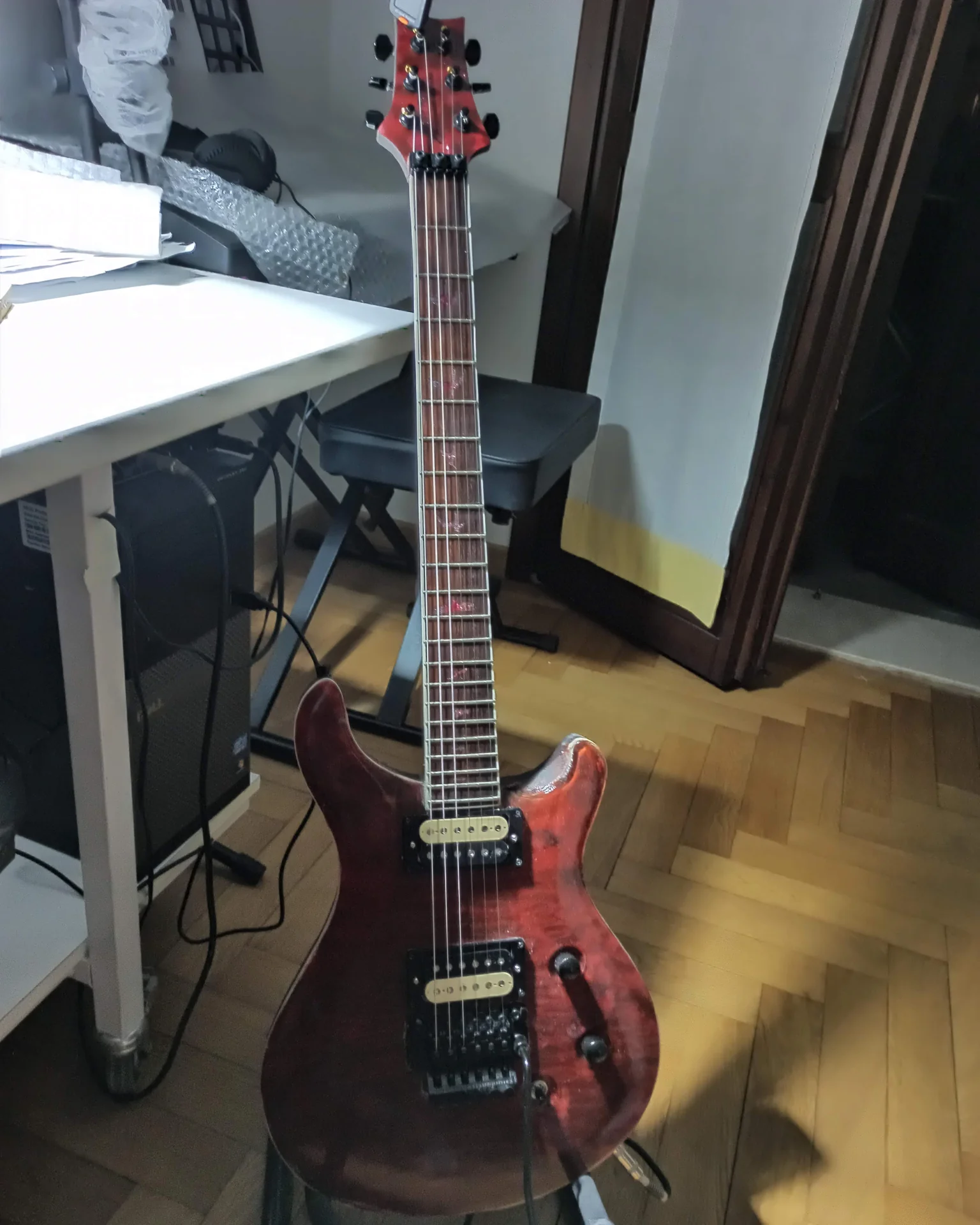
The first thing that strikes you about the PRS SE Custom 24 is, without a doubt, its aesthetics. PRS has an eye for design that few can match. Even in the SE series, which is produced in Asia to keep costs down, the attention to detail is palpable. The woods are carefully chosen, the finishes are often impeccable, and that “PRS” body profile is unmistakable. Versions with flamed or quilted maple veneer tops are a real feast for the eyes. They look like guitars that cost twice as much, if not more. And I'm not just talking about aesthetics for their own sake: a guitar you enjoy looking at and holding in your hand is a guitar that inspires you to play more. This is a factor that, in my opinion, should never be underestimated, especially for those taking their first serious steps into the world of guitar. The body shape, a mix between a Stratocaster and a Les Paul, is ergonomic and well-balanced. It's not too heavy, it's not bulky. The upper cutaway, with its typical PRS “horn” shape, allows easy access to the higher frets, which I really appreciate when I find myself doing solos or looking for notes in extreme positions.
Technical Features: What's Under the Hood?
Advertisement
PRS SE Custom 24 Exclusive, Orange Tiger Smokeburst
Before delving into the sensations and opinions, let’s take a look at the technical specifications. It is essential to know what we are getting our hands on. Features may vary slightly depending on the year of production or special editions, but the core remains the same.
Body Wood: Usually a mahogany body, often with a maple top, which can be solid or veneered maple (Flame or Quilted Maple finishes). Mahogany offers warmth and sustain, while maple adds brightness and attack. The combination is classic and very effective for a versatile guitar.
Neck Wood: Mahogany, as is traditional for PRS, with a profile that is generally described as “Wide Thin” or “Standard”. This profile is usually comfortable, not too thick it is too thin, suitable for a wide range of hands. Some newer versions might have maple necks, but mahogany is the most common for the SE Custom 24.
Keyboard: Rosewood (Rosewood) is the standard, sometimes ebony on particular or more recent models. The ebony offers a smoother feel and a brighter response, while rosewood is warmer and more traditional. Rosewood fretboards are usually well treated and finished on the SE series.
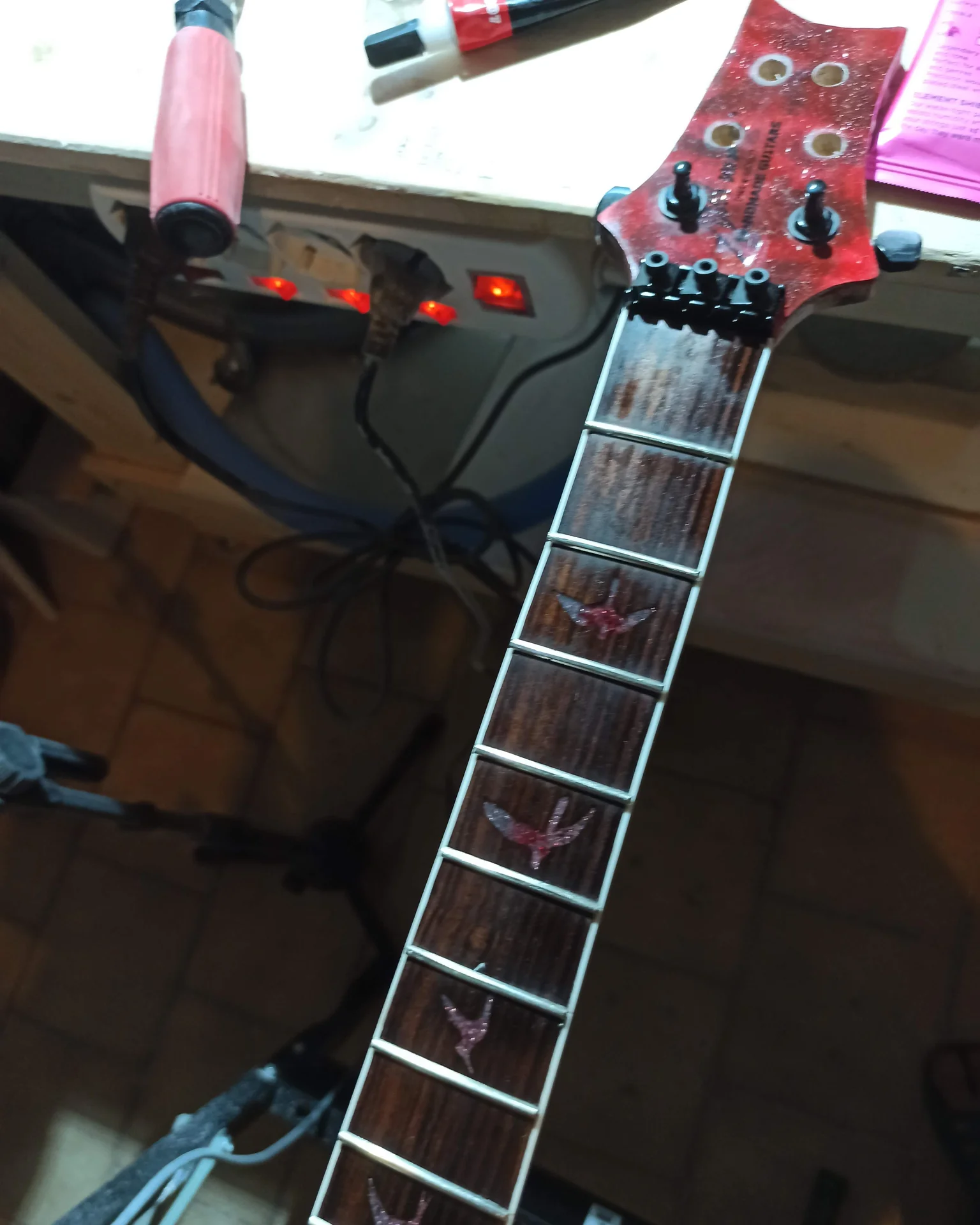
Fretboard Inlays: PRS's iconic bird-shaped inlays are a hallmark. On the SE series, they are usually made of plastic or synthetic mother-of-pearl, but visually they look great.
Stairs: The typical scale length is 24.75 inches, a middle ground between Fender (25.5″) and Gibson (24.75″). This contributes to a slightly softer feel on the strings and a tone that combines some Fender attack with Gibson fullness.
Pick-up: The PRS SE Custom 24 usually features a pair of humbuckers, often the PRS-Designed SE HFS (High-Frequency Stamped) models or similar, designed to offer versatility. Many newer models feature TCI “S” (Tuned Capacitance Inductance) pickups. These pickups are designed to be robust, with a good balance of highs, mids, and lows, suitable for a variety of genres.
Electronics: Standard controls with volume, tone, and a 3-way pickup selector. Some models have a push-pull on the tone potentiometer to split the humbuckers (to get a single-coil sound), significantly increasing versatility. This is a feature I have always found essential.
Hardware: SE guitars feature good quality hardware, often with a PRS-style tremolo bridge (2-point) designed to be stable and allow expressive use without sending the guitar out of tune. The tuners are usually locking, which facilitates string changes and maintains tuning.
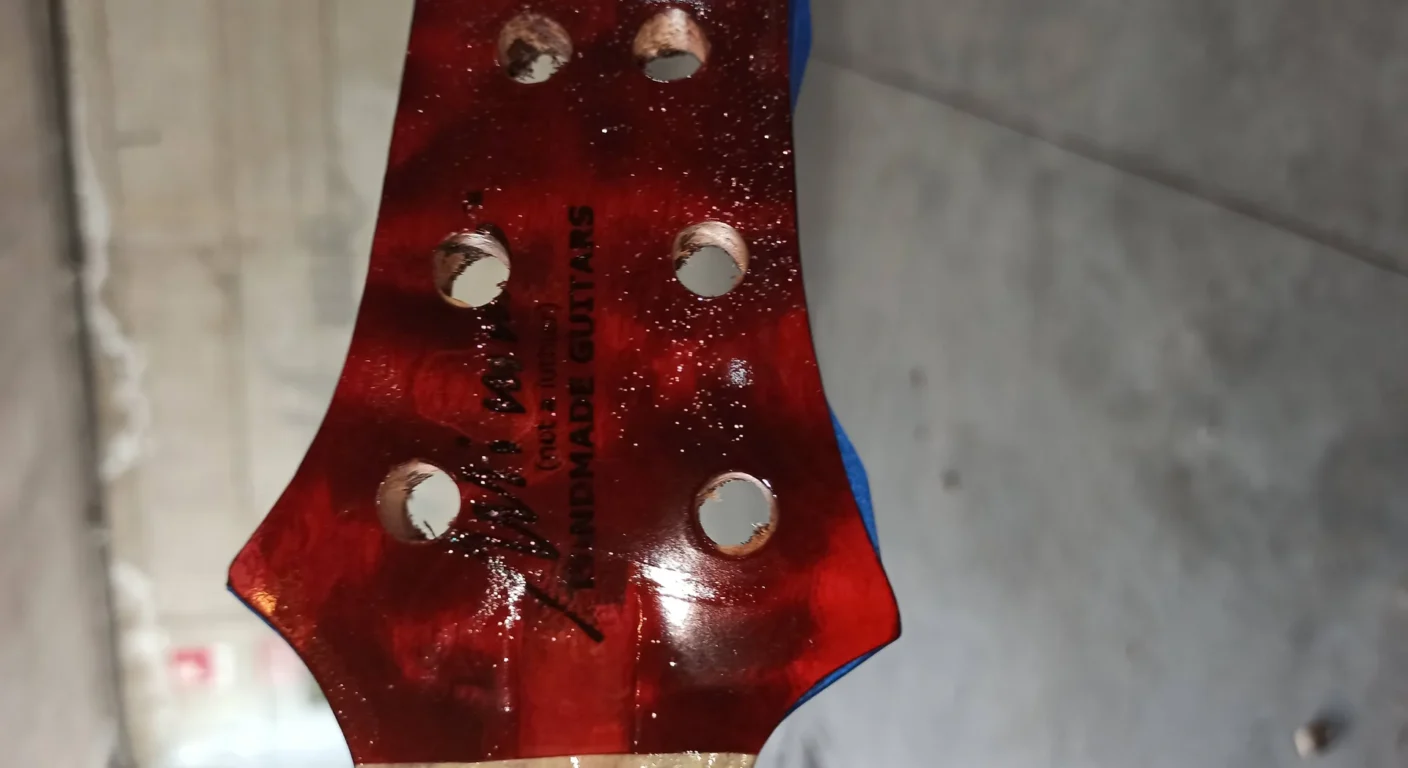
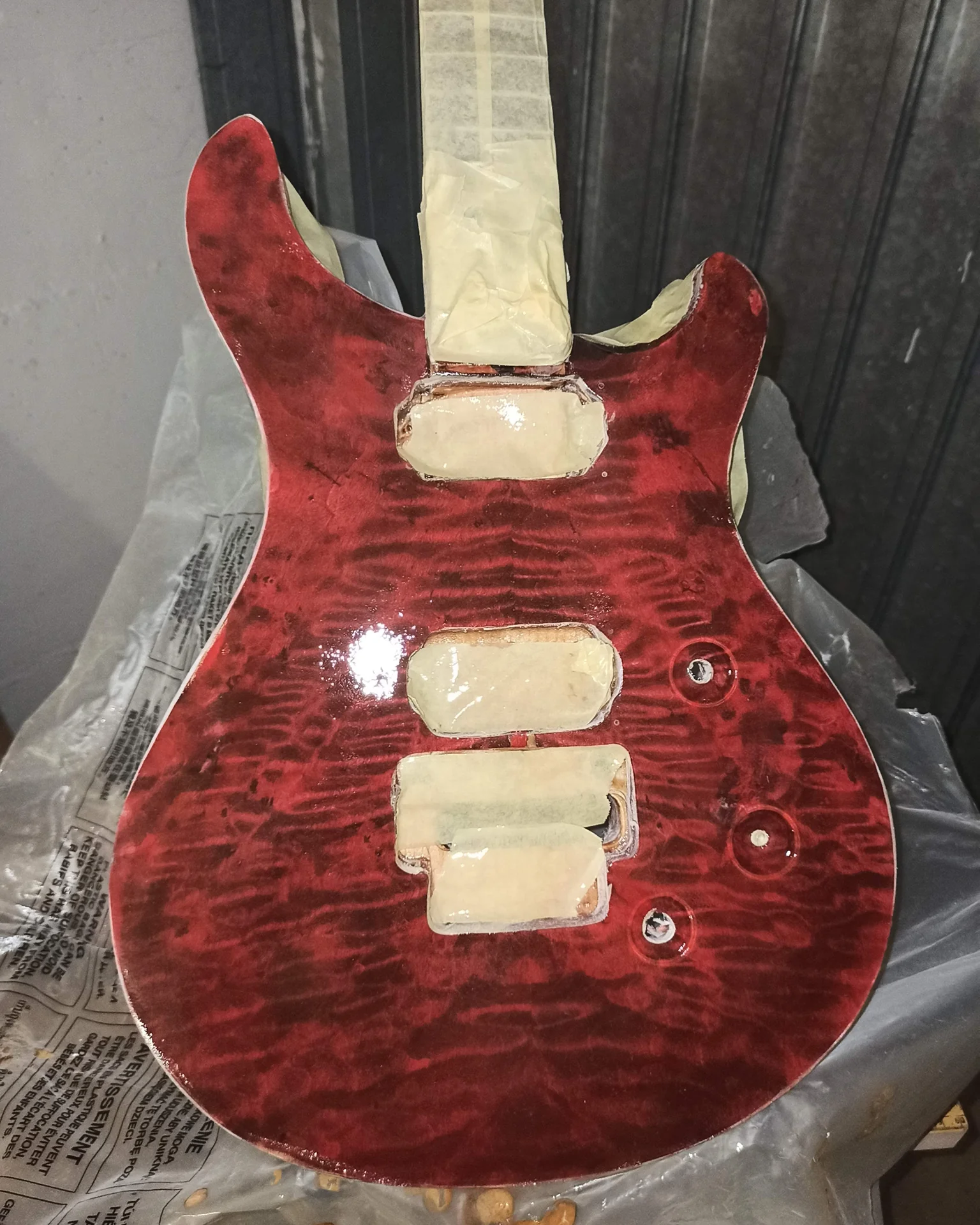
Finish: Available in a wide range of colors and finishes, often with flamed or quilted maple tops that are a real spectacle. The finishes are usually lacquered, glossy, and well-applied.
Relevant Construction Notes: The construction is generally solid. The neck-to-body joints are precise, the frets are usually well-installed and beveled (plekked), and the overall assembly is clean. The build quality for the price is one of the strengths of the SE series.
These are the facts. Now, let's move on to the user experience and what people really say.
Enjoying this article? Subscribe to the newsletter: one email a week, zero spam.
PRS SE Custom 24 Charcoal Cherry Burst 2026Review by TV Guitar Center
Popular Sentiment: What Guitarists Say (and What They Complain About)
This is where things get interesting. If you browse guitar forums, watch YouTube videos, or talk to other musicians, you'll hear a lot about the PRS SE Custom 24. Most of it is positive, but it's important to read between the lines and understand what pain points emerge most often.
Most Cited Merits:
Sound Versatility: This is probably the number one strength. Thanks to the combination of humbuckers, scale length, and often the split-coil function, this guitar can handle an incredible number of genres. From rock to blues, from pop to light metal, it performs admirably. Comfort and Playability:
The neck is almost universally praised for its comfort. The “Wide Thin” profile or similar is an excellent compromise that doesn't tire the hand, even during long sessions. Access to the upper frets is excellent. Build Quality for the Price: Many are amazed at how well-built a guitar is that, all things considered, is in the mid-to-low range of the market. Finishes, assembly, hardware: they often exceed expectations. Aesthetics: I will never tire of repeating it. PRS SE Custom 24 guitars are beautiful. The flamed or quilted maple tops are the highlight, but the solid finishes are also well-done. Upgrade Potential: As I said before, it's an excellent platform for modifications. The stock components are good, but by replacing pickups, electronics, or hardware, you can transform this guitar into something truly special, without having to start from scratch.
Most Frequent Complaints (and why they are important):
This is where honesty comes in. No guitar is perfect, especially in this price range. Here's what people complain about: Stock Pickups: Although they have improved over the years, the original SE pickups are often the first point that more demanding guitarists decide to address. They are not “bad”, but they lack that character, definition, or “bite” found on pickups from more renowned brands or on more expensive guitars. The sound, at times, can be a bit “generic” or “soft”. For those looking for a super defined or aggressive sound, they might not be enough. Hardware (especially the Tremolo): The PRS-style tremolo bridge is generally good and stable, but it's not a Floyd Rose or a top-tier bridge. Some complain about a somewhat “woody” feel or less fluidity compared to more expensive systems. Even the tuners, while often locking, might not have the same precision or longevity as those in higher price ranges. Top Finishes (on some models): Although aesthetics are a strong point, on some models with veneered maple tops, the finish can sometimes show small imperfections or a “plastic” look when viewed up close, especially on very vibrant colors. It's not a structural defect, but a critical eye might notice it. Tone Potentiometer: The tone potentiometer, especially the one that manages the split-coil, can sometimes have a limited range of use. That is, the sound changes significantly only in a small portion of its travel, making it difficult to find the perfect nuance. General “Made in Asia” Feel: Despite the high build quality, sometimes it lacks that “magic” or that feeling of a “handcrafted instrument” that can be found on guitars made in USA or Japan in the same price range (but different market segments, of course). It's a perception, but for some, it's important. These are the points to reflect on. They are not defects that make the guitar unusable, but they are areas where you can notice the difference compared to more expensive instruments. And, above all, these are the areas where an upgrade can make a huge difference.
Pros and Cons in Relation to Price
This is where we do the math. The PRS SE Custom 24 is positioned in a price range that attracts those who want something more than an entry-level, but are not yet ready or willing to spend exorbitant amounts.
PROS (in relation to price):
High-End Aesthetics: You pay for a look that makes you feel like you own a much more expensive guitar. The flamed/quilted maple tops are a real bargain. Playability and Comfort:
It offers a level of comfort and playability often found only on higher-end guitars. The neck is a pleasure to play. Basic Sonic Versatility: Stock, it's an instrument capable of covering many genres. The split-coil function, if present, is a significant bonus. Solid Build Quality: Assembly and finishes are generally excellent for the price range. It gives you a sense of reliability. Tuning Stability: The hardware, while not top-tier, does a good job of keeping the guitar in tune, especially with moderate tremolo use.
CONS (in relation to price):
Mediocre Pickups for Experts: As mentioned, the pickups are the Achilles' heel for those with more trained ears. They lack definition and character compared to pickups from renowned brands. Hardware Can Be Improved: The bridge and tuners, while functional, are not on par with high-end hardware. They can be a limitation for those who use the tremolo intensely or seek maximum precision. General “Mass-Produced” Feel: Sometimes, it lacks that “X factor” or that feeling of uniqueness found on more expensive instruments. It's an extremely competent guitar, but not “exciting” for everyone. Upgrade Potential Needed for Top Sound: To get the most out of it, you will almost certainly have to consider upgrading the pickups and, potentially, the electronics. This adds an extra cost. In summary, the value for money is excellent if we consider aesthetics and playability. If, on the other hand, your primary focus is pure and pristine sound “out of the box”, you might find better, but probably at a higher price or with compromises on other fronts (aesthetics, playability).
Who Is the PRS SE Custom 24 Suitable For?
This guitar is a real workhorse, but it's not for everyone.
It Is Ideal For:
The Intermediate Guitarist: If you've moved past the entry-level phase and are looking for a guitar to accompany you as you grow, with excellent value for money, the SE Custom 24 is an excellent choice. Who Seeks Extreme Versatility: If you play different genres and want an instrument that adapts to everything without excelling in a specific field, this guitar is for you. Who Loves PRS Aesthetics but Has a Limited Budget: If you've always dreamed of a PRS but can't afford a Core Model, the SE Custom 24 offers you a taste of that world. Who Wants an Upgrade Platform: If you like “tinkering” with your guitars, this is a perfect base to install custom pickups, new electronics and make your guitar unique. Live Guitarists Looking for Reliability: It's a robust guitar that holds up well on stage, with a versatile sound and an aesthetic that doesn't go unnoticed.
Who Should Avoid It (or Think Twice):
Extremely Demanding Guitarists on “Out of the Box” Sound: If you are a purist and want the perfect sound right away, without wanting to touch anything, you might find the stock pickups a bit disappointing. It might be better to opt for guitars with higher-end pickups. Heavy Tremolo Fanatics: If you are a shredder who uses the tremolo in an extreme way and is looking for the fluidity and stability of a Floyd Rose or a Gotoh 510-type system, you might find the PRS SE tremolo a bit limiting. Those Looking for a Specific and Nihilistic Sound: If you are obsessed with the sound of a vintage Stratocaster or a Les Paul Burst, you might find the SE Custom 24 too “generic” or a bit of a middle ground that doesn't fully meet your specific needs. Those Who Underestimate Upgrade Costs: If you plan to buy this guitar and then spend another 300-400 euros on pickups, electronics, and hardware, it might be better to look directly at guitars that start from a higher base.
Build better. Subscribe for updates, guides and free ebooks.
There PRS SE Custom 24 it is, without a doubt, one of the best guitars you can buy in its price range. It offers a complete package of aesthetics, playability, and versatility that is hard to find elsewhere. It's a guitar that invites you to play, to explore, and that doesn't put you in difficulty. However, it is essential to be aware of its limitations, especially regarding the stock pickups and hardware. If you are an experienced musician who knows what they want from the sound, be prepared to consider upgrades. If, on the other hand, you are looking for your first “serious” guitar or a versatile instrument for live performances, you might be perfectly satisfied as it is. My recommendations: 1. Try it, if you can: The ergonomics and feel of the neck are very personal. If you have the chance, go to a store and hold it. 2. Listen to demos with different pickups: Search YouTube for demos of PRS SE Custom 24 with aftermarket pickups (Seymour Duncan, DiMarzio, EMG, Bare Knuckle) to get an idea of the sonic potential after an upgrade. 3. Consider your real needs: If you mainly play extreme metal, perhaps a guitar with active pickups or a fixed bridge might be more suitable. If you love pure blues, you might prefer a Stratocaster or a Telecaster. Alternatives to consider in the same price range or slightly higher:Schecter C-1 / Hellraiser: They often offer more aggressive pickups and solid construction, with a more “metal” aesthetic. Ibanez RG Series (Prestige or Premium models): If you are looking for fast playability, thin necks, and a more performing tremolo bridge (like the Edge), Ibanez guitars are always an excellent choice, especially for more modern and fast genres. Suhr Classic S/T (used) or Fender Player Series: If your heart beats for Stratocasters or Telecasters, a Fender Player is an excellent option. Used Suhr guitars, if you find a bargain, can offer a higher level of quality. ESP LTD EC-1000 / MH Series: They often offer excellent build quality and branded pickups (Seymour Duncan or EMG) as standard, with a focus on rock and metal. Ultimately, the PRS SE Custom 24 is an excellent guitar that offers a lot for its price. It's a smart choice for many guitarists, provided you are aware of what you are buying and where it can be improved.
FAQ about the PRS SE Custom 24
Are the stock pickups on the PRS SE Custom 24 really that bad?
They are not “bad” in absolute terms, but they are designed to be versatile and do not excel in a specific genre. They lack that definition, character, and “bite” that many experienced guitarists look for. If you are a beginner or a musician who plays many different genres without extreme sonic demands, they might be fine. For those seeking the maximum, a pickup upgrade is almost mandatory.
Is it worth upgrading the pickups on a PRS SE Custom 24?
Absolutely yes. Replacing the original pickups with a high-quality set (like Seymour Duncan, DiMarzio, or boutique brands) can radically transform the guitar's sound, giving it character, definition, and power. It is one of the most effective upgrades you can make to take this guitar to a higher level, making it competitive with much higher-end instruments. I hope this honest review has been useful to clear your doubts and make an informed decision. Have fun with your next guitar!
To provide the best experiences, we use technologies such as cookies to store and/or access information on your device. Consent to these technologies will allow us to process data such as browsing behavior or unique IDs on this site. Not consenting or withdrawing consent may negatively impact certain features and functions.
Functional
Always active
Technical storage or access is strictly necessary for the legitimate purpose of enabling the use of a specific service explicitly requested by the subscriber or user, or for the sole purpose of carrying out the transmission of a communication over an electronic communications network.
Preferences
Technical storage or access is necessary for the legitimate purpose of storing preferences that are not requested by the subscriber or user.
Statistics
Technical storage or access which is used exclusively for statistical purposes.Technical storage or access that is used exclusively for anonymous statistical purposes. Without a subpoena, voluntary compliance by your Internet Service Provider, or additional records by third parties, the information stored or retrieved for this purpose alone cannot usually be used for identification.
Marketing
Technical storage or access is necessary to create user profiles for sending advertising, or to track the user on a website or across different websites for similar marketing purposes.
To provide the best experiences, we use technologies such as cookies to store and/or access information on your device. Consent to these technologies will allow us to process data such as browsing behavior or unique IDs on this site. Not consenting or withdrawing consent may negatively impact certain features and functions.
Functional
Always active
Technical storage or access is strictly necessary for the legitimate purpose of enabling the use of a specific service explicitly requested by the subscriber or user, or for the sole purpose of carrying out the transmission of a communication over an electronic communications network.
Preferences
Technical storage or access is necessary for the legitimate purpose of storing preferences that are not requested by the subscriber or user.
Statistics
Technical storage or access which is used exclusively for statistical purposes.Technical storage or access that is used exclusively for anonymous statistical purposes. Without a subpoena, voluntary compliance by your Internet Service Provider, or additional records by third parties, the information stored or retrieved for this purpose alone cannot usually be used for identification.
Marketing
Technical storage or access is necessary to create user profiles for sending advertising, or to track the user on a website or across different websites for similar marketing purposes.




 English
  Italiano
Stuck on your build?
If you ran into the same problem or have a question, drop it in the comments. I read and reply to every one.
Write a comment