

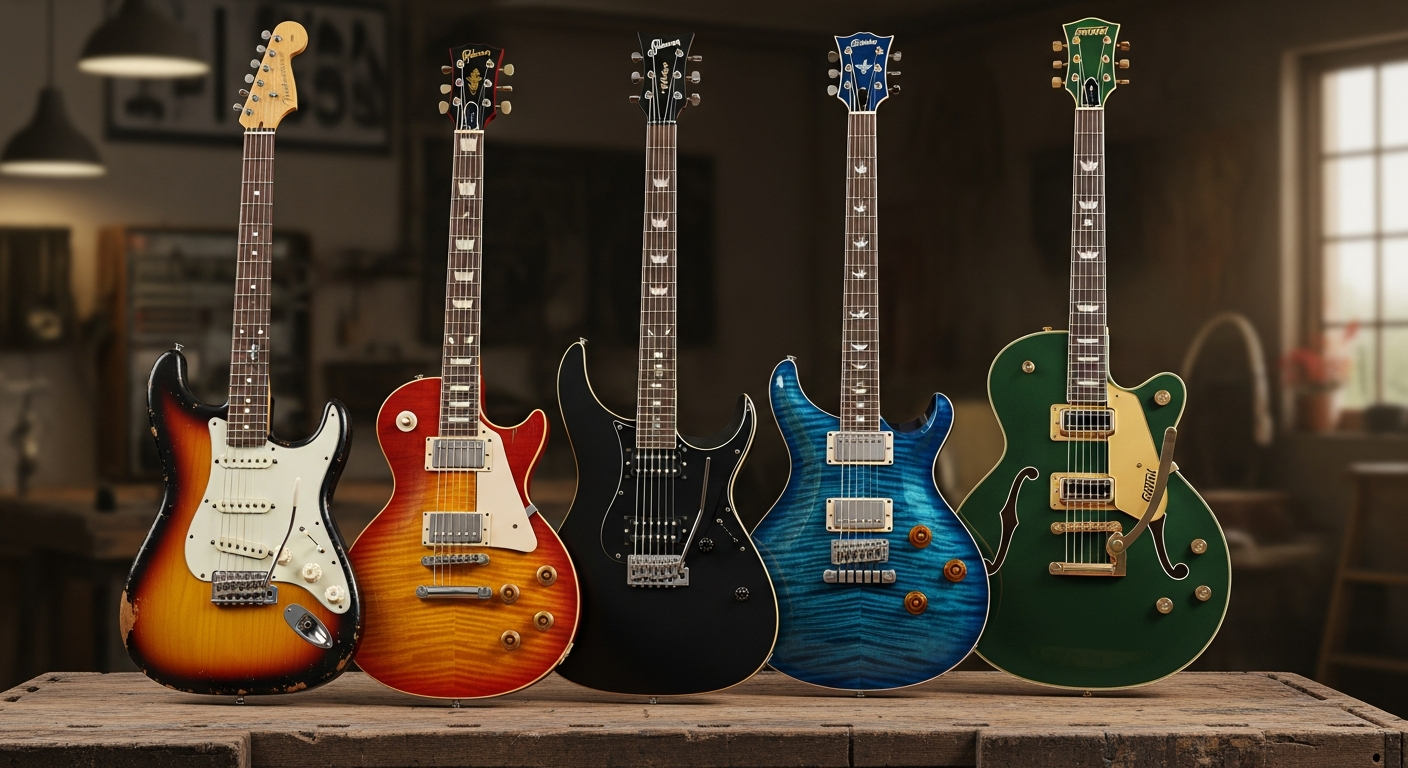
Review Gibson CS 1959 Les Paul Reissue
Let's be clear: the Gibson Custom Shop 1959 Les Paul Reissue, which many simply call “R9”, is a controversial object. There are those who idolize it as the Holy Grail of electric guitars, the absolute benchmark for the Les Paul sound. And there are those, like me, who look at it with a mix of admiration and a touch of healthy skepticism, wondering if the price printed on the label is truly justified, especially for us who, sometimes, open up guitars, modify them, or build them from scratch. When talking about a Gibson Custom Shop 1959 Les Paul Reissue, we are not reviewing just any object. We are touching a raw nerve, an icon, a piece of history that has influenced generations of guitarists. For many, it's a cherished dream, the pinnacle of the collection. For others, it's the symbol of an industry that sells nostalgia for its weight in gold. The point is: you, who might be thinking of taking the plunge or simply informing yourself, want to understand if this guitar is Really for you. You don't need the glossy brochure, but the truth, the one you discover after hours spent playing, tinkering, and above all, confronting those who own these guitars or have thoroughly tested them. My approach, you know, is always pragmatic. My hands are dirty with sawdust and solder, not glitter. So, when I had the chance to get my hands on several R9s, I did it with the eye of someone looking for substance, the why behind the sound and feel, not just the legendary aura. I'm not a professional luthier, but I've built and repaired enough guitars to understand where quality lies, where there's fluff, and where a high price can hide pitfalls, or on the contrary, reveal unexpected value. The problem, if we want to call it that, is always the same: is it worth investing an amount that for many is equivalent to that of a small car to have a replica, however faithful, of a sixty-year-old guitar? It's a million-dollar question, literally. Let's try to understand it together, analyzing the Gibson R9 without filters, looking at the specifications, the “popular sentiment” and, above all, the quality/price ratio from the point of view of those who, like us, are not afraid to get their hands dirty.
Technical Specifications: What’s Under the Hood of the Reissue 59?
When talking about a Gibson Custom Shop 1959 Les Paul Reissue, fidelity to the original specifications is the mantra. Every detail is designed to replicate the '59 icon, a year considered by many to be the pinnacle of Les Paul production. Let's see what we find by analyzing the model.
Body
The body is made of solid lightweight mahogany in two pieces, without tone chambers or weight relief. This choice is fundamental for sustain and resonance, even if it can lead to significant weight variations between one specimen and another. On the upper part, we find a two-piece flamed maple top (flame maple), usually with a grain ranging from “plain top” to “highly figured”, depending on the wood selection and year of production. The maple top is glued to the mahogany body with animal glue (hide glue), a detail that many believe positively influences the transfer of vibrations and the overall resonance of the instrument. The bindings, both on the body and on the neck, are made of cellulose, aged to replicate the look of the originals.
Neck and Fingerboard
The neck is made of solid mahogany, with a thick but comfortable profile, known as “Authentic ’59 Medium C-Shape”. It is not a thin ’60s slim taper type neck, but it has its own ergonomics that many find perfect for the hand. The fretboard is made of solid Indian Rosewood, with a 12-inch radius, the classic Gibson standard. The frets are “Historic Medium-Jumbo”, which offer a good compromise between modern playability and vintage feel. The nut is made of nylon, another detail faithful to the original, which contributes to tone and sustain. Inside the neck, there is a non-tubing truss rod, typical of the ’50s, which some consider better for neck resonance. The “long neck tenon”, which is the joint between the neck and body that extends deeply into the body, is a crucial element for sustain and stability, and the R9 faithfully replicates it.
Pick-up
Pickups are usually the Custombucker Alnico III, designed to replicate the sound of the legendary original PAF (Patent Applied For). These humbuckers are unpotted, which, while making them more microphonic at high volumes, on the other hand contributes to a more open and dynamic sound, rich in harmonics. Alnico III magnets offer a sweeter and less aggressive response compared to Alnico V, approaching the warm and defined character of vintage PAFs. Often, the DC resistance varies between 7.5k and 8.5k ohms, but each pickup is hand-wound and presents slight variations, just like the originals.
Hardware and Electronics
The hardware is nickel, aged to give a consistent “vintage” look. It includes an ABR-1 Tune-O-Matic bridge and a lightweight aluminum Stopbar tailpiece, both faithfully reproduced. The tuners are Kluson Single Line, Single Ring Deluxe, also aged. The internal electronics are high quality: CTS 500k Audio Taper potentiometers and “Bumblebee” paper-in-oil capacitors, although the modern replica of these capacitors is a subject of debate among tone audiophiles. The wiring is vintage, with braided conductors.
Finish
The finish is a thin nitrocellulose lacquer, applied by hand. This type of finish is known for its ability to “breathe” and allow the wood to resonate freely, as well as for aging naturally over time, developing “checking” (cracks in the paint) that many appreciate. The Gibson R9 They are available both in VOS (Vintage Original Spec) version, with light aging and a satin finish, and in more aged (heavy aged) versions that simulate years of wear. The top color can vary enormously, from classic “Lemon Drop” finishes to “Darkburst”, “Cherry Burst” and many other shades. These are the basic specifications, but as with any handcrafted instrument, there are always small variations between one example and another. And this is where the discussion begins, because theory is one thing, practice is another.
Popular Sentiment: Between Myth and Reality of the Gibson R9
navigating through forums, Facebook groups of enthusiasts and chatting with collectors, the “popular sentiment” regarding the Gibson Custom Shop 1959 Les Paul Reissue it's a stormy sea, made of waves of veneration and splashes of criticism. There is no middle ground.
What Enthusiasts Say
For purists and many collectors, the R9 is the ultimate. The sound, they say, is inimitable: warm, full, with infinite sustain and dynamics that respond to every nuance of touch. Many tell how the guitar "sings" even when unplugged, vibrating impressively. The '59 neck feel is often praised as the most comfortable, a perfect balance between thickness and smoothness. The aesthetics, then, are a constant: the flamed maple tops, the VOS finishes that replicate the wear of time, the meticulous attention to details such as animal glue and the long neck tenon. For many, the purchase of a Gibson R9 it's not just the purchase of an instrument, but an investment. The value of these guitars tends to remain stable or even increase over time, making them a “safe haven” for lovers of the six strings. There are those who buy it to play it, those who buy it to collect it, but for everyone it is a piece of history.
What Critics and Budget-Conscious Buyers Say
Then there are the critics, and I, with my “garage builder” mentality, sometimes find myself closer to them. The main criticism, of course, is the price. We are talking about figures ranging from 6,000 to over 10,000 euro for a new model, depending on the finish and the year. It’s a huge amount, and the question is always: is it worth it? Many complain about a certain variability in build quality and wood selection. Despite the high price, it’s not uncommon to find R9s with small cosmetic flaws, top grain not meeting expectations or, more rarely, setup or fretwork issues requiring intervention. This is a sore point, because at that price, one would expect absolute perfection. Another point of discussion is the weight. Although Gibson strives to use lightweight mahogany, not all R9s are “lightweight”. You can find models that exceed 4.5 kg, which for some is a problem, especially for those who play standing for long periods. The search for a lightweight and resonant model becomes almost a treasure hunt. There are also those who argue that much of the price is due to the “brand” and “nostalgia”, and that with a fraction of the cost, equally valid, if not superior, instruments can be obtained from boutique luthiers or replicas from other brands. This is an endless debate, which touches the very heart of the value of a luxury item.
My Personal Experience with Different R9
I was lucky enough to get my hands on several Gibson Custom Shop 1959 Les Paul Reissue over the years, thanks to collector friends or at trade shows. And I must say that the “popular sentiment” holds true in both directions. I've played R9s that left me speechless: light, resonant, with incredible sustain and a sound that fills the room even when unplugged. The neck, for my hands, è perfect, a bit chunky but never tiring. The touch è sublime, and you truly feel in contact with the instrument. These are the R9s that fuel the myth. But I've also tried R9s that, despite being excellent instruments, didn't give me that “something extra” that would justify such an exorbitant expense. Perhaps a bit heavy, with a less appealing top, or a general feeling that, while excellent, didn't scream “this è the guitar of a lifetime” to me. In these cases, skepticism about the quality-price ratio becomes apparent. È a matter of “mojo”, of that intangible feeling that makes a guitar special. The best R9s have it in abundance, but not all of them have it in the same way. And for us who modify a guitar It's almost a hobby, the question arises spontaneously: can I get a similar feeling with a smaller budget and some modifications? The answer is not simple, but we'll try.
Pros and Cons of the Gibson R9: The Balance of the DIY Luthier
Weighing the pros and cons of a Gibson CS 1959 Les Paul Reissue it means comparing an icon with the reality of a handcrafted product, however luxurious. We try to be as objective as possible, taking into account the price.
Pro
- Incredible Sound and Dynamics: The best R9s offer a warm, rich tone, with sustain that seems to never end. The unpotted Custombucker Alnico III contribute to exceptional dynamics, reacting perfectly to every nuance of the picking. The sound is full-bodied, with present mids and sweet highs, without being shrill.
- Feeling and Playability: The '59 neck profile is legendary for its comfort. It is a profile that adapts to many hands, allowing hours of study without fatigue. The overall playability is of the highest level, with an action often perfect right from the factory.
- Build Quality and Premium Materials: The use of selected mahogany and maple, animal glue, the long neck tenon, Bumblebee capacitors (even if replicas) and hardware faithful to the original specifications, are all details that contribute to the perceived quality and durability of the instrument.
- Resale and Investment Value: The Gibson R9 they maintain their value very well over time, and in some cases increase it. They are considered a safe investment for collectors and a sought-after asset on the used market.
- Dream Aesthetics: Flamed maple tops, VOS or aged finishes, vintage details; these guitars are visual works of art. Each specimen has its unique character, making it a display piece as well as an instrument to play.
Against
- Exaggerated Price: The cost is the main obstacle. We are talking about thousands of euros, a figure that for many is prohibitive and makes you wonder if the added value is really proportional to the expense compared to excellent alternatives.
- Qualitative Variability: Despite the price, there's some variability between one specimen and another. You can find perfect R9s and others with minor cosmetic flaws, less impressive top grain, or excessive weight. This makes buying “blind” risky and requires careful selection.
- Weight: Although Gibson tries to use lightweight mahogany, not all R9s are light. Some specimens can be quite heavy, exceeding 4.5 kg, which can be a problem for those who play standing for hours.
- Microphonics of the Pickups: Unpotted Custombuckers, while offering an open sound, can on the other hand be subject to microphony (undesired feedback) at high volumes or in the presence of very powerful amplifiers. For those who play high-gain genres, this could be a limitation.
- Delicate Finish: Nitrocellulose lacquer, although historic and desirable for the sound, is much more delicate than modern polyurethane finishes. It is more prone to scratches, dents, and “checking” (cracks) even with normal use. For those who are meticulous about aesthetic preservation, it can be a source of stress.
Relationship with Price
The quality/price ratio of the Gibson Custom Shop 1959 Les Paul Reissue is the most controversial point. From the point of view of pure sound and construction performance, the R9 is a very high-level instrument. But the price includes a huge “premium” for the brand, history, and exclusivity.
For a DIY luthier like me, accustomed to optimizing costs and seeking the best value for money, it's difficult to justify such a high figure. You can build or modify a guitar that sounds excellent with a fraction of that expense, by choosing quality woods, boutique pickups, and top-level hardware. However, you will never have the “Gibson” on the headstock
It's that historical feeling that only a Custom Shop can give.
It's an emotional purchase, an investment in a dream. If your budget allows it and you have the opportunity to choose a particularly resonant and well-made example, then the experience can be rewarding. But it's essential to be aware that not all R9s are equal and that the price does not guarantee the total absence of compromises or minor defects.
Who Is This Guitar For? And Who Should Look Elsewhere?
Understand for whom one was intended Gibson CS 1959 Les Paul Reissue it is fundamental not to fall into a purchase dictated solely by emotion or the prestige of the name. It is not a tool for everyone, and that's not a bad thing.
Ideal Target: For Whom is the R9
- The Collector or the Vintage Enthusiast: If you are a collector looking for an iconic piece, faithful to the original and that maintains its value, the R9 is perfect. It is an object to admire, to play, and to cherish.
- The Demanding Professional Musician: If your work requires the best possible Les Paul sound, and budget is not an issue, a well-selected R9 can be your ultimate instrument. Its dynamic response and sustain can make a difference in the studio or on stage.
- Who Seeks “That Sound”: If you've spent years chasing the tone of the rock and blues greats who played original Les Pauls, the R9 is the most faithful way to get close to that sound without having to mortgage your house for a '59 model.
- Who Wants the “Top of the Range”: If you simply want the best that Gibson Custom Shop has to offer in terms of vintage replica, and you are willing to pay the price, the R9 is the obvious choice.
Who Should Avoid It (or Consider Alternatives)
- The Budget-Conscious Buyer: If your budget is limited, or if the idea of spending thousands of euros gives you chills, there are many excellent alternatives. Gibson offers Les Paul Standard and Classic models that sound great for a much lower cost.
- The Beginner or Occasional Guitarist: For those who are just starting out or only play occasionally, an R9 is overkill. You wouldn't fully exploit its potential, and the risk of accidentally damaging it is too high for its value.
- Who Seeks Extreme Versatility or Modern Sounds: If you play very different genres, need high-output pickups, or are looking for an ultra-thin neck and “shredder” playability, the R9 might not be the best choice. It is an instrument with a well-defined character, rooted in the past.
- Who Does Not Accept Compromises on Quality at a High Price: If you expect absolute perfection without any variation or small aesthetic flaw, know that even R9s can have minor imperfections. At that price, for some, even the slightest defect is unacceptable.
- The Extremist “Modder”: If your first thought is to change the pickups, the circuitry, or even rout the body to lighten it, then spending a fortune on an R9 is a waste. Better to start with a more affordable Les Paul or a quality DIY kit.
In practice, if money is not a problem and you are looking for the Holy Grail of vintage Les Paul sound, the R9 is a very strong candidate. But if budget is a factor, or if you have particular needs that deviate from the vintage concept, it is wise to consider other options.
Alternatives and My Final Advice
Let's get to the point: is it worth diving into Gibson Custom Shop 1959 Les Paul Reissue? The answer, as often happens in the world of guitars, is a resounding “it depends”
Alternatives to Consider
If the R9 is out of reach or simply doesn't quite convince you, the market offers several very valid alternatives:
- Gibson Les Paul Standard/Classic: They offer the Les Paul sound and feel at a much more affordable price. They might not have all the “vintage-correct” details of the R9, but they are excellent and versatile instruments.
- Liutai Boutique: There are many independent luthiers who make incredible Les Paul replicas, often with selected woods and a maniacal attention to detail, at prices that can be competitive with an R9, or in any case offer a superior quality-price ratio. Brands like Eastman, Heritage, or even small artisans can surprise.
- Vintage Japanese Replicas: Brands like Tokai, Greco, Burny, especially those from the ’70s and ’80s, have produced replicas of legendary Les Pauls, often called “lawsuit guitars”, which today are highly sought after for their build quality and sound, at prices still accessible compared to R9s.
- DIY Kits and Modifications: For those who are hands-on, like us, a quality kit or a mid-range Les Paul can be the perfect base for creating a custom instrument. With the right choice of pickups, electronics, and a good setup, surprising results can be achieved. This is the approach I have always preferred, because it allows me to understand every single component and to get exactly the sound I want, without paying for the brand.
My Honest Advice
If you have the budget and the opportunity to choose, dedicate time to it. Try as many Gibson R9 you can. Every guitar is a tree, and every tree is different. Look for the one that “speaks” to you, the one that resonates most, that feels comfortable, that has “that” sound. Never buy sight unseen based only on the name or online reviews. Trust your hands and your ears. If budget is an issue (and for most of us it certainly is!), don't feel bad. You don't necessarily need an R9 to play well or to have a fantastic sound. There are so many wonderful guitars out there that don't cost as much as a car. The important thing is to find the instrument that inspires you, that makes you want to play, and that suits your needs and your style. Always remember that the magic is not just in the instrument, but also in the hands of the player. A good guitar helps, of course, but the true sound is within you. Don't let marketing or brand prestige make you think that an exorbitant price is the only way to musical happiness.
Conclusions: A Dream, But With Open Eyes
There Gibson Custom Shop 1959 Les Paul Reissue It is, without a doubt, a magnificent instrument. It is an ode to craftsmanship, history, and the iconic sound that has shaped generations of music. For those who can afford it and for those who appreciate every minimal detail, it is a unique and fulfilling experience. It has an undeniable charm, an aura that few other guitars can match. However, it is not absolute perfection for everyone, and its price makes it a luxury item that must be carefully evaluated, aware of its merits, but also of its limitations. If your dream is an R9, go ahead, but do it with your eyes wide open and a touch of healthy pragmatism, the kind that allows you to enjoy the guitar without being robbed by nostalgia.
Frequently Asked Questions (FAQ)
What is the main difference between a Gibson R9 and a modern Les Paul Standard?
The main difference lies in the attention to vintage details and materials. The R9 faithfully replicates the 1959 specifications, including selected woods (unweighted mahogany, flamed maple), animal glue, “long neck tenon” neck-to-body joint, ’59 neck profile, unpotted Custombucker Alnico III pickups, and a thinner nitrocellulose finish. Modern Les Paul Standards, while being excellent instruments, often use body weight relief, thinner neck profiles, modern pickups like Burstbuckers or 60s Burstbuckers, and thicker polyurethane or nitrocellulose finishes, designed for mass production and a more contemporary appeal.
Are Gibson R9s a good investment?
Generally yes, the Gibson Custom Shop 1959 Les Paul Reissue They tend to maintain or increase their value over time, especially particularly beautiful specimens or those with sought-after characteristics. They are considered collector's items, and their historical appeal and limited annual production contribute to good market stability. However, like any investment, there's no absolute guarantee, and the value can vary based on the instrument's condition, finish, year of production, and market trends. It is always advisable to consult experts or used market prices for a more precise idea.
Download the Luthier Survival Kit
Free PDF with checklist, problem-cause table and project card template.
 English
  Italiano
Stuck on your build?
If you ran into the same problem or have a question, drop it in the comments. I read and reply to every one.
Write a comment