

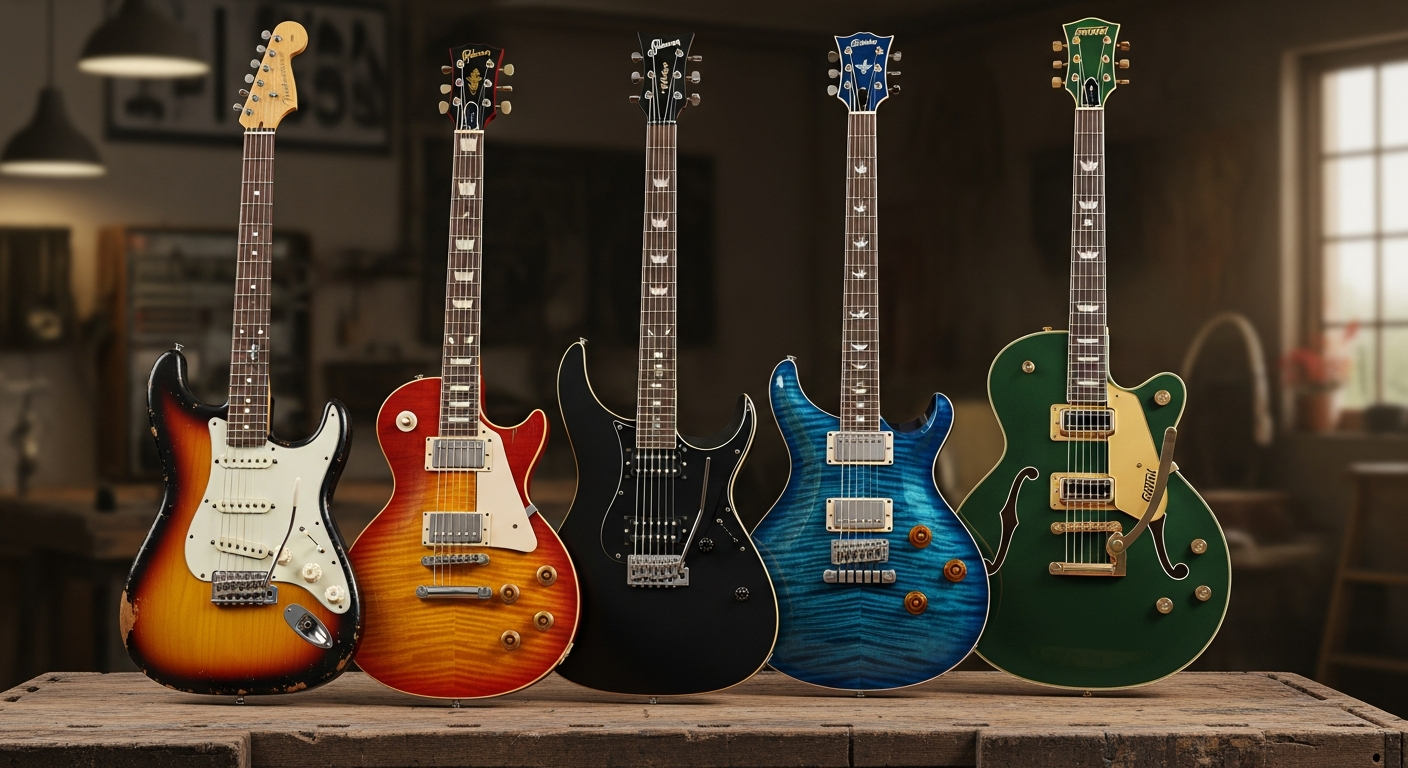
Fender American Vintage II 1961 test Stratocaster
When it comes to electric guitars, the Stratocaster It's a bit like a time machine. Every time you pick one up, especially if it's a model that nods to the past, you find yourself thinking: "What the hell did they play in the '60s with these necks?" It's not a criticism, it's pure curiosity. And the Fender American Vintage II 1961 Stratocaster It's exactly that: a return ticket to 1961.I'm not a music critic,
He's a renowned luthier. I'm just one of many who's gotten my hands dirty in the garage, made a bad cut on the body, soldered a potentiometer backwards, and learned that, with a little patience and the right tools (and a little swearing), almost anything can be done. So, when you get your hands on a guitar like this, you look at it differently. Not just for its sound, but for its construction philosophy.
The point isn't whether it "sounds good"—a Strat almost always sounds good, at least for what it's supposed to do. The question is: can this reissue, with its not-so-cheap-for-drinks price tag, replicate the original experience without making you regret your money? And above all, with all the modern options out there, does such a "vintage" guitar still make sense in terms of playability?
Let's talk about it, because if you're thinking of adding it to your cart, you better know what you're getting into. Not just what the marketing says, but what you hear around the world, from those who play it and those who, like me, occasionally wonder, "But what if I tweaked it a bit...".
Technical characteristics of the Fender American Vintage II 1961 Stratocaster
To understand where we're going, let's start with the basics. Fender's American Vintage II series aims to almost obsessively replicate the specifications of the iconic models. Stratocaster 1961 is no exception.
Here's a rundown of its main specs, which I've verified by cross-referencing official Fender data with some reliable technical reviews (such as those from Premier Guitar, for example):
Body: Solid alder (Alder) in two or three pieces, depending on the model. Alder is a classic for Strats, light and resonant. The finish is in glossy nitrocellulose, which allows the wood to “breathe” and age naturally, showing scratches and signs of wear over time.
Handle: Maple with a 1961 “C” profile. This is a fairly slim neck for the era, but still has a nice shoulder. It’s not a thin neck like an Ibanez, but it’s not a baseball bat thick either.
Keyboard: Rosewood (Slab Rosewood) with a radius of curvature of 7.25 inches. This is a crucial detail. The slab fingerboards are thicker and flatter on the underside, glued directly to the neck, a characteristic of Strats from that era. The tight radius is true to the vintage, but we'll see that it has its implications.
Keys: 21 “Vintage Tall” frets, narrower and lower than modern medium jumbo or jumbo frets. This also contributes to the “vintage” feel.
Capo: Bone, not synthetic, for better resonance and string flow.
Pick-up: Three Pure Vintage '61 single-coils Stratocaster. These are designed to replicate the warm, clear, and twangy sound of the original pickups of the era. They feature Alnico V magnets and period-specific windings.
Controls: A 5-way selector switch (although in '61 there were 3, this is a concession to modernity that Fender began to make on reissues from the '70s onwards, to the delight of those who didn't want to mod the selector switch) for the classic positions: neck, neck + middle, middle, middle + bridge, bridge. Master volume, Tone 1 (neck), Tone 2 (middle and bridge).
Hardware: Bridge: Pure Vintage synchronized tremolo with "Fender" bent steel saddles and a steel block. Faithful to the original, but like any vintage tremolo, it requires careful setup to maintain tuning.
Mechanics: Pure Vintage Single-Line “Fender Deluxe” pressings. These are also aesthetically and functionally authentic to the era.
Pickguard: 3-ply Mint Green, typical of early 60's Strats.
Stairs: 25.5 inches (648 mm), the classic Fender scale.
Pencil case: Vintage-style hard case with orange plush interior, faithful to the cases of the era.
These are the specifications on paper. It all seems perfect, a true journey through time. But paper, as we know, doesn't sound right.
Popular sentiment: what enthusiasts and buyers say
Now, here's where we get to the heart of the matter. It's not enough to just read the spec sheets; you need to understand what the people who buy these guitars think, play them, and perhaps even clash with them in the studio or on stage. I've spent some time scouring forums, Facebook groups for Fender enthusiasts, and YouTube reviews, and the picture that emerges is pretty clear.

The strengths that everyone recognizes:
1. The Sound: This is almost unanimously the strong point. The Pure Vintage '61 pickups are described as exceptional. They have that bright yet warm tone, rich in harmonics, typical of pre-CBS Strats. Perfect for blues, classic rock, surf, and light funk. They're not high-output pickups, mind you, but for those looking for... that I sound great. Many say they don't need replacing, which is rare for a stock guitar. No. 2. Aesthetics and Historical Fidelity: The guitar is beautiful. The nitrocellulose finish, the custom colors (like the famous Olympic White or Fiesta Red, which were optional in '61), the mint green pickguard, the shape of the body and headstock: everything screams "vintage." Those looking for an authentic look will be completely satisfied. The nitro also ages beautifully, and for many, the signs of wear are an asset. The “Vintage” Feeling: Many buyers describe it as a guitar that "makes you feel like you're back in 1961." The neck, the narrow frets, the fingerboard radius... it's not just a look, it's a different tactile experience. For purists, it's a dream come true.The “buts” and the “howevers”: the points of discussion
This is where things get interesting, because “vintage” doesn’t always mean “perfect for everyone.”.1. Neck and Fingerboard (7.25″ Radius and Vintage Tall Frets): This is the most controversial point, without a shadow of a doubt.
Pros: For those who are used to it, or those with small hands, the narrow radius can be very comfortable for open chords and rhythms. The low frets give a very direct feel to the fingerboard.
Against: The vast majority of modern guitarists are accustomed to fingerboards with flatter radii (9.5″, 10″, 12″, or compound) and medium jumbo or jumbo frets. With a 7.25″ radius, large bends (especially from the 12th fret onwards) can cause the string to “fry” if the action is too low. You have to get used to a slightly higher action or limit certain bends. This is not a manufacturing defect, but a characteristic faithful to the era which limits playability for some styles. I've read comments from people who sent it back because of this.n2. The Nitrocellulose Finish: Pros: It ages beautifully, allows the wood to resonate better.
Against: It's delicate. Very delicate. It gets scratched, scratched, and weather-checked (small surface cracks appear) easily, even if you just set it down incorrectly. If you're a sucker for a pristine guitar, know that this one won't stay that way for long. This, incidentally, is a Pros for many relic lovers, but a against for those who always want a new guitar.n3. The Price: Let's be honest, this guitar is quite expensive. We're talking about a price tag that puts it in competition with some entry-level Custom Shops or boutique guitars. For that price, many expect absolute perfection, which, being a mass-produced guitar, isn't always guaranteed with the 100%. There may be small imperfections in the fretwork that require fret leveling or a more accurate setup than the factory setup. This isn't the norm, but it happens. The Vintage Tremolo: It works well for what it is, but don't expect the stability of a two-pivot system or a Floyd Rose. For light use, like Hank Marvin vibrato, it's fine. If you start banging it around, you'll need to tune more often. Again, not a flaw, but a feature of the original design.
In short, the community loves it for its sound and aesthetics, but is divided on the playability of the neck and the quality of the finish. It's not a universal guitar.
Pros and Cons in relation to the price
Let's analyze the strengths and weaknesses of this guitar, relating them to the price tag, which, as we said, is not for everyone.PROS (considering the cost)
Authenticity without compromise: If your goal is to have a Stratocaster With the closest feel and sound to a 1961 original possible, without spending the crazy prices of a true vintage or ultra-relic Custom Shop, this guitar comes pretty close. The attention to historical detail is impressive.Screaming sound: The Pure Vintage '61 pickups are a real gem. They deliver that classic, rich, and bright tone that many guitarists seek. They're perfect for blues, classic rock, surf music, and country. You won't need to think about upgrading your pickups, and that's a great savings.
Quality of materials: The selected woods (alder, maple, slab rosewood) are of excellent quality. The nitrocellulose finish is a huge plus for tone and aesthetic ageing. These are all elements that partially justify the price.
Mojo potential: The nitro finish and its tendency to mark give it an almost immediate "mojo." It's not a factory relic, but a guitar that will age with you, telling your story. For many, this is an added value that few modern guitars can offer.
Resale Value: American Vintage models, and now the American Vintage II series, tend to hold their value well over time, especially if well cared for (or well "reliced," of course). This is an aspect not to be underestimated for such a significant investment.
CONS (considering the cost)
Compromise on modern playability: The 7.25" fingerboard radius and vintage-tall frets are the real dealbreaker for many. At this price, you expect a guitar that is versatile and comfortable to play. Everything is fine Style. The 1961 Strat is not. If you bend a step and a half at the 15th fret with low action, you might run into problems. For those accustomed to flatter necks and jumbo frets, the adjustment isn't immediate. This is a "hidden" cost in terms of comfort and versatility.Non-Custom Shop Quality Control: Despite the high price, we're talking about a mass-produced guitar. I've read (and sometimes experienced with other American Vintages) about small flaws in the fretwork or factory setup that require a luthier's intervention. For a guitar that costs this much, you expect it to be perfect right out of the case. That's not always the case, and that can be frustrating. A Custom Shop, for similar or higher prices, offers obsessive quality control.
Delicacy of finish: While it's a plus for some, for those who want a pristine guitar, a nitro finish can be a source of anxiety. A small bump, a ring, and goodbye perfection. If you're the type to put a soft cloth between your guitar and its case, prepare to suffer.
Lack of “modern” versatility: It's not a guitar designed for hard rock, heavy metal, or modern jazz fusion. The pickups are very specific, and the neck has its own peculiarities. If you're looking for an all-rounder, this isn't it. There are guitars half the price that offer much more versatility.
In short: the price is justified by historical accuracy and the quality of the materials and sound, but not by the versatility or craftsmanship of a Custom Shop product. It's a niche guitar, for those who know exactly what they want.
Who is the Fender American Vintage II 1961 suitable for? StratocasterAnd who should avoid it?
This is one of the most important questions, because not all guitars are for everyone. And this one, in particular, is one you either love or hate.This guitar is FOR YOU if:
You're a vintage purist: You love the sound, feel and aesthetics of the Stratocaster pre-CBS. The sound of SRV, Hendrix, Clapton (in his early Strat years) drives you crazy, and you want to reproduce it as faithfully as possible.You have no problem with the 7.25″ radius and vintage frets: Maybe you already have guitars with these specs, or your hands are well suited. You play mainly blues, classic rock, country, surf, and light funk. You don't do extreme bending or need a low action for shredding.
You appreciate the nitrocellulose finish and natural aging: You're not concerned about the guitar getting marked or "repaired" naturally with use. In fact, you see it as an added value, a distinctive feature.
You have a large budget and are looking for an investment: See this guitar not only as an instrument, but also as a collector's piece that will likely hold its value well over time.
Are you ready for a good setup: You know that a guitar like this, to perform at its best, needs an expert luthier (or your hands, if you're good) for a custom setup, especially to tune the tremolo and action to suit your playing style.
You are a modder with a clear vision: Ok, maybe you don't buy it to destroy it, but if you think about small changes to make it your (like changing the selector, or the pots for a different tone cone), you know the starting point is excellent.
You should AVOID it if:
Looking for a versatile guitar for all genres? If you play everything from jazz to metal and need an instrument that can adapt to any situation without compromising on playability (flat neck, jumbo frets), this is not the right choice.Can't stand the 7.25″ radius or vintage frets: If bends are uncomfortable or the strings are "fried" and you don't want to or can't adjust, save yourself the frustration. There are dozens of other Stratocaster with more modern handles.
Your budget is limited: For the same price (or less), you can find guitars with a better quality/price ratio in terms of versatility and modern comfort. You might also consider a used Custom Shop or a luthier's guitar.
You want a “perfect” guitar out of the box: Despite the price, it's not a Custom Shop. It might require a professional setup or minor work to be at its best. If you expect absolute perfection without touching a thing, you might be disappointed.
You are obsessed with aesthetic integrity: If every scratch makes you cringe, the nitrocellulose finish will drive you crazy. This guitar is made to be played and to show signs of age.
In short, it's a guitar for a specific audience, not an "all-rounder".
Final advice and alternatives
So, at the end of the day, what do I think of this? Fender American Vintage II 1961 Stratocaster?It's a guitar that really intrigued me. It has that "je ne sais quoi" that makes you want to pick it up and never let go. The sound is fantastic, there's no doubt about it. If you close your eyes, you feel like you've been transported back in time. The overall build quality is high, the materials are top-notch, and the attention to historical detail is commendable. For a purist, it's pure gold.
But, there's a but, and I say this as someone who makes do with tools and always looks for the most practical solution: the 7.25" radius neck and vintage frets are a turnoff for many. It's not a flaw, it's a stylistic choice, but it's a choice that heavily impacts modern playability. Personally, I have large hands and prefer flatter radii and jumbo frets for my bends. I'm not saying you can't get used to it, but it's a significant compromise to consider.
If you're nostalgic, a lover of classic sound, and accept the compromises of the original design, go ahead. This is a guitar that will give you immense satisfaction. If, however, you're looking for maximum comfort and versatility, or if your budget makes you sweat at the thought of such a "demanding" neck, perhaps it's better to look elsewhere.
Alternatives to consider:
1. Fender American Original '60s Stratocaster: This series, preceding the Vintage II, offered an interesting compromise. It retained many vintage features (nitro, look), but often with a more modern fingerboard radius, like 9.5". You can find some excellent used ones for a slightly lower price. They offer a great vintage feel with a hint of modern playability. n2. Fender Vintera II '60s Stratocaster: If budget is a bigger concern, the Vintera II series is a great option. It's cheaper, made in Mexico, but still offers a great vintage feel. The pickups are often very good for the price range, and you can always upgrade them later. Fender Custom Shop '60s Stratocaster: If budget isn't an issue and you want the ultimate in customization and handcrafted perfection, a Custom Shop is the ultimate choice. There, you can choose every single detail, from the neck radius to the type of frets, to the relic grade. But be prepared to spend double or triple that.n4. DIY or luthier-made guitars: And here I speak to you as a true "Mimmo." If you're like me and like to get your hands dirty, you might consider assembling your own. Stratocaster with an alder body, a neck with the specs you want (maybe a 9.5″ radius and medium jumbo frets, but with a '60s profile), and a set of boutique pickups that faithfully replicate the '61 sound (like Lollar, Fralin, or Mojo Pickups). It costs less, you learn a lot, and in the end you have a guitar Yours*, made exactly how you want it. And if you mess up, we'll do it again! I assure you, it's an experience worth trying.In conclusion, the Fender American Vintage II 1961 Stratocaster It's a masterfully recreated piece of history. It's not for everyone, but for those who seek it, it's a dream come true. Think carefully about your priorities, try the handle if you can, and if you fall in love, don't miss the opportunity.
See also
Download the Luthier Survival Kit
Free PDF with checklist, problem-cause table and project card template.
 English
  Italiano
Stuck on your build?
If you ran into the same problem or have a question, drop it in the comments. I read and reply to every one.
Write a comment