

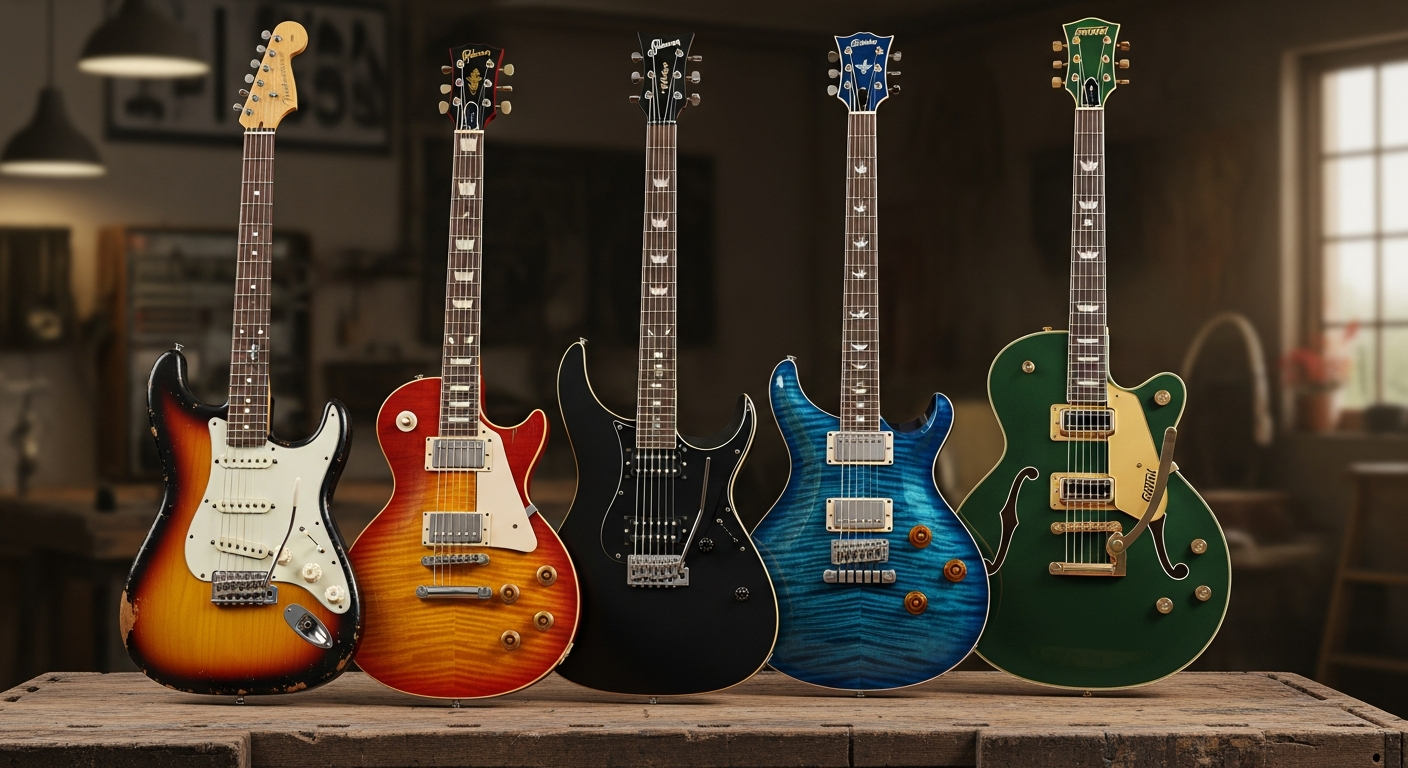
Jackson JS11 Dinky Review: Pros and Cons
So, did you see that one? Jackson JS11 Dinky Is it out there, perhaps online or at your local dealer? It's buzzing around in your head, huh? Sure, the price is tempting, especially if you're just starting out or looking for a "fight-or-fight" guitar to experiment with without too much fuss. It's the classic situation: you need a guitar. electric that doesn't empty your wallet, but you also don't want to end up with a useless piece of wood.
It's often easy to fall on these entry-level models from well-known brands. Jackson, as we know, has a remarkable pedigree in the world of metal and hardcore rock. But can a guitar costing less than €200 really embody that DNA, or is it just a fancy name on a budget-friendly product? I'll tell you straight away: it's a bit of both. And here, on my workbench (which is actually my garage table, let's face it), I've had the opportunity to get my hands on more than one model from this JS series, both the JS11 and its slightly more sophisticated siblings. I've tried setting them up, I've tried playing them, and yes, I've even tried to understand something about them for those thinking of taking one home.
The truth is, when you're spending less, you have to be willing to compromise. The real question is: which compromises are acceptable and which aren't? And above all, which flaws can you fix with a little elbow grease, and which ones force you to give up everything? This Jackson JS11 Dinky review wants to be honest, from someone who has disassembled and reassembled guitars, not from someone who sells them. Let's see together what's under the paint.nn
Jackson JS11 Dinky: Technical Specifications (The Real Ones)
n
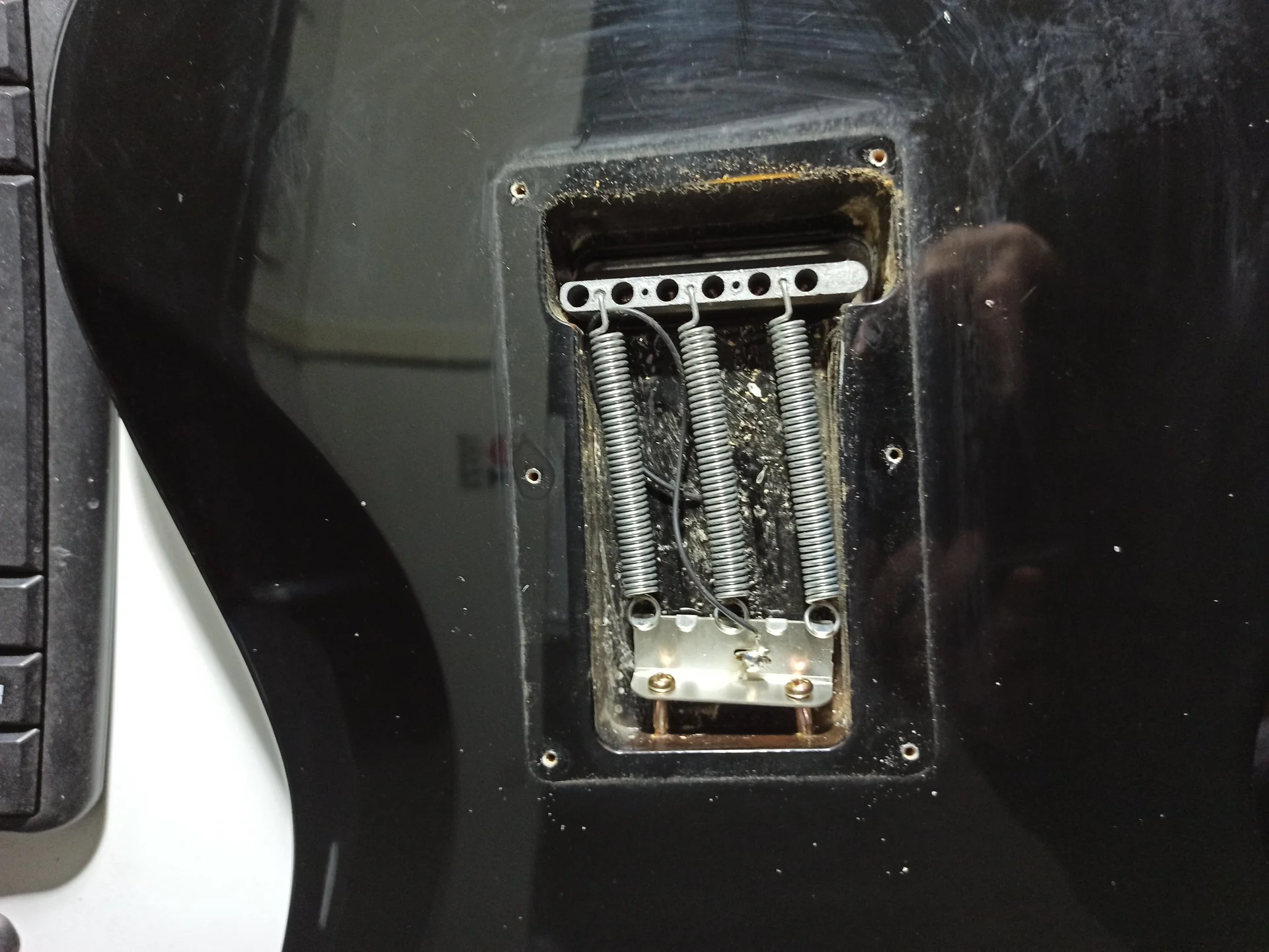
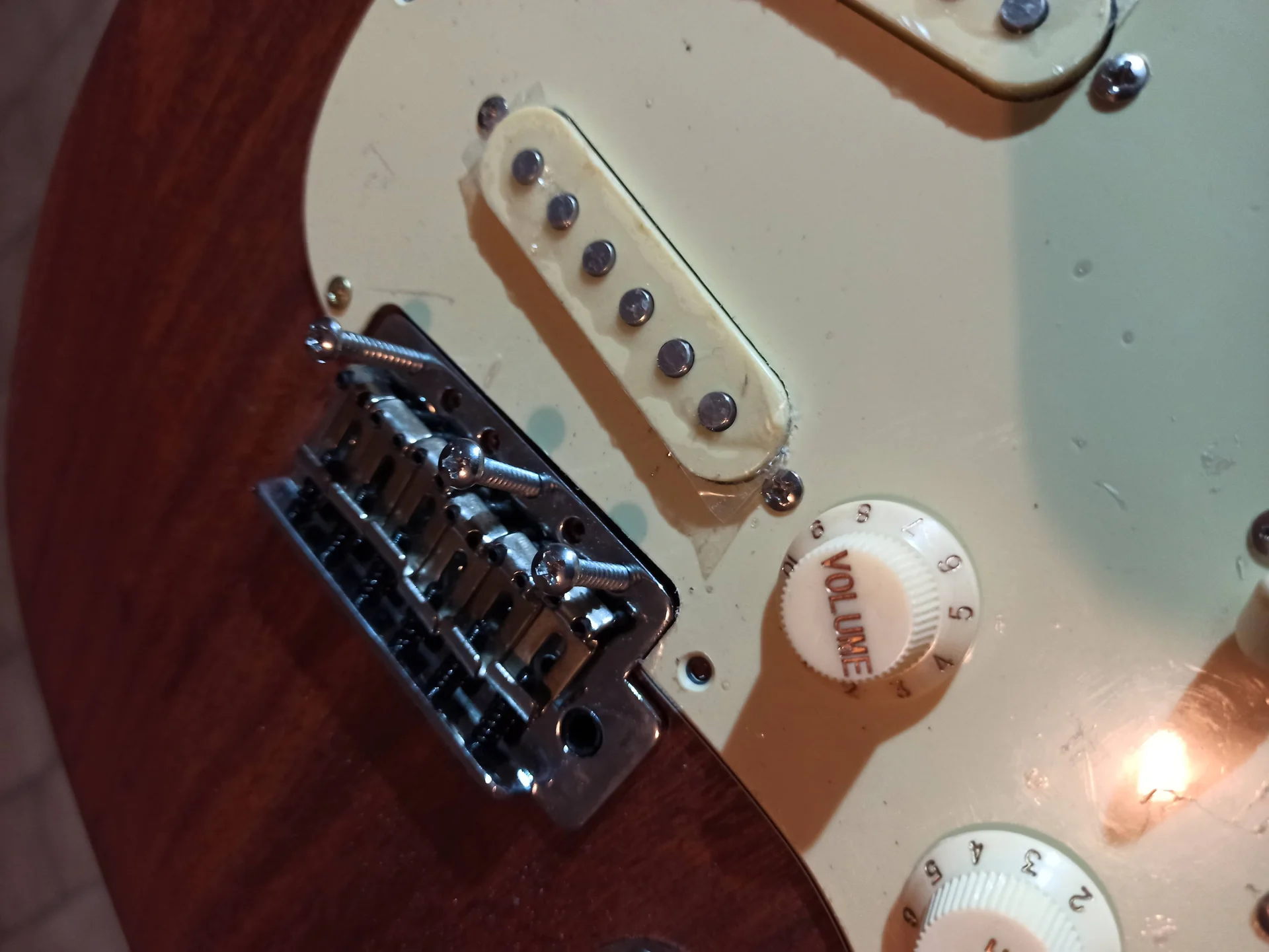
Okay, the spec sheet is one thing. But then there's your hands, your ear, and the frustration of a bend that doesn't sound right. I've spent hours on forums and Facebook groups dedicated to budget guitars, and I've spoken with several friends who've ventured into buying one. Jackson JS11 Dinky. The picture that emerges is quite clear and, I would say, predictable for the price range.
The general consensus is: “It's an entry-level Jackson, it does its job for the price, but it needs attention”. Nobody expects perfection, and that's a good starting point.nnThe qualities that come back most often:nn Fast Handle: Almost everyone praises the neck profile. It's thin, comfortable, and the satin finish really helps with ease. For those who like fast necks, this is a big plus. "I like it; it glides beautifully," a guy who uses it to practice scales told me.
Aesthetics: There's no arguing with this, it looks like a real Jackson. Dinky shapes are iconic for rock and metal. If you want a guitar that you seem A shredder's guitar, she is. The colorways are often eye-catching, no-frills but effective.
Pickup Power: Humbuckers, while not monsters of detail or dynamics, have enough output to push the amp. For metal, hard rock, punk... basically, for making noise, they're more than adequate. "They do their dirty work," is the most common comment. They're not refined, but they're effective.
Solid Foundation for Modifications: This is the key point for us tech enthusiasts. Many see it as an excellent base for upgrades. The poplar body is light and easy to work with, the neck is decent, so if you want to change pickups, electronics, or even the bridge, you have a good starting point.nnThe most common (and often complained about) defects:nn Fretwork Finish: This is the Achilles heel of almost all super-cheap guitars. The frets of the Jackson JS11 Dinky They're often rough, poorly polished, and, in many cases, feature the infamous "fret sprout," where the ends of the frets protrude slightly from the edges of the fingerboard. This can make the neck uncomfortable to play, almost "sharp.".
My experience: I've seen JS11s with frets that looked like saws, and others with surprisingly decent fretwork. It's a lottery. But even the "decent" ones benefit from a good filing and polishing.
Factory Setup: Forget about a perfect setup right out of the box. Often, the action is very high, the intonation is off, and the truss rod might need adjusting. It's almost guaranteed.
My experience: Every budget guitar I've ever owned, including this one, has required a complete setup. It's the first thing you should do, always.
Poorly Defined Pickups: While they're powerful, they lack clarity and dynamics. With the gain turned up high, they do their job, but if you try to play something cleaner or with less distortion, the lack of definition becomes noticeable. The bass can be a bit muddy.
Cheap Hardware: The tremolo bridge, despite being a two-point bridge, isn't the most stable. Using it too vigorously can lead to rapid detuning. The tuners, despite being sealed, aren't very precise and have some play. The plastic nut is a classic bottleneck for tuning stability.
Potentiometers and Selector: They are often of basic quality. They may be noisy, jerky, or have a non-linear "sweep" (the progression of volume or tone).
In short, the picture is that of a guitar with great potential for the price, but which requires an investment of time (and perhaps a few euros) to bring out the best. It's like buying an assembly kit: the base is there, but you have to put in your own effort.nn
Jackson JS11 Dinky: Pros and Cons vs. Price
nnnnnn

nn
nNow that we are clear about what the specifications say and what people are complaining about, let's put everything into perspective with the price. We are talking about a guitar that, new, costs between 160 and 200 euros, depending on the offers. At this price, are the defects I listed “defects” or are they simply part of the package?nnPRO (Considering the Price)
nn1. Value for money (as a basis): For less than 200 euros, having such a comfortable and fast neck, a well-shaped body and an attractive aesthetic is a plus. It's a guitar that it seems much more expensive than it is.n2. Neck and Fingerboard: The Speed Neck profile and compound radius are hallmarks of higher-end guitars. Jackson hasn't skimped on this crucial aspect of playability. The satin finish is a touch of class that's not a given at this level.n3. Suitable for Aggressive Genres: If your goal is to play rock, metal, punk or similar genres, the high-output pickups and 25.5″ scale length give you a good foundation for getting a powerful, punchy sound with distortion.n4. Great Platform for Upgrade: This is the real selling point for those of us who like to get our hands on things. The body and neck provide a solid foundation. With a few pickup swaps, pots, a nut, and a good setup, you can transform this guitar into something surprisingly capable, spending much less than you would for a mid-range, ready-made guitar.n5. Lightweight and Comfortable: The poplar body makes it a light guitar, easy to transport and comfortable to play even for long sessions.nn
CONS (Considering the Price)
nn1. Poor Fretwork: As mentioned, this is the most common flaw. Rough, protruding, or uneven frets can ruin anyone's experience, especially a beginner who might think they're the problem. This isn't acceptable, especially considering the price, because it directly affects playability. 2. Non-existent Setup: A guitar that isn't set up properly is difficult to play and tune. It requires immediate repairs, which, if you don't know how to do yourself, will cost you more money at the luthier's. Basic Hardware and Electronics: The potentiometers, selector switch, and nut are the first things to show their weakness. The tremolo bridge is functional but not very stable. These components are the most obvious cost-cutting measure.n4. Non-Versatile Pickup Sound: If you're looking for nuance, crystal-clear cleans, or complex dynamics, these humbuckers will disappoint. They're good for one thing: making noise. But they're not versatile.n5. Variable Quality Control: This is an important aspect. I've seen well-assembled JS11s and others with obvious aesthetic or functional defects (imperfect paint, bent screws, etc.). It's a bit of a lottery, and that doesn't inspire confidence in a buyer.
In short, the Jackson JS11 Dinky it's a guitar that gives you so much for its price, but it also asks you so much in terms of post-purchase work. It's not a perfect “plug-and-play” guitar right out of the box, but it's a blank canvas with a good frame.nn
Who is the Jackson JS11 Dinky suitable for? And who should avoid it?
This is the million-dollar question, or in this case, the 180-euro question. Understanding who this guitar was designed for helps you decide if it's for you.nn
Who Should Consider the Jackson JS11 Dinky:
Absolute Beginners (with some help): If you're just starting out and on a budget, the JS11 might be a good option. The neck is comfortable to learn on, and the price allows you to enter the world of electric guitar without a heavy investment. HOWEVER: you will haveabsolutely necessary Have someone with some experience do a complete setup for you (or you learn how to do it). Without a good setup, a beginner will simply get frustrated.
Hobbyists who want to experiment: If you enjoy disassembling, reassembling, soldering, and modifying, this guitar is a godsend. It's an excellent base for learning how to upgrade, swap pickups, and tweak electronics. It's the perfect practice tool. Personally, I've used similar guitars to learn how to route pickups for the first time or how to shield cavities. The low cost reduces the anxiety of "I'll ruin everything.".
Guitarists Looking for a Battle Axe or Spare Guitar: Do you need a guitar you can carry around without worrying about it getting damaged? A guitar you can leave in the rehearsal room? Or simply a guitar you can drop-tune without touching your main guitar? The JS11 is perfect for this.
Hard Metal/Rock Lovers on a Tight Budget: If your genre is metal or more aggressive rock and you can't spend much, this guitar will give you the aesthetics and a sufficiently aggressive sound to start with.nn
Who Should Avoid the Jackson JS11 Dinky:
Absolute Beginners Without Help or Will to Get Lost: If you are a beginner and have no one to set you up,It's the desire to learn on your own. You might find yourself with an instrument that's difficult to play, which will put you off. An "uncomfortable" guitar is a beginner's worst enemy.
Intermediate/Advanced Guitarists Looking for a Ready-to-Use Instrument:
If you're used to mid- or high-end instruments and are looking for something that sounds great and looks great right out of the box, the JS11 will disappoint. The compromises are noticeable and require work. It's not a professional stage or studio guitar without significant modifications.
Those seeking timbre versatility: If you play a variety of genres, from jazz to blues, pop to funk, and need crystal-clear cleans, dynamic crunch, and a wide range of sounds, the JS11 pickups won't give you that versatility. They're very gain-oriented.
Those who don't want or know how to do maintenance: If the thought of filing frets, adjusting the action, or swapping pickups terrifies you, then this guitar isn't for you. It would cost more to have a luthier than the guitar itself to make it truly perform.
So, before clicking “buy”, honestly ask yourself which category you belong to.nn
My Final Advice and Some Alternatives
So, at the end of the day, the Jackson JS11 Dinky Should I recommend it or not? The answer is: it depends.
If you are a beginner with a geek friend (or the curiosity to become one) who can give you a hand with the setup and maybe some small modifications, or you are a hobbyist looking for an inexpensive project to learn how to get your hands on a guitar, then yes, absolutely. It's a solid and fun foundation to build on. With a proper setup, a fret file, and maybe a nut change, it becomes a surprisingly playable guitar for the price.
I remember when I worked on a friend's JS22 (its bigger sister, but with similar problems): half an hour of filing the frets, an hour of complete setup (action, intonation, truss rod), and it felt like a completely different guitar. These repairs cost nothing if you know how to do them. And if you don't, it's a great opportunity to learn. Here on the blog you'll find tons of how-to guides. For example, if you want to start understanding how to make a guitar perform better, check out the section dedicated to guitar modification, there are a lot of useful tips there to improve even a Jackson JS11 Dinky.nnHowever, if you do not fall into these categories, if you are looking for a “perfect” guitar that is ready to use straight out of the box, or if you just don't feel like putting your hands on it, then better to look elsewhere. The frustration would be too much.nn
Alternatives to Consider (always in the entry-level range):
If the JS11 doesn't convince you or you want to explore other options, here are some alternatives that often offer a similar price-quality ratio, or slightly better in some aspects, always with the idea of an inexpensive guitar that might need some small adjustments:nn1. Harley Benton D-120CE or similar: Harley Benton guitars (Thomann's brand) often surprise with their build quality for the price. They don't have the Jackson legacy, but quality control is sometimes more consistent. You might find better fretwork. Look for models with humbuckers if you need that kind of sound. Squier Bullet/Affinity Strat/Tele HSS: Squiers are a classic for beginners. The HSS (humbucker-single-single) versions offer more sonic versatility. The neck is often fatter than the Jackson, but quality control is generally good for the price range. Here, too, a setup is a must.n3. Yamaha Pacifica 012/112: Pacificas are legendary for their reliability and playability out of the box. They often have above-average quality control for entry-level models. They don't have the Jackson's metal aesthetic, but they are solid and versatile instruments. They may cost a little more, but sometimes the less frequent repairs are worth it. Ibanez GRG/GRX Series (Gio Series): Ibanez also offers excellent entry-level models, with fast necks and powerful pickups. They're direct competitors to the Jackson JS. Again, expect to need some setup and maybe some fret adjustments, but they're a good base.
Always remember that, at this price range, you add the real value. A well-done setup transforms any inexpensive guitar. It's not magic, it's just a bit of patience and the right tools.nn
Jackson JS11 Dinky Frequently Asked Questions
Since the topic is hot, and the questions are always the same, let's try to answer the most common doubts I've heard or read.nn
“Does the Jackson JS11 Dinky hold tuning well?”
Well, "good" is a big word. Let's say he keeps it Enough if you don't use the tremolo too much. The weak points are the plastic nut, which can pinch the strings, and the basic tuning machines.
What to do:n1. Lubricate the nut: Put a little graphite (from the tip of a pencil) in the nut slots. This helps the strings slide better. 2. Stretching the strings: Every time you put on new strings, pull them a little to settle the tuning.n3. Capo Upgrade: If you want a significant improvement, replace the nut with a tusq or bone one. It's an inexpensive modification and makes a huge difference.n4. Mechanics Upgrade: If you really can't stand it, a set of locking tuners is a next step, but the cost might exceed the value of the guitar, so evaluate carefully.nn
“Are pickups really that bad?”
nn”Bad” is subjective. They are functional For aggressive genres. If you like a gain-heavy sound with plenty of punch and little concern for nuance, then no, they're not bad. They do what they're supposed to.
What to do:
If you're looking for more definition, more dynamics, or a more versatile sound, then yes, you'll have to change them. A set of mid-range humbuckers (like Seymour Duncan Designed, Wilkinson, or even certain GFS) works wonders. It's the most common modification and has the greatest impact on the sound.nn
“Is it suitable for learning bending and vibrato?”
Yes, a compound-radius neck is great for this. The fingerboard flattens out toward the higher positions, making bending easier and less prone to fret out. The only drawback, as mentioned, could be a less than perfect fretwork that makes the strings less smooth.
What to do:
Good fret leveling and polishing will allow you to do bends and vibrato without impediments.nn
“Can I put a Floyd Rose bridge on this guitar?”
Technically, you could. But I don't recommend it, and I'll explain why. A Floyd Rose requires very precise routing in the guitar body, and the Jackson JS11 Dinky is not designed for this. You would have to do significant carpentry work, which requires specific tools and a lot of experience. Furthermore, the cost of a decent Floyd Rose far exceeds the value of the guitar. You would spend more on the modification than on the guitar itself, and the final result might not justify the effort. If you want a Floyd Rose, it's better to buy a guitar that already has one from the factory.nn
“How much should I spend on upgrades to make it good?”
It depends on what you want to achieve.
Base (FUNDAMENTAL): Complete setup, filing and fret polishing (if needed). Cost: €0 if you do it yourself, €30-60 at a luthier.
First Level (HIGHLY RECOMMENDED): Tusq/Bone nut. Cost: €10-20 (materials) + €0 (if you assemble it yourself) / €10-20 (from a luthier).
Second Level (GREATEST IMPACT ON SOUND): New pickups (e.g., Wilkinson, GFS, Seymour Duncan Designed). Cost: €50-100 for a decent set, €0 (if sold on your own) / €30-50 (from a luthier).
Level Three (Improve Electronics): Quality potentiometers and selector switches (e.g., Alpha, CTS). Cost: €20-30, €0 (if sold on your own) / €20-40 (from a luthier).
So, for an extra €0-150 (if you do most of the work yourself), you can transform your JS11 Dinky from an entry-level guitar to a truly high-performance, fun-to-play instrument. If you have to pay a luthier for everything, the cost may go up, but it's still less than a mid-range guitar.
I hope this Jackson JS11 Dinky review I hope I've clarified your ideas. The choice is yours, but now you have all the elements to make it consciously. Good luck!nn
nnnn
See also
Download the Luthier Survival Kit
Free PDF with checklist, problem-cause table and project card template.
 English
  Italiano
Stuck on your build?
If you ran into the same problem or have a question, drop it in the comments. I read and reply to every one.
Write a comment