

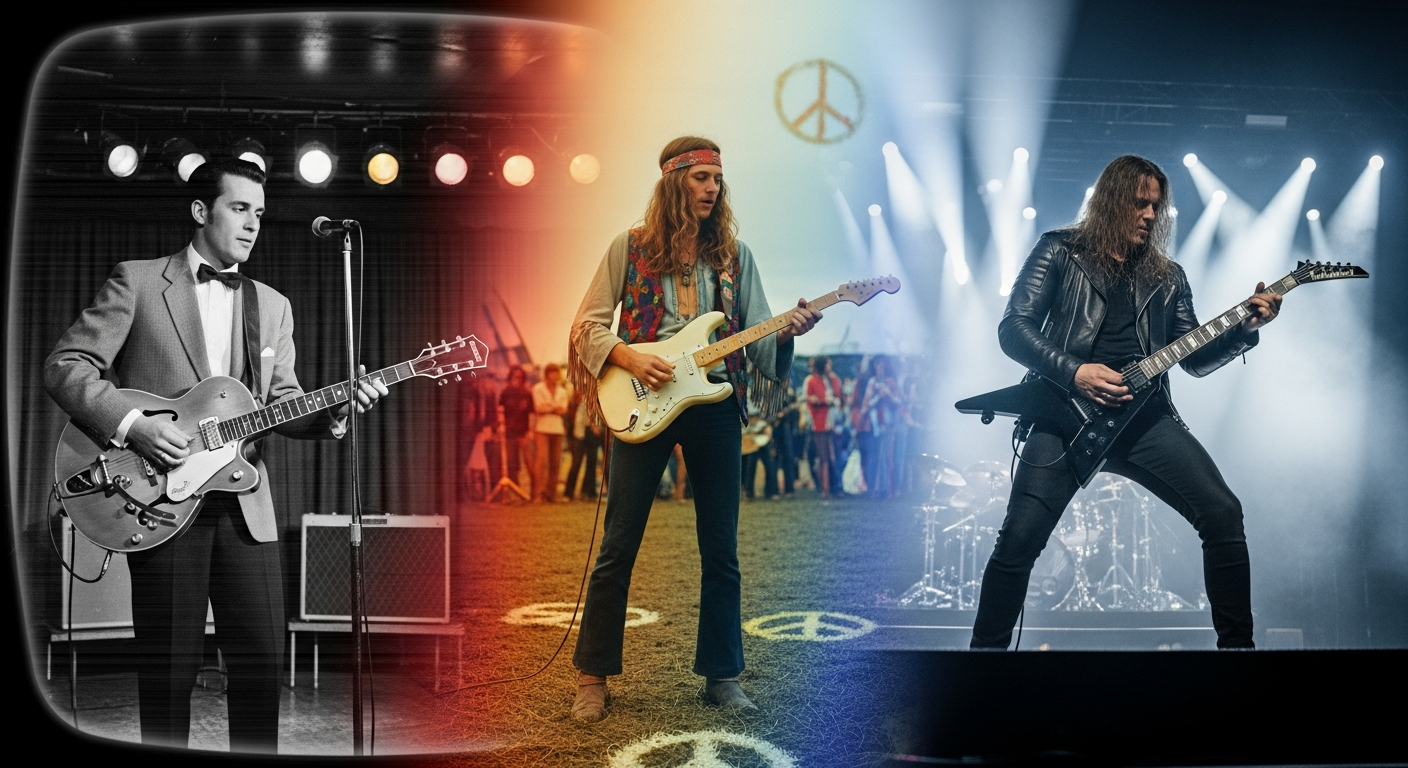
Quick Guide: Essential Electric Guitar History
Guitarists, welcome to my virtual garage. Today we won't be dismantling a pickup or sanding a body, but taking a step back in time. We're diving into the history of the electric guitar, a journey that has always been fascinating to me, almost as fascinating as the first chord played on a tube amp. I won't give you a lecture, don't worry. Instead, I'll tell you the story of how we came to have these pieces of wood and metal that make us dream. It's a story of brilliant intuitions, a few resounding flops, and many, many attempts. Just like when you try to wire a circuit for the first time and discover the potentiometer is backwards.When I first started getting my hands on my first guitars, taking them apart and putting them back together, I always asked myself: “Who invented this stuff? And why did they make it like this?” Behind every detail, from the bolt-on neck to the single-coil pickup, there is a story. A Timeline of the history of electric guitars Which isn't just a list of dates, but a tale of men who simply wanted a louder, more expressive sound. And, believe me, their ideas changed the world.
The First Cries: When Acoustics Were No Longer Enough (1920s–1930s)
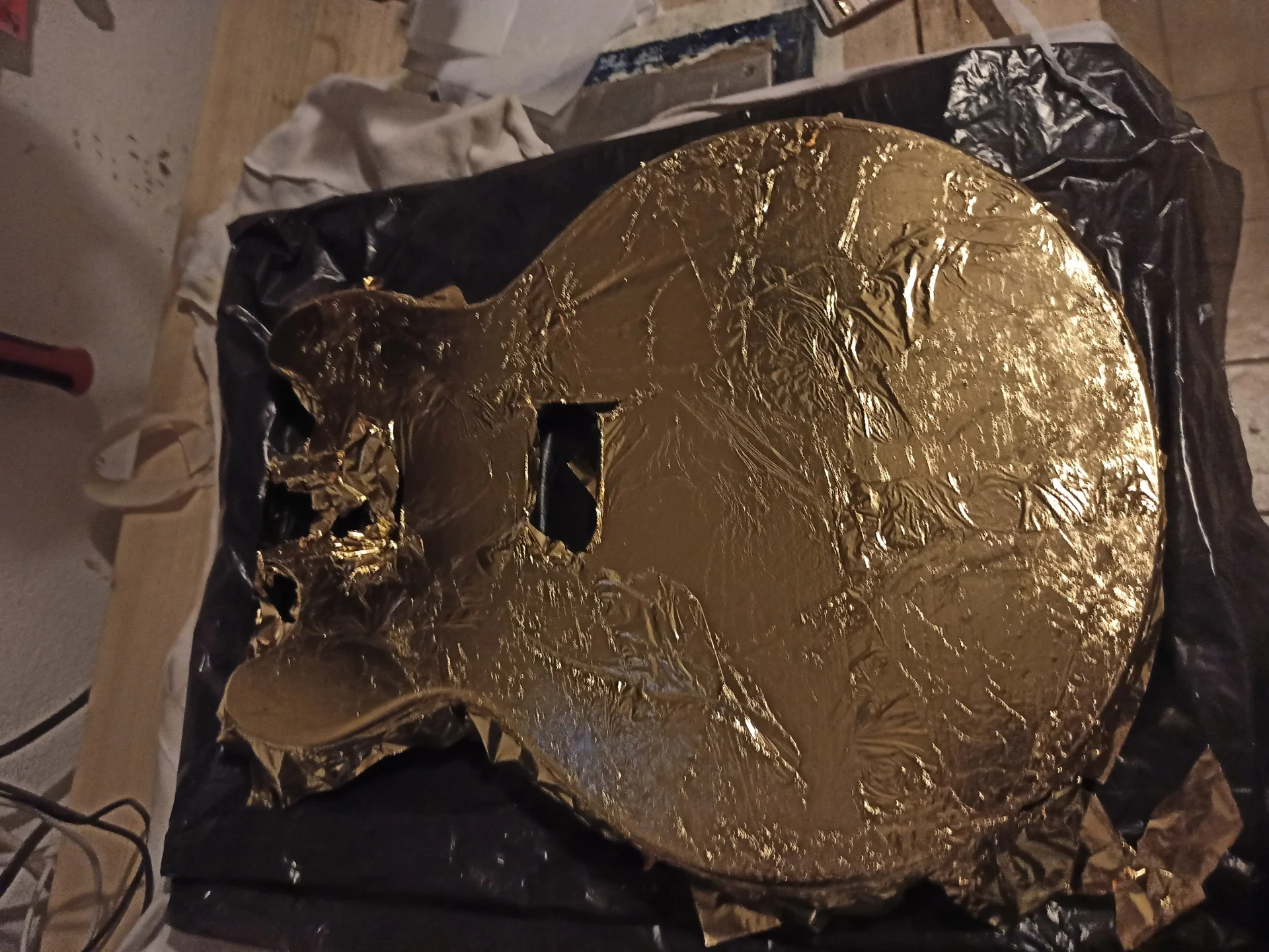
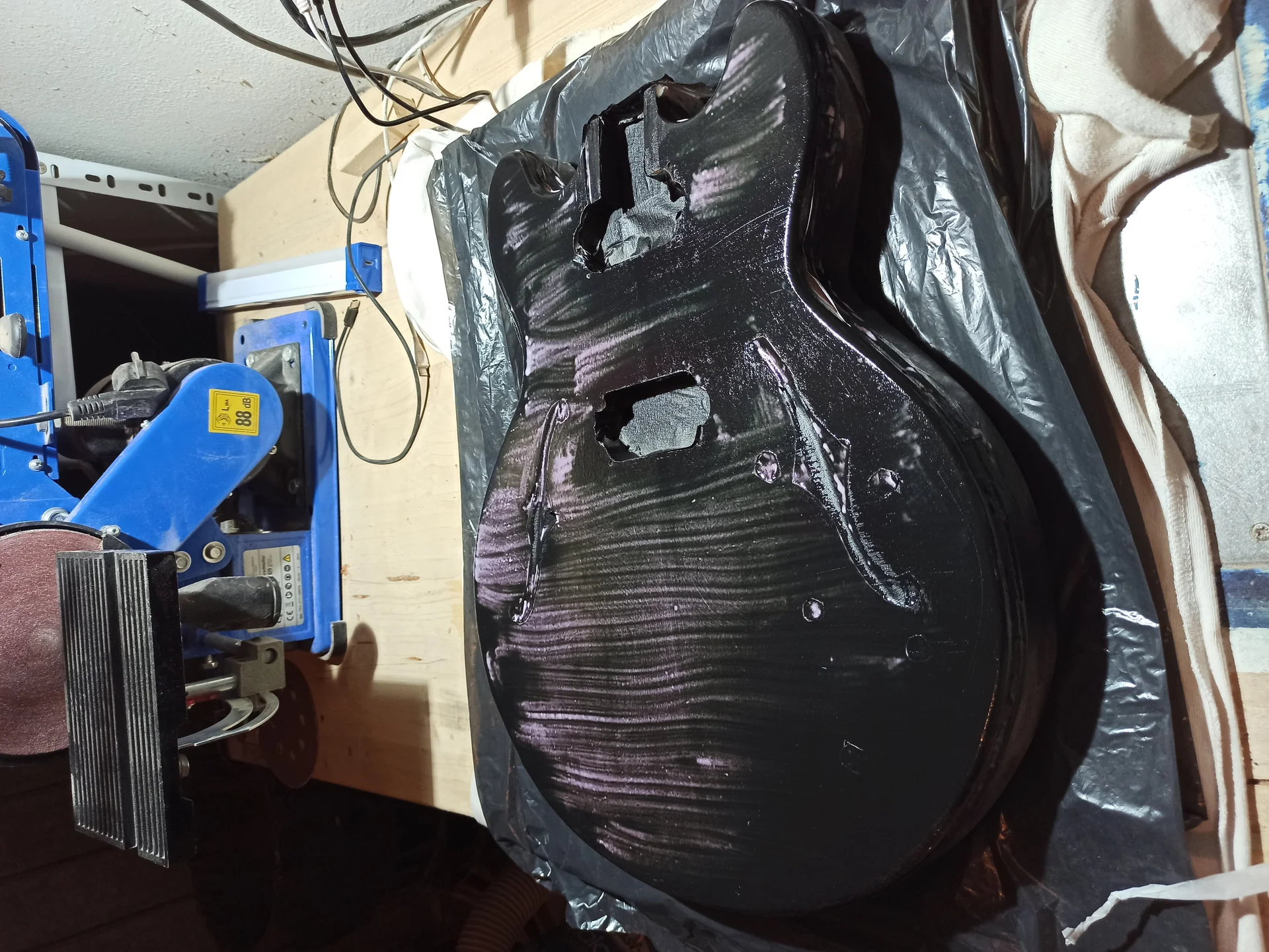
World War II had slowed everything down a bit, but the thirst for innovation hadn't quenched. Quite the opposite. Once the war was over, there was a mad desire to do, to create, to play. And the limitations of semi-acoustic guitars with pickups were evident: feedback. That uncontrollable whistling that ruined your performance, especially at high volumes.
Someone had to find a solution. And they did. In fact, they found it in several places almost simultaneously, with very different approaches.
Leo Fender: The Garage Genius
Advertising

Standard Telecaster, Maple Fingerboard, Black Pickguard, Butterscotch Blonde
See on Amazon

His intuition? Eliminate the sound box entirely. Create a solid body. No sound box, no feedback. Brilliant, right? His first mass-produced solid-body guitar was the Broadcaster (later renamed the Telecaster in 1950, due to a copyright issue with Gretsch). Simple Design: An ash or alder body, a bolt-on maple neck. No frills, maximum functionality.
Ease of Production and Repair: The bolt-on neck was a blessing. If it got ruined, you changed it. If you wanted a different action, all it took was a shimming. A philosophy that influenced all of us who get our hands dirty. The first time I had to straighten out a tangled neck on an old Telecaster, I thanked Leo for making it so easy to do. modify and fix.
The Sound: Two single coils. A bright, sharp sound, with plenty of twang. Perfect for country, rockabilly, and blues. It's the sound that defined an era. Think of artists like James Burton or Keith Richards.
Leo didn't stop there. In 1954, the Stratocaster arrived. Another revolution. Three single coils, a five-position selector switch (early models actually had three; guitarists soon discovered that positioning the lever halfway between one position and the next produced "out of phase" sounds), and a synchronized tremolo system. It was ergonomic, futuristic, and incredibly versatile. A true piece of industrial design, not just an instrument. And that tremolo, while sometimes complicated to set, opened up a world of expressiveness. How many times have I worked up a sweat balancing the springs on a Stratocaster's bridge, but the result... was worth it.
Gibson and the Elegant Answer: The Les Paul
While Fender was making its "carpenter-style" guitars, Gibson, with its long tradition of lutherie, couldn't help but follow suit. Their approach was different: more traditional, more luxurious. In 1952, in collaboration with legendary guitarist and inventor Les Paul (who had actually been experimenting with his "The Log" guitar since the 1940s, a 4x4 block of wood with two acoustic guitar wings attached for its appearance), they launched the Gibson Les Paul. Construction: Mahogany body with carved maple top, mahogany set neck. A longer and more expensive process, but one that many believed gave greater sustain and resonance.Aesthetics: Elegant, with a breathtaking sunburst finish. It wasn't just an instrument, it was a jewel.
The Pickups: Initially, it featured P90s, then in 1957 came humbuckers, invented by Seth Lover. Humbuckers solved the hum problem of single-coil pickups, offering a fuller, warmer sound with more output. If you've ever tried recording with a single-coil pickup in a room full of interference, you'll understand why humbuckers were such a blessing!
The Les Paul created an iconic sound for blues, rock, and jazz. Peter Green, Jimmy Page, and Slash all shaped their sound around this guitar. timeline of electric guitars it wouldn't be the same without the (healthy and productive) rivalry between Fender and Gibson.
Gretsch: The Jukebox Sound
Around the same time, Gretsch, which had a long history with drums and acoustic guitars, entered the electric game. Their guitars, often semi-hollow or hollow-bodied, had an unmistakable look and sound. Equipped with Filter'Tron or Dynasonic pickups, they produced a bright, almost jangly sound, but with a body and resonance that made them perfect for rockabilly and country.Think Duane Eddy with his “Twangy” Gretsch or Eddie Cochran. And then, of course, Brian Setzer. The Gretsch sound is like a 1950s jukebox, an explosion of energy and style. When I tried putting a Bigsby on an old Gretsch, I realized how integral the vibrato was to that sound. It's not a Fender tremolo; it's something else, softer and more ’surfy.“.
The Golden Years and the Expansion of Sound (1960s – 1970s)
The '60s were the real boom of the electric guitar. Rock and roll had exploded, and with it the need for new sounds, new forms, new expressions.Rickenbacker and Jangle Pop
Rickenbacker, after the Frying Pan, continued to innovate. In the 1960s, their semi-hollow guitars, particularly 12-string models like the 360/12, became iconic thanks to the Beatles, and especially George Harrison. The bright, resonant, jangly sound defined the pop-rock sound of the time.That crystalline, almost organ-like sound is unmistakable. I tried playing a 12-string Rickenbacker once, and boy, it's another world. The closely spaced strings and the unique intonation take some practice, but the resulting tone is pure magic.
Gibson and the Bold Forms
As Fender consolidated the success of the Strat and Tele, Gibson experimented with shapes. The Flying V, the Explorer (both 1958), and the SG (1961) were bold responses to Fender's functional design. They were guitars that screamed "rock and roll" even before they were played.The SG, in particular, with its slim body and double cutaways, became a symbol of rebellion. AC/DC's Angus Young is the perfect example. These guitars weren't just instruments, they were style statements. And I have to say, despite my preference for bolt-on necks, the lightness of an SG is unmatched for long standing sessions.
The Influence of Blues and Rock
In recent years, the electric guitar has become the beating heart of genres like blues-rock and psychedelic rock. Jimi Hendrix with his Stratocaster, Eric Clapton with his Les Pauls and later his Strats, Jimmy Page with his Les Paul… they pushed these instruments to their limits, discovering new sounds, using feedback not as a problem but as an artistic expression.There history of electric guitars in this period it is an explosion of creativity, where musicians not only played, but they co-created the sound with their instruments. Think of how Hendrix used the Strat's tremolo, bending it until it screamed. An innovation that wasn't in Leo Fender's handbook, but which became an integral part of the instrument's DNA.
The Decade of Volume and Sustain: The 1980s and Beyond
The '80s were a decade of excess, even for guitars. Metal and hard rock dominated the scene, and guitarists wanted more volume, more sustain, more speed.The Superstrats and the Floyd Rose
Japanese manufacturers, such as Ibanez and Charvel/Jackson (which later became American), began to take the Stratocaster concept and push it to the extreme. The “Superstrats” were born: thinner bodies, faster necks with flat fingerboards and jumbo frets, and HSH (Humbucker-Single Coil-Humbucker) pickup configurations for extreme sonic versatility.And then there's the Floyd Rose. A tremolo system that allowed you to do dive bombs and extreme harmonics without the guitar going out of tune. A true revolution for shred guitarists. The first time I set up a Floyd Rose, it took me hours to figure out how to set the intonation. It's not a system for the faint of heart, but when it works, it's incredible.
These guitars were war machines, designed for speed and power. Steve Vai, Joe Satriani, Eddie Van Halen… carved their sounds on these instruments. The evolution of electric guitars underwent a significant push in this direction.
Electronics and Effects
At the same time, the electronics onboard guitars became more complex, with active circuits, integrated boosters, and multi-coil pickups. And, of course, the world of effects pedals exploded. It was no longer just the guitar that made the sound, but the entire signal chain.This is an area where we DIYers have a lot of fun. How many times have I modified the wiring of a guitar to add a switch, a coil split, or a built-in boost? It's there that you really understand how electronics work and how every small change can change the character of the instrument.
The New Millennium: Vintage, Boutique, and DIY
Today, the timeline of electric guitars It's reached an interesting point. There's a strong trend back to vintage, with increasingly accurate reissues and a booming used and collectibles market. Many of us are looking for that "old school" sound that made history.But there's also an explosion of "boutique" luthiers, small artisans who build custom guitars, often with exotic woods or innovative solutions. And, of course, there's the world of DIY.
Our Place in History
We who get our hands dirty, whether we build a guitar from scratch or modify an existing one, are a bit like the heirs of those pioneers. We're like Leo Fender in his garage, trying, making mistakes, improving. Experimentation: We can try different pickups, swap bridges, and modify the electronics. We're not tied to factory specs.Practical Knowledge: Understanding how a guitar is made helps us understand its sound, its limitations, and its potential. When you hear a humbucker buzzing, you immediately know there's a ground problem, because you've seen how it's wired.
Personalization: Every guitar we build or modify becomes a one-of-a-kind piece, with our own unique touch. And that, for me, is the real added value.
So, next time you pick up your guitar, think about the entire journey it took to get to you. From the Rickenbacker "pan" to your super-customized instrument, there's a direct line of innovation, passion, and, yes, even a lot of mistakes and adjustments.
An Eye on the Sources
For those who want to delve deeper, there's a book I consider a veritable bible: "The History of the American Guitar: From 1833 to the Present Day" by Michael Wright. It's a solid read, but packed with details and anecdotes. For me, it was essential reading for understanding the "whys" behind certain designs. You can find an updated and more concise version in "The Story of the Electric Guitar: The Complete History of the Guitar" on sites like Amazon or in bookstores.Frequently Asked Questions for the DIY Luthier
When talking about history of electric guitars, the questions I asked myself at the beginning often come to mind.What was the first electric guitar?
The first commercially produced electric guitar was the Rickenbacker A-22 “Frying Pan” in 1931. It was a lap steel, but its electromagnetic pickup paved the way for everything else. Technically, it wasn’t a “Spanish guitar” as we know them today, but the concept of electromagnetic amplification was there.Why have solid body guitars become so popular?
Mainly for two reasons:n1. Deleting Feedback: Hollow-body guitars, when amplified at high volume, produced an annoying whistling sound. The solid-body solved this problem.n2. Sustain and Attack: The solid body allowed for greater sustain and a more defined attack, ideal characteristics for new musical genres such as rock and roll.What is the main difference between a Fender Telecaster and a Gibson Les Paul?
The differences are many and fundamental, and define two different construction philosophies:Neck Construction: The Telecaster has a bolt-on neck, which is easy to replace or adjust. The Les Paul has a set neck, often considered by some to provide greater sustain and resonance, but more difficult to repair if broken.
Woods: Telecaster with a thick ash/alder body and maple neck. Les Paul with a mahogany body and maple top and mahogany neck.
Pick-up: The Telecaster uses a single coil pickup, which has a bright, twangy sound. The Les Paul uses humbuckers (from the mid-1950s), which have a warmer, fuller, and hum-free sound.
Bridge: The Telecaster has a fixed bridge with individual saddles. The Les Paul has a Tune-o-matic bridge with a separate tailpiece.
Sound: The Telecaster is more crystalline, suitable for country, blues, and rockabilly. The Les Paul is thicker and more sustaining, perfect for blues-rock and hard rock.
A practical tip from Mimmo:
Don't be afraid to open up your guitar and look inside. Every time I take apart a guitar, even if I've done it a hundred times, I learn something new. Maybe I discover some strange wiring, a unique capacitor, or an ingenious way to attach a component.Theory is important, of course. But getting your hands dirty, feeling the wood, the melting tin, the sound changing after a modification... that's the real way to understand the history of electric guitars, not just as a list of dates, but as a series of engineering and artistic solutions that continue to evolve, even in your garage. Happy crafting, and have fun!
See also
Download the Luthier Survival Kit
Free PDF with checklist, problem-cause table and project card template.
 English
  Italiano
Stuck on your build?
If you ran into the same problem or have a question, drop it in the comments. I read and reply to every one.
Write a comment