

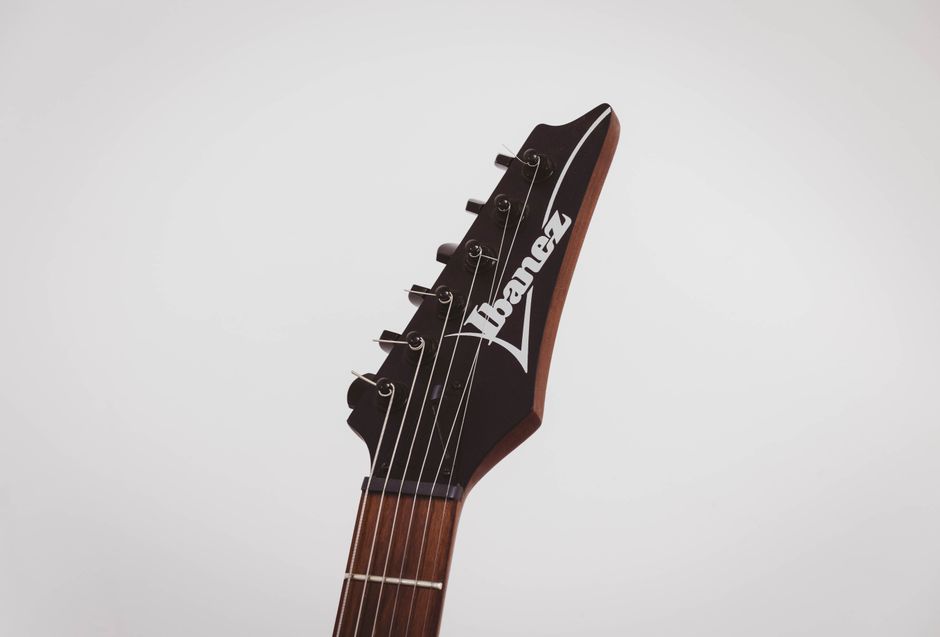
Ibanez Guitars: The Definitive History
Let's get this out of the way: when it comes to electric guitars, the name Ibanez immediately conjures up images of thin necks, floating bridges that make the world shake, and solos that seem to defy the laws of physics. For years, for many of us, it was there shredder guitar, the metalhead one, the one with which virtuosos performed magic. But there's much more behind this brand. Much more than you can imagine, believe me. And no, it wasn't born yesterday with Steve Vai in hand. The history of the Ibanez guitars It's a true novel, full of twists and turns, radical transformations and a purely Japanese obstinacy in wanting to do things well, even when starting by copying. I, in my garage, have always had a soft spot for brand stories. Understanding how they were born, who was behind them, what mistakes they made and how they managed to get back on their feet, energizes me. Because if they, with all the resources in the world, made mistakes and learned, imagine us with our cheap soldering iron. So, buckle up. This is not a boring list of dates. It's a journey through time, to understand how a small musical instrument distributor became a giant capable of defining entire musical genres.
The Japanese Origins: From Scores to Classical Guitars (Pre-1950s)
The history of this icon of electric lutherie does not begin with distortions and fast necks, but with a gentleman named Matsujiro Hoshino and a music store in Nagoya, Japan. It was 1908 when Hoshino Gakki, the parent company of what would become the brand we know, opened its doors. Initially, their main business was the distribution of musical scores.
Imagine this: a Japan that was opening up to the world, but where Western music, especially that for string instruments, was not yet so widespread. Matsujiro had foresight, and understood that there was a potential market for musical instruments themselves.
It was in 1929 that Hoshino Gakki began importing Spanish guitars produced by a luthier named Salvador Ibáñez, from Spain. These were well-made classical guitars, and the name “Ibáñez” quickly became synonymous with quality in the Japanese market. It was not yet the brand we would see on stages around the world, but the seeding had begun.
Unfortunately, Salvador Ibáñez's original factory was destroyed during the Spanish Civil War. Hoshino Gakki, who by then had some experience with the distribution and demand for these guitars, decided to acquire the rights to the name and began producing their own classical guitars. It was 1935, and the “Ibanez” brand (with a ‘z’ instead of a ‘ñ’, to simplify pronunciation and international registration) was officially born.
These first Ibanez guitars They were still acoustic instruments, often classical or folk. They were built with artisanal care that, even today, can be appreciated if you are lucky enough to find one. Don't think of superstrats, but of elegant instruments, with selected woods and a warm resonance. It was the foundation upon which everything else would be built.
The Second World War abruptly interrupted much of production and trade, but the Hoshino family, with its proverbial resilience, managed to restart. In the post-war period, Japan was a country under reconstruction, but with a strong drive for innovation and manufacturing. Hoshino Gakki was ready to ride the wave.
For me, who often finds myself disassembling and reassembling old guitars, it is fascinating to think about how much work and passion went into even these “prehistoric” instruments. They didn't have pickups,
And tremolo bridges, but the care in the choice of wood and in the assembly was already a distinctive sign. It is the same care that, years later, they would have applied to much more complex models.
The Era of Copies and the Birth of a Silent Giant (1960s-1970s)
The real turning point for the Ibanez guitars, and for many other Japanese brands, arrived in the 60s. The rock’
'roll had exploded, and with it the demand for electric guitars. Fender and Gibson dominated the market, but their instruments were expensive and not always easy to find worldwide.
Here comes into play the genius (or cunning, depending on your point of view) of the Japanese industry of that era. Instead of immediately inventing something new, they began to replicate, and often improve, the most popular American models. It’s the era that we enthusiasts call the “Lawsuit Era”, the era of lawsuits.
Hoshino Gakki, with its Ibanez brand, was no exception. They began producing incredibly faithful replicas of Stratocaster, Les Paul, ES-335, and even Rickenbacker. And we're not talking about shoddy copies. Many of these replicas were built with such quality that they could compete with, and sometimes surpass, the originals of the time, especially those produced during the "dark periods" of the big American brands (yes, I'm talking about the 70s, when Gibson and Fender didn't always shine for constructive consistency).
I still remember the first time I got my hands on an old 1970s Ibanez Les Paul Style. A friend had brought it to me, all dusty, found in the attic. After a good cleaning, a setup and a truss rod adjustment – something anyone can do with a little patience, perhaps following the advice on how to modify a guitar – that guitar sounded amazing. It had incredible sustain, the pickups were powerful and the finish was still impeccable. It was a clear example of how the Japanese did not just copy, but studied every detail to faithfully replicate, and sometimes improve, the original.
This 'copy and improve' strategy allowed Ibanez to make a name for itself in the international market. Musicians, especially those with limited budgets, found that they could have very high-quality instruments at a fraction of the price of their American counterparts. It wasn't just a matter of cost; it was also a matter of reliability and playability.
Obviously, this practice did not go unnoticed by the American giants. In 1977, Gibson (then Norlin) filed a lawsuit against Hoshino for copyright infringement, specifically for the “open-book” headstock typical of Gibson. Although the lawsuit was settled out of court and there was never a definitive ruling declaring Ibanez guitars “illegal”, this event marked a turning point.
Hoshino Gakki understood that to grow further and establish itself as a leading brand, it had to stop copying and start innovating. And so they did. The era of original designs began, which would lead to iconic models and define the sound of entire generations of guitarists.
Between the late ’70s and early ’80s, Ibanez began experimenting with its own shapes. Models such as the Ibanez Artist (a versatile guitar with a distinctive look), the Destroyer (an aggressive rock guitar, made famous by guitarists like Paul Stanley of KISS) and the Iceman (another bold shape, adopted by artists like Paul Stanley and Daron Malakian of System of a Down) were born. These instruments were no longer copies, but statements of intent, showing Ibanez’s ability to create its own identity.
For me, the “Lawsuit Era” is proof that even starting from scratch, or from an imitation, with dedication and a keen eye for quality, you can surpass the masters. It's a lesson I carry with me every time I try to repair a guitar that seems like a desperate case. With the right attention, even a “clone” can become a gem.
The Explosion of Rock and the Definition of a Sound (1980s-1990s)
If there's a decade in which the Ibanez guitars have become synonymous with an entire musical genre, it was the ’80s. Hard rock and heavy metal were at their peak, and guitarists were looking for instruments that would allow for increasingly extreme virtuosity: fast necks, tremolo bridges that could withstand wild tunings, and powerful pickups for distorted and defined sounds.
Ibanez was in the right place at the right time, and above all, had the right vision. Instead of merely producing guitars, they began to collaborate closely with the most influential guitarists of the era. Their philosophy was clear: listen to the needs of musicians and build the instruments that would allow them to push beyond every limit.
The first, and perhaps most iconic, of these encounters was with Steve Vai. Vai, a true innovator who had played with Frank Zappa and David Lee Roth, had very precise ideas about what his ideal guitar should be like. He wanted an ultra-thin neck, a tremolo bridge that allowed extreme dive bombs without losing tuning, and a look that was as bold as his music.
From the collaboration between Vai and Ibanez, the famous JEM was born. The JEM was not just a guitar; it was a revolution. With its Wizard neck (ultra-thin and super-fast), the Edge bridge (an improved, incredibly stable Floyd Rose system) and the iconic “Monkey Grip” (the hole in the upper part of the body, originally intended for hanging it, but which became a distinctive feature), the JEM immediately became an object of desire for every shred guitarist. The DiMarzio PAF Pro pickups specific to the JEM helped define a powerful and versatile sound.
Not long after, another giant of virtuosity, Joe Satriani, joined the Ibanez family. From his collaboration, the JS series was born, another line of signature guitars that combined elegance with extreme performance. The JS, with their softer shapes and specific DiMarzio pickups (like the FRED and the Mo’ Joe), offered a more “rounded” alternative to the JEM, but with the same attention to playability and stability.
In parallel with the signature models, Ibanez developed its own successful series. The RG series (Roadstar Guitar) became the workhorse for thousands of metal and rock guitarists. The RGs incorporated many of the JEM innovations – Wizard necks, Edge or Lo-Pro Edge bridges – but in a more accessible package and with a variety of pickup configurations. The S series (Sabre) offered a thinner and contoured, extremely ergonomic body, maintaining the characteristics of speed and power.
I remember when, as a kid, I spent hours watching Steve Vai's videos and dreamed of a JEM. For me, as for many, those guitars represented freedom of expression, the possibility of playing anything that came to mind, without technical limits. Even though I couldn't afford one at the time, their influence was palpable. I spent hours in my garage trying to replicate that feeling, modifying necks, playing with the action, and trying to understand how to achieve that tremolo stability. It was a real learning laboratory, driven by those models.
My first “serious” Ibanez was an RG550, a true workhorse, produced in the legendary Fujigen factory. Even today, that neck feels incredibly fast to me and the Edge bridge is a perfect machine. It's no coincidence that many professional guitarists consider Ibanez guitars from the ’80s and ’90s to be real “tanks”, instruments built to last and to be abused on stage, without batting an eyelid.
Innovation didn’t stop at the necks and bridges. Ibanez was among the first to embrace the idea of 7-string guitars, thanks mainly to the impetus from Steve Vai and then bands like Korn. This opened new sonic frontiers for metal and progressive rock, allowing for lower tunings and a wider tonal range. Vai’s UV777 Universe is a striking example of this pioneering vision.
The ’80s and ’90s were the period when Ibanez went from being an “excellent copyist” to a “benchmark innovator”. They demonstrated that it was possible to build guitars of the highest quality, with meticulous attention to detail and playability, and that these guitars could define the sound of an entire musical era. For those who love to get their hands on instruments, studying the technical solutions adopted by Ibanez during that period is like attending a school of lutherie engineering.
Beyond Shred: Diversification and Continuous Innovation (2000s-Present)
After dominating the landscape of “shredder” guitars for two decades, Ibanez could have rested on its laurels. Instead, the company demonstrated a remarkable capacity for adaptation and diversification, pushing itself far beyond the boundaries of rock and metal. The early 2000s saw a more mature Ibanez, aware of its heritage but projected towards new challenges.
One of the smartest moves was the introduction of the Artcore series in 2002. These were semi-acoustic and hollow body guitars, affordably priced but surprisingly high quality. These guitars, with their warm and resonant sound, appealed to jazz musicians, bluesmen, and anyone looking for sounds different from the usual strat or les paul. It was a resounding success, demonstrating that the brand was not just for metal virtuosos, but could offer valid instruments for a much wider audience.
In parallel, Ibanez continued to push the limits of multi-string guitars. After the success of 7-string guitars in the ’90s, the company was among the first to produce 8-string and even 9-string guitars, opening up new possibilities for genres like djent and extreme metal. Their Iron Label series, introduced for the most demanding metal guitarists, offered models with performance-oriented specifications, such as Nitro Wizard necks, active pickups (often EMG or DiMarzio Fusion Edge) and Gibraltar fixed bridges.
Another significant innovation has been the exploration of multi-scale or fanned-fret guitars. This technology, which features angled frets and a different scale length for each string, allows for optimizing string tension and intonation across the entire neck. It's an ingenious solution, even if it might seem a bit strange to play at first. I had the opportunity to try some Ibanez models with multi-scale, and I must say that the intonation precision, especially on the lower strings, is impressive. It's a great example of how modern lutherie is still evolving.
Ibanez has not forgotten bassists either. The Soundgear (SR) series has become a benchmark for lightweight, ergonomic, and versatile electric basses, appreciated for their thin necks and powerful, well-balanced pickups. Here too, the attention to playability and build quality has allowed the brand to carve out a significant share of the market.
In recent years, Ibanez has also launched new series that combine classic elements with modern innovations. The AZ series, for example, has been met with great enthusiasm. These guitars feature a more traditional neck profile compared to the super-thin Wizard, a Gotoh T1802 tremolo bridge (which offers the stability of a Floyd Rose but with the feel of a vintage tremolo) and Seymour Duncan Hyperion pickups, designed for exceptional tonal versatility. I had the opportunity to get my hands on an AZ2204N, and I found it an incredibly well-balanced instrument, capable of transitioning from blues to heavier rock with disarming ease. It's proof that Ibanez is not afraid to reinvent itself, even by returning a bit to its roots but with an eye on the future.
Another example of how Ibanez is exploring new paths is the Talman series, which has seen a revival in recent years. With their unique shapes and an aesthetic that winks at vintage but with a modern soul, the Talman have been appreciated for their originality and versatility, available in both electric and acoustic guitar configurations.
Ibanez's approach has always been to offer quality at different price points. From the entry-level GIO series model, perfect for beginners, up to Prestige and J. Custom instruments, made with the highest level materials and finishes, there is a Ibanez guitar for almost every budget and every need. This democratization of quality is, in my opinion, one of the brand's greatest successes. It's not just for the pros, but also for us tinkering in the garage, looking for the perfect sound without emptying our wallets.
The Legacy of Ibanez: More than a Guitar, a Symbol
Having arrived at this point in our journey, it is clear that the history of the Ibanez guitars It's much more than a simple product timeline. It's the story of a company that has known how to evolve, face legal challenges, constantly innovate and, above all, listen to musicians. From simple sheet music distributors to pioneers of seven-string guitars, Ibanez has left an indelible mark on the world of music.
The legacy of Ibanez is visible in many aspects of modern lutherie. They helped standardize thin and fast necks, to perfect floating tremolo systems and to push the limits of tonal versatility. Many of the concepts we take for granted today, such as advanced ergonomics or tuning stability even under extreme stress, have been influenced, if not introduced, by the innovations of this Japanese company.
But the impact of Ibanez goes beyond technical aspects. They created a strong identity, a symbol for generations of guitarists who were looking for an instrument that was not only beautiful to look at, but also a war machine for performance. For many, the first Ibanez was the key to unlocking new techniques, pushing beyond their limits, and finding their musical voice. How many times, in my small workshop, have I seen kids with shining eyes in front of an old RG, ready to dream of the next solo?
Their ability to adapt to market changes and anticipate trends has been fundamental. When extreme metal demanded more strings and lower tunings, Ibanez responded. When jazz and blues sought affordable quality hollow body guitars, Ibanez responded. And when modern guitarists wanted a versatile instrument that combined the best of vintage and modern, Ibanez responded with the AZ series.
One aspect I particularly admire is their consistency in quality. Even in mid-range models, Ibanez manages to maintain a high standard of construction and components. This is a crucial factor, especially for those who, like me, are not afraid to open a guitar and see what’s inside. There are no nasty surprises, but solid engineering and reliable components, even if not always top-of-the-range.
It is no coincidence that many professional guitarists, even outside the more “virtuosic” genres, have at least one Ibanez in their arsenal. The versatility, playability, and reliability of these instruments make them faithful companions on stage and in the studio. For those who want to delve deeper into the history of Hoshino Gakki, the parent company, and its vision, I recommend taking a look at their history section on the official website. It's a good way to understand the mentality behind the brand.
In summary, Ibanez is not just a guitar manufacturer; it is a facilitator of creativity, a pioneer of innovation, and a reliable partner for musicians of all levels. Their history is a testament to the power of perseverance, adaptation, and a constant pursuit of excellence. And for us, in the garage, it's an inspiration: if a company can transform so radically and successfully, there's no limit to what we can achieve with our instruments and our passion.
The history of Ibanez teaches us that it doesn't matter where you start, but where you want to go and with what determination you pursue your goals. From the modest origins of a sheet music importer, the brand has become a global icon, defining the sound of entire generations of guitarists and continuing to push the boundaries of electric lutherie with a passion and dedication that deserves all our respect.
FAQ: What è the main difference between the Ibanez RG and S series?
Ibanez's RG and S series are both popular among rock and metal guitarists, but they have key differences in body design. RGs have a thicker, more robust body, often with squarer edges, which contributes to greater sustain and a more “solid” feel. S series, on the other hand, feature an ultra-thin, contoured body, making them extremely light and ergonomic, offering exceptional comfort for those looking for a compact and easy-to-handle instrument.
FAQ: Are Ibanez “lawsuit” guitars really as good as they say?
Yes, many Ibanez guitars from the “lawsuit” era (1970s) are considered of excellent quality and are highly sought after by collectors and musicians. They were faithful replicas, and often built with attention to detail and materials that, in some cases, exceeded the standards of their American counterparts of the time, who were going through a period of ups and downs. They offered exceptional value and even today, if well preserved, they can sound and feel magnificent.
Download the Luthier Survival Kit
Free PDF with checklist, problem-cause table and project card template.
 English
  Italiano
Stuck on your build?
If you ran into the same problem or have a question, drop it in the comments. I read and reply to every one.
Write a comment