

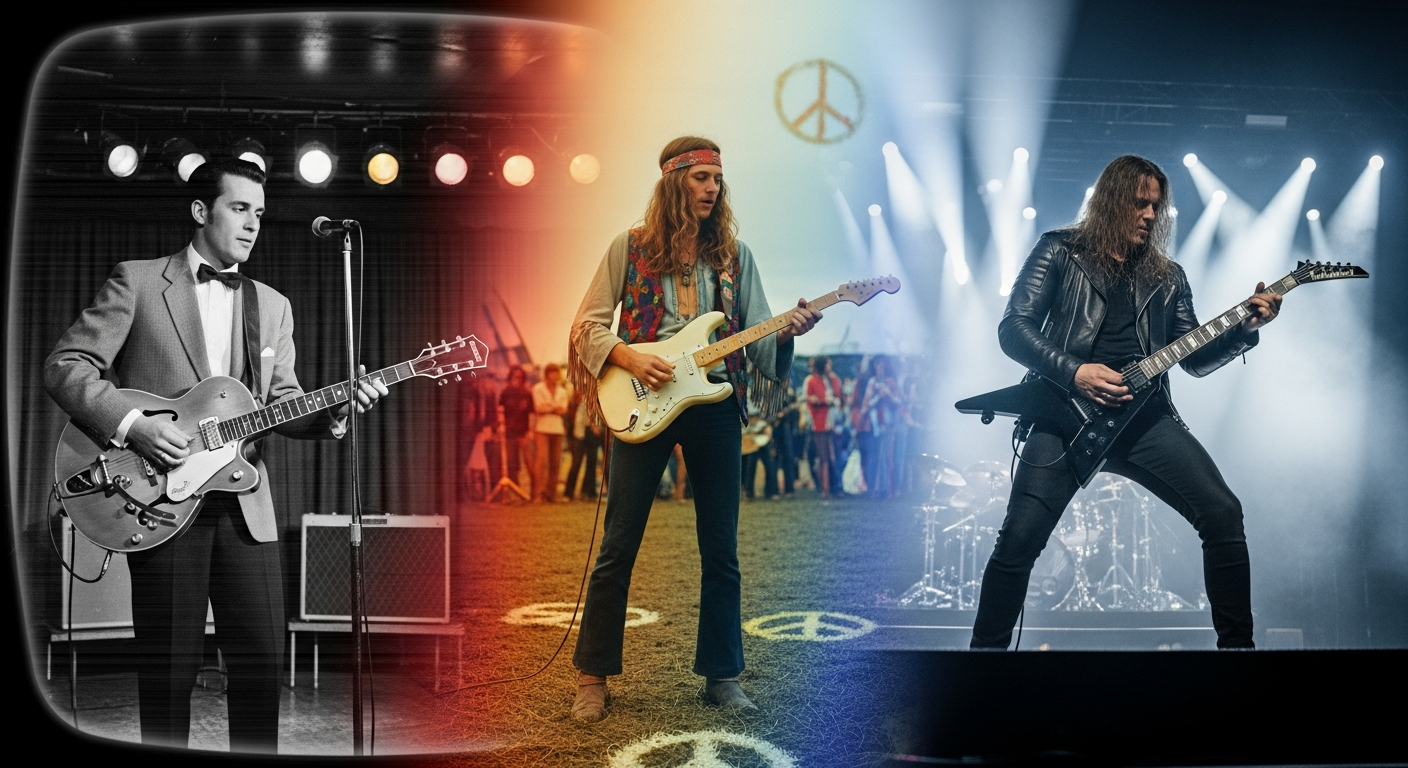
American Classical Guitars: History
When you pick up a guitar Electric, whatever it is, you're holding a piece of history in your fingers. It's not just wood, metal, and wire. It's the fruit of decades of experiments, brilliant intuitions, and, let's face it, a fair amount of rough-and-ready testing in garages or small workshops. Today I want to tell you the story of American classical guitars, those names that have become legends and defined the sound of entire generations. Don't expect an academic treatise, but rather the story I like to tell when a friend asks me, "But why does the Stratocaster sound like this and the Les Paul sounds like that?" It's a story of incredible characters, often more inventors than musicians, who changed everything with their ideas. And I assure you, if I could get my hands on them, understand their secrets, and modify them, you can too.Where It All Began: The Need to Make Yourself Heard
Leo Fender: The Garage Electronics Genius

Squier Classic Vibe 60s Stratocaster Electric Guitar, Candy Apple Red | Beginner to intermediate electric guitar, vintage 60s Strat tone, laurel fingerboard, 2-year warranty, Fender pickups
★ 4.5 (1000 reviews)
See on Amazon

He believed a guitar should be easy to build, easy to repair, and sturdy. And so, in his workshop, he began experimenting.
The Birth of the Telecaster (Broadcaster/Esquire)
In 1950, his company introduced the Esquire, a solid-body guitar with a single pickup. Shortly after, the Broadcaster arrived, with two pickups. The name didn't last long, because Gretsch already had a drum kit called the Broadcaster. So, for a short time, they only had "Fender" on the headstock, before becoming the legendary Telecaster.The Telecaster was a revolution. Massive ash or alder body, bolt-on maple neck, two mean single coils. Simple Design: Leo wanted a guitar that could be mass-produced easily. The bolt-on neck was a genius for production and repair: if it broke, you could replace it.
“Twangy” sound: The Tele's single-coil pickups, especially the bridge one, gave it a bright, aggressive sound, perfect for country and blues. That "twang" became a trademark.
Reliability: It was a battle-hardened instrument, made for musicians who played in bars and needed something that could withstand the knocks and endless evenings.
I still remember the first time I tried to replicate a Telecaster neck pocket on a raw body. It sounds easy, right? In reality, maintaining precise tolerances for a solid fit between neck and body is an art. I failed a couple of times before realizing that it takes patience, repeated measurements, and a properly crafted template. But once you get it right, you feel the guitar resonate differently.
The Stratocaster: The Evolution of the Concept
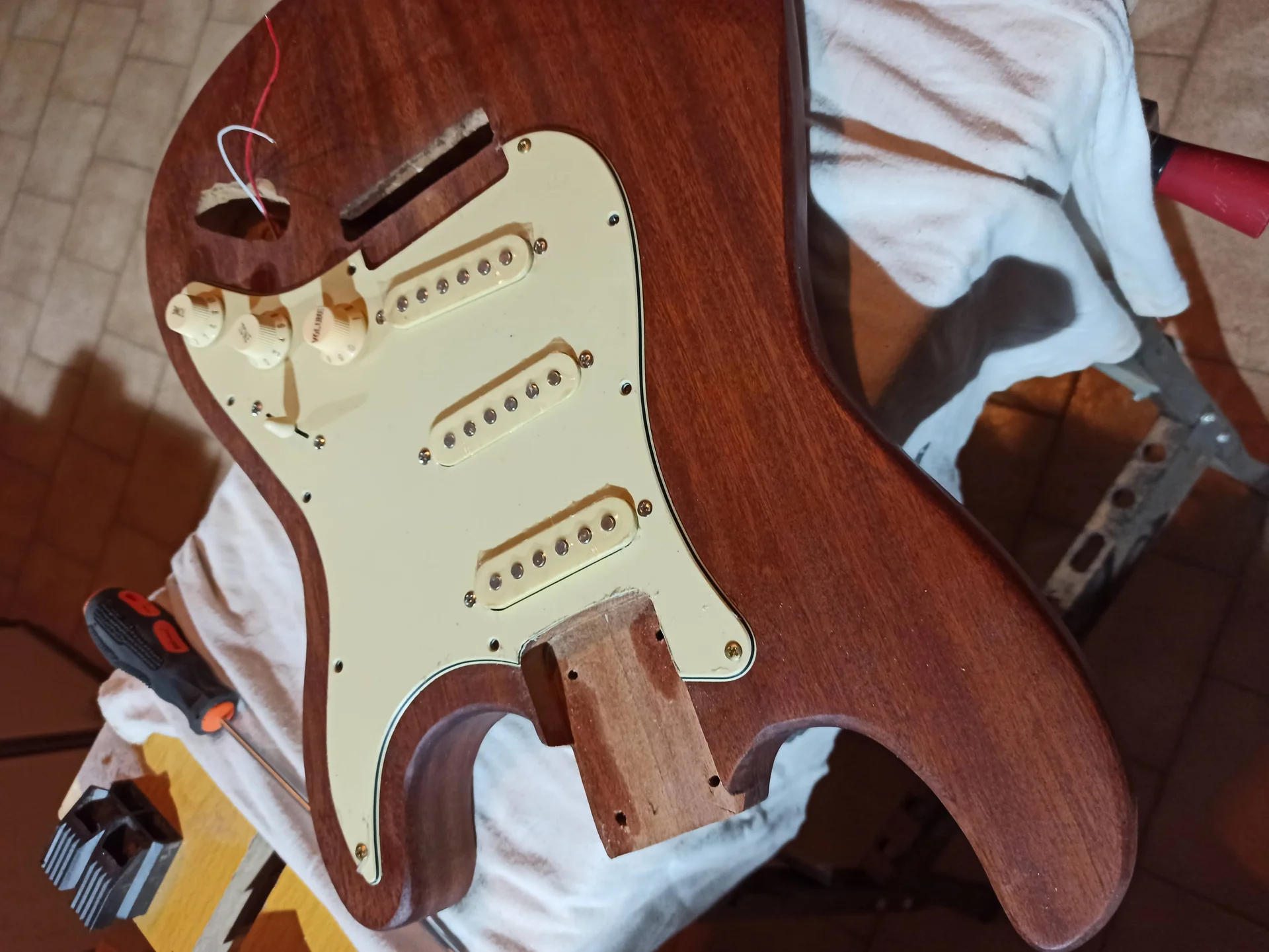
Not content with the Tele's success, Leo and his team (George Fullerton, Freddie Tavares) wanted to go further. They wanted a more comfortable, versatile guitar with a futuristic look. In 1954, the Stratocaster was born. Contoured Body: The Stratocaster's curves weren't just aesthetic. They were ergonomic, designed to hug the guitarist's body, making it incredibly comfortable to play while standing or sitting. That forearm and belly flare became a benchmark.Three Single-Coils: Three pickups, with a three-position selector switch (later expanded to five), offered an unparalleled range of tones for the time. From the bright sound of the bridge, to the rounder sound of the neck, to the "out of phase" intermediate positions that produced a quacky, crystalline sound.
The Synchronized Tremolo: Another amazing innovation. It allowed the strings to be lowered, creating vibrato effects that had previously been impossible. It required some maintenance and adjustment, but it opened up a world of expressive possibilities.
The Stratocaster, with its unmistakable look and versatility, has become an icon of rock, blues, and a thousand other genres. It's the guitar you see everywhere, in the hands of legends like Jimi Hendrix, Eric Clapton, and David Gilmour.
Gibson: Tradition Meets Electronics
On the other side of the United States, in Michigan, there was Gibson. A company with a long and distinguished history of building acoustic instruments, especially mandolins and archtop guitars. Their philosophy was different from Fender's: more artisanal, more rooted in the tradition of lutherie.Gibson's boss in the 1950s was Ted McCarty, a man who understood both production and the musicians' vision.
The Collaboration with Les Paul
Gibson couldn't ignore the rise of solid-body guitars. But instead of starting from scratch like Fender, they decided to do things their own way. And who better to help them than Les Paul, a guitar virtuoso and inventor himself (he had built his own solid-body "Log" years earlier)? In 1952, the Gibson Les Paul was born. It wasn't just a guitar, it was a statement. Mahogany Body with Maple Top: A more complex construction, with a thick mahogany body for sustain and a curved maple top for brightness. The combination of these woods, glued together, produced a warm and powerful sound.Set-Neck: Unlike Fender, Gibson used a set-in neck, a technique they believed improved the sustain and overall resonance of the instrument. It was more expensive and complex to produce, but it was part of the Gibson philosophy.
Humbucker Pickups: This is the real turning point. The first models had P-90s, bigger and more powerful single-coils than the Fender ones, with a fatter, more mid-range sound. But the real game-changer arrived in 1957 with the humbucker pickup, invented by Seth Lover.
Let's explain humbuckers for a moment. Single-coils have a problem: they pick up the "hum" (hum) of AC power. Seth Lover had the brilliant idea of placing two coils side by side, wound in opposite directions and with opposite magnetic polarities. The background noise, being a signal common to both coils but "out of phase," was cancelled out. The string signal, however, was added together. The result? A louder, warmer, more mid-range sound, and, above all, quieter. Gibson's "Patent Applied For" (PAF) has become the most iconic pickup in history.
The Les Paul, with its humbuckers and endless sustain, has become the guitar of choice for genres like rock, blues-rock, and hard rock. Jimmy Page, Slash, Gary Moore… the list is endless.
The Gibson SG: Light and Aggressive
By the early 1960s, the original Les Paul, with its heavy body and high price, was feeling the weight of its age compared to its leaner rivals. Gibson decided to revamp the model, creating a completely new guitar but keeping the ’Les Paul’ name for the first few years. In 1961, the SG (Solid Guitar) was born. It was much thinner, lighter, and had two pointed “horns” that gave it an aggressive look. Slim Mahogany Body: The SG was a true featherweight compared to the Les Paul. This made it more comfortable to play, especially for guitarists who moved around a lot on stage.High Key Access: The body shape, with its double cutaway, offered unprecedented access to the highest frets on the neck, a boon for soloists.
Powerful and Direct Sound: Although lighter, the SG retained the powerful, mid-range sound of Gibson humbuckers, with a slightly brighter, more “mean” tone than the Les Paul.
The SG became the guitar of Angus Young of AC/DC, Tony Iommi of Black Sabbath, but also of legends like Eric Clapton of Cream.
The Alternative Sound: Gretsch and Rickenbacker (the return)
While Fender and Gibson were vying for solid-body supremacy, other brands were carving out their own niche, offering unique sounds and aesthetics that would influence music in different ways.Gretsch: The Kingdom of Rockabilly and Twang
Gretsch was a long-established company, founded in 1883, famous for its drums and acoustic guitars. In the 1950s, under the leadership of Fred Gretsch Jr., they launched into the world of electric guitars, focusing on semi-hollow and hollow-body instruments with an unmistakable look and sound.Gretsch were the guitars of rockerabilly, country and, later, rock.’
‘'wildest roll. Extravagant Design: Gretsch guitars were eye-catching. Bright colors, glittery finishes, binding everywhere, Bigsby pickups, G-Arrow knobs. They were guitars that got noticed.
Filter'Tron Pickup: Invented by Ray Butts, Filter'Trons were an alternative to Gibson humbuckers. They were designed to "filter" certain frequencies, producing a clearer, less midrange sound with a unique twang. Perfect for Duane Eddy's rockabilly or Chet Atkins' clean melodies.
Hollow-Body Body: The hollow or semi-hollow body construction contributed to a more resonant sound, with an almost acoustic but amplified character, ideal for fingerpicking and a more “airy” sustain.
Gretsch has had its ups and downs, but its American classical guitars They've always been a go-to for those seeking a different sound, with a vintage soul and an inimitable aesthetic. Brian Setzer of the Stray Cats is one of the greatest ambassadors of the Gretsch sound.
Rickenbacker: The Chime of the Beatles and the Byrds
After the “Frying Pan”, Rickenbacker continued to produce instruments, but it was in the 1960s that it experienced a real renaissance, thanks above all to a group from Liverpool who loved their instruments: the Beatles.John Lennon and George Harrison used Rickenbackers extensively, making them iconic. “Toaster” and “Hi-Gain” Pickups: Rickenbacker pickups, such as the famous "toaster" pickups (because they looked like miniature toasters) or the more powerful "hi-gain" pickups, had a bright, crystalline sound with a distinctive chime. They were perfect for the clean arpeggios and sparkling rhythms of pop-rock.
Semi-Hollow Construction: Many models, such as the 330 or 360, were semi-hollow, with a soundbox that contributed to a richer, more resonant sound, while still controlling feedback better than pure hollow-bodies.
Unique Aesthetics: Rickenbackers had a futuristic and unmistakable design, with their pointed headstocks, “R” tailpiece bridges and binding along the body.
Rick-O-Sound: Some models offered a stereo output, the "Rick-O-Sound," which allowed the pickups to be split between two separate amplifiers, creating an incredible stereo effect. This was the kind of "gem" that drove us geeks crazy.
Rickenbackers, with their distinctive sound, defined the sound of bands like the Beatles, the Byrds, and the Who, and are still sought after today for that unique tone you can't find anywhere else.
Innovation and the Birth of New Sounds: Other Brands and the Legacy
The panorama of the American guitar legends It doesn't stop with Fender, Gibson, Gretsch, and Rickenbacker. Many other players have helped shape the sound and design we take for granted today.Guild: From Acoustic to Electric with Character
Guild, founded in 1953 in New York, is another important name. Born with a strong tradition in acoustic and archtop jazz guitars, it later successfully expanded into the world of electric guitars, especially with its semi-hollow models.Models like the Starfire offered a viable alternative to the Gibson ES-335, with a sonic character all their own, often associated with a more “bluesy” and rock sound.
“Budget Guitars” and Exotic Pickups: Valco/Supro, Silvertone
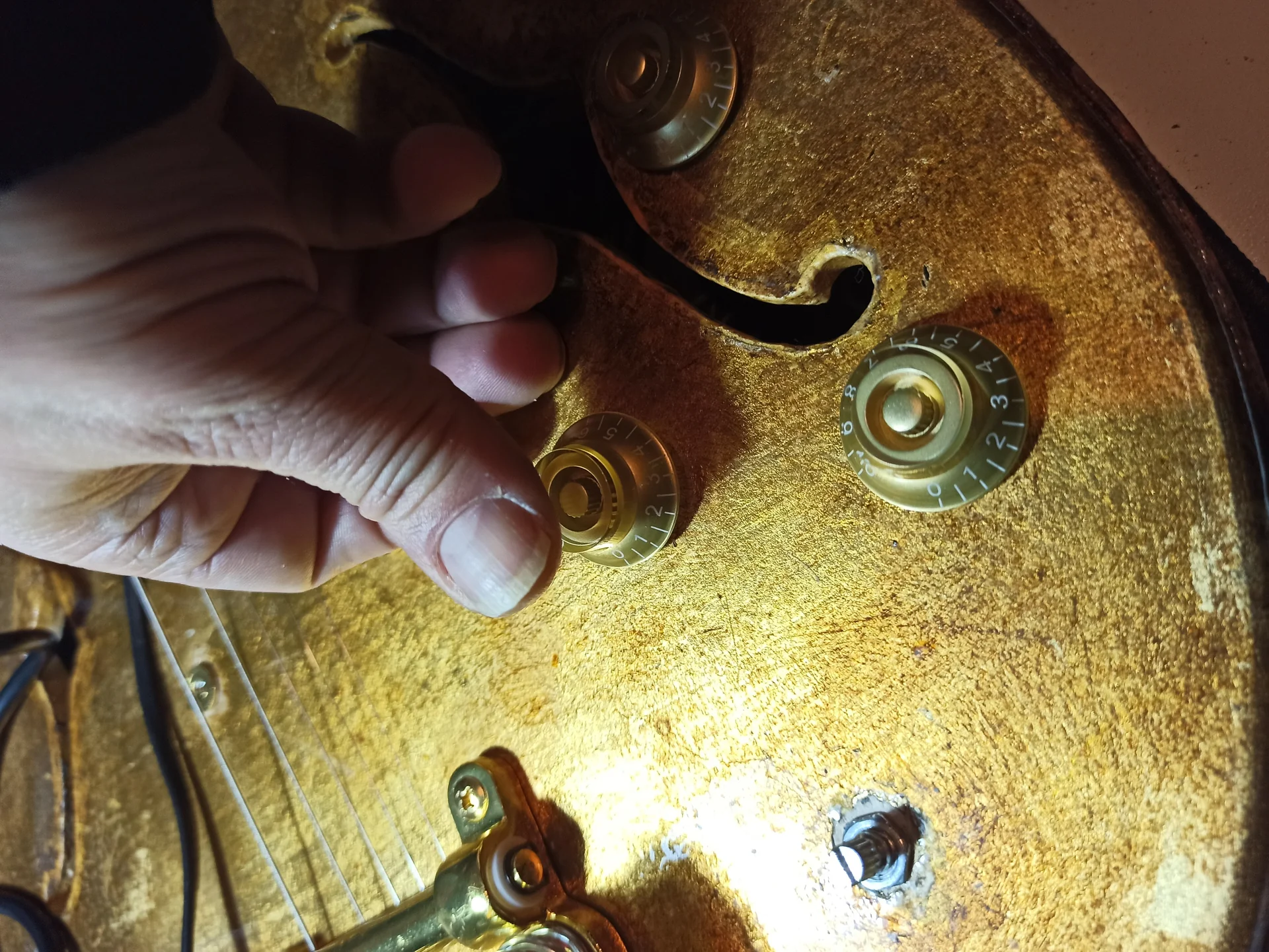
In the 1950s and 1960s, the market was also full of less expensive guitars, often sold through catalogs or in department stores. Brands like Valco (which produced Supro, National), Danelectro, and Silvertone (distributed by Sears) produced instruments that, despite being affordable, had incredible character. “Gold Foil” and “Lipstick” Pickups: These pickups, often found on inexpensive guitars, had a unique sound. Gold foil pickups, for example, with their unique design, produced a bright, almost acoustic sound, but with excellent dynamic response. Danelectro's lipstick pickups, made from lipstick casings, were famous for their twangy, nasal tone.* Alternative Constructions: Danelectro, for example, used masonite bodies and wooden frames, a cheap construction but one that gave a very resonant and light sound.
These "poor" guitars have been rediscovered over the years, becoming cult instruments for blues, garage rock, and surf rock. They didn't have the refinement of a Gibson, but they had plenty of soul. I assure you, I bought a cheap gold foil pickup online and installed it on a salvaged guitar of mine. It didn't sound like a Tele, but it had its own character, something raw and authentic that surprised me. That's the beauty of DIY: experimenting!
Legacy and Influence on DIY
These American electric guitars, with their history rich in innovations and twists, are not just museum pieces. They are the foundation upon which all modern electric violin making is built.Every time we take an alder body and a maple neck to assemble our first homemade Stratocaster, we're somehow paying homage to Leo Fender. Every time we solder a humbucker, we think of Seth Lover.
The beauty of these tools is that, despite their complexity, they were often born from a practical need and an almost "do-it-yourself" approach. They were designed to be used, modified, and repaired.
This is the true spirit we hobbyists should embrace. Don't be afraid to open them, understand how they work, or change a part. If you don't understand, don't worry. There's always a way to learn. Perhaps by reading. guides on how to modify your guitar, or by watching some videos. The important thing is to try.
Conclusions: One Sound, a Thousand Stories
The history of the American classical guitars It's a fascinating journey through human ingenuity, the passion for music, and the constant pursuit of the "perfect sound." From an amplified frying pan to iconic instruments that have shaped entire musical generations, the journey has been incredible.These instruments aren't just objects, but vehicles of expression, keepers of stories and catalysts of emotion. Every Stratocaster, every Les Paul, every Telecaster has a soul that resonates with the history of rock, blues, jazz, and countless other sounds.
For those of us who love to get our hands on them, it's also an inexhaustible source of inspiration. Understanding how these marvels were conceived helps us not only appreciate them more, but also better understand how we can modify our instruments, improve them, and personalize them. Because, ultimately, this is the beauty of the electric guitar: there's no "ultimate" sound, only the one that resonates with your soul. And often, that sound can only be found by getting your hands on it.
If you'd like to delve further into the histories and characteristics of these instruments and their creators, a great resource is Michael Heatley's book "The Story of the Electric Guitar," which offers a rich overview filled with detail and anecdotes. It's a fascinating journey, especially if, like me, you find yourself taking apart a pickup and wondering, "Who thought of that first?".
Remember: you don't need to be a professional luthier to appreciate and understand these masterpieces. All you need is curiosity, a desire to learn, and, why not, the courage to make mistakes. Because it's from mistakes that we learn the most, as someone who's made all sorts of guitars in his garage tells you. And if I could do it, you can too.
See also
Download the Luthier Survival Kit
Free PDF with checklist, problem-cause table and project card template.
 English
  Italiano
Stuck on your build?
If you ran into the same problem or have a question, drop it in the comments. I read and reply to every one.
Write a comment