


Eko Guitars from the 1950s: 3 Legendary Models to Discover
Imagine a rainy afternoon, my garage smelling of wood and tin, and a stack of old music magazines found at a flea market. Between an article about Clapton and an ad for effects pedals that would cost a kidney today, I stumbled upon something that took me back in time: Eko electric guitars from the 50s. No, I'm not just talking about museum pieces or stuff for hardcore collectors. I'm talking about tools that, for me, who's always had a passion for DIY, represent a piece of our history, an example of ingenuity and how great things can be achieved even with limited resources.When I started tinkering with my first bodies and necks, the idea of building a guitar was a bit like climbing Everest in flip-flops. Then I realized that's the beauty of it: starting from scratch, making mistakes, redoing, and finally hearing that sound coming out of the amplifier, knowing you made it. And ultimately, Eko's story isn't all that different. It's the story of an Italian company that knew how to invent itself, with an almost garage-like approach, at a time when American industry dominated the market. They took ideas, combined them with their creativity and what they had available, and emerged with instruments that, even today, retain their own charm and unique sound.
If I say Eko, maybe the first thing that comes to mind is the Ranger, that indestructible acoustic that we've all had in our hands at least once. But trust me, the history of the Eko electric guitars from the 50s It's a chapter in itself, full of brilliant insights and quintessentially Italian courage. It's a journey that takes you straight to the heart of the economic boom, to an Italy that was beginning to dream and make music again. And on this journey, I want to tell you about three models that, in my opinion, are the quintessence of that period, three instruments that, if you find them, deserve to be rediscovered, perhaps even with a bit of healthy DIY restoration.
These are guitars with soul, character, and I assure you, if you get your hands on one, they'll tell you a story. And I'm not just talking about strings and pickups, but about people, ideas, and the dreams of an era. Get ready, because this isn't your typical history lesson. It's a conversation among enthusiasts, with a few tips on what to look for if you happen to come across one of these pieces.
An Explosion of Creativity in Recanati: How Eko Put Down Roots
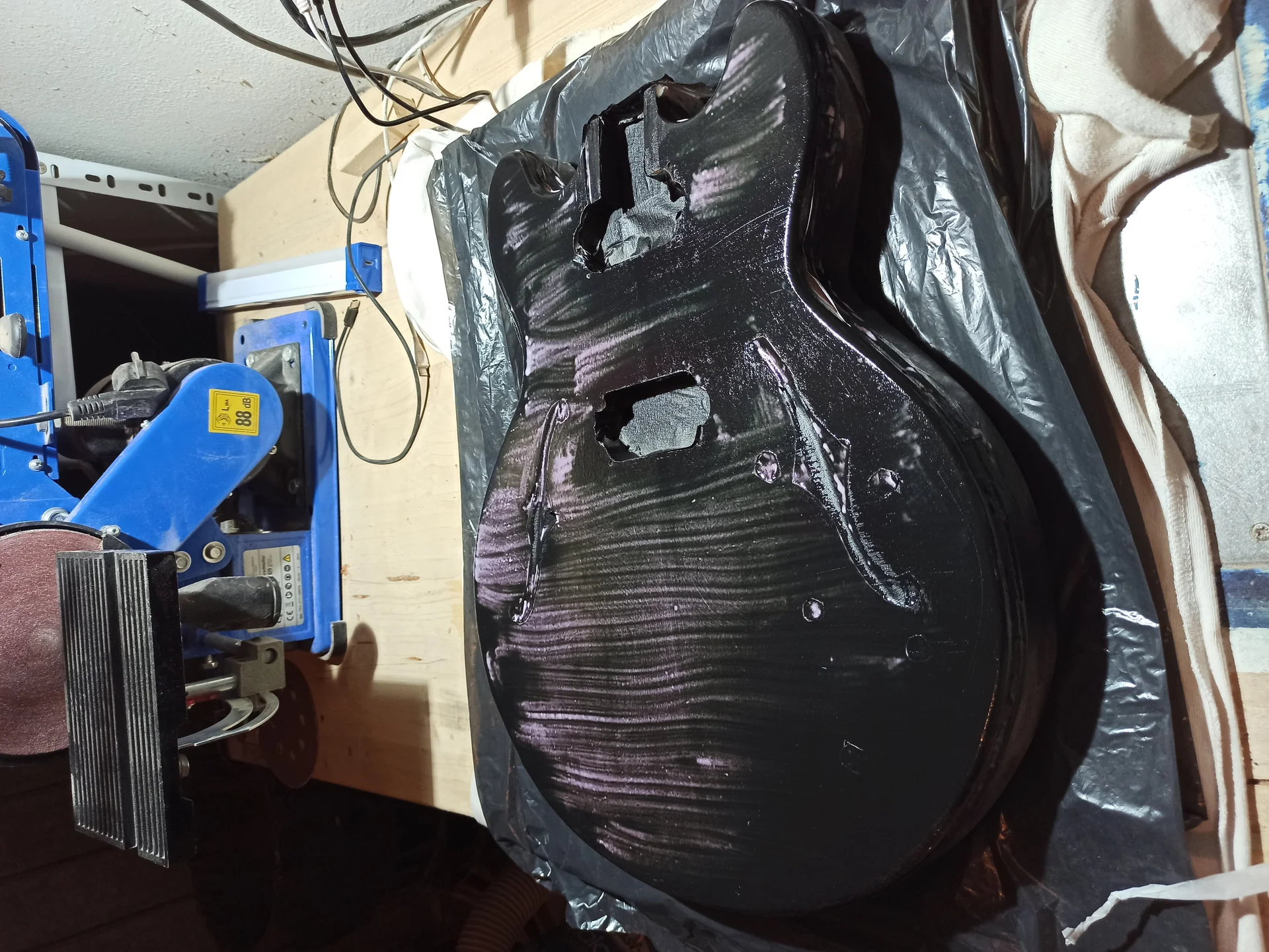
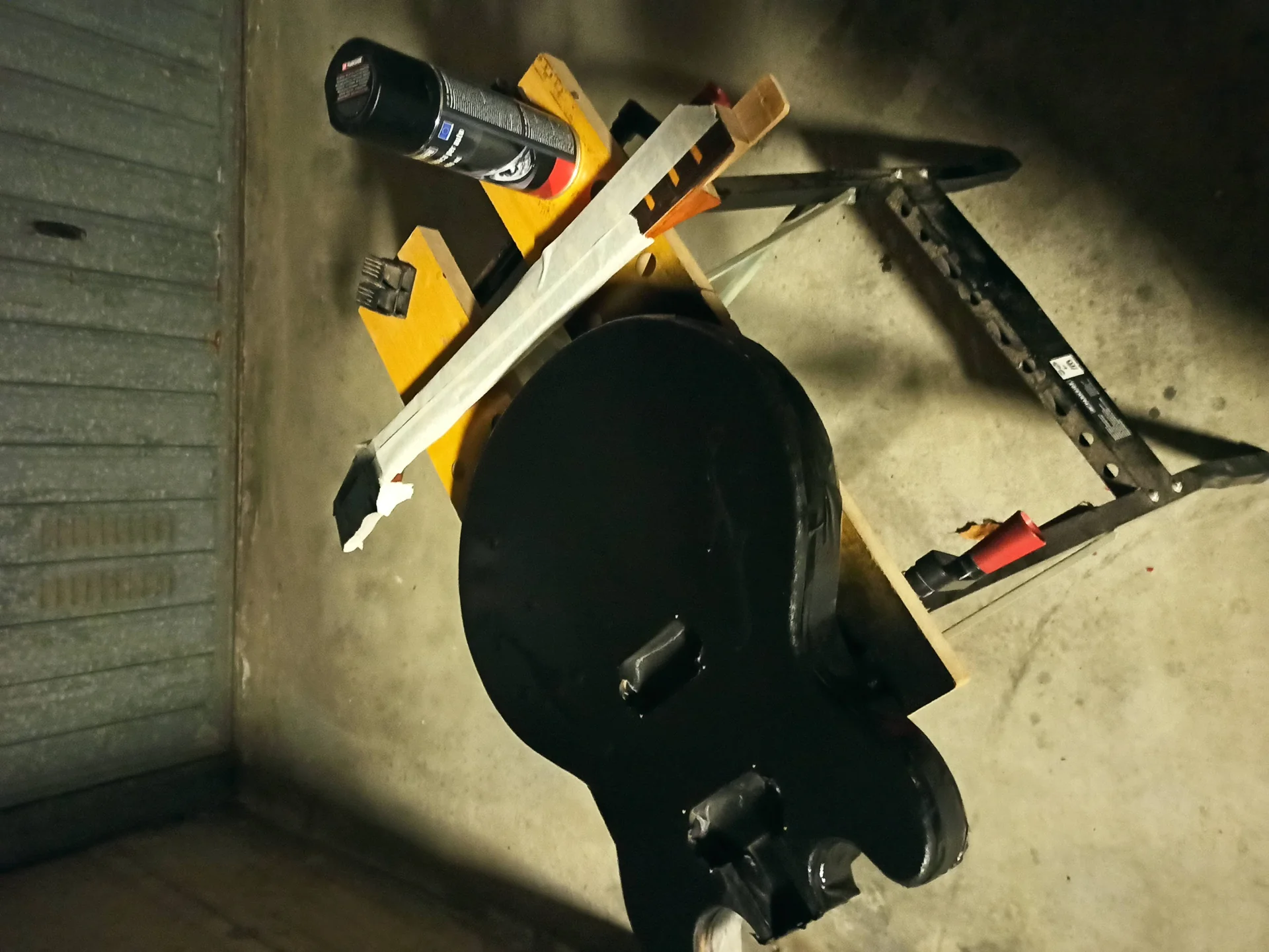
If there is one guitar that embodies the innovative and bold spirit of Eko in the late 50's, it is undoubtedly the Eko 500. I saw it for the first time in a vintage catalog, and it immediately struck me: a design that, despite having references to American solid-body guitars, had an aesthetic all its own. It was 1959, a crucial year for Eko, which was diving headfirst into the world of electric guitars. And the Eko 500 was their first real statement of intent.
The Eko 500 wasn't a guitar designed to compete with Fender or Gibson's flagships. It was an instrument for a different market, for musicians looking for something playable, reliable, and, above all, affordable. And in this, the 500 succeeded perfectly. Its body, often made of poplar or beech, was solid and relatively lightweight. The shape was somewhat elongated, with those rounded tips that gave it a futuristic yet elegant look for the time.
But the true heart of the Eko 500 was its pickups. It often featured two or three single coils, sometimes with chrome metal covers that gave it an unmistakable look. These pickups were certainly not Gibson PAFs or Fender single coils. They had a thinner, brighter sound, sometimes a little microphonic, but with a character all their own. They were perfect for the surf rock that was exploding, for beats, for the pop that was just beginning to emerge. I've heard them played on old recordings, and believe me, they weren't bad at all. In fact, they had that vintage vibe that we desperately seek today.
The controls were simple: a three-way pickup selector, volume, and tone. Nothing fancy, but functional. The neck was usually beech, with a rosewood or sometimes ebonized maple fingerboard. The scale was often shorter than American standards, making it comfortable for those with small hands or those accustomed to acoustic guitars.
A sore point, at times, was the mechanics. They were often of modest quality, and on many examples I've seen, they've been replaced over time. But this, for those of us who love... modify a guitar, it's not a problem, on the contrary. It's an opportunity to improve the instrument without distorting its character. Even the bridge, often a simple roller bridge or a fixed bridge with adjustable saddles, was functional, but not always perfectly accurate in intonation. Once again, an opportunity for an upgrade.
I have a friend who has an Eko 500V (the vibrato version, introduced immediately after the standard 500) and every time he picks it up, he smiles. It's not his main guitar, but it's a piece of history he still plays. The vibrato, often a Bigsby-type system but "Eko-esque," wasn't the most stable in the world, but it added that extra touch of personality. Mimmo's Tip: Restoring Vintage Eko Pickups
If you find an Eko 500 with the original pickups that no longer sound good, don't despair. Often the problem isn't the pickup itself, but rather deteriorated wiring or cold solder joints.n1. Check the cables: Vintage fabric cables can deteriorate. Replace them with good-quality shielded cables.n2. Check the welds: Redo all the welds, making sure they are clean and strong.n3. Measure resistance: Using a multimeter, measure the pickup's DC resistance. If it's in the range of 4-7kOhms (for a single coil), there's hope. If it's zero or infinite, the coil wire may be broken. 4. Rewind (last resort): If the wire is broken, you can try rewinding the pickup, but it's a delicate operation that requires specialized equipment. Sometimes, it's easier to find an original replacement or an aftermarket pickup that comes close to the sound.
The Eko 500 is a testament to how Italian ingenuity has created instruments with their own unique identity, which have helped define the sound of an era. If you find one, even in a battered condition, don't hesitate. It could be your next DIY project, a piece of history worth reviving.
The Eko Cobra: A snake that bit rock'’
‘'roll
Advertising

Electric Guitar with Amp Beginner Kit 39 Inch Solid Body Full Size,All Accessories,Digital Tuner,Six Strings,Four Picks,Tremolo Bar,Strap,Gig Bag,Starter kit (Sunburst-HSS)
See on Amazon

‘'roll more aggressive. I'm talking about the Eko Cobra, another icon of the late 50s and early 60s, which deserves a place of honor among the Eko electric guitars of the 50s for its conception, even if mass production exploded shortly thereafter.
The Eko Cobra, like the 500, was introduced in 1959. But where the 500 had a sober elegance, the Cobra was more aggressive, more brazen. The body was often asymmetrical, with carvings and contours that were somewhat reminiscent of the "futuristic" shapes emerging in America, but always with that unmistakable Eko touch. It was an instrument that screamed "rock."’
‘'roll” just by looking at it.
The Cobra's pickups were often similar to those of the 500, but Eko sometimes experimented with different configurations, perhaps with more powerful pickups or slightly different spacing to create a more aggressive sound. I remember trying one in a vintage shop years ago, and the sound was surprisingly bright and cutting, with good sustain despite the simple construction. Perfect for energetic riffs and punchy solos.
One of the Cobra's most distinctive features was its neck. Often thin and fast, it was designed for playability. The fingerboard was usually rosewood, and the dot inlays were sometimes uniquely shaped, contributing to the instrument's unique aesthetic. The truss rod, if present, was often a simple system, sometimes not the most effective, but sufficient to keep the neck stable. If you find one, always check the neck curvature: it's a critical point on older guitars.
The bridge was often a’evolution than the 500, sometimes with more effective roller saddles for intonation and a more robust vibrato system. The Cobra's vibrato, sometimes called the "Vibrola," was Eko's attempt to offer a functional and reliable system. It wasn't a Floyd Rose, sure, but for the time it was a great way to add a little whammy to the sound.
The Cobra was a guitar that didn't go unnoticed. It was the choice of many musicians in beat and rock bands.’
‘'roll throughout Europe. It was a symbol of rebellion, an affordable and stylish alternative to the American guitars that cost a fortune. With the Cobra, Eko demonstrated that he understood the market's needs and knew how to respond with instruments that had character and personality. What to check if you find a vintage Eko Cobra: 1. Neck and fingerboard: Neck stability is crucial. Check the curvature, fret wear, and the fingerboard for cracks or delamination. 2. Electronics: The potentiometers and selector switch may be noisy or oxidized. Cleaning with a specific spray for electrical contacts often solves the problem; otherwise, they should be replaced. 3. Mechanics and bridge: The original tuners may be inefficient. Consider replacing them with modern models, maintaining the vintage look if possible. The bridge, if damaged, can affect intonation. Vibrato: If there's a vibrato system, check that it's complete and working properly. The springs and bushings may be worn.
The Eko Cobra is a piece of history that can still give you great satisfaction today. Don't expect the versatility of a modern Stratocaster, but prepare yourself for a direct, bright sound with a rock attitude.‘
‘' roll that few other guitars can match. It's proof that even on a limited budget, you could make quality music with style.
Eko Florentine: When Italy Met America (But in Its Own Way)
If we talked about solid body with the Eko 500 and the Cobra, we cannot ignore another important trend that Eko has explored since the late 50s, demonstrating remarkable versatility: that of semi-hollow and hollow body. And among these, the Eko Florentine (or similar models with the same layout, as Eko produced several variations) is a shining example of how the Recanati-based company reinterpreted an American classic with its own unique style. Although full production of the Florentine took place in the early 1960s, its roots and design mentality are firmly anchored in the creative ferment of the late 1950s.The Eko Florentine was, essentially, Italy's answer to American hollow-body and archtop guitars, like the Gibson ES-335 or Gretsch. But, as usual, Eko did it his own way, with an eye on cost and originality. The body was often made of maple or birch plywood, with an arched soundboard and f-holes (the "f"-shaped openings typical of jazz guitars). This gave it a more resonant, warmer, and "woodier" sound than solid-body guitars, while still being able to be played amplified.
I remember seeing one, in very bad condition, at a flea market many years ago. It had an incredible charm, a bit shabby but full of history. The sound, even when turned off, was surprisingly strong and rich. Once plugged into the amp, with its pickups—probably the same single coils, sometimes chromed, you'd find on the 500 or the Cobra—it produced a bright, almost twangy tone, but with a depth provided by the soundboard. It was perfect for jazz, blues, or even the melodic pop that was popular at the time.
The Florentine's neck was usually made of beech, with a rosewood fingerboard, and was often glued to the body, contributing to sustain and resonance. The scale was the classic Eko one, slightly shorter, which made it easy to play. The tuning machines were similar to those of solid body guitars, and again, they were often the first component to require an upgrade.
The bridge was usually a floating rosewood or ebony bridge, with a trapezoid tailpiece or vibrato system. The vibrato, if present, was often a more elaborate version of the Eko systems, designed to add a touch of color to the sound without compromising stability. Sure, it wasn't an original Bigsby, but it did its job with dignity. Mimmo's Take: The Pros and Cons of Vintage Eko Hollow-Body Guitars Pros: Warm and resonant sound: The soundboard adds depth and character.
Lightness: They are generally lighter than solid body ones.
Classic aesthetics: They have a timeless look that attracts many enthusiasts.
Versatility: Suitable for various genres, from jazz to light rock. Against: Feedback: At high volumes, hollow-body speakers tend to whistle (feedback). This is a common problem that requires some management, perhaps with a foam block inside or by positioning them correctly relative to the amplifier.
Fragility: The hollow body is more delicate and prone to cracking or moisture damage.
Maintenance: Accessing the electronics is more complicated than with a solid body amp, often requiring working through the f-holes. I spent hours struggling with potentiometers falling in!
The Eko Florentine is another demonstration of Pigini and his team's vision. They didn't limit themselves to just one type of guitar, but explored various avenues, offering musicians a range of instruments to suit different needs and tastes. Finding a Florentine in good condition is a true gem, a piece of musical history that lets you hear what Italy sounded like in the late 1950s and early 1960s. And if you happen to get your hands on one for restoration, be prepared to learn a lot about hollow-body luthiery. It's an enriching experience, believe me.
The Legacy of '50s Ekos: More Than Just Vintage Guitars
At this point, I hope you have understood that the Eko electric guitars from the 50s These aren't just old tools to be salvaged. They're genuine pieces of history, witnesses to an era of great excitement, innovation, and a healthy dose of Italian DIY. Oliviero Pigini and his team in Recanati didn't have the budgets of Fender or Gibson, but they had a clear vision: to create accessible, playable instruments with a distinctive character. And they succeeded remarkably.These first Eko electric guitars, created in the late 1950s, laid the foundation for the productive and creative explosion of the 1960s, when Eko became one of the world's leading guitar manufacturers. They allowed thousands of young musicians, not only in Italy but throughout Europe, to pick up an electric instrument and start playing rock.’
‘'roll, beat, surf music. They gave a generation a voice.
For me, who spends my days with wood dust on my hands and tools on my bench, there's something deeply inspiring about working on an old Eko. It's not just a restoration, it's a dialogue with the past. It's trying to understand the choices of those who built it, their compromises, their intuitions. And then, it's the satisfaction of seeing an instrument that was perhaps destined for the landfill come back to life, to play, to tell its story once again. Why it's worth rediscovering a vintage Eko guitar: Unique character: They have a sound and aesthetic you won't find in modern guitars. That vintage vibe is priceless.
Historical value: They are an important piece of the history of Italian and European violin making.
Ideal DIY project: They often require a bit of work, but they're relatively easy to disassemble and repair, making them perfect for DIY enthusiasts. You can learn a lot by getting your hands dirty.
Accessibility: Even though prices are rising, they can still be found at reasonable prices compared to certain American vintages.
Playability: Many Ekos, once fixed, are perfectly playable and fun instruments.
Of course, don't expect the precision of a modern lutherie guitar or extreme versatility. These Eko electric guitars from the 50s They're instruments with a soul, with their strengths and weaknesses. The mechanics might be a little loose, the electronics a little noisy, the necks less than perfect. But it's precisely these flaws that hide part of their charm and personality. They're like old friends with many stories to tell, and a few wrinkles only add to their character.
If you happen to come across an Eko 500, a Cobra, or a Florentine (or any other Eko from that era), don't ignore it. Check it out, try playing it. You might discover a hidden gem, a piece of history just waiting to be rediscovered. And maybe, with a little patience and a few tools, you could be the one to bring it back to life, make it sing again. That's the beauty of DIY: you're not just building, you're giving new life to something that would otherwise be lost. And after all, isn't that the true spirit of rock?’
‘'roll?
To learn more about the history of Eko and its models, you can take a look at specialized sites such as Vintage Guitars, which often have sections dedicated to historic Italian brands: Vintage Guitars. It's always nice to see how our contribution, even a small one, can make a piece of history shine.
See also
Download the Luthier Survival Kit
Free PDF with checklist, problem-cause table and project card template.
 English
  Italiano
Stuck on your build?
If you ran into the same problem or have a question, drop it in the comments. I read and reply to every one.
Write a comment