

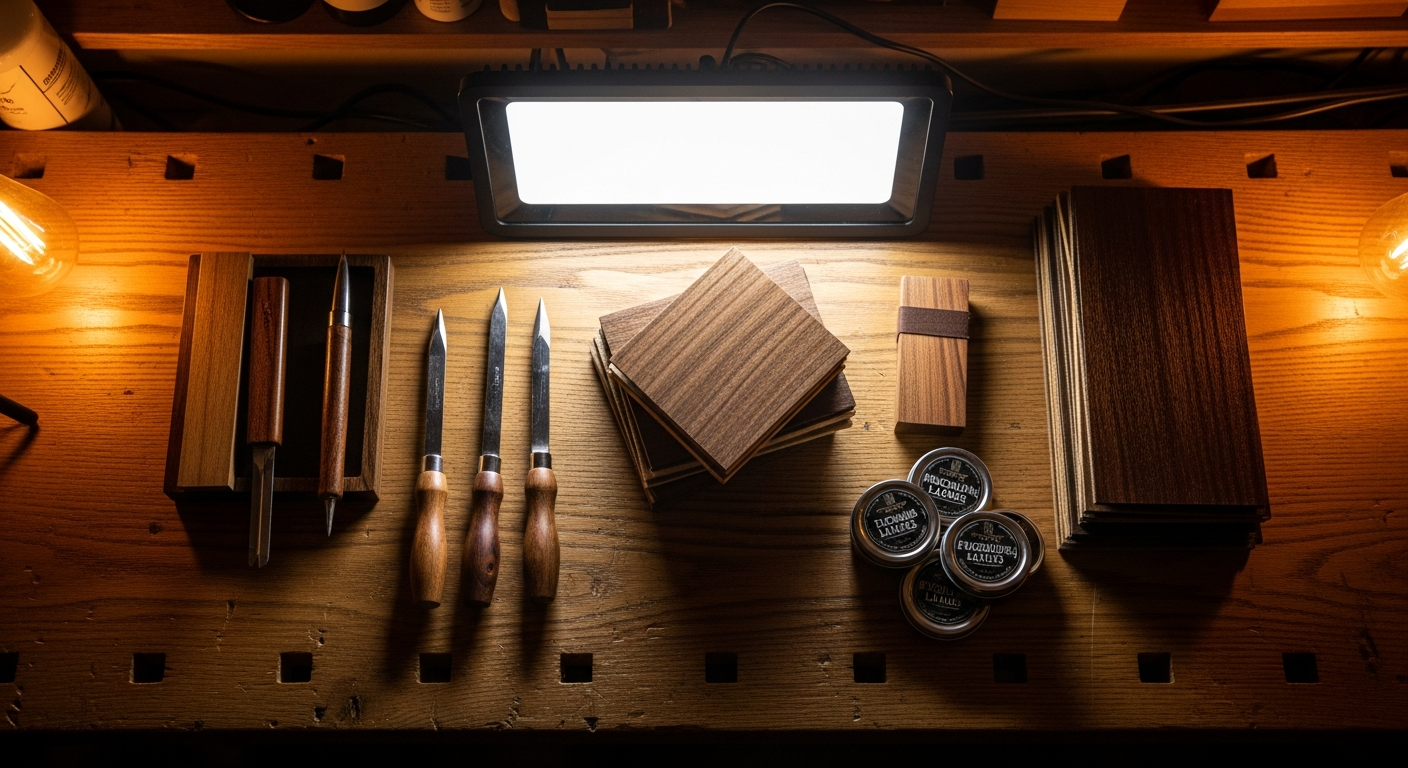
Guitar Components: 5 Top Suppliers, No Nonsense
I still remember the first time I tried to put a guitar together electric from scratch. I had the body, the neck, a clear idea in my head. Then I got to the components part and that's where the madness began. A sea of websites, prices ranging from “too good to be true” to “are we crazy?”, and total confusion about what was Really good and what was just well-sold junk. I bought a lot of useless stuff, spent money twice for the same part, and cursed like a sailor when a cheap potentiometer started crackling after two weeks.The point is this: building or even just modify the guitar is a joy, but if you don’t start with the right foundations, frustration is around the corner. And it’s a shame, because with a little attention and the right tips, you can build an instrument that sounds amazing without emptying your wallet. For this reason, I’ve put together a list of my guitar electronic component suppliers and favorite hardware, those I rely on when I don't want surprises. We'll talk about where to find everything, from pickups to bridges, from potentiometers to jacks, without mincing words.nn
Why Quality Matters (and What I Learned the Hard Way)
nn nnnnnn
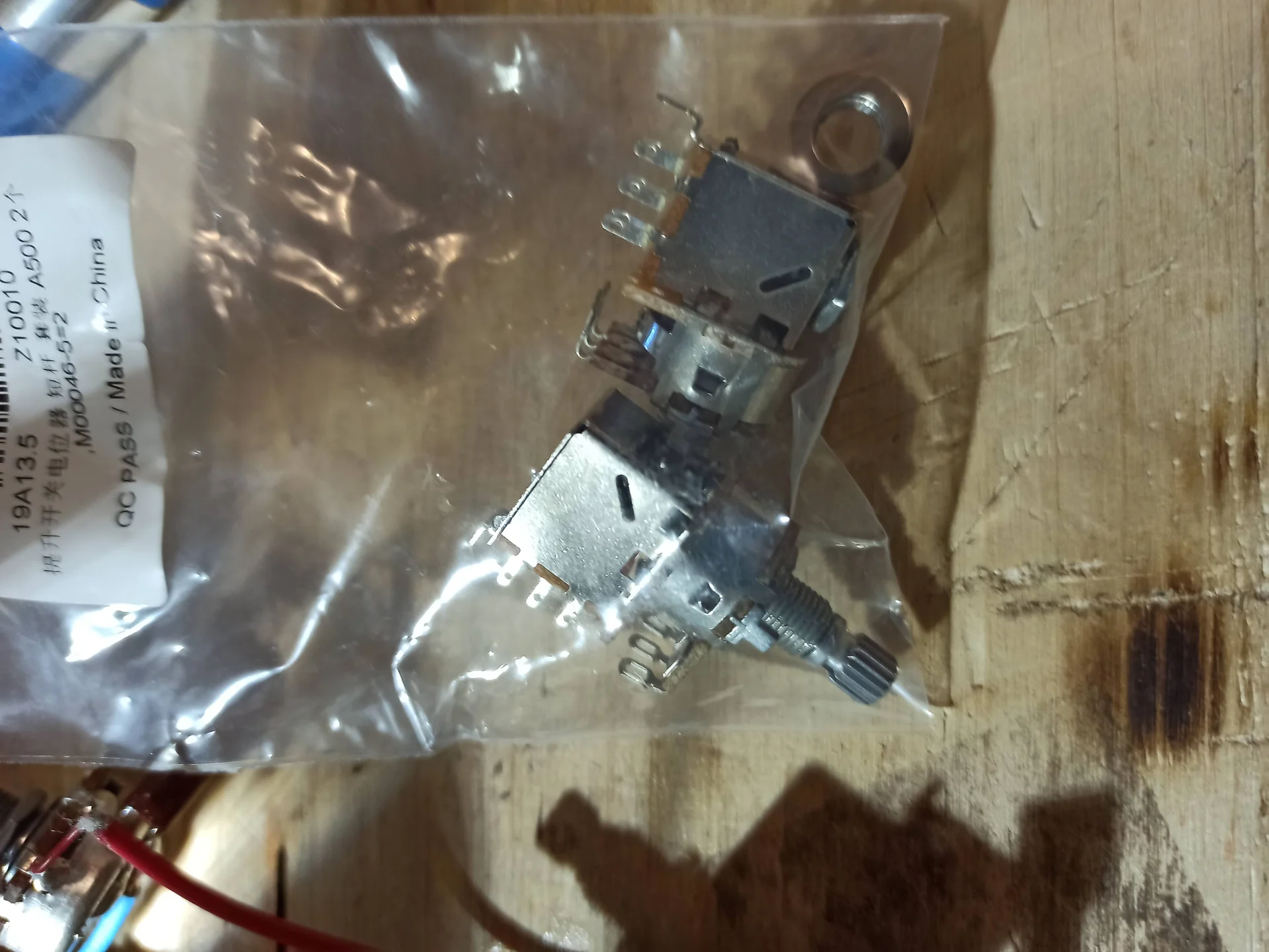
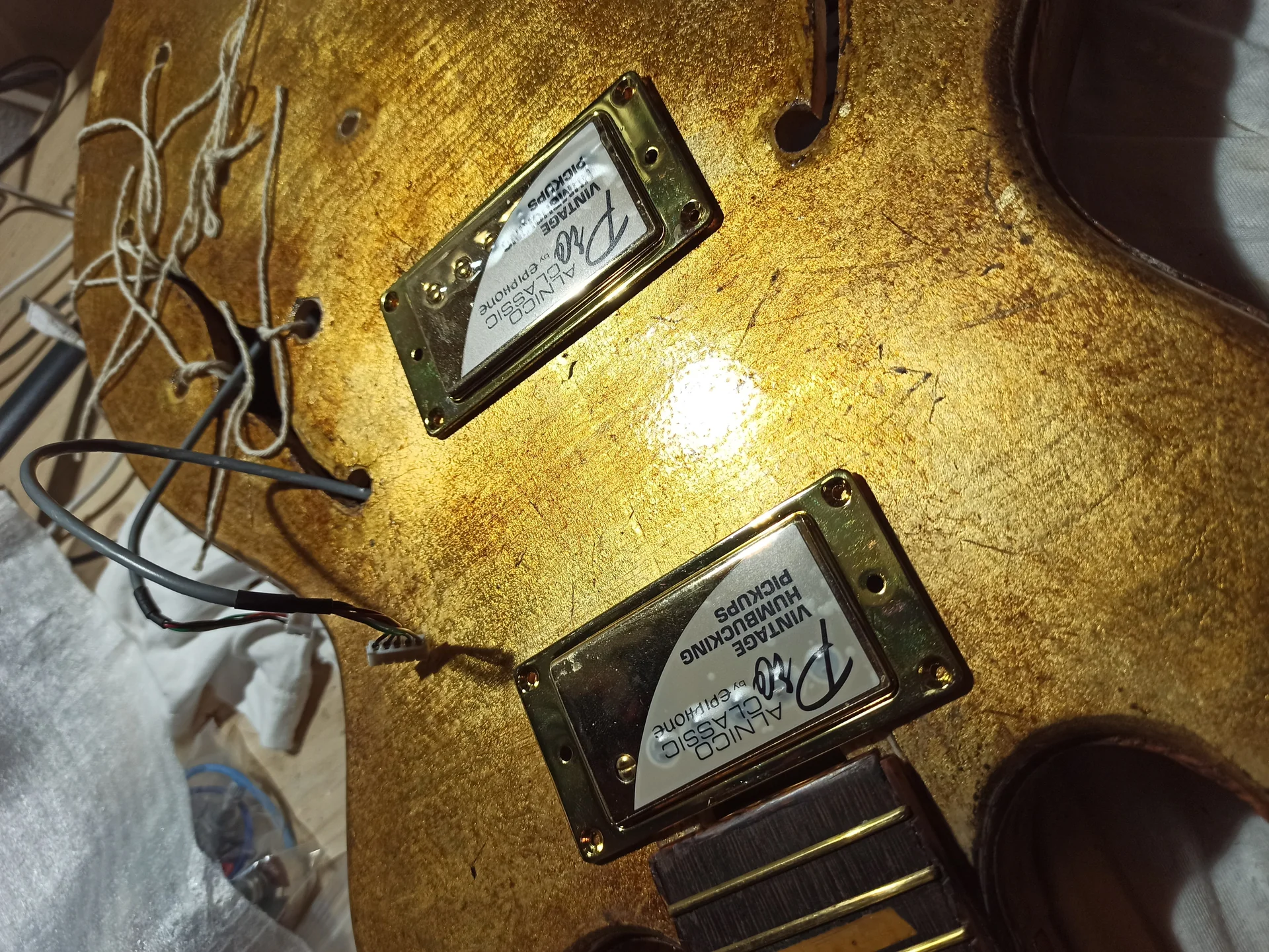
Here are the red flags I've learned to recognize:nn Price “too good to be true”: If a set of self-locking tuners from an unknown brand costs less than a coffee, something is wrong. Quality has a cost, and materials, labor, and quality control all come at a price. I'm not saying spend a fortune, but be realistic.
Lack of clear specifications: A good supplier will give you all the details: potentiometer shaft diameter, resistance and tolerance values, capacitor material, bridge screw pitch, tuner gear ratio. If you only find a generic description like “guitar potentiometer”, move on.
Generic or low-quality photos: A serious site shows the product it sells, with clear photos and from different angles. If the images are blurry, taken from other sites, or look like poorly made 3D renders, it's an alarm bell.
Missing or overly enthusiastic reviews: Reviews are a valuable resource, but they should be read with a critical eye. If there are no reviews, or if they are all 5-star with generic and unconvincing texts, be suspicious. An honest product will have a mix of reviews, perhaps with some constructive criticism.
Non-existent customer service: Before placing a substantial order, try asking a question to customer service. If they don't respond or are vague, imagine what will happen if you have a problem with your order. A good supplier is transparent and available.
The “Aliexpress risk”, as I call it, is a classic. Sometimes you hit the jackpot, finding a treasure for a few bucks. But much more often you get junk that isn't even worth the shipping. I've bought “cheap” pickups that sounded worse than the stock ones on a 100-euro guitar, tuners that had play right out of the box, bridges with screws that stripped just by looking at them. It's not worth it, trust me. Better to spend a few more euros and be sure of a part that does its job.
Documentation is another crucial aspect. When you buy a Seymour Duncan or DiMarzio pickup, you'll find the wiring diagram for every possible configuration on their website. When you get a CTS potentiometer, you'll find the precise specifications. This is not a detail; it's proof that the manufacturer and supplier know what they sell and support the customer. It's the difference between a component and a “piece of metal with wires”.nn
My 5 “Go-To” Suppliers for Electronic Components and Hardware
Advertising

Fender Jackson Dinky/Soloist Multi-Fit Molded Case, Black | Molded hard-shell with multi-fit design and storage for Soloist, Dinky and solid body guitars
See on Amazon

nn
nOk, enough with the theory. Let's move on to practice. These are the guitar electronic component suppliers and hardware that I have tested, re-tested, and that have never disappointed me. Each has its strengths, so we'll see what they are best suited for.nn1. Musikding (Germany)
This is my safe haven for everything related to “small” and specific electronics. If you're building a pedal, it's paradise. But even for internal guitar components, they are unbeatable in certain aspects.nn What they offer: A huge selection of resistors, capacitors (Orange Drop, WIMA, ceramic, electrolytic), diodes, transistors, ICs, cables (Gavitt, Mogami), jacks (Switchcraft), potentiometers (Alpha, but also CTS), switches (Alpha, DPDT, 3PDT for pedals), and a lot of small parts.Why I choose them: The quality is consistently high. I have never received a defective component from them. Prices are fair, especially for quality capacitors and Alpha potentiometers. They also have an excellent selection of hardware for pedals, but many components are also very suitable for guitars. Shipping is fast and well-packaged.
Personal experience: I've bought hundreds of Orange Drop and WIMA capacitors from them for my wiring, and I've never had a problem. The Alpha potentiometers they sell are excellent for budget-limited projects without compromising on basic quality. If you're looking for a particular capacitor for a specific tone, you're almost certain to find it here.nn
2. Allparts / Guitar-Parts.nl (European Distributors)
Allparts is one of the giants in the world of guitar parts and accessories. They don't sell directly to us hobbyists in Europe, but they have excellent distributors. Guitar-Parts.nl is one of them, and I use it often.nn What they offer: A vast catalog that covers practically everything: necks, bodies, bridges (Gotoh, Wilkinson, Schaller), tuners (Gotoh, Schaller, Grover), pickups (Seymour Duncan, DiMarzio, Lollar, Lindy Fralin), potentiometers (CTS, Bourns), switches (CRL, Switchcraft), various hardware (saddles, nuts, screws, bushings).Why I choose them: They are the benchmark for high-quality “standard” spare parts. If you want a reliable Gotoh bridge, precise Schaller tuners, or a set of Seymour Duncan pickups, you can't go wrong here. Their selection is curated and the products are original. Guitar-Parts.nl has excellent customer service and fast shipping.
Personal experience: I've bought several Gotoh bridges, Grover tuners, and Tusq nuts from them. The quality is always impeccable. I remember having a doubt about the compatibility of a bridge with a Squier body, and customer service responded quickly with all the necessary measurements. It's crucial when choosing parts that need to fit perfectly.nn
3. Thomann / Music Store (Large Retailers)
These are the music “supermarkets”, but don't underestimate them for electronic components for guitar and hardware. They often have an excellent selection of spare parts, especially for the most common brands.nn What they offer: A wide range of branded components (Seymour Duncan, DiMarzio, EMG, Fender, Gibson), potentiometers (Alpha, CTS), switches (CRL, Switchcraft), jacks, bridges and tuners from well-known brands (Gotoh, Wilkinson, Schaller), cables, and small parts. They also have their generic brands (Harley Benton, Fame) which sometimes offer good value for less critical components.Why I choose them: They are convenient. If you are already buying other material (strings, effects, amplifiers), you can add spare parts to the same order and save on shipping. Prices are often competitive, and the return policy is excellent, which gives you peace of mind if you are unsure about a purchase.
Personal experience: I've bought many branded pickups (Seymour Duncan JB, DiMarzio Super Distortion) from Thomann, and they've always arrived perfect. I also often get CTS potentiometers and CRL switches here, especially when I place larger orders. Once I got a set of generic Harley Benton tuners for a budget project and was surprised by their decency for the price. Clearly, they weren't Gotoh, but they did their job.nn
4. Farnell / RS Components (Generic Electronic Component Distributors)
These are not “guitar shops” in the strict sense, but they are indispensable if you delve into the world of pure electronics, perhaps for building pedals or for very specific choices of capacitors or resistors.nn What they offer: The world of electronics. Resistors (with extremely tight tolerances), capacitors (of all types and values, from audiophile to power), diodes, transistors, integrated circuits, top-quality cables (specific cross-sections and shielding), connectors, printed circuit boards. You'll find brands like Vishay, Panasonic, Kemet, Wima, and many others.Why I choose them: For the quality and breadth of selection. If you need a capacitor with a precise value and specific tolerance, or a particular type of resistance, you'll find it here. They're ideal for those who want to experiment with component values in guitar circuits or pedals, knowing they're getting the highest-quality industrial products.
Personal experience: I've used Farnell to find specific capacitors for overdrive pedal prototypes, and for precision metal film resistors to reduce noise. They're not the first places I'd go for a CTS potentiometer (which you can find more easily elsewhere), but for a Sprague capacitor or a higher quality shielded cable, they're unbeatable. The catalog can be a bit intimidating at first, but with a little research, you can find everything.nn
5. Small Specialist Shops (e.g. Reference Laboratory for Cables and Connectors)
Sometimes, smaller, specialized shops are true gems, especially for details that make a difference. Reference Laboratory, despite being a high-end cable manufacturer, is an example of a supplier that also offers excellent quality connectors and components.nn What they offer: High-quality audio cables (jack-jack, microphone, power) and connectors (jack, XLR) from brands like Neutrik, Switchcraft, and their own proprietary line. They often also feature select potentiometers and switches. Their focus is on maximum signal integrity.Why I choose them: For uncompromising quality, especially when it comes to audio. If you want to assemble patch cables or connecting cables for your pickups with the highest fidelity, this is the place to go. They are experts in the field and often offer valuable advice.
Personal experience: I assembled several cables for my setup using components from Reference Laboratory. Their shielded cable for internal guitar connections is fantastic for reducing noise, and the Neutrik jacks they sell are indestructible. They don't sell pickups or necks, but when it comes to connections and wiring, they're a reference. It's proof that you don't need to buy everything from the same place, but rather choose the best in each category.
External link: For example, a classic Switchcraft 11 jack, a piece that has never let me down. You can find the specifications and details on the official website of Switchcraft: [https://www.switchcraft.com/product/11](https://www.switchcraft.com/product/11) (Note: always check the availability and relevance of the external link at the time of publication).nn
What to Buy Where: A Quick Guide to Smart Shopping
Now that you have an overview of my guitar electronic component suppliers favorites, let's see how to approach shopping for a specific project. You don't necessarily have to buy everything from one place. Often, the secret is to mix and match, choosing the best supplier for each type of component.Here's a checklist to guide you:nn Pick-up: Where: Allparts/Guitar-Parts.nl, Thomann/Music Store. These are the best places to find renowned brands like Seymour Duncan, DiMarzio, Lollar, Lindy Fralin, EMG. They have the full range and are authorized dealers, so you can be sure of authenticity.
Advise: Don't skimp on pickups. They are the heart of the sound. I've tried to save money and always regretted it.nn Potentiometers (Pots): Where: Allparts/Guitar-Parts.nl (for CTS, Bourns), Musikding (for Alpha, or even CTS).
Advise: For most common guitars, 250K or 500K CTS are the standard. Always check the shaft diameter (solid shaft, split shaft, diameter in millimeters or inches) and length to ensure they fit the body and knobs. Once I bought pots with too short a shaft and they didn't protrude enough from the control plate. Frustrating.nn Capacitors (Caps): Where: Musikding (Orange Drop, WIMA, ceramic), Farnell/RS Components (for more exotic or specific selections).
Advise: For tone, Orange Drop are a classic. For a more vintage sound, you can explore “paper in oil” capacitors. There's no fixed rule, but a good capacitor is fundamental for tone control.nn Switches (Pickup Selectors): Where: Allparts/Guitar-Parts.nl (CRL, Switchcraft), Thomann/Music Store (CRL, Switchcraft), Musikding (Alpha for less common switches or pedals).
Advise: CRL for Stratocaster and Telecaster, Switchcraft for Les Paul (toggle switch). They are robust and reliable.nn Output Jack: Where: Musikding (Switchcraft), Reference Laboratory (Neutrik, Switchcraft), Allparts/Guitar-Parts.nl (Switchcraft).
Advise: Go with Switchcraft or Neutrik, without thinking twice. They are indestructible and ensure a solid contact. A poor quality jack is the number one cause of intermittent signal problems.nn Hardware (Bridges, Tuners, Saddles, Nuts): Where: Allparts/Guitar-Parts.nl, Thomann/Music Store.
Advise: For bridges and tuners, brands like Gotoh, Schaller, Wilkinson, Grover are a guarantee. Always check the measurements! The “pitch” of the saddles, the spacing of the tuner holes, the diameter of the bridge post. I bought a beautiful Tune-o-matic bridge but with posts of a slightly different diameter than those I had in the body. A nightmare.nn Cables (Internal Wiring): Where: Musikding (Gavitt), Reference Laboratory (high-quality shielded cables), Farnell/RS Components (for specific cables).
Advise: Use shielded cable for longer and more sensitive connections (e.g., from the pickup to the volume pot). Gavitt waxed cotton cable is a classic for aesthetics and ease of processing.nnAn important warning: Pay attention to imperial (inches) and metric (millimeters) measurements. Many American components (CTS, Switchcraft, Fender/Gibson bridges) use inch measurements, while Asian or European ones use millimeters. This is a common mistake I've made multiple times. A potentiometer with a 6mm shaft will not fit into a 9.5mm (3/8 inch) hole without adapters, and a bridge with imperial saddle spacing might not align with metric pickups. Always check everything with a caliper.nn
Tips from an “Old Fox” (i.e., from me who has made many mistakes)
After years spent among cold solders, stripped screws and components that didn't match, I have accumulated some pearls of wisdom (or at least, experience). I hope they help you avoid my same mistakes.nn1. Make a Detailed List (and Reread It Twice): It seems trivial, but it's the most important thing. Before placing an order, list every single component you need. Don't forget the small parts: pickup screws, tuner screws, washers, nuts, bushings, pickup springs. Those small things that cost two euros and hold up your project for a week waiting for shipping.n2. Measure, Measure, Measure: Don't just trust the descriptions. If you have doubts about the compatibility of a bridge, a nut, or tuners, take your caliper and measure everything: hole spacing, post diameter, nut width, neck thickness. It's a tedious job, but it will save you huge headaches.n3. Don't Be Afraid to Mix: You don't necessarily have to buy everything from the most renowned brand. An inexpensive but well-made body can become a fantastic guitar with quality electronics and hardware. Sometimes a lesser-known pickup can surprise you. Experiment, but with informed judgment.n4. Invest in the Right Tools (at least the basic ones): A good temperature-controlled soldering iron, quality solder (lead-free, please!), a multimeter, a caliper, a set of decent screwdrivers and hex keys. These are your best friends. A cheap tool can ruin a quality component.n5. Learn to Solder Well: A cold solder joint is an invisible problem that will drive you crazy. Watch tutorials, practice on scrap wires. A good solder joint is shiny, cone-shaped, and doesn't need to be “drowned” in solder.n6. Don't Rush: This is perhaps the hardest advice to follow. When you have the body and neck ready, the temptation to assemble everything quickly is very strong. Resist. Every step deserves your attention. Tighten screws gently, never force them. If you feel resistance, stop and understand why. I've stripped more screws than I can count due to rushing.n7. Accept Mistakes: Building is learning. The first guitar won't be perfect. Maybe you'll make a slightly crooked hole, maybe a solder won't turn out well. It's normal! The beauty of DIY is precisely this: you learn from your mistakes and improve. My first guitar had pickup routing that looked like it was done by a drunk beaver, but it played! And most importantly, it was mine*.I hope this guide is useful for you to navigate the world of guitar electronic component suppliers and hardware. Remember, your instrument is an extension of your creativity, and deserves the best components your budget allows. It's not a race, it's a journey. Enjoy every phase, from choosing the single potentiometer to the first chord played with your creation. If I succeeded, with my mistakes and my curses, you can succeed too. Good luck!nn
nnnn
See also
nnDownload the Luthier Survival Kit
Free PDF with checklist, problem-cause table and project card template.
 English
  Italiano
Stuck on your build?
If you ran into the same problem or have a question, drop it in the comments. I read and reply to every one.
Write a comment