

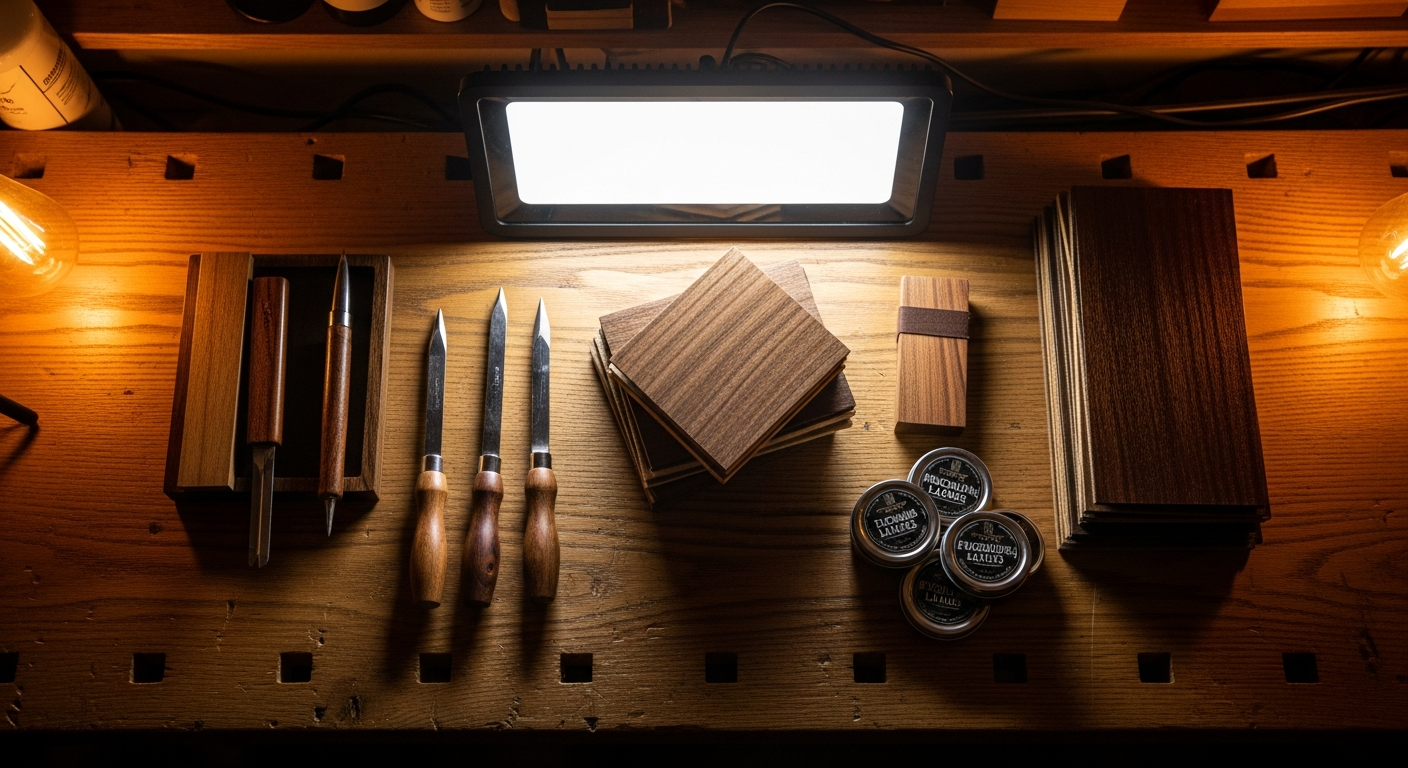
Cigar Box Guitar Frets: 5 Types Compared
I still remember the first guitar cigar box I assembled. A disaster, I tell you. The neck was crooked, the pickup hummed like a mad beehive and, above all, the frets… oh my, the frets! They were crooked, sharp at the edges and, with every note, a buzz that gave me a headache. You didn’t need perfect pitch to understand that something was wrong.
Then I thought: “It's a CBG, what do you want it to be? Put on two metal strips and that's it”. Big mistake. A beginner's mistake that taught me a fundamental thing: even on an instrument made with a cigar box and a salvaged neck, details matter. And the details that make the difference between an instrument that ends up hanging on the wall and one you play every day, often, are precisely the cigar box guitar frets.
If you're here, you've probably already built something. Maybe you've already mounted a neck, done some soldering. But when it comes to the fret, anxiety rises. “What if I get the spacing wrong? What if I put them in badly? What if I ruin all the work done so far?”. It's a common fear, I've had it too. But I assure you that, with the right information and a little patience, you can do it.
In this article, I won't just tell you which types of keys there are, but also why a choice is best of another for your CBG, and how to approach the installation without having a nervous breakdown. We will talk about materials, dimensions and even alternatives that can simplify your life, especially if you are building your first cigar box guitar.
Why Frets Matter (Even on a Cigar Box Guitar)
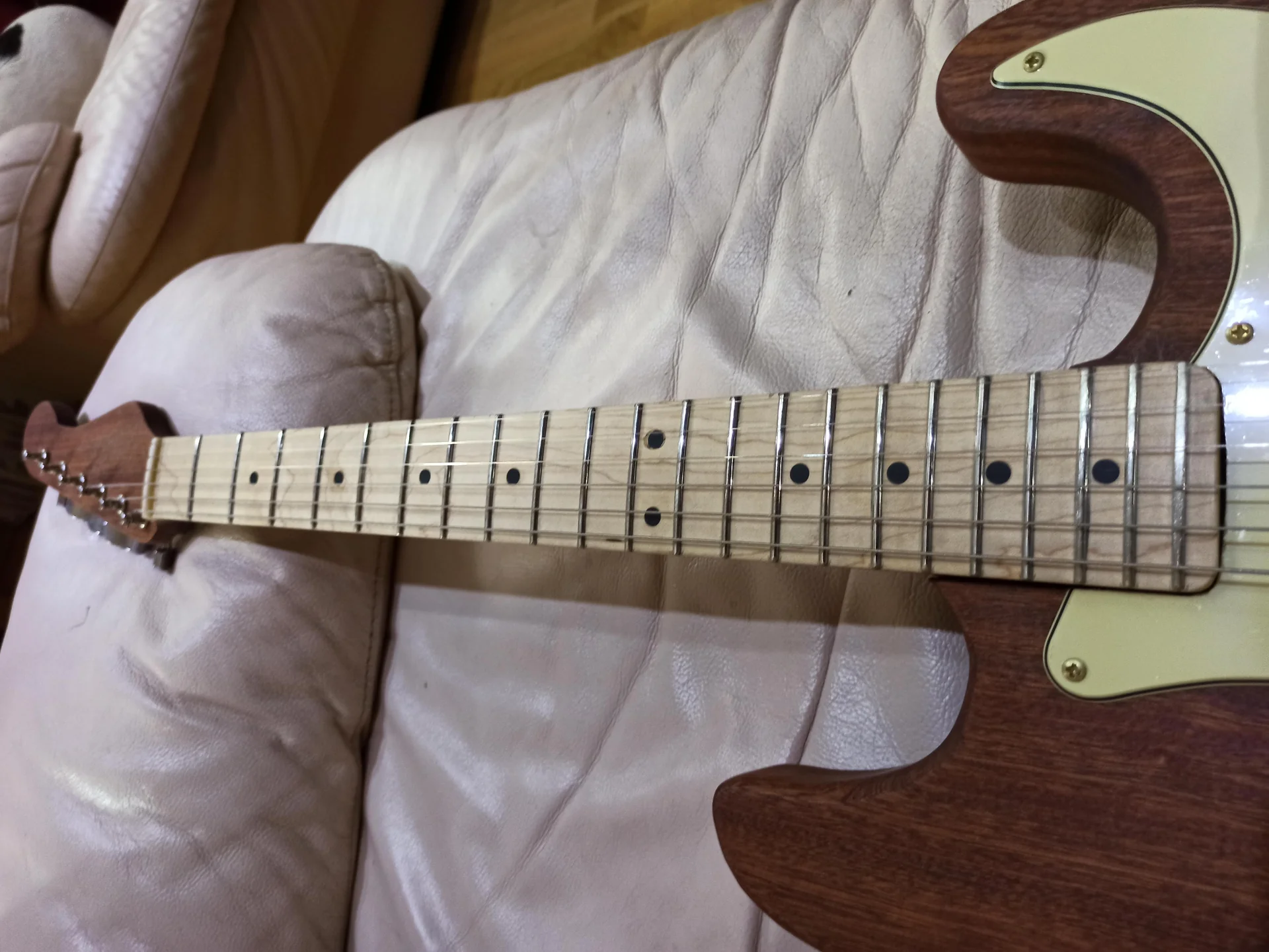
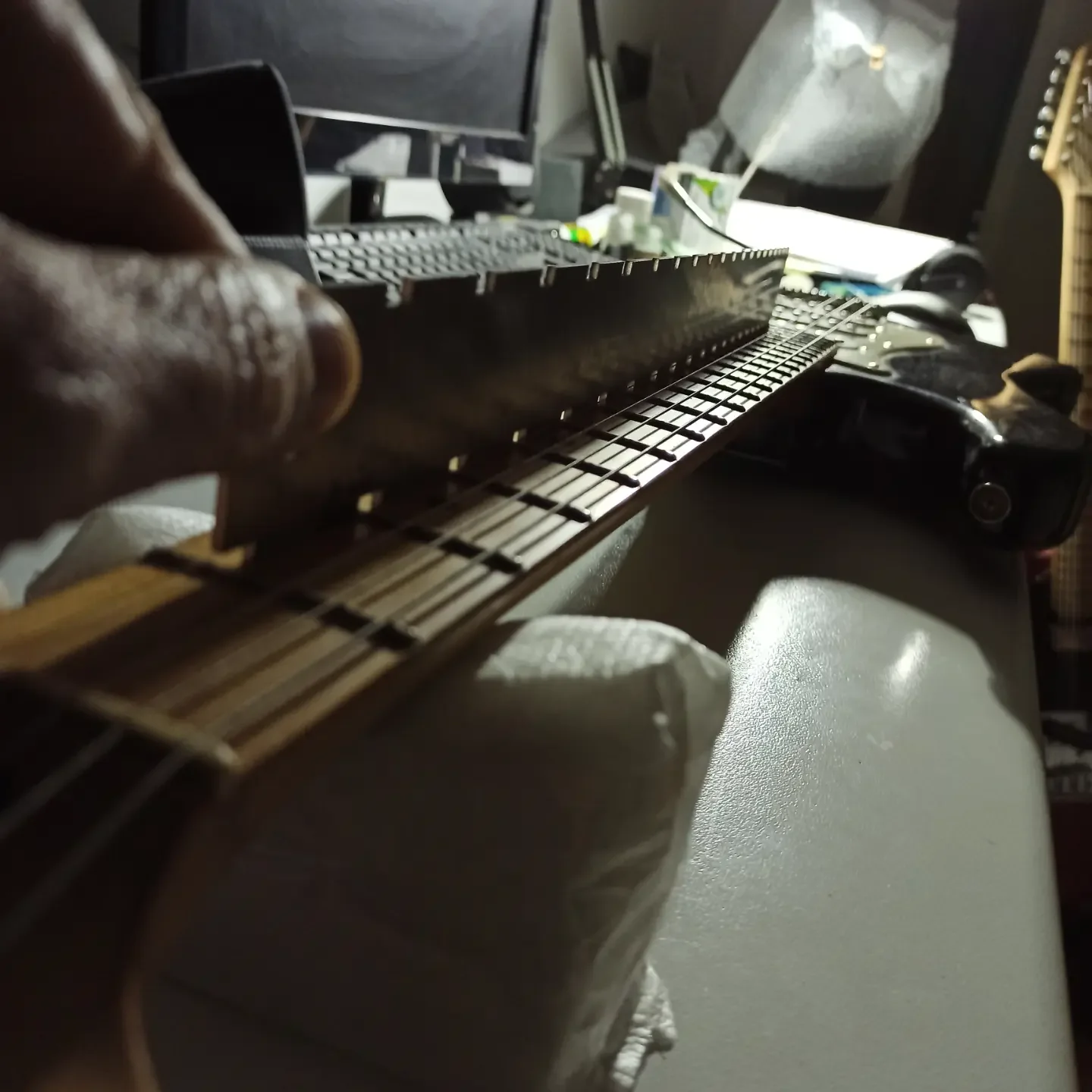
When talking about guitar keys, the first thought goes to metal. And, in fact, most frets are made of metal alloys. But not all alloys are the same, and each has its own characteristics. Let's look at the most common materials (and a couple of interesting alternatives for our CBGs).
1. Nickel-Silver (Nickel-Silver)


Against: It is not the most resistant. With time and use, it tends to wear out, creating grooves and flattening that require a refret (or, in the long run, a complete refretting). It also tends to oxidize, becoming a bit dull, but this is only an aesthetic problem and can be solved with good cleaning.
My experience: I've used nickel-silver for years. My first well-made CBG had these frets. They are honest, do their job, and allow you to practice without spending a fortune on super-specialized tools or materials. If you don't expect eternal durability or have an unlimited budget for specific tools, go for it.
2. Stainless Steel (Acciaio Inox)
Stainless steel is the choice for those seeking maximum durability and a bright tone. More and more modern guitars, especially high-end ones or for genres like metal, feature stainless steel fret. Pros: It is incredibly durable. It practically doesn't wear out, which means that once installed and leveled, it will last a lifetime without needing refrets. It doesn't oxidize, maintaining a consistently bright appearance. Many say it gives a clearer and brighter sound, with slightly more sustain.Against: It's a real nightmare to work with. It's extremely hard, which means it will quickly wear out your files, nippers, and cutters. Bending the wire is more difficult, and filing and polishing require much more effort and time. It also costs more. If you don't have specific (and expensive) tools for steel, or the patience of a Tibetan monk, you might find yourself cursing.
My experience: I tried to fret a neck with stainless steel once. I wanted to see if it was really that difficult. I confirm: it is difficult. I destroyed a couple of cheap files and it took me twice as long. The final result was excellent, but the process was exhausting. I would only recommend it if you already have some experience and the right tools, or if you really want a challenge. Not for your first fretting.
3. EVO Gold (Copper-Tin-Iron Alloy)
This is a relatively new material, an excellent middle ground that is gaining popularity. The name “Gold” comes from its golden color, but it does not contain gold. It is an alloy of copper, tin, and iron, often marketed as “EVO Gold” or “Gold Fretwire”.
Pros: It offers significantly greater hardness than nickel-silver (estimated at about 20-30% more), which translates into greater durability. It does not oxidize and maintains its golden color, adding an interesting aesthetic touch. It is easier to work with than stainless steel, while being more resistant than nickel-silver. An excellent compromise.
Against: It costs more than nickel-silver. It is not yet as widespread as the other two, so availability might be lower.
My experience: I used EVO Gold on a couple of necks, both for standard guitars and for a more “elaborate” CBG. I liked it a lot. It works almost like nickel-silver, but the feeling of robustness is evident. And that golden touch, I must admit, looks good. If you're looking for an upgrade from nickel-silver without the hassle of stainless steel, EVO Gold is an excellent choice for your cigar box guitar.
4. Zero Fret (Zero Fret)
This is not a material, but a constructive solution that deserves to be considered, especially for CBGs. The zero fret is a standard fret (usually nickel-silver or EVO Gold) placed immediately after the nut. The strings rest on it instead of the nut to determine the height of the open strings.
Pros: Intonation: It unifies the tone and intonation of open strings with fretted ones. This is because the open string has the same “condition” as a fretted string, resting on a fret instead of the nut. This is a huge advantage for those who have difficulty with intonation at the nut.
Action: It simplifies the action setup at the nut. The nut only serves to space the strings, not to determine their height. This is a great relief for hobbyist builders.
Wear: It reduces wear on the nut, which is no longer subjected to string pressure.
Against: Aesthetics: Not everyone appreciates the look of an extra fret.
Stamp: It can slightly modify the timbre of open strings, making it more “bright” or “metallic” compared to a bone or graphite nut.
My experience: I used the Zero Fret on several of my first CBGs. I tell you, it saved my life! Setting the right action at the nut is one of the most annoying things for a beginner, and the Zero Fret takes a lot of weight off your shoulders. I highly recommend it for early builds, it allows you to focus on other aspects without going crazy with micrometric nut filing.
5. Fretless (Fretless)
Once again, not a type of fret, but a radical choice for the fretboard. A guitar fretless does not have fret elements. The strings are pressed directly onto the wood (or another material) of the fretboard.
Pros: Unique sound: It offers an incredibly expressive, soft and “vocal” sound, with infinite possibilities for slides and glissandos. It somewhat resembles a violin or a fretless bass.
Expressiveness: It allows for microtonality and nuances that are not possible on a fretted fingerboard.
Simplification: It completely eliminates the fretting process, which is the most complex and delicate part of neck construction.
Against: Intonation: It requires a very trained ear and absolute precision in finger placement. For those not used to it, playing in tune is a real challenge.
Wear: Strings can quickly wear down the wooden fretboard, especially if steel strings are used and you don't have a hard wooden fretboard (like ebony) or one protected by a durable finish.
Feeling: The feeling is completely different from a guitar fretted one, and it's not for everyone.
My experience: I built a couple of fretless CBGs for fun and for the particular sound that comes out of them. If you like dirtier blues, “ethnic” sounds, or just want to experiment, a fretless is incredibly cool. However, know that playing it well requires a lot of practice. And if the fingerboard is made of soft wood, be prepared to see string grooves after a while. A good compromise is to use hard wood for the fingerboard, or apply a durable epoxy finish. Sometimes, on these, I would mark the fret positions with thin lines, just to have visual references.
Fret Sizes: Which to Choose for Your CBG?
Besides the material, the size of the fret has a huge impact on playability. We're talking about height and width. There isn't one “best” size, but only the one that best suits your style and preferences.
Manufacturers of fret wire often use codes (e.g. Dunlop 6100, 6150, 6230), but for our hobbyist purposes, it's more useful to think in terms of general categories.
Jumbo (Wide and Tall)
Typical measurements: Width ~2.9-3.0 mm (0.114-0.118″), Height ~1.4-1.5 mm (0.055-0.060″).Pros:
They greatly facilitate bending and vibrato. Fingers barely touch the fretboard wood, reducing friction. “Fast” and “smooth” feel.
Against: They can make intonation more difficult for beginners, because even minimal pressure is enough to push the string past the correct point. The feeling is like having “rails” under your fingers, which not everyone likes.
Mimmo says: On my favorite Strat I have jumbo frets. On a CBG they can sometimes seem exaggerated, especially on narrow necks, but if you like aggressive bending and wide vibrato, why not? Prepare your fingers for a different feel.
Medium-Jumbo (Medium-Wide and Medium-Tall)
Typical measurements: Width ~2.5-2.7 mm (0.098-0.106″), Height ~1.2-1.3 mm (0.047-0.051″).Pros:
The compromise par excellence. It offers a good balance between ease of bending and intonation precision. Versatile for almost all musical styles.
Against: It doesn't have the extreme characteristics of jumbo or vintage frets, so if you're looking for a very specific feel, it might be a bit “anonymous”. But for a hobbyist, this is an advantage.
Mimmo says: If you don't know what to choose, go with Medium-Jumbo. It's hard to go wrong with these. They are what I use most often on my CBGs, because they offer excellent playability without complications.
Medium (Medium-Wide and Medium-Tall)
Typical measurements: Width ~2.2-2.4 mm (0.087-0.094″), Height ~1.1-1.2 mm (0.043-0.047″).Pros:
They offer a more “traditional” feel and good intonation precision. The fingers feel the wood of the fingerboard more.
Against: They might be slightly less suitable for very strong bends compared to jumbo frets, and sustain might be slightly lower if the string is not pressed with the right force.
Mimmo says: On a short-scale CBG, sometimes medium frets are perfect for not feeling the neck too “bulky”. If you have small hands or prefer a more “intimate” feel with the fingerboard, these might be for you.
Small (Vintage, Narrow and Low)
Typical measurements: Width ~2.0-2.1 mm (0.078-0.083″), Height ~1.0-1.1 mm (0.039-0.043″).Pros:
Characteristic of vintage guitars, they offer very precise intonation (if played well) and an “old school” feel. Excellent for slide, because they don't get in the way.
Against: They are the most difficult for bending and vibrato, and require greater finger pressure to avoid buzzing. Sustain can suffer. They wear out faster.
Mimmo says: If you're aiming for a vintage look and feel, or if you use a lot of slide on your CBG, they might make sense. But be careful, they're low! The first time I installed a set, it felt like I was playing directly on the wood. It takes getting used to.
Summary Table of Dimensions (Indicative Values)
Here's a small table for a clearer idea:
| Fret Type | Width (mm / inches) | Height (mm / inches) | Notes |
| :————— | :———————– | :——————— | :———————————————————————- |
| Jumbo | 2.9 – 3.0 / .114 – .118 | 1.4 – 1.5 / .055 – .060 | Excellent for bending, “fast” feel, requires less pressure. |
| Medium-Jumbo | 2.5 – 2.7 / .098 – .106 | 1.2 – 1.3 / .047 – .051 | The ideal compromise, versatile and forgiving. |
| Medium | 2.2 – 2.4 / .087 – .094 | 1.1 – 1.2 / .043 – .047 | Traditional feel, good precision, fingers feel the fretboard. |
| Small (Vintage) | 2.0 – 2.1 / .078 – .083 | 1.0 – 1.1 / .039 ― .043 | For vintage look and feel, great for slide, requires more pressure. |
The Hobbist Builder's PAIN POINT: “I'm afraid of choosing the wrong size and ruining everything.” I completely understand. The truth is, there isn't an “absolutely wrong size,” just one that suits your playing style better or worse. If you're undecided, Medium-Jumbo is the safest choice. It will give you an excellent basis to understand what you like or don't like for your next builds. And remember, the beauty of DIY is that you can always experiment!
Practical Tips for the
See also
Download the Luthier Survival Kit
Free PDF with checklist, problem-cause table and project card template.
 English
  Italiano
Stuck on your build?
If you ran into the same problem or have a question, drop it in the comments. I read and reply to every one.
Write a comment