

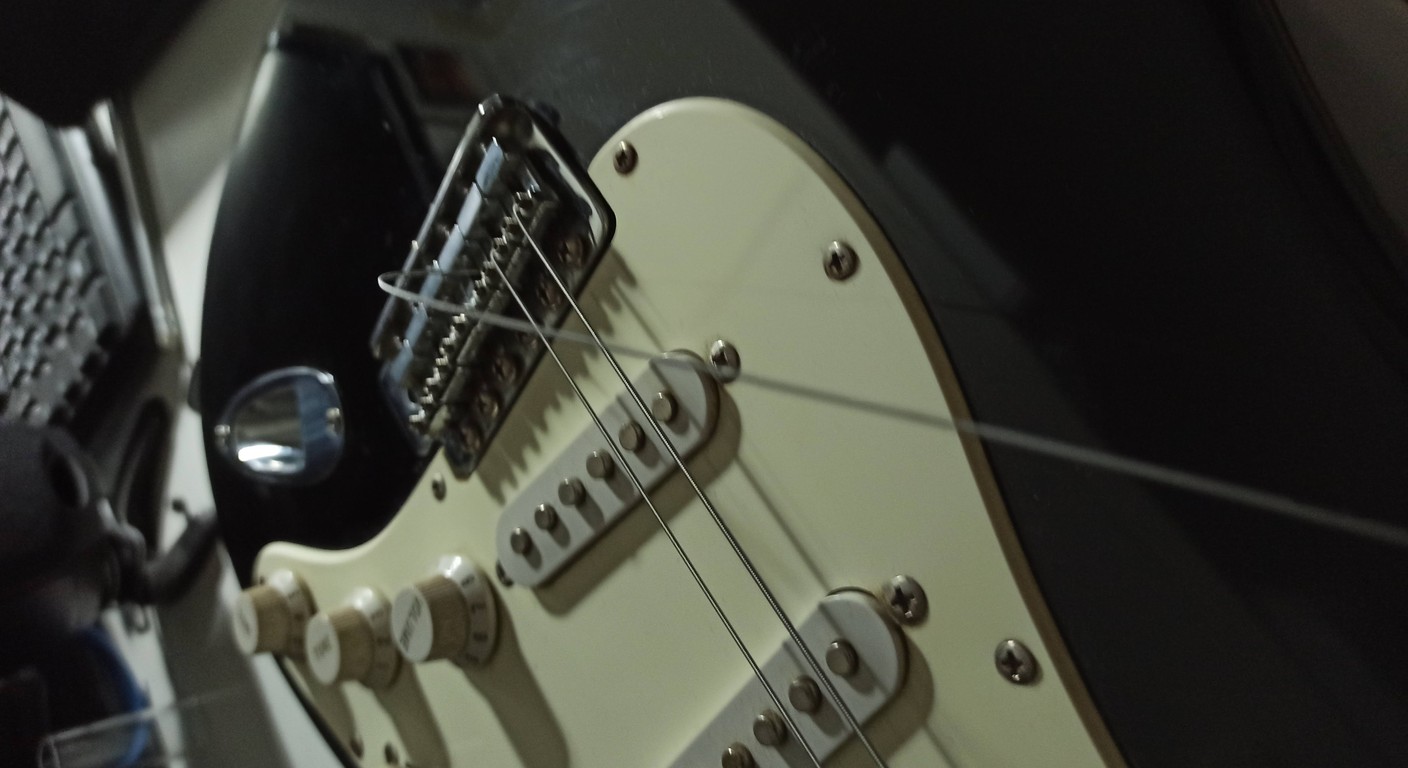
Best Guitar Pickups: Which One to Choose? Top 3
Choosing a new set of pickups for your guitar is a bit like deciding what engine to put on a sports car you built piecemeal in your garage. You're faced with a sea of options, numbers, acronyms, and promises of "iconic sounds." And, let's face it, the first time you dive in, it's incredibly confusing. I've been there, too, more than once, trust me. I've bought pickups that on paper seemed perfect for my style, only to discover that on paper they weren't. my instrument, with the my amplifier, they sounded like a broken alarm clock.The point is exactly this: there is no best replacement guitar pickup absolutely. There is a right pickup. for you, for the sound you have in your head, for the guitar you're holding, and for the amplifier you're using. And above all, there's the desire to experiment. Don't worry if it seems like rocket science at first; with a little patience and a few tips from those who've already made every possible mistake, you'll see that it's easier than you think. The goal is to help you understand what to look for and how to choose, without you wasting money like I did at the beginning.
Understanding the Basics: What Pickups Do and Why They Matter
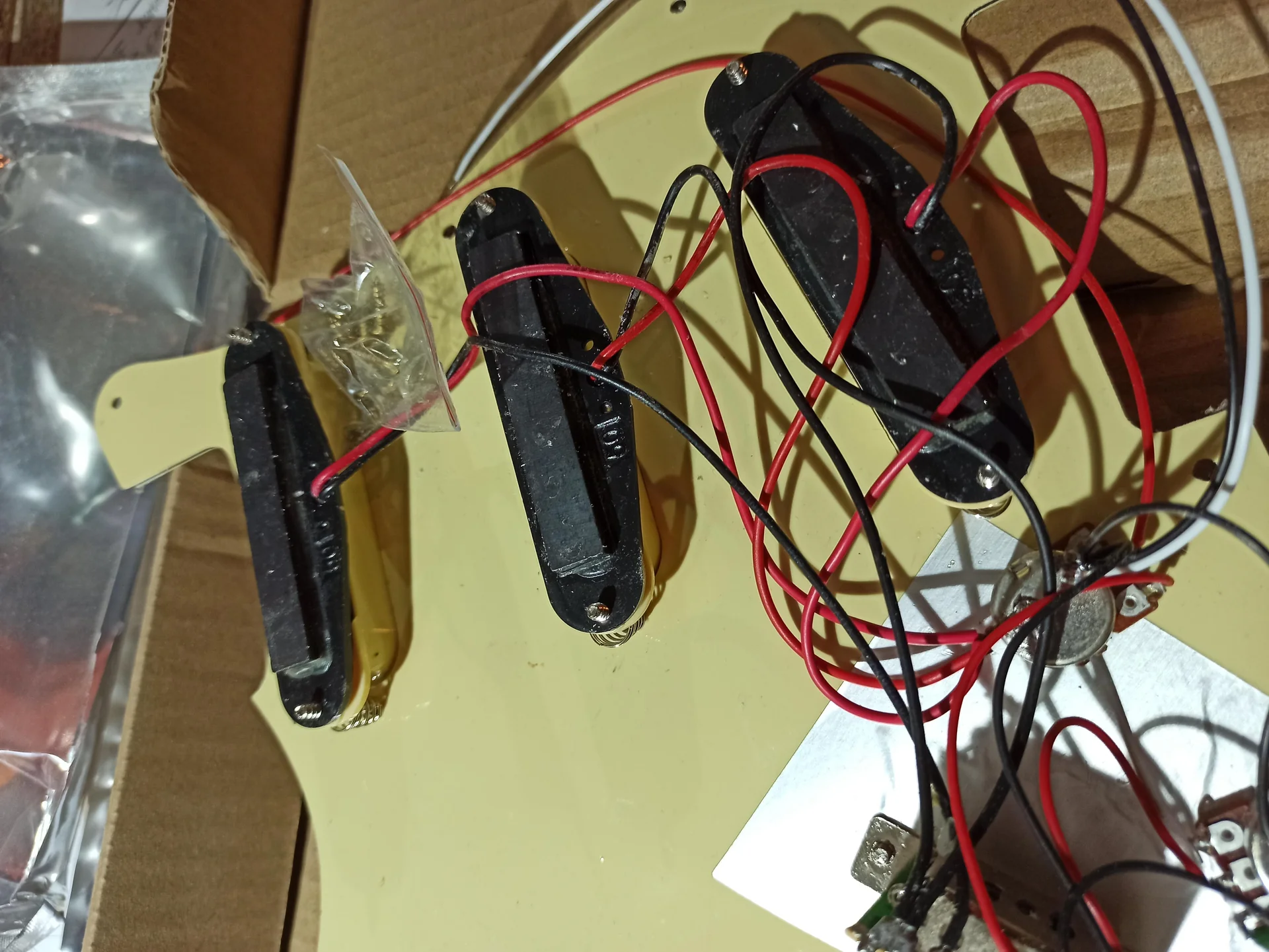
Ok, now that we have the basics, the next step is the most important: understanding you What do you want? What sound do you have in your head? What's your musical genre? What kind of guitar do you have?
Your musical genre and style of sound
Advertising

KAISH 12" Guitar Bass Fingerboard Radius Sanding Block Fret Leveling Luthier Tools
See on Amazon

If your main focus is hard rock or metal, you'll need a high-output pickup that can push the amp into distortion and maintain definition even with a lot of gain. Ceramic pickups or "hot" alnico V humbuckers are ideal candidates.
For jazz, clarity, warmth, and definition are priorities. An Alnico II or III, often with lower output, will give you that round, velvety sound. There's nothing more frustrating than having a guitar that doesn't give you the sound you want. I remember the first time I installed a "modern" pickup on an old Telecaster of mine, hoping to make it more versatile. The result? It lost all its "twangy" character and didn't sound right.
it's modern
It's vintage. A disaster. I had to redo everything.
Your guitar and its interaction with the amplifier
The guitar itself plays a huge role. A pickup will sound different on an alder Strat than on a mahogany Les Paul. The body wood, the neck, the bridge—everything contributes to the overall tone. Don't expect a pickup to transform a Squier Bullet into a Gibson Custom Shop. It will improve the sound, sure, but the instrument's intrinsic character will remain.And then there's the amplifier. A high-output pickup on an already very gainy amplifier might be overkill, muddying the sound. Conversely, a vintage pickup on a clean, bright amplifier might not have enough punch for distorted sounds.
Balance is key. If you have a tube amp that you like to push into natural saturation, a medium-low output pickup might be perfect for working with dynamics. If you use a solid-state amp and want to achieve powerful distortion, a high-output pickup will give you the push you need.
Your playing style
If you're a guitarist who uses a lot of dynamics, varying your picking attack to achieve different nuances, a pickup with excellent dynamic response (often Alnico) will be the best choice. If, on the other hand, your style is more consistent, perhaps with powerful chords and fast riffs, a more compressed pickup with a high output could give you the tonal stability you seek.Take the time to listen to your favorite guitarists. What instruments do they use? What pickups do they have? Not to copy, but to have a point of reference. Don't be afraid to experiment. That's the beauty of DIY: trying, making mistakes, and learning.
My Top 3 Replacement Pickups That Won't Let You Down (And Why)
After years of buying, assembling, disassembling, and reselling pickups, I've compiled a list of what I've found to be the best. They're not necessarily the most expensive or exotic, but they offer excellent value and proven reliability. I've installed them on several guitars and have always had excellent results, or at least I've immediately known whether they're right for the project.Here's my personal Top 3, designed to cover a variety of needs:
1. Seymour Duncan SH-4 JB (Humbucker)
Type: Humbucker Magnet: Alnico Vn DC Resistance: Approximately 16.4 kΩSound: The Seymour Duncan JB It's a true classic, one of the best-selling humbucker pickups of all time, and for good reason. It's versatile, powerful, but not overpowering. It has pronounced mids, bright highs, and tight lows. It's not an ultra-modern pickup, but it's a workhorse for rock, hard rock, blues-rock, and even more classic metal.
Why I like it: I mounted it in the bridge position of a Les Paul Custom that I wanted to make more aggressive, and it transformed the sound. It has fantastic crunch and exceptional sustain for solos. It never gets muddy, even with a lot of gain. It's a pickup that gives you that extra "push" without sacrificing the instrument's character. If you're looking for a significant upgrade from a stock humbucker, this is almost always a safe bet.
Ideal for: Rock, hard rock, and fusion guitarists. Excellent for the bridge position, where it also pairs well with a more vintage-sounding neck pickup.
2. Fender Custom Shop '69 Strat Pickups (Single Coil)
Type: Single Coil Magnet: Alnico Vn DC Resistance: Approx. 5.2 kΩ (Neck/Middle), 5.5 kΩ (Bridge)Sound: If you have a Stratocaster and want that iconic, crystal-clear sound, with lots of quack In the middle positions, these are the pickups to consider. They are faithful replicas of the Stratocaster pickups of the late '60s. They have a bright, airy sound with scooped mids and defined lows. Perfect for Hendrix blues, Gilmour rock, funk, and surf rock.
Why I like it: I had a Mexican Stratocaster that sounded a little flat. I decided to invest and put together this set. The difference was enormous. The guitar came to life, with that glassy sound and dynamics that only certain single coils can deliver. Every note has its own definition, and the sustain is incredible for a single coil. It lets you feel every nuance of the picking.
Ideal for: Strat-addicted guitarists looking for a vintage, blues, classic rock, or funk sound. Excellent as a complete set for those looking for a quality upgrade from a mid-range Strat.
External source: You can find detailed specifications and listen to samples on the official Fender website, for example here: Fender Custom Shop '69 Strat Pickups.
3. DiMarzio PAF 36th Anniversary (Humbucker)
Type: Humbucker Magnet: Alnico Vn DC Resistance: Approx. 7.3 kΩ (Neck), 7.6 kΩ (Bridge)Sound: This is DiMarzio's attempt to recreate the sound of the legendary original PAF (Patent Applied For), but with the consistency and reliability of modern manufacturing. The result is a humbucker that offers a warm, open sound with excellent definition and surprising dynamics for a humbucker. It's not a high-output pickup, but it responds beautifully to the amp's volume and your playing.
Why I like it: I was looking for a humbucker for a semi-acoustic guitar that would give me warmth and clarity without being too dark. The PAF 36th Anniversary was perfect. It has that creamy, harmonic sound you expect from a great humbucker, but with a clarity that allows you to hear every single string even in a complex chord. It's an incredibly expressive pickup, suitable for blues, jazz, classic rock, and even fusion. It's not "hot," but it has an incredible character.
Ideal for: For those looking for a warm, defined, and dynamic vintage humbucker sound. Perfect for guitars like the Les Paul, ES-335, or any instrument requiring a rich, harmonically rich, sustaining tone. Excellent for both neck and bridge.
Remember, these are just suggestions based on my experience. The market is full of excellent manufacturers like Lollar, Fralin, Bare Knuckle, Mojotone, and many other lesser-known but excellent artisans. The important thing is to understand what you're looking for before making a purchase.
Assembly and Wiring: Advice from Those Who Have Been There
Once you have chosen your new magnetic components For guitar, it's time to put them into practice. Don't worry, it's not as difficult as it seems, but it does require patience and the right tools. I've seen friends panic when faced with soldering two wires, but I assure you, it's much easier than you think.The essential tools
Before you begin, make sure you have: Soldering iron: Good quality, with a fine tip and a power of 30-40W.Pond: Preferably with flux core.
Desoldering pump or desoldering braid: To correct any errors.
Wire stripper: To remove insulation from cables without damaging them.
Screwdrivers: Cross and slotted, just the right size for the pickup and pickguard screws.
Multimeter: Essential for checking soldering and circuit continuity.
Insulating tape or heat shrink: To isolate connections.
Long-nose pliers: Useful for handling wires.
The step-by-step process (in brief)
1. Unplug your guitar: Obvious, but fundamental.n2. Remove the strings and pickguard/plate: Access the pickups and electronics.n3. Photograph the existing wiring: This is the golden rule! It will save you hours of frustration if you get lost.n4. Unsolder old pickups: Carefully, heat the solder and pull the wire away.n5. Clean the soldering points: Remove the old solder to have a clean base.n6. Prepare the new pickups: Strip the wires (if they are not already prepared) and lightly tin the tips (pre-tinning).n7. Solder the new pickups: Follow the wiring diagram that came with your pickups or the one on your guitar. Make sure the solder connections are bright and solid (not “cold”). 8. Check with the multimeter: Check the continuity of each connection and that there are no short circuits.n9. Test the sound: Before closing everything up, plug the guitar into the amplifier and touch the poles of each pickup with a metal screwdriver. You should hear a loud, clear "click.". Close everything: If the test is positive, replace the pickguard and strings and enjoy your new sound!For more detailed and specific wiring diagrams, I recommend you take a look at our section dedicated to changes. There you'll find a ton of helpful resources, including diagrams for different pickup and control configurations.
Common mistakes to avoid
Cold welds: These are the opaque, non-glossy ones that don't make good electrical contact. They can cause signal interruptions or humming.Non-insulated cables: If a "hot" wire touches ground, you have a short circuit. Make sure all connections are well insulated.
Wrong polarity: Some pickups have a specific assignment for the "hot" and "ground" connections. Reversing them can cause phase problems, especially with multiple pickups. Always follow the wiring diagram.
Damage the pickup wire: The winding wire is very thin. Be careful not to break it or burn the insulation with the soldering iron.
Pulling the strings too tightly: Especially the ones that come out of pickups. They're delicate.
My first attempt at replacing a pickup was a disaster. I made a cold solder and the pickup wouldn't sound. I had to unsolder, clean, and redo it. But that's how you learn! Don't rush and don't be afraid to make mistakes.
Not Just Pickups: The Importance of Potentiometers and Capacitors
We often focus only on the transducers magnetic, but the passive electronics of your guitar (potentiometers and capacitors) have a huge impact on the final sound. There is no point in mounting the best replacement guitar pickups if you then strangle them with low-quality or incorrectly rated components.The potentiometers: Volume and Tone
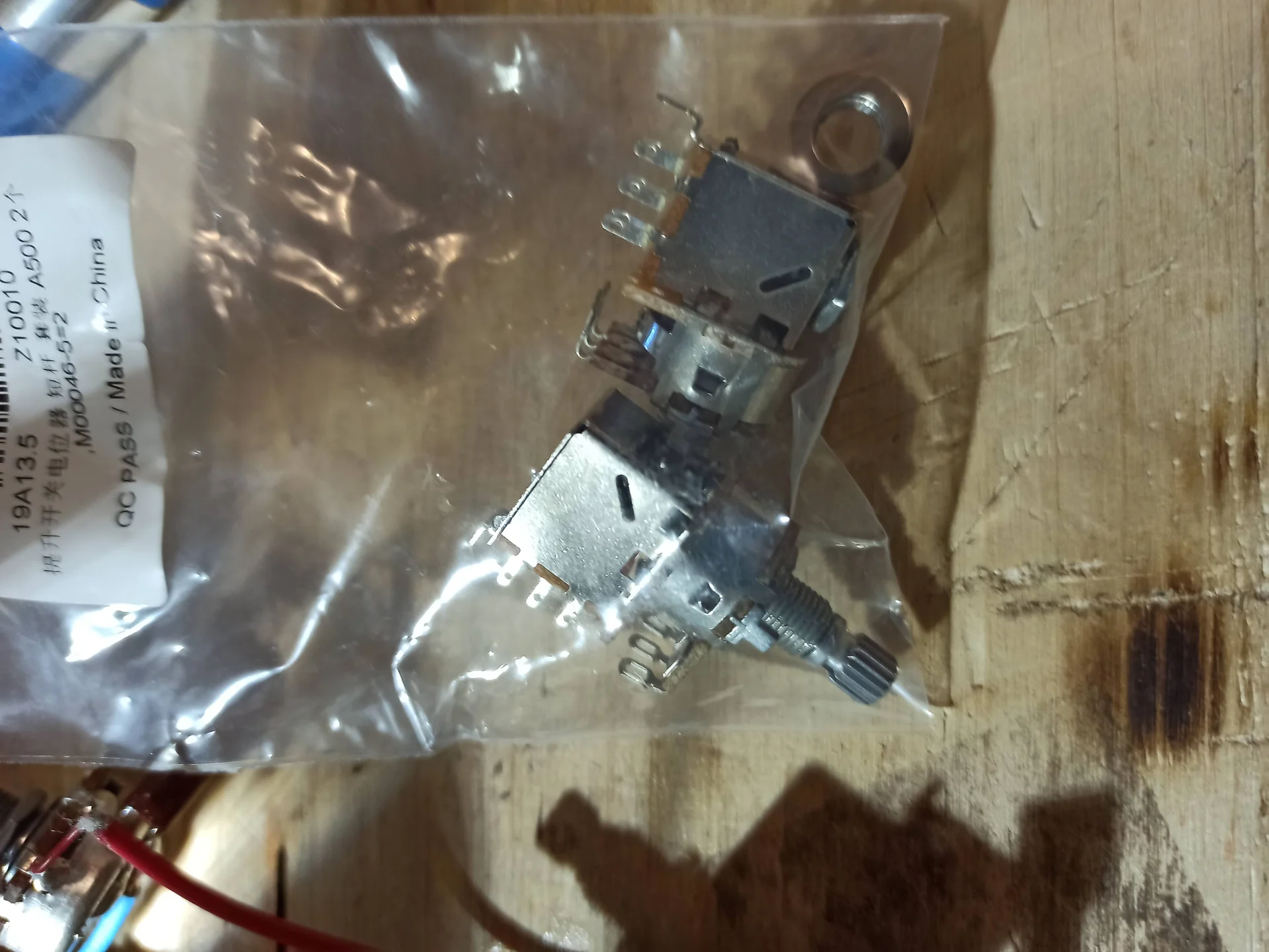
Potentiometers (pots) are variable resistors that control volume and tone. The most common values are 250kΩ and 500kΩ. 250kΩ: Typically used with single coils. They offer a slightly warmer, darker sound, "softening" the sometimes too-shrill highs of single coils.500kΩ: Typically used with humbuckers. They allow for a brighter, more open sound, allowing more high frequencies to pass through. If you use a 250kΩ with a humbucker, the sound may be too dark and muddy.
There are also 1MΩ (for even brighter sounds) or 300kΩ (a good compromise for some humbuckers) potentiometers.
Then there is the response curve, or taper: Audio Taper (Logarithmic): It's the most common for volume and tone. Its resistance varies nonlinearly, simulating human perception of volume.
Linear Taper: Resistance varies linearly. Sometimes used for volume, but the perceived change can be too abrupt.
I once installed a powerful humbucker with 250kΩ pots, and it was like gagging the guitar. The sound was dull and lifeless. By swapping the pots for 500kΩ ones, the guitar opened up, regaining clarity and dynamics. It's a simple and relatively inexpensive upgrade that can make a huge difference.
Capacitors: The Tone Filter
The capacitor in the tone circuit works like a low-pass filter. When you turn down the tone control, the capacitor diverts the high frequencies to ground, allowing only the lows and mids to pass through.The most common values are: 0.022µF: Very common, especially with humbuckers. It offers a versatile tone range, from bright to warm.
0.047µF: Often used with single coils. It filters out more high frequencies, giving a darker, mellower sound when the tone is lowered.
The type of capacitor can also influence the sound, though to a lesser extent than the value. The most common are ceramic (cheap and good), polyester, or the more "esoteric" paper-in-oil (PIO) capacitors, which promise a smoother, more musical roll-off. Don't expect miracles from a $30 PIO capacitor compared to a good ceramic one, but it's a detail that can further refine your sound if you're a tone control freak. The most important thing is the microfarad value.
These technical details may seem boring, but they are the key to unlocking the true potential of your electric guitar pickup. A good passive electronics setup allows you to make the most of the sonic characteristics of your transducers, giving you more control and versatility.
Conclusions: Your guitar, your sound
I hope this guide has given you the tools to navigate the world of replacement guitar pickups with a little more confidence. Remember, the path to finding "your" sound is personal and full of experimentation. Don't be afraid to try different combinations, to assemble and disassemble, to make mistakes and redo them. That's how you really learn.As I said at the beginning: I'm not a professional luthier. I'm someone who's spent hours in the garage with a soldering iron in hand, learning through trial and error. And if I could do it, with a little desire and the right tools, you can too. The satisfaction of hearing the sound you've always wanted come out of a guitar you've "customized" with your own hands is priceless.
Take your time, do your research, listen to samples, and, above all, trust your ears. Your guitar will thank you!
See also
Download the Luthier Survival Kit
Free PDF with checklist, problem-cause table and project card template.
 English
  Italiano
Stuck on your build?
If you ran into the same problem or have a question, drop it in the comments. I read and reply to every one.
Write a comment