

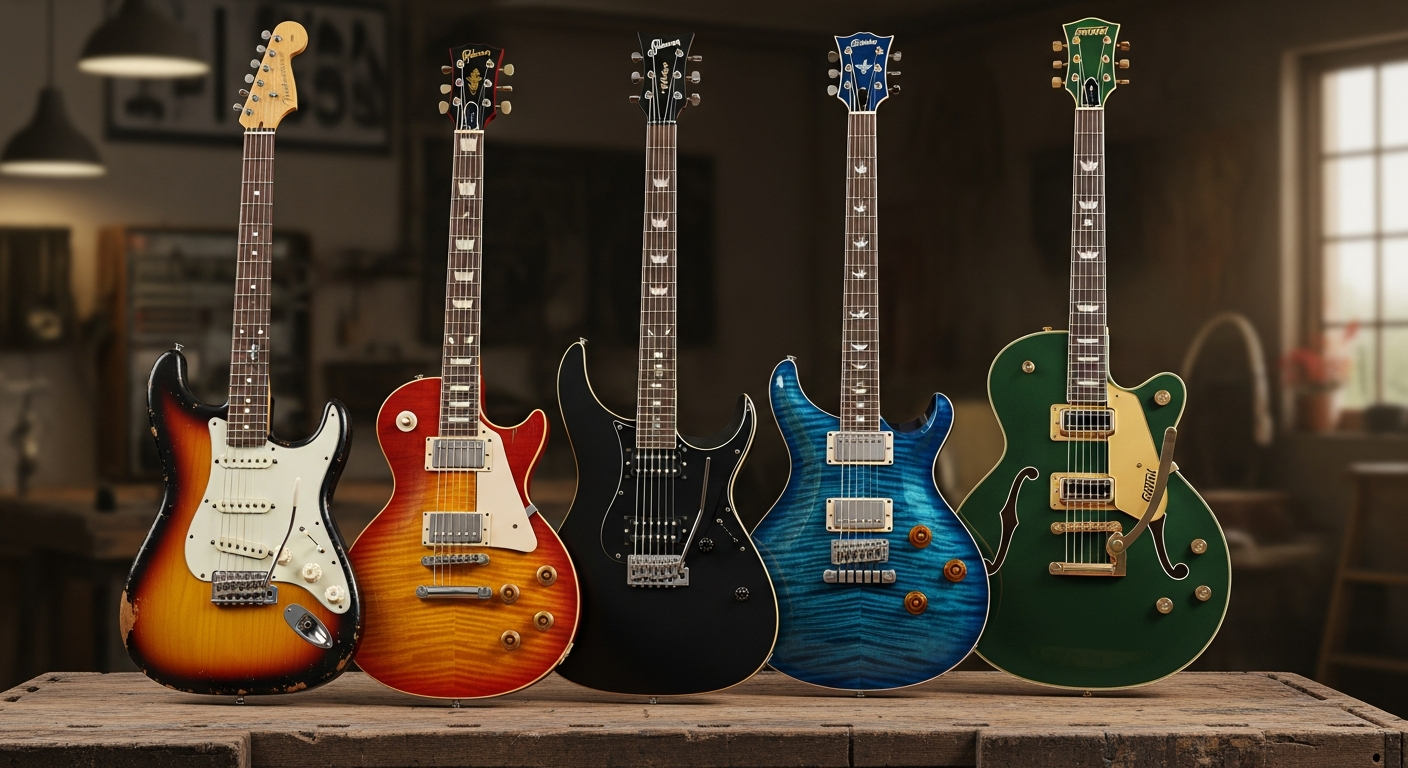
Epiphone electrics: Top models for those who don't want to empty their wallet
So, guys. How many times have we found ourselves in front of the guitar shelf, perhaps with a not exactly unlimited budget, dreaming of that Les Paul or that SG that would make us feel like our heroes, but which costs an arm and a leg? Many, too many. È lì that comes into play Epiphone. They are not perfect guitars, they are not Gibson, and whoever tells you that is lying. But they are honest travel companions, sometimes surprising, especially if you want to get your hands dirty. In this article, I will not give you the usual parade of catalog models. I want to talk to you about the main Epiphone electric guitars which, in my experience and what is heard around among forums and groups of enthusiasts, are worth the money they cost. And, above all, I will tell you who they are for and for whom, perhaps, it is better to look elsewhere. Because the point is not just buying a guitar, but buying the right guitar for you. I've been working on these Epiphone guitars for years, both mine and my friends'. I've changed pickups, fixed bridges, redone the electronics. I've seen models come out of the factory with fretboards as dry as the Sahara desert and others with an almost perfect setup. In short, I've learned that with Epiphone, a bit of luck and a bit of work, you can really get a lot out of them. Let's see together which models, for a budget-conscious guitarist with a bit of DIY spirit, can make a difference.
Epiphone Les Paul Standard ’50s and ’60s (Inspired by Gibson)
When talking about Epiphone electric, the Les Paul è the first that comes to mind for many. The line “Inspired by Gibson” has significantly raised the bar, bringing the specifications closer to high-end Gibson counterparts. The '50s and '60s versions are the flagships.
Technical features
These models are a faithful tribute to Gibson icons, and the specifications prove it:
- Body wood: Solid mahogany with carved Maple top (Maple Cap). It is not a thin lamination, but a real maple layer, at least 1/2 inch thick, which contributes to the sustain and brightness of the sound.
- Handle wood: Solid mahogany. The neck is glued to the body (set neck), a fundamental characteristic for sustain, and has a long tenon, just like vintage Gibsons.
- Keyboard: Indian Laurel (Indian laurel) or, on some older batches, Pau Ferro. Both are excellent substitutes for rosewood, with very similar density and feel.
- Neck profile:
- ’50s: A rounded, thicker, and more generous “C” profile. It gives a solid feel in hand, great for those with large hands or who prefer a more robust grip.
- ’60s: A “SlimTaper C” profile, thinner and faster, ideal for solos and quick passages.
- Pick-up: ProBuckers. These are Epiphone's proprietary pickups, designed to replicate the sound of Gibson PAFs (Patent Applied For). They are humbuckers with Alnico II magnets, known for their warm, round, and dynamic sound.
- Stairs: 24.75 inches (628.65 mm), the Gibson standard for a comfortable feel and a more compressed tone.
- Hardware: LockTone Tune-o-matic bridge and Stopbar tailpiece, which firmly lock the bridge and tailpiece to the body, improving sustain and stability. Grover Rotomatic 18:1 tuners, reliable and precise in tuning.
- Finish: Gloss in classic colors like Heritage Cherry Sunburst, Ebony, Metallic Gold.
- Relevant construction notes: CTS wiring and Mallory capacitors for the electronics, a significant upgrade that ensures good potentiometer response and a usable tone at all volumes.
Popular sentiment
I must say that the community has welcomed these new with great enthusiasm Epiphone Les Paul. The general feeling is that Epiphone has finally “hit the mark” with the “Inspired by Gibson” series. Many consider them the best Epiphones ever produced, especially in relation to the price. Buyers are often surprised by the quality of the ProBuckers, which they don't feel the need to change immediately. “They sound amazing, I didn't believe it at this price” is a comment often read. Sustain is another highly praised strong point, thanks to the glued neck and LockTone hardware. However, not all that glitters is gold. The most common complaint concerns the variability of quality control (QC). It's not uncommon to find models with a less than optimal setup, string action too high or low, or intonation that needs adjustment. Sometimes you encounter frets that are not perfectly level or have slightly rough edges, the classic “fret sprout” due to humidity changes. Some have also reported minor cosmetic imperfections in the finish, but these are isolated and usually minor cases. The good news is that these defects are almost always fixable with a good setup and, if necessary, a key processing.
Pros and cons in relation to price
Let's see what this guitar offers and what it asks for in return:
Pros:
- Sound and Tone: ProBuckers offer a warm, rich, and versatile sound, very close to Gibson PAFs. Mahogany and maple work well together for remarkable sustain.
- Quality Construction: Solid woods, glued neck with long tenon, solid hardware and good level electronics (CTS/Mallory).
- Imposing Aesthetics: It looks like a much higher-end Les Paul. The finishes are generally well-maintained and the classic colors are always a pleasure for the eyes.
- Upgrade Potential: Although the pickups are great, the starting base is so good that investing in a set of boutique pickups (like a Seymour Duncan or a DiMarzio) or other small improvements can transform it into a guitar that competes with much more expensive models.
Against:
- Variable Quality Control: It might require a professional setup upon purchase. This is an additional cost to consider, approximately 50-100 euros.
- Weight: Being a solid mahogany Les Paul, it's a heavy guitar. If you suffer from back pain or prefer light instruments, it might not be for you.
- Fretwork: Although improved compared to the past, key leveling or edge finishing may require attention.
Who it's suitable for / who should avoid it
The Epiphone Les Paul Standard ’50s/’60s is perfect for rock, blues, hard rock, and similar genre guitarists looking for a classic sound and traditional feel. It's ideal for those on a limited budget who don't want to give up a “Gibson-like” aesthetic and tone. If you're willing to make a small extra investment for a setup or get your hands dirty to optimize it, this guitar will give you immense satisfaction. Who should avoid it? If you're looking for an ultra-light guitar, or if you expect absolute perfection out of the box without spending an extra euro, then perhaps you should look elsewhere. Even guitarists playing extreme genres with very high gain might find the ProBuckers a bit too “vintage” for their taste, although with a good amplifier and pedals, a lot can be achieved.
Epiphone SG Standard (Inspired by Gibson)
The SG, with its pointed horns and thin body, is another rock icon. Here too, the “Inspired by Gibson” line has done an excellent job of bringing the feel and tone of the original SG at an accessible price. It is the rebellious guitar par excellence.
Technical features
A guitar designed for speed and aggressiveness, but with a versatile soul:
- Body wood: Solid mahogany. The thin and light body makes it very comfortable to hold.
- Handle wood: Solid mahogany. Here too, glued neck (set neck) for excellent sustain.
- Keyboard: Indian Laurel.
- Neck profile: SlimTaper C. This slim profile is a hallmark of SGs, designed for speed and ease of play.
- Pick-up: ProBuckers (Alnico II). The same ones found on Les Pauls of the same line, guarantee a warm and round sound, but with the brightness and aggressiveness expected from an SG.
- Stairs: 24.75 inches (628.65 mm).
- Hardware: LockTone Tune-o-matic Bridge and Stopbar tailpiece. Epiphone Deluxe tuners with 18:1 ratio.
- Finish: Gloss in classic colors like Cherry, Ebony, or White.
- Relevant construction notes: Wired electronics with CTS potentiometers and Mallory capacitors, like the Les Paul “Inspired by Gibson”. This is a great advantage for sound quality and durability.
Popular sentiment
The Epiphone SG Standard The Inspired by Gibson series are generally well-regarded. People appreciate the fidelity to the Gibson design, the contained weight, and the fast neck. Many see it as an excellent base for a rock guitar that doesn’t cost a fortune. The sound of the ProBuckers is again a plus, with many finding them suitable for the SG’s character, capable of going from a bluesy crunch to a more decisive rock. The lightness is a double-edged sword: while on one hand it’s comfortable, on the other it accentuates the famous “neck dive” (the tendency of the neck to drop when playing it standing with a strap). This is the most cited flaw by the community. Here too, complaints about quality control are present, although perhaps to a lesser extent compared to the more complex Les Pauls. Imperfect setups and frets that need a filing are the most common criticisms.
Pros and cons in relation to price
Let's analyze the strengths and weaknesses of this icon:
Pros:
- Comfort and Lightness: Its slim body and light weight make it an extremely comfortable guitar to play, both standing and sitting.
- Classic Rock Sound: The ProBuckers paired with mahogany offer the classic SG growl, perfect for rock, blues, punk, and hard rock.
- Fast Handle: The SlimTaper C profile is a pleasure for those who love solos and fast riffs.
- Affordable Price: It offers an almost complete SG experience at a fraction of the cost of a Gibson.
Against:
- Neck Dive: The tendency of the neck to tip downwards is an intrinsic characteristic of the SG design and can be annoying for some. It can be mitigated with a suede strap or by moving the strap attachment.
- Quality Control: As with Les Pauls, an initial professional setup is often recommended to get the best out of the guitar.
- Access to the top keys: Despite the double-cutaway design, some find access to the frets beyond the 19th a bit more uncomfortable compared to other guitars.
Who it's suitable for / who should avoid it
The Epiphone SG Standard is the ideal choice for the rocker, punk rocker, or bluesman looking for a guitar with an aggressive tone, an unmistakable look, and lightning-fast playability. If you love Angus Young, Tony Iommi, or Pete Townshend, this is your weapon. It's great for those on a limited budget who want a guitar with a strong and iconic character. Who should avoid it? If “neck dive” is an insurmountable problem for you, or if you prefer guitars with a more traditional balance, perhaps it's better to look elsewhere. It's not the most versatile guitar in the world, but it does damn well what it was designed for.
Epiphone Casino
The Epiphone Casino is not just a guitar, it's a legend. Made immortal by the Beatles, it's a semi-acoustic (or rather, a hollow body) with P-90 pickups that offers a unique and unmistakable sound. It does not fall into the “Inspired by Gibson” line because the Casino is a historical Epiphone model in its own right, with a very strong identity.
Technical features
A hollow body with a distinctive character:
- Body wood: 5-ply laminated maple. Unlike semi-hollows (like the ES-335), the Casino is a true hollow body, without a center block. This contributes to its acoustic sound and resonance.
- Handle wood: Mahogany. Glued neck (set neck) for good sustain.
- Keyboard: Indian Laurel or Pau Ferro.
- Neck profile: SlimTaper C. A comfortable and fast profile, which adapts well to different styles.
- Pick-up: Epiphone P-90 Dogear. These soapbar-type single coil pickups, with Alnico V magnets, are the heart of the Casino's sound. They offer a bright, “twangy” tone but with good body and a certain aggressiveness when pushed.
- Stairs: 24.75 inches (628.65 mm).
- Hardware: LockTone Tune-o-matic bridge and Trapeze tailpiece (or Frequensator on some models). Epiphone Vintage Deluxe tuners with 18:1 ratio.
- Finish: Gloss in colors like Vintage Sunburst, Natural, or Cherry.
- Relevant construction notes: The absence of the center block makes it light and resonant, but also more susceptible to feedback at high volumes. The electronics are wired with good quality potentiometers, but not always CTS/Mallory as in the Inspired by Gibson line.
Popular sentiment
There Epiphone Casino is loved for its distinctive character. Enthusiasts appreciate the unique sound of its P-90s, which makes it perfect for blues, indie rock, jangle pop, and classic rock. Many highlight its incredible acoustic resonance, which makes it pleasant to play even unplugged. Its most known “flaw” is the tendency for feedback at high volumes or with high gain, an intrinsic characteristic of hollow body guitars without a center block. It's not a guitar for metal, and those who buy it know that. Some complain about the somewhat thick finish, which can slightly limit resonance, but it's a common compromise in this price range. Quality control can be a bit inconsistent, requiring an initial setup to optimize action and intonation.
Pros and cons in relation to price
An analysis of the pros and cons of this legend:
Pros:
- Iconic and Unique Sound: The P-90s and hollow body construction give it a bright, airy tone, with a nice bite and an unmistakable character.
- Lightness and Comfort: Extremely light and comfortable, ideal for long sessions.
- Vintage Aesthetic: The classic look with “f” holes and the glossy finish is an irresistible call to the past.
- Acoustic Resonance: Excellent for playing without amplification, for studying or for an acoustic touch in recordings.
Against:
- Feedback: At high volumes, especially with distortion, the Casino is very susceptible to feedback. It requires careful management of amplification.
- Less Versatile for Extreme Genres: It's not the right choice for heavy metal or thrash, where sustain and the absence of feedback are crucial.
- Finish: Some find it a bit too thick, which can slightly affect resonance.
Who it's suitable for / who should avoid it
The Epiphone Casino is the perfect guitar for the blues, jazz, indie rock, garage rock, and brit-pop guitarist. If you're looking for a sound with personality, a decisive attack, and great resonance, and you're willing to manage potential feedback, this is the guitar for you. It's an excellent choice for those who want an alternative to the usual solid body guitars. Who should avoid it? If you play genres that require very high volumes and extreme distortions, or if you don't want to learn how to “tame” feedback, the Casino is not for you. It's not a “grab and go” guitar for every situation, but it rewards those who understand and appreciate its peculiarities.
Epiphone ES-335 (Inspired by Gibson)
The ES-335 is the bridge between the world of solid body and hollow body guitars. A semi-hollow body with a center block that gives it sustain and feedback resistance, while maintaining the resonance and tonal complexity of an acoustic guitar. Here too, the “Inspired by Gibson” line has done an excellent job.
Technical features
Versatility in guitar form:
- Body wood: 5-ply laminated maple with mahogany center block. The center block is fundamental for reducing feedback and increasing sustain compared to a true hollow body.
- Handle wood: Mahogany. Glued neck (set neck).
- Keyboard: Indian Laurel.
- Neck profile: Rounded C. A comfortable profile, not too thick
is too thin, which adapts well to many styles. - Pick-up: Alnico Classic PRO humbuckers. These pickups are designed to offer a warm, rich, and versatile sound, with excellent definition. They are an evolution of ProBuckers, often with Alnico V magnets for slightly higher output and more brilliance.
- Stairs: 24.75 inches (628.65 mm).
- Hardware: LockTone Tune-o-matic bridge and Stopbar tailpiece. Grover Rotomatic 18:1 tuners.
- Finish: Gloss in classic colors like Cherry, Ebony, or Vintage Sunburst.
- Relevant construction notes: Electronics wired with CTS potentiometers and Mallory capacitors, guaranteeing quality and durability. The semi-hollow construction makes it versatile for many genres.
Popular sentiment
There Epiphone ES-335 “Inspired by Gibson” is one of the most appreciated guitars in the line. The community praises its incredible versatility: it's a guitar that feels at home in blues, jazz, rock, pop, and even certain fusion contexts. “It does everything well, and has amazing sustain” is a recurring comment. The Alnico Classic PRO pickups are well-regarded, considered a good balance between vintage and modern, capable of going from crystal-clear clean sounds to powerful crunch without losing definition. The center block is key, because it allows you to turn up the volume and use some distortion without the feedback problems of the Casino. Criticisms are similar to other Epiphone models: the need for a good initial setup to optimize playability and sometimes small finish or fretwork flaws. Some find the dimensions of the ES-335 a bit bulky, especially those accustomed to smaller guitars.
Pros and cons in relation to price
Key points of this all-rounder guitar:
Pros:
- Incredible Versatility: From the warmest jazz to the most aggressive rock, the ES-335 adapts to almost every musical genre thanks to its semi-hollow construction and balanced pickups.
- Sustain and Rich Tone: The center block and quality woods offer remarkable sustain and a complex tone, with rich harmonics.
- Feedback Resistance: Much more manageable than a pure hollow body, it allows playing at higher volumes and with more gain.
- Elegant Aesthetic: The classic design of the 335 is timeless and always classy.
Against:
- Dimensions: It's a big guitar. If you are small in stature or prefer compact instruments, it might not be the most comfortable.
- Weight: Although semi-hollow, it's not very light, due to the center block and overall dimensions.
- Quality Control: As with other Epiphone models, a good setup is almost mandatory to maximize performance.
Who it's suitable for / who should avoid it
The Epiphone ES-335 is the ultimate guitar for the versatile musician who needs a single instrument to cover a wide range of genres. It is excellent for blues, jazz, classic rock, pop, and even for more modern sounds. If you are looking for a rich sound, generous sustain, and a guitar that can do a bit of everything, this is an excellent choice. Who should avoid it? If size and weight are an issue for you, or if you exclusively play extreme genres that require very high gain and zero compromise on feedback, you might want to consider a more specific solid body. But for most guitarists, the 335 is a safe bet.
Epiphone Les Paul Special (P-90) (Inspired by Gibson)
Sometimes, simplicity is key. The Les Paul Special with its P-90s is an essential, raw guitar that gets straight to the point. It's the garage rock, punk, and blues guitar for those who aren't afraid of a direct, no-frills sound.
Technical features
The beauty of simplicity:
- Body wood: Solid mahogany. The body is flat, without the carved maple top of the Les Paul Standard.
- Handle wood: Solid mahogany. Glued neck (set neck).
- Keyboard: Indian Laurel.
- Neck profile: SlimTaper C. A comfortable and fast profile that suits the spartan nature of the guitar.
- Pick-up: P-90 PRO Dogear. These are Epiphone's proprietary P-90s, with Alnico V magnets, known for their bright, “gritty” sound and with a nice punch.
- Stairs: 24.75 inches (628.65 mm).
- Hardware: Lightning Bar Wraparound Bridge. This type of bridge, fixed and without individual intonation for each string, is simple but effective. Epiphone Vintage Deluxe tuners with 18:1 ratio.
- Finish: Gloss in colors like TV Yellow, Cherry, or Ebony.
- Relevant construction notes: Wired electronics with CTS potentiometers and Mallory capacitors. The construction is solid and direct, without frills.
Popular sentiment
There Epiphone Les Paul Special P-90 is a guitar that divides, but those who love it, love it madly. Its undisputed strong point is the sound of the P-90 PROs, which the community finds authentic and full of character. “It’s the ultimate guitar for garage rock” is a comment often read. Its simplicity and low price make it very attractive. The main criticism concerns the Lightning Bar Wraparound bridge. Although it is faithful to the vintage design, fixed intonation can be a problem for some, especially with non-standard gauge strings. It is not possible to intonate each string individually, so one must settle for a good general compromise. Here too, quality control may require an initial setup to optimize action and fret leveling. However, given its “working horse” nature, many are more lenient with small defects.
Pros and cons in relation to price
The strengths and weaknesses of this essential guitar:
Pros:
- Authentic P-90 Tone: P-90 PROs offer a bright, aggressive and dynamic sound, perfect for blues, classic rock, punk and indie.
- Simplicity and Directness: A no-frills guitar, easy to play and with a tone that gets straight to the point.
- Extremely Affordable Price: It is one of the most affordable options to enter the world of “Inspired by Gibson” guitars with P-90s.
- Lightweight and Comfortable: The flat body and contained weight make it very manageable.
Against:
- Fixed Pitch: The Lightning Bar Wraparound bridge does not allow individual string intonation, which can be a limitation for some.
- Less Versatile: P-90s are great for certain genres, but less suitable if you're looking for the versatility of a humbucker or the crystalline sound of a traditional single coil.
- Quality Control: An initial professional setup is almost always necessary to get the best out of the guitar.
Who it's suitable for / who should avoid it
The Epiphone Les Paul Special P-90 is the ideal guitar for those looking for a raw, direct sound, with the bite of P-90s, without spending a fortune. It's perfect for garage rock, punk, dirty blues, and for those who appreciate simplicity and effectiveness. If you are guitarists who love to dirty up the sound and don't worry about surgical intonation precision, this guitar will give you great satisfaction. Who should avoid it? If you need perfect intonation on every string, or if you are looking for an extremely versatile guitar to cover many genres, perhaps it is better to opt for a model with a Tune-o-matic bridge and humbuckers. It's not a virtuoso's guitar, but a 'working man's' guitar that does its job with character.
Final advice and alternatives
As you may have understood, the Epiphone electric, especially those from the “Inspired by Gibson” line, represent today an incredible value in the budget-friendly guitar market. They are not Gibson, don't delude yourselves. But they are honest travel companions, which with a little attention and, why not, a little luthier work, can become truly performing instruments. My advice is always the same: try them. Go to the store, pick them up, play them. Every guitar is a bit unique, and personal feeling is fundamental. And don't be afraid to get your hands dirty. A good initial setup is almost always an investment that pays off. If you feel adventurous, you can also try to do the setup yourself: there are tons of guides online and, believe me, it's an experience that teaches you a lot about your instrument. If, after evaluating Epiphone guitars, you feel they are not the right choice for you, there are some valid alternatives in the same price range or slightly higher:
- Squier Classic Vibe: For those looking for a Fender-style alternative, the Squier Classic Vibe offer exceptional value for money, with respectable pickups and hardware.
- Yamaha Revstar: A modern option with an original design and solid construction. Yamaha are famous for their consistency and reliability in quality control.
- PRS SE Series: If the budget can stretch a bit, the PRS SE offer an often superior level of finish and playability, with an elegant aesthetic and great versatility.
Remember, the important thing is to find the instrument that inspires you to play more. And often, it's not the one that costs the most.
Conclusions
The Epiphone electric, in particular the models we analyzed today, have proven to be more than just “second choices”. With the “Inspired by Gibson” line, the brand has been able to offer instruments that capture the essence of their Gibson counterparts, making them accessible to a wider audience. The key to fully appreciating them lies in recognizing their potential and, if necessary, being willing to invest a little time and effort in a good setup. Whether you are looking for the classic Les Paul sound, the aggressiveness of an SG, the unique character of a Casino, the versatility of an ES-335, or the rock simplicity of a Les Paul Special P-90, Epiphone offers solid and satisfying options for those who know what to look for and are not afraid of a little DIY.
FAQ
What è the main difference between the Epiphone Les Paul ’50s and ’60s?
The main difference lies in the neck profile: the ’50s has a thicker and more rounded neck (“C” shape), faithful to vintage specifications, while the ’60s has a thinner and faster profile (“SlimTaper C”), ideal for those seeking greater agility. Both mount ProBuckers pickups and have a similar construction.
Are the Epiphone “Inspired by Gibson” valid for live concerts?
Absolutely yes. Many professional and amateur musicians use Epiphone “Inspired by Gibson” for concerts. With a good setup, and maybe some small upgrades (even if often not necessary for the pickups), these guitars offer excellent reliability, quality sound, and a stage presence that doesn't look out of place at all on stage.
Download the Luthier Survival Kit
Free PDF with checklist, problem-cause table and project card template.
 English
  Italiano
Stuck on your build?
If you ran into the same problem or have a question, drop it in the comments. I read and reply to every one.
Write a comment