

PRS SE Standard 24 Review: Advantages and Disadvantages
When looking for a guitar new, especially if the budget is not that of a collector, you often end up navigating a sea of compromises. You want that sound, that playability, but without emptying your bank account. And this is where the “budget” series of big brands come into play, like the PRS SE Standard 24. For me, who has spent years assembling and disassembling guitars in the garage, understanding at my own expense what works and what doesn't, analyzing such an instrument is an interesting exercise. It's about understanding if what you pay for truly offers you something concrete, or if it's just a name. The truth is that the PRS SE series has made a remarkable name for itself. I remember when the first ones came out, there was a bit of skepticism. “Cheap PRS? Come on.” Instead, over time, they have proven to have their own reason. The PRS SE Standard 24, in particular, is a bit of a gateway to the world of Paul Reed Smith for many of us. It's a guitar that promises a lot at a price that, while not absolutely entry-level, is still decidedly accessible compared to the American Core models. But does it really deliver on its promises? Or are there some "buts" that a careful guitarist, or a hobbyist who isn't afraid to get their hands dirty, should be aware of? Let's take a closer look, through the eyes of those who don't just trust glossy brochures.
PRS SE Standard 24 Technical Specifications: What's Under the Hood
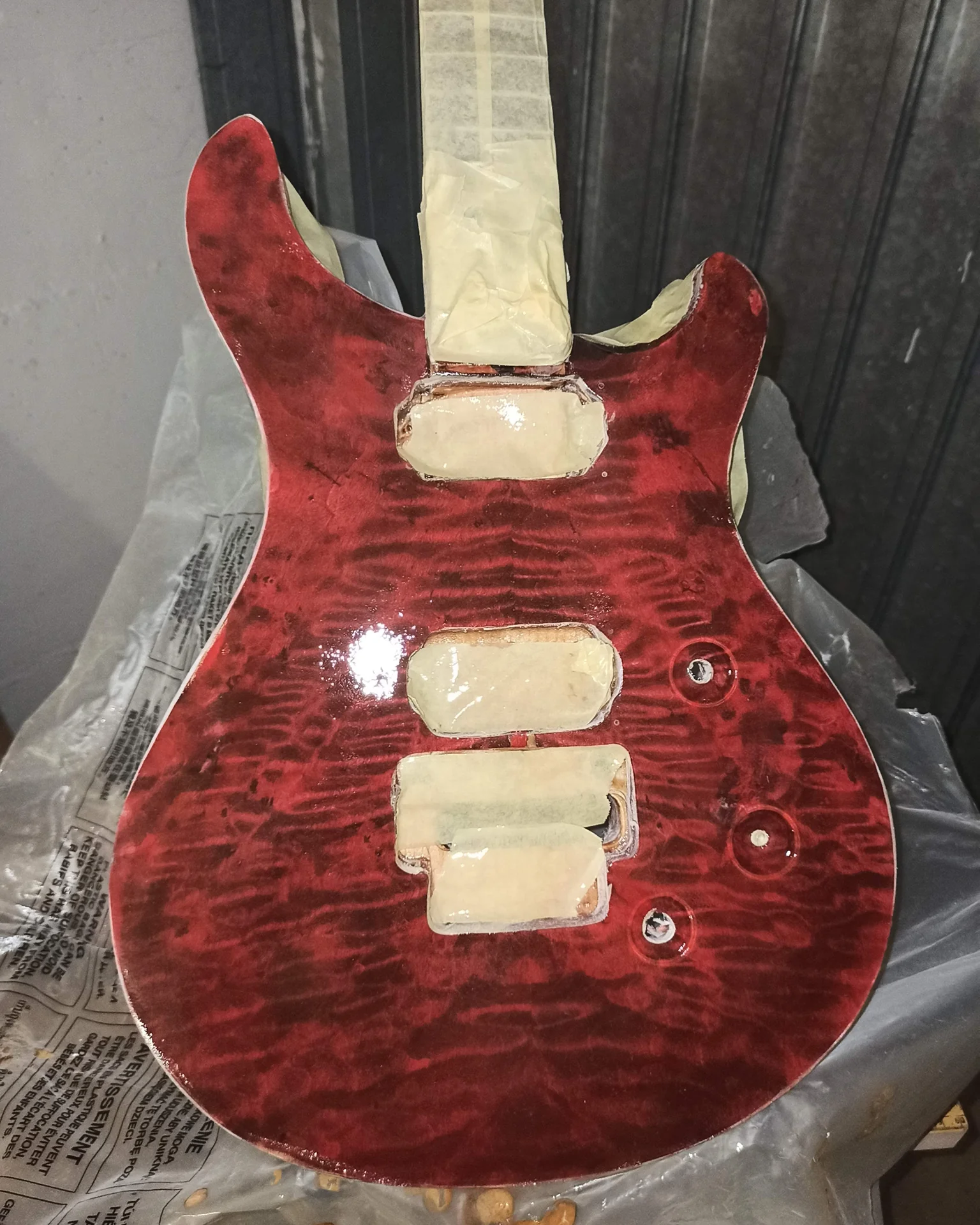
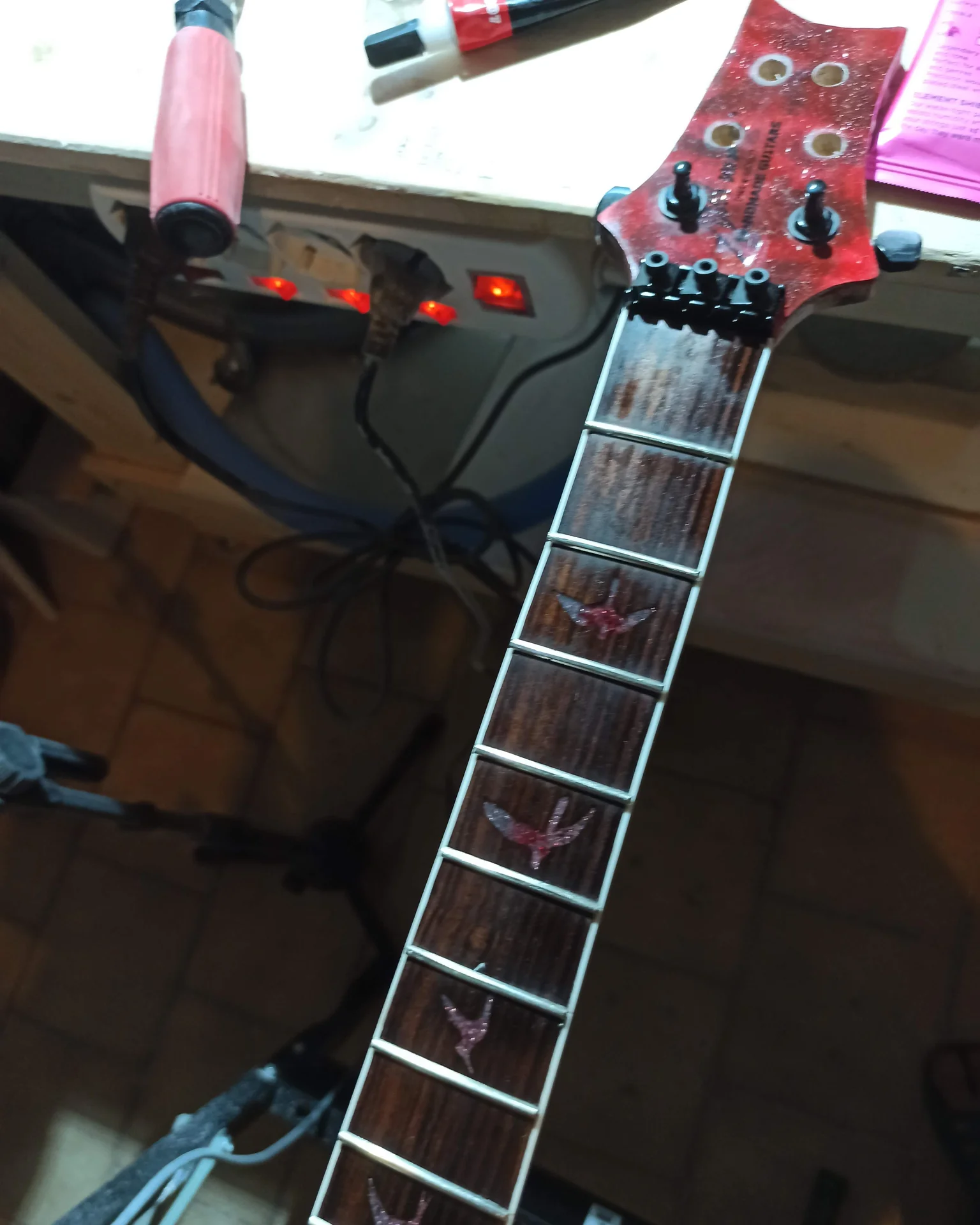
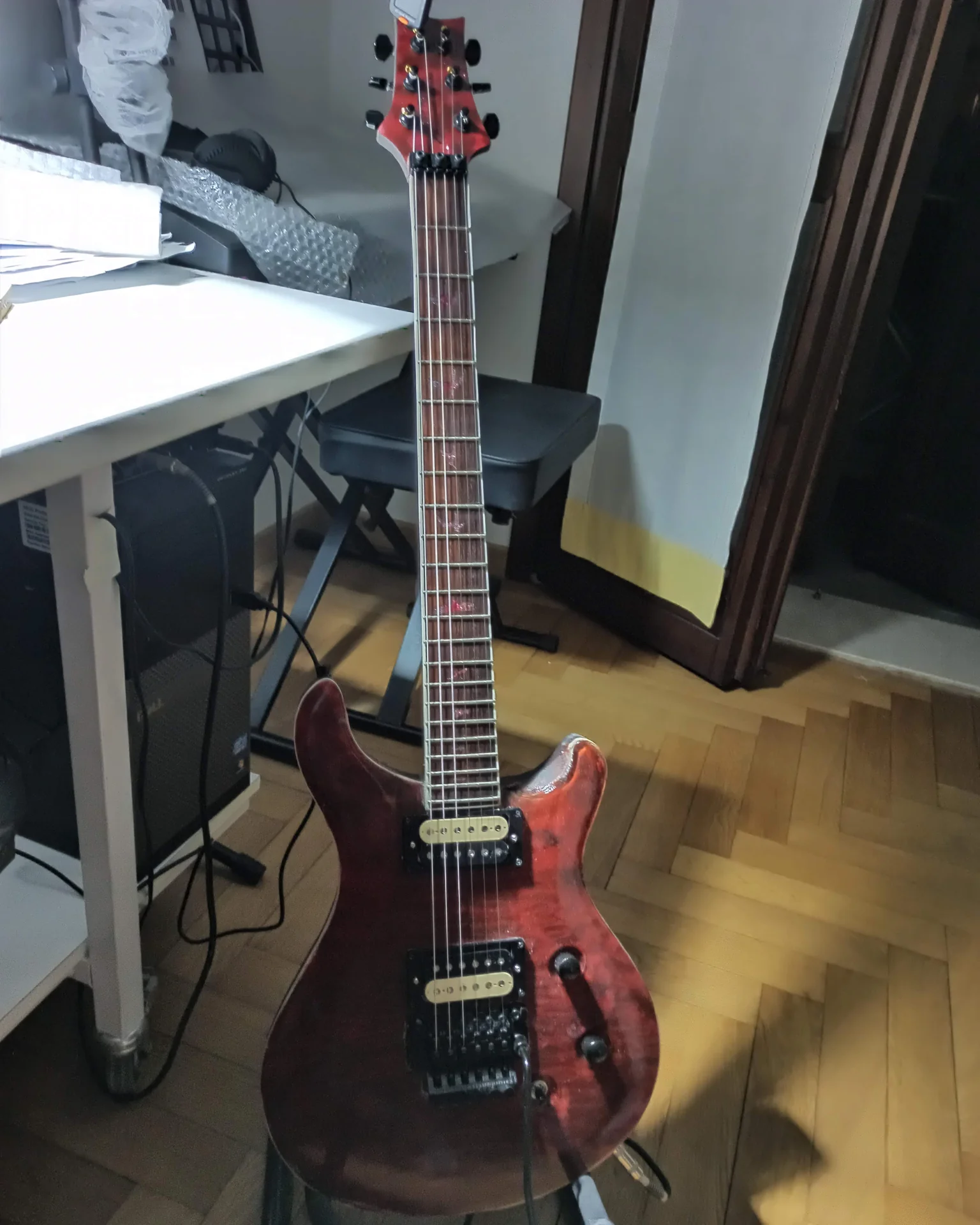
[GRIGLIA FOTO]
Let's talk first and foremost about what’s on paper, the numbers and the materials. Because, let’s face it, they are the starting point for understanding what we're talking about. And PRS, even on the SE series, doesn't skimp on details, at least on paper.
- Body: Solid mahogany. It's not the super-selected mahogany of the Core models, but it's real mahogany. This is an important point for resonance and sustain. Many models in this price range use less noble woods or heavy laminates.
- Handle: Mahogany with Wide Thin profile. This is a classic PRS. It's a neck that, despite being thin, has a width that provides comfort. Ideal for those with medium-sized hands who love a fast touch, but without feeling like they're on a highway. The fretboard is Rosewood, another classic, with PRS's famous “Birds” inlays.
- Construction: Neck-through? No, it's a set neck, the neck is glued to the body. This is a common and well-accepted compromise for this price range, and contributes to good sustain and resonance, although not at the levels of a neck-through or a well-made bolt-on neck with good contact.
- Stairs: 25 inches. Another PRS peculiarity. It's a middle ground between Gibson's 24.75 inches and Fender's 25.5 inches. This means a bit more string tension than a Gibson, but less “effort” for bends than a Fender, and a sound that positions itself in a kind of tonal “sweet spot”.
- Keys: 24. A classic for those who want to extend the sound range and have access to all notes without problems, perfect for soloists and those who love to explore.
- Pick-up: Pair of PRS SE HFS (Treble) and Vintage Bass (Neck) humbuckers. These are designed specifically for the SE series. The bridge is more aggressive, the neck warmer and rounder. They are not the American pickups, but they are designed to give an idea of the “PRS sound”.
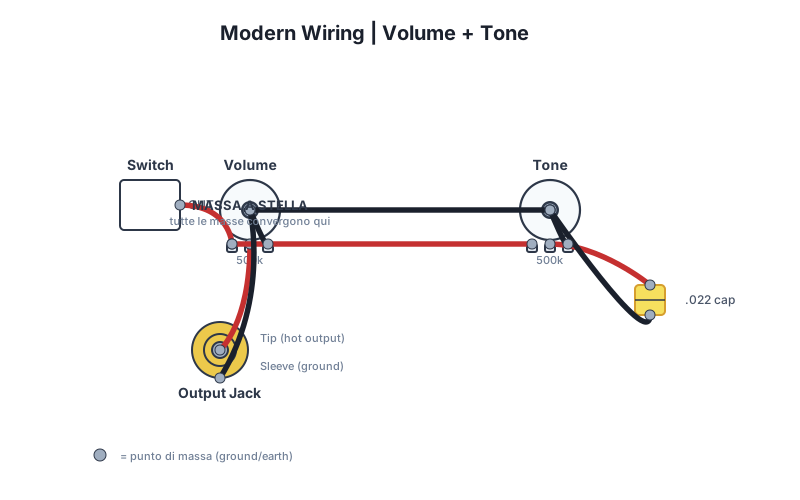
- Controls: Volume, Tone with push/pull for coil-split, 3-way selector. The push/pull is an interesting feature, allowing you to switch from humbucker to single coil, greatly expanding sonic versatility.
- Hardware: PRS Designed tremolo bridge (it's not a Floyd Rose, but it's a two-point contact vibrato-type system, very stable if set up well) and PRS Designed tuners. The hardware is PRS branded but produced in Asia, like the rest of the guitar.
- Finish: Gloss polyurethane, usually transparent or in solid colors, which clearly shows the mahogany grain (if present).
- Origin: Built in Indonesia. This is a key factor in the price.
These technical data are important. They tell us that PRS has tried to maintain the brand's distinctive characteristics—scale, neck profile, pickup types—while keeping costs down. Mahogany is a good starting point, and the set neck is a solid choice. The tremolo, while not super-Strat-style, is functional. For those accustomed to disassembling and reassembling guitars like me, these are the first things I look at. A good starting point for any future projects. changes future. For a more detailed verification of the specifications, you can consult the official website of PRS Guitars, for example, the page dedicated to SE Standard models: PRS SE Standard 24.
Popular sentiment: what do people think?


[BOX AFFILIAZIONE]
Here we get to the heart of the matter. Specifications are one thing, but the user experience is another. I've read forums, Facebook groups, and online store reviews. And the picture that emerges is... PRS SE Standard 24 It's quite consistent. It's not the perfect guitar, and no one expects that at this price, but it has its undeniable strengths and a few flaws worth knowing about.
What enthusiasts and budget-conscious buyers are saying:
The first thing that stands out is that many are surprised by the overall build quality. “For the price, it’s really well made”, is a comment often read. The finish, despite being thick polyurethane, is carefully applied and withstands daily wear well. The frets, a sore point on many mid-range guitars, are generally well-seated and finished here. Of course, don’t expect laser-level craftsmanship, but sharp edges or uneven heights are rarely found. The Wide Thin neck is another acclaimed strong point. Many find it incredibly comfortable and fast. Those coming from chunkier necks might feel disoriented at first, but then adapt quickly. Those who love speed, adore it. It’s a neck that allows you to move across the entire fretboard without tiring your hand. The 25-inch scale is appreciated for its balance: good sustain, but with string tension that makes bends softer compared to a Fender Telecaster, so to speak. Regarding the pickups, the judgment is more varied, but generally positive. The PRS SE HFS and Vintage Bass humbuckers are not Core pickups, that’s obvious. But they offer a powerful and versatile sound. The bridge HFS is nicely “nasty”, with a generous output, perfect for rock and metal. The neck Vintage Bass is warmer and rounder, great for bluesy or jazz sounds. The coil-split then adds that versatility that many appreciate for more “twangy” or crystalline sounds. “They’re not pickups to change immediately”, many say, “but if you want an upgrade, there’s room for it”. And on this, as a hobbyist, I agree. A good pickup upgrade can transform an already good guitar into something exceptional. The PRS Designed tremolo is another component that divides opinions a bit. Many find it stable and functional for moderate use. It allows for light vibratos and dive bombs without excessively detuning the guitar. However, those accustomed to a Floyd Rose or a high-quality six-screw Fender tremolo might find it a bit less responsive or precise. Tuning stability is generally good, also thanks to the PRS Designed tuners, which, despite not being locking, do their job.
The most common defects and complaints:
not all that glitters is gold, obviously. There are some points that emerge in discussions. The first, and perhaps most common, concerns the pickups. Although they are considered good for the price, many find them a bit ’ “generic” or “lacking in character” compared to high-end American pickups. Some say they lack that distinctive “flavor” that makes a sound recognizable. This is not a defect in itself, but an observation: they are honest pickups, but they won't make you shout for joy. For those looking for a more defined or specific sound, a pickup change is almost a must. Another complaint, less frequent but present, concerns the finish. Although well applied, it is a fairly thick polyurethane. This, for tone purists, can “choke’ a bit of the wood's natural resonance. For those who are not tone fanatics, it's a non-issue; in fact, it makes the guitar more durable. But if you're looking for that “vintage” feel of a nitro finish, well, you won't find it here. Finally, the hardware, while functional, is not of the highest quality. The tuners, as mentioned, are decent but not locking. The tremolo is good, but not exceptional. Some have experienced minor intonation or stability issues after intense vibrato use. For those accustomed to higher-level hardware, it might be a slight downgrade. But even here, it's a compromise for the price. As a hobbyist, I tell you, hardware is always one of the first things you can improve with a reasonable budget. In summary, the community sees the PRS SE Standard 24 as a solid, well-built guitar, with an exceptional neck for the price. The compromises are mainly found in the pickups and hardware, which are good but leave room for improvement. It's a fantastic base for those who want a reliable and versatile instrument, with the possibility of customizing it in the future.
Pros and Cons of the PRS SE Standard 24 in relation to the price
Now that we've seen the specs and the "popular sentiment", let's put everything on the scales. When evaluating a guitar, especially in this price range (which for the PRS SE Standard 24 (usually ranging between 500 and 700 euros, depending on the retailer and the offers), it is essential to understand what you are sacrificing and what you are gaining. It is not just a question of "is it good or bad", but of "is it a good deal for me?”.
PROS: The concrete advantages
1. Solid Build Quality: Despite being produced in Indonesia, the overall quality is high. I've seen guitars from renowned brands in higher price ranges with worse finish or fretwork defects. Here, attention to detail is evident. The bindings are clean, the neck/body joint is precise. This means fewer headaches and less set-up work to do right out of the box. 2. Exceptional Neck and Playability: The Wide Thin neck is a real strong point. It's fast, comfortable, and allows you to play for hours without getting tired. The 25-inch scale is an excellent balance between string tension and sustain. For those who love solos, bends, and speed, it's a joy. It's the kind of neck that makes you want to play. 3. Sound Versatility: The HFS/Vintage Bass pickups, combined with the coil-split on the tone potentiometer, offer a remarkable range of sounds. It goes from powerful humbuckers for rock/metal to more subtle and crystalline single-coil sounds. It won't be the definitive guitar for every genre, but it allows you to explore a lot of musical territories without having to change instruments. For a guitarist who doesn't have an arsenal of instruments, it's a nice advantage. 4. Iconic PRS Aesthetics: There's no denying that a PRS has its own charm. The SE series also maintains the elegant lines and “Birds” inlays that make it immediately recognizable. It's a beautiful guitar to look at, and for many, this is no small detail. It looks like a much higher-end guitar than it actually is. 5. Excellent Base for Upgrade: If you're a hobbyist like me, you know how important it is to have a good base to work on. And the PRS SE Standard 24 it is. Mahogany body, comfortable neck, good construction. If one day you want to improve the sound, just change the pickups. If you want greater stability, you can replace the tuners or the tremolo. You're not starting from scratch, but from a solid point.
CONS: Where the price is felt
1. “Generic” Pickups: As mentioned, PRS SE pickups are honest, but they lack that “character” or “personality” found in high-end pickups. The sound is competent, but sometimes it can be a bit flat or lacking in nuances. If you're looking for a very specific sound or a vintage soul, you'll probably have to modify them. 2. Thick Finish: Thick polyurethane, while offering resistance, can also be perceived as a 'stopper' for the natural resonance of the wood. For purists, this is a compromise. You won't have the feeling of wood that 'breathes' like with a nitro or oil finish. 3. Functional but Improvable Hardware: The tuners and tremolo are adequate, but do not excel. The tuners are not locking, which can affect string changing speed and stability for those who abuse the tremolo. The tremolo itself, while decent, does not have the precision or fluidity of a Floyd Rose or a Gotoh. For intensive use, you might want to replace it. 4. Case/Gig Bag: Often, to keep costs down, the guitar is sold with a rather basic gig bag, or without one. For those who need to transport the instrument safely, this means an additional cost for a hard case or a better padded gig bag. 5. It's not a PRS Core: It seems obvious, but it's an important point. Despite the aesthetics and playability recalling more expensive models, it is not a handmade American guitar with highly selected woods and boutique pickups. It's a great instrument in its price range, but don't expect it to sound or feel exactly like a three-thousand-euro Custom 24. This is fundamental for managing expectations. Ultimately, the PRS SE Standard 24 It offers truly excellent value for money for the construction and playability of the neck. The compromises are mainly in the electronics and hardware, which are good but not exceptional. For the price, it's hard to find such a well-balanced and versatile instrument, which gives you a taste of the PRS feel without breaking the bank.
Who is the PRS SE Standard 24 suitable for? Who should avoid it?
Understanding who a product is aimed at is crucial. There is no "best overall" guitar, only the one that best suits your needs, your style, and your budget. PRS SE Standard 24 It's a versatile tool, but not for everyone.
Who is it suitable for:
1. The Intermediate Guitarist Looking for an Upgrade: If you started with a cheap guitar and now want to make a leap in quality without mortgaging the house, this PRS is perfect. It offers a level of playability and build quality decidedly superior to many “entry-level” instruments. It's an investment that will accompany you for years. 2. The Versatile Musician: With its combination of powerful humbuckers and coil-splitting, this guitar is suitable for a wide range of genres: rock, blues, fusion, pop, light metal. If you play in a cover band and need to cover different sounds, the PRS SE Standard 24 will give you a hand. 3. The PRS Enthusiast on a Limited Budget: If you've always dreamed of a PRS but the Core models are out of reach, the SE series allows you to get closer to that feeling and that iconic aesthetic. It's a great opportunity to enter the PRS world without spending a fortune. 4. The Hobbyist / Modder: For someone who, like me, loves to get their hands on things, this guitar is a fantastic base. The mahogany body and comfortable neck are excellent starting points. You can easily upgrade the pickups, l’hardware and maybe even the electronics, transforming it into an almost “boutique” instrument with a still reasonable total investment. It's a great project for anyone who wants to learn how to customize their own guitar. 5. Those Looking for a Reliable "Workhorse": If you already have a high-end guitar but need a reliable second instrument for rehearsals, gigs in not-so-safe venues, or simply for experimenting, the Standard 24 is an excellent option. It's robust and performs well.
Who should avoid it:
1. The Vintage Tone Purist: If you're looking for the warm, woody sound of a Les Paul ’59 or the crystalline twang of a Telecaster ’52, this guitar, with its modern humbuckers and thick finish, might not be for you. The sound is modern and versatile, but it doesn't have that “historic” flavor. 2. Those Expecting the Feel of a Boutique Guitar: If you have already played and own handcrafted luthier instruments or Custom Shop models, the PRS SE Standard 24, although excellent, it will not give you the same luxury feeling. The materials are good, but not exceptional, and the attention to detail, although high, is not that of a craftsman who has spent weeks on your single instrument. 3. The Absolute Beginner on a Minimum Budget: If you are on your first instrument and your budget is under 300 euros, this guitar might be excessive. There are cheaper options that allow you to start learning without such a significant investment. It's better to start with something more affordable and then upgrade when you have a clearer idea of what you're looking for. 4. Tremolo Abusers (Steve Vai Style): If your style involves extreme dive bombs, flutter, and intensive use of vibrato, the PRS Designed tremolo, while stable, might not be up to the task. You might need to resort to a Floyd Rose or similar systems to achieve maximum stability and freedom of expression. 5. Those looking for an extremely specific sound: If you only play jazz and are looking for an ultra-clean and warm sound, or only extreme metal and need pickups with monstrous output and precise bass response, stock pickups might be a compromise. In these cases, you might want to look for more specialized guitars or plan for an immediate pickup change. In summary, the PRS SE Standard 24 It's a guitar for those who appreciate versatility, modern playability, and excellent build quality for the price. It's a reliable workhorse, but it's not the ultimate for those with very specific needs or experience with high-end instruments.
Final advice and alternatives for the PRS SE Standard 24
So, at the end of the day, it's worth considering a PRS SE Standard 24? My answer, from someone who has seen hundreds of guitars pass through their hands and who has learned the hard way that “perfect” doesn't exist, is a resounding yes, absolutely yes. If you are an intermediate guitarist, or even an ambitious beginner who wants to start on the right foot, or a musician looking for a reliable and versatile second instrument, this PRS offers a package that is hard to beat for its price. The playability of the neck, the build quality, and the sonic versatility make it an excellent choice. It is an instrument that allows you to grow, experiment, and, if you wish, customize. My advice is always the same: try it. Go to a store, pick it up, feel the neck, try the sounds. Listen to what it tells you. Every guitarist has different hands, different tastes. But if the feeling is right, don't let it slip away. It's a guitar that, with a few small adjustments or future upgrades (perhaps to the pickups, as many do), can become a truly faithful and high-performing instrument that will give you satisfaction for years.
Alternatives to consider:
If the PRS SE Standard 24 doesn't quite convince you, or you want to explore similar options in the same price range, here are some valid alternatives that offer different features: 1. Epiphone Les Paul Standard/Custom (Inspired by Gibson series): If you are looking for a warmer sound, a fatter neck (even if Epiphone offers different profiles) and the classic Gibson aesthetic, the Epiphone from the “Inspired by Gibson” series are an excellent choice. They have made giant strides in terms of quality in recent years. They offer remarkable sustain thanks to the set-neck construction and short scale. 2. Yamaha Pacifica 611/612: Yamaha Pacifica guitars are often underestimated, but the 600 series offers incredible value for money. They usually feature Seymour Duncan pickups (bridge Humbucker, neck and middle single coil) and quality hardware (Grover locking tuners, Wilkinson tremolo bridge). They are incredibly versatile and well-built, with a neck closer to a Fender. If you're looking for a more “strat-like” sound but with the power of a humbucker, they are worth trying. 3. Schecter Omen Extreme / Damien Elite: If your genre is more oriented towards metal or hard rock, Schecter offers guitars with an aggressive aesthetic, fast necks, 24 frets, and often high-output humbuckers (like Seymour Duncan Designed or their stock pickups). They are robust, well-built instruments designed for power. 4. Ibanez RG / S Series (Premium or Standard range): For shredders or those seeking extreme speed, Ibanez guitars are always a guarantee. Very thin necks, 24 frets, super stable tremolos (like the Edge Zero II or the DL tremolo), and powerful pickups. They offer ergonomics and playability designed for technique. 5. Sterling by Music Man Cutlass/StingRay: These are the budget versions of Music Man guitars. They offer excellent build quality, comfortable necks, and remarkable sonic versatility, often with humbucker/single-coil pickups and two-point tremolos. They are modern and very reliable instruments.
Each guitar has its own voice and feeling. PRS SE Standard 24 It's positioned as an excellent all-rounder, with an elegant soul and above-average playability. But if after trying it you feel like something's missing, or that a different aesthetic or configuration appeals more, there's no shortage of alternatives. The important thing is to find the instrument that inspires you to play the most. And, believe me, as a hobbyist, I can tell you that there's nothing better than finding the right guitar.
FAQ
Is the PRS SE Standard 24 suitable for an absolute beginner?
If the budget allows and the beginner is serious and motivated, it can be an excellent choice to avoid future upgrades. However, for those who are just starting out and have a very limited budget, cheaper instruments might be more suitable to begin with, and then move on to a model like this once their preferences are better defined.
Is it worth changing the pickups on the PRS SE Standard 24?
Many guitarists consider stock pickups honest but not exceptional. Replacing them with pickups from more renowned brands or specific to one's genre can significantly elevate the guitar's sound, transforming it into a truly performing instrument. It's one of the most common and recommended modifications for those looking for that “something extra”.
Download the Luthier Survival Kit
Free PDF with checklist, problem-cause table and project card template.
 English
  Italiano
Stuck on your build?
If you ran into the same problem or have a question, drop it in the comments. I read and reply to every one.
Write a comment