

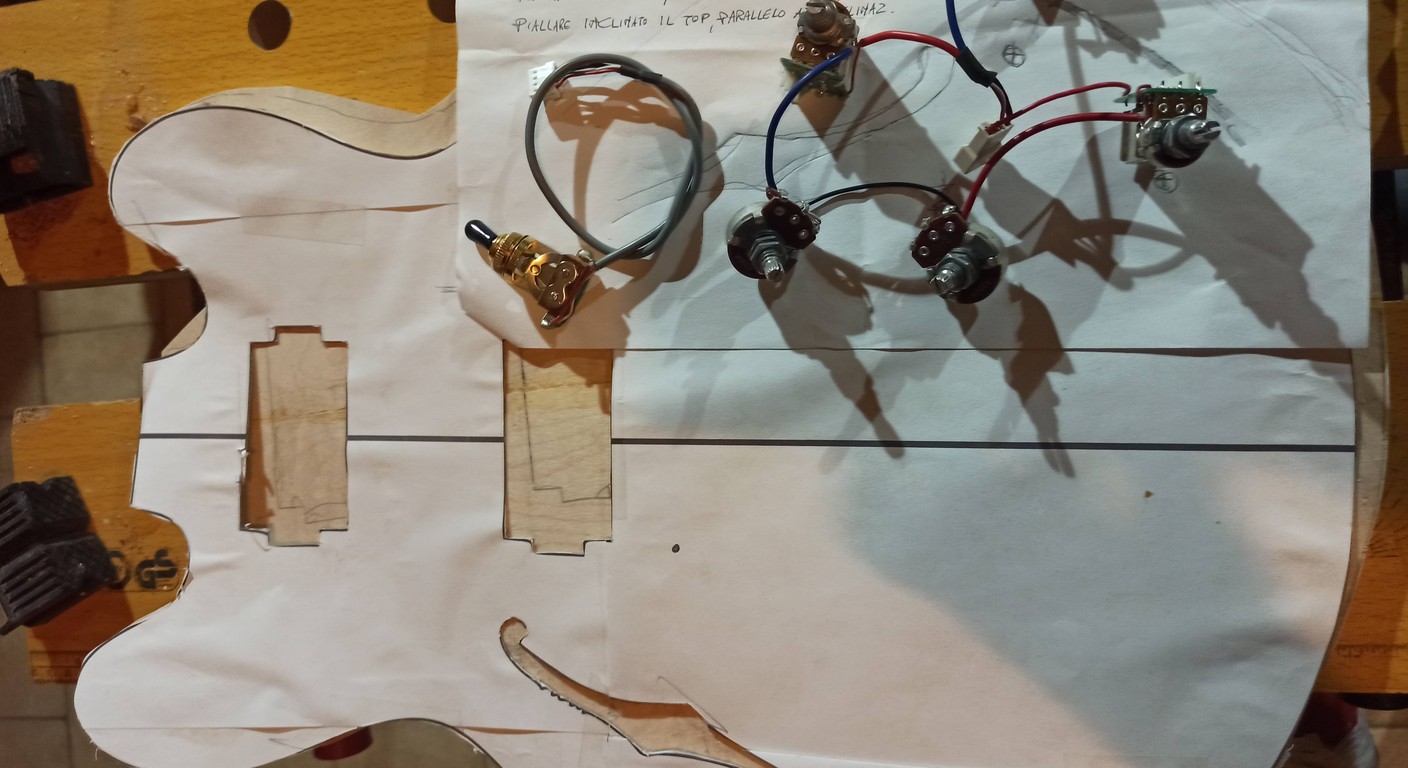
Single Coil vs Humbucker: Quick Wiring Diagram
nnHow many times have you found yourself in front of a new pickup, maybe a nice one? single coil flaming or a humbuckers sturdy, and you asked yourself: “Okay, what now? How do I attach it?” It's a classic scene in the garage of anyone who dabbles with guitars, I've been there more times than I'd like to admit. The first time I opened the cavity of my Stratocaster, it felt like I was looking at a tangle of electrical worms. Don't be scared: the electronics of the guitar It's simpler than it seems. I'm not an electrician, nor a professional luthier. I'm someone who, like you, learned through trial and error, through poorly made and redone soldering, through reading and reinterpreting schematics. The goal here isn't to make you a circuit guru, but to give you the tools to understand. Why certain things connect in a certain way and as farlo senza farti venire un esaurimento nervoso. Se ci sono riuscito io, con un saldatore da pochi euro e tanta pazienza, puoi farcela benissimo anche tu.nnIn questo articolo, ti guido attraverso il cuore dell’elettronica della chitarra, concentrandoci sulle differenze tra i pickup a bobina singola e quelli a doppia bobina, e come cablarli. Non solo ti mostrerò lo schema, ma ti spiegherò il “perché” dietro ogni connessione. Preparati, si parte!
The Heart of the Difference: Single Coils and Humbuckers
n
n n
n
nn See on Amazonn
n
nnnPrima di mettere mano al saldatore, capiamo cosa abbiamo tra le mani. La scelta tra un single coil pickup and a humbuckers non è solo una questione di suono, ma anche di funzionamento e, di conseguenza, di cablaggio. Sono due filosofie diverse per catturare le vibrazioni delle corde.
The Single Coil: Brilliance and Character
nnImmagina una bobina di filo di rame avvolta intorno a dei magneti. Ecco, quello è un pickup a bobina singola. Il concetto è semplice: le corde metalliche vibrano nel campo magnetico creato dai magneti del pickup, e questa vibrazione induce una piccola corrente elettrica nel filo della bobina. Questa corrente è il segnale audio che poi arriva all’amplificatore.nnIl suono tipico di un pickup di questo tipo è brillante, cristallino, con una grande definizione. Pensa al “twang” di una Telecaster o al suono vetroso di una Stratocaster. Hanno un carattere unico, inconfondibile.nnC’è un rovescio della medaglia, però. Essendo una singola bobina, sono molto sensibili alle interferenze elettromagnetiche esterne. Tradotto: fanno rumore. Quel ronzio di fondo, il famigerato “hum” a 50/60 Hz, è il loro tallone d’Achille. È il prezzo da pagare per quella brillantezza.
The Humbucker: Power and Silence
nnL’humbucker è nato proprio per risolvere il problema del ronzio. Il nome stesso, “hum-bucker”, significa “che elimina il ronzio”. Come funziona? Invece di una, ci sono due bobine. Ma non è solo questo il trucco. Le due bobine sono avvolte in direzioni opposte e i loro magneti hanno polarità invertite.nnQuando le vibrazioni delle corde colpiscono le due bobine, i segnali che generano sono in fase tra loro. Ma quando il rumore esterno (il ronzio) colpisce le bobine, per via dell’avvolgimento e della polarità opposta, i segnali di rumore sono fuori fase e si cancellano a vicenda. È un trucco geniale, ideato da Seth Lover per Gibson negli anni ’50.nnIl risultato sonoro è diverso: gli humbucker tendono ad avere un output più elevato, un suono più caldo, più corposo, con meno alti taglienti e più medi. Sono perfetti per generi che richiedono sustain e una certa “grinta”, come il rock o il metal. Il loro cablaggio è un po’ più complesso, visto che ci sono due bobine da gestire, ma niente di impossibile.
The Circuit's Main Characters: Potentiometers, Capacitors, and Switches
nnPrima di lanciarci nel cablaggio vero e proprio, facciamo un ripasso veloce dei componenti che troveremo nel cavity della chitarra. Capire il loro ruolo è fondamentale per non saldare a caso. Questi sono i nostri “attori non protagonisti” ma indispensabili.
Potentiometers (Pots): Volume and Tone
nnSono quelle piccole manopole che controllano il volume e il tono. Tecnicamente, sono resistenze variabili.
Volume: Controls the amount of signal coming from the amplifier. Typically, one terminal is connected to the input signal, one to the output signal (the jack), and the third to ground. By turning the knob, you vary the resistance and therefore the volume. Tone: Lavora in combinazione con un condensatore. Non riduce il volume, ma taglia le frequenze alte, rendendo il suono più “scuro” o “morbido”.nnI valori più comuni sono 250kΩ (kilo-ohm) e 500kΩ.
250kΩ: Typical for single-coil pickups. They offer a warmer sound and slightly dampen the highs, which can help tame their natural brightness. I've used them on a couple of Stratocasters I've built, and the difference is tangible. 500kΩ: Spesso usati con gli humbucker. Permettono di far passare più alte frequenze, mantenendo la chiarezza del suono che altrimenti potrebbe risultare troppo scuro o “fangoso” con potenziometri da 250k.nnEsistono anche potenziometri da 1MΩ (mega-ohm) per chi cerca la massima brillantezza, o valori più bassi (ad esempio 300k) per un compromesso. La scelta non è scolpita nella pietra, ma una buona regola generale è: 250k per single coil, 500k per humbucker.
Capacitors: The Heart of Tone
nnI condensatori sono piccoli componenti che accumulano e rilasciano carica elettrica. Nel circuito tono della chitarra, agiscono come un “filtro”. Quando abbassi la manopola del tono, il condensatore devia una parte delle frequenze alte verso massa, rimuovendole dal segnale audio.nnI valori più comuni sono 0.022µF (micro-Farad) e 0.047µF.
0.022µF: Common with humbuckers. They remove a certain amount of high frequencies that suits their already warm sound well, without making it too dark. 0.047µF: Spesso usati con i pickup a bobina singola. Tendono a tagliare più alte frequenze, il che può essere utile per ottenere suoni più morbidi o jazzati dai single coil, che di natura sono molto brillanti.nnAnche qui, la sperimentazione è la chiave. Ho provato condensatori di diversi valori e materiali (ceramici, a film di poliestere, “orange drop”) e ti assicuro che, pur essendo sottili, le differenze ci sono. Non aspettarti stravolgimenti, ma piccole sfumature che possono fare la differenza nel mix. La cosa importante è iniziare con i valori standard e poi, se vuoi, giocare un po’.
Switches: Selectors and Versatility
nnGli switch servono a selezionare quali pickup sono attivi. Le chitarre elettriche ne usano diversi tipi:
3-way toggle switch: Typical of Les Paul-style guitars. Allows you to select the neck pickup, the bridge pickup, or both. 5-way blade switch: Standard on Stratocaster-style guitars. Offers five positions: neck, neck+middle, middle, middle+bridge, bridge. Push-pull/Push-push pots: These are potentiometers that integrate a switch. By pulling or pushing the knob, an additional function is activated, such as coil splitting (trasformare un humbucker in un single coil) o la messa in serie/parallelo delle bobine. Sono un ottimo modo per aggiungere versatilità senza forare il body della chitarra. Ne ho montato uno sulla mia Squier modificata, e ha cambiato completamente il carattere del pickup al ponte.
The Output Jack: The Gateway to Sound
nnIl jack è la connessione finale, quella che porta il segnale dalla chitarra all’amplificatore. Ha due terminali: uno per il segnale (tip) e uno per la massa (sleeve). Assicurati di saldarli correttamente, altrimenti addio suono!
The Ground: The Forgotten Fundamental
nnQuesto è forse l’aspetto più critico e spesso sottovalutato. Tutte le parti metalliche della chitarra (ponte, corde, schermatura del cavity, corpi dei potenziometri) e tutti i terminali “negativi” dei componenti devono essere collegati tra loro e poi al terminale “sleeve” del jack. Una buona messa a terra è essenziale per ridurre il rumore e garantire che tutto funzioni correttamente. Una massa fatta male è la causa numero uno di ronzii e problemi di segnale. Ho passato ore a cercare un ronzio fastidioso solo per scoprire che un filo di massa si era allentato!
Basic Wiring: Single Coil
nnOra che abbiamo chiaro chi fa cosa, vediamo come mettere insieme un circuito base con i pickup a bobina singola. Questo è lo schema più comune per una chitarra con tre single coil, un volume e due toni, tipo Stratocaster.
Materials you need:
Soldering iron (with clean tip!) Electronic solder (preferably lead-free for health reasons, but 60/40 is easier to work with) Fine electrical wire (22-24 AWG, stranded) Long-nose pliers, wire cutters Screwdriver A multimeter (not essential, but useful for testing continuity) A piece of cardboard or wood to support the components while solderingPreparation:
1. Disconnect the guitar: Unplug everything from the amplifier. It seems trivial, but I don't want you to get shocked or burn anything. 2. Remove the pickguard: If the pickups and electronics are mounted on the pickguard, unscrew all the screws and gently lift the pickguard.n3. Organize the wires: Ogni pickup single coil avrà due fili: uno caldo (segnale) e uno freddo (massa). Identificali. Solitamente il caldo è nero o bianco, il freddo è nudo o verde. Se non sei sicuro, controlla le specifiche del produttore del pickup.
Conceptual Schematic (Three Single Coils, 1 Volume, 2 Tones, 5-way Switch):nnNon pensare a un diagramma intricato con mille linee. Pensiamo al flusso del segnale.
1. The Pickups and the Switch:n Each pickup has its own hot wire that goes to a specific terminal on the 5-way switch. The switch positions determine which pickup (or combination of pickups) sends the signal. The ground wires of all the pickups should be connected together and then to ground (usually on the back of a potentiometer).n2. From Switch to Volume:n The output terminal of the switch (the one that changes depending on the chosen position) connects to the input terminal of the volume potentiometer (usually the central one or one of the lateral ones, depending on the type of pot).n3. The Volume Potentiometer:n The signal from the pickup arrives at a terminal.n The center terminal is the one that goes to the output jack.n The other side terminal of the volume potentiometer must be connected to ground. This is important for the correct operation of the volume control.n4. The Tone Potentiometers:n Each tone pot takes its signal from one or more pickups (or a switch section). For example, the first tone can control the neck and middle pickups, while the second tone can control the bridge pickup. The hot wire from the pickup (or switch section) goes to one terminal on the tone pot. The center terminal of the tone potentiometer should be connected to a capacitor. The other terminal of the tone potentiometer goes to ground.n5. The Tone Capacitors:n One terminal of the capacitor connects to the center terminal of the tone potentiometer. The other terminal of the capacitor goes to ground.n6. The Output Jack:n The “tip” terminal of the jack connects to the center terminal of the volume pot. Il terminale “sleeve” del jack si collega a massa.
Welding Tips:
Clean tip: A dirty tip won't solder well. Clean it with a damp sponge or steel wool. Heat the component, not the solder: Place the tip of the soldering iron on the component (e.g., the potentiometer terminal) for a couple of seconds, then touch the component with the solder. The solder should melt on the hot component, not on the tip of the soldering iron. “Bright” welds: A good weld is shiny and smooth, cone-shaped. A "cold" weld is dull and lumpy, and will cause problems. If this happens, do it again! Garage Patience: Don't rush. Each solder requires attention. If you're shaking, take a break. I remember the first time I soldered a jack: I had to redo the solder three times because it kept coming loose. Here's a helpful external link to a more specific diagram for a standard Stratocaster, which can give you a clear visual idea: Seymour Duncan Wiring Diagrams. Non copiare a pappagallo, ma usalo come riferimento per capire il percorso.
Basic Wiring: Humbucker
Let's now move on to the double coil pickups. The wiring of the humbuckers It's a bit more complicated than single coils, mainly because each humbucker has two coils and therefore more wires. Most modern humbuckers have 4 conductors plus ground, which offers more wiring options (such as the coil splitting).
Extra material (if you want to do coil splitting):
Potenziometri push-pull o push-push.
Identifying Humbucker Wires:This is the crucial point. Each manufacturer has its own color code, so Always check the diagram that comes with your specific pickup! Non fare affidamento sulla memoria o su schemi generici.nnTuttavia, ecco una guida comune per i 4 conduttori + massa:
Coil 1 (Start/Finish): Usually a “hot” wire (e.g. green or black) and a “cold” wire (e.g. white or red).n Coil 2 (Start/Finish): Two more wires, which connect to form the series or parallel.n Mass/Shielding: Un filo nudo o di un colore specifico (es. nero). Questo è il cavo di schermatura del pickup e va sempre a massa.
Example (Seymour Duncan):
Green: Start Coil 1 (Goes to ground in standard configuration) Red: Finish Coil 1 (Connection point between coils) White: Start Coil 2 (Connection point between coils) Black: Finish Coil 2 (Hot Signal)n Nudo: MassannIn una configurazione standard, i fili rosso e bianco vengono saldati insieme e isolati (questa è la connessione in serie delle due bobine). Il filo verde va a massa con il nudo, e il nero è il segnale caldo.
Conceptual Diagram (Two Humbuckers, 2 Volumes, 2 Tones, 3-way Toggle Switch):nnQuesto è lo schema classico delle chitarre stile Les Paul.
1. The Pickups and the Switch:n For each humbucker:n Identify the four wires and the ground. For a standard series wiring (the most common), solder the two center wires together (e.g. red and white for Seymour Duncan) and insulate them with heat shrink or electrical tape. The final “hot” wire (e.g. black for SD) is the signal that goes to the switch.n The “cold” wire (e.g. green for SD) and the bare ground wire must be connected together to ground. The 3-Way Switch:n The “hot” signal from the neck pickup goes to one terminal of the switch.n The “hot” signal from the bridge pickup goes to another terminal of the switch.n The output terminal of the switch (the one that sends the selected signal) goes to circuit n2. Individual Volume Potentiometers:n Each humbucker will have its own volume pot.n The “hot” signal from the pickup (or its output wire, after connecting the coils in series) goes to the input terminal of the volume pot (e.g. the left side terminal). The center terminal of the volume potentiometer goes to the input terminal of the corresponding tone potentiometer. The other side terminal of the volume potentiometer goes to ground.n3. The Individual Tone Potentiometers:n Each tone pot is connected to its own volume pot.n The signal from the center terminal of the volume potentiometer goes to one terminal of the tone potentiometer. The center terminal of the tone potentiometer should be connected to a capacitor. The other terminal of the tone potentiometer goes to ground.n4. The Tone Capacitors:n One terminal of the capacitor connects to the center terminal of the tone potentiometer. The other terminal of the capacitor goes to ground.n5. From Volume/Tone to Switch (and then to Jack):n The “hot” signal from the neck pickup volume pot goes to the “neck” terminal of the 3-way switch. The “hot” signal from the bridge pickup volume pot goes to the “bridge” terminal of the 3-way switch. The switch output terminal connects to the “tip” terminal of the output jack.n6. The Output Jack:n The “tip” terminal of the jack connects to the output of the switch.n Il terminale “sleeve” del jack si collega a massa.
Personal anecdote: La prima volta che ho saldato un humbucker, mi sono confuso con i colori dei fili e ho invertito la fase di una bobina. Il risultato era un suono debolissimo e sottile, quasi “nasale”. Ho dovuto disfare tutto e rifare, controllando con il multimetro la continuità e la fase. È un errore comune, non preoccuparti!
Coil Splitting: A Humbucker That Sounds Like a Single Coil
nnQuesta è una modifica che offre molta versatilità. Permette di “spegnere” una delle due bobine di un humbucker, facendolo suonare (quasi) come un single coil. Ottieni il meglio dei due mondi: la potenza dell’humbucker e la brillantezza del single coil, anche se con un output inferiore e un po’ di rumore in più, visto che hai disattivato la cancellazione di fase.
How to do it:nnDi solito, si usa un potenziometro push-pull.
1. I due fili che collegano le bobine dell’humbucker (es. rosso e bianco per SD) vengono saldati insieme e poi collegati a un terminale dello switch push-pull.n2. L’altro terminale dello switch push-pull viene collegato a massa.nnQuando lo switch è in una posizione, le bobine sono in serie (humbucker). Quando lo si tira (o spinge), il circuito si chiude a massa su una bobina, disattivandola e lasciando attiva solo l’altra, trasformando il pickup in un single coil. È una modifica relativamente semplice ma molto efficace per espandere la tua tavolozza sonora. Ho montato un push-pull su un vecchio Epiphone Les Paul e ha dato una seconda vita a quella chitarra, rendendola molto più adatta a generi diversi.
Beyond the Basics: Mix and Match
nnUna volta che hai preso confidenza con i cablaggi base, il mondo delle modifiche si apre. Molti chitarristi amano mescolare i tipi di pickup per ottenere suoni unici.
Hybrid Configurations: HSS, HSH
nnLe configurazioni HSS (Humbucker-Single-Single) o HSH (Humbucker-Single-Humbucker) sono molto popolari perché offrono una vasta gamma di suoni. Per esempio, una Stratocaster HSS ti dà il crunch di un humbucker al ponte per i riff più pesanti, e la chiarezza dei single coil al centro e al manico per i suoni più puliti.
What changes in the wiring?
Potentiometers: Here you have to make a choice. Single coils prefer 250kW, humbuckers 500kW. In a mixed setup, a compromise is often found, such as 500kW for all pots, accepting that the single coils might be a little brighter than usual, or using separate volume/tone pots based on the pickup. Another solution is to use a 500k master volume pot and 250k tone pots for the single coils and 500k for the humbucker, if the layout allows it. This is a field of experimentation. Switching: 5-way switches are designed for SSS or HSS configurations. If you have an HSH, you may need a more complex switch, such as a 4-pole 5-way superswitch, to handle all the desired combinations (e.g., automatic coil splitting in certain positions). Phase: Quando si mescolano pickup di marche o modelli diversi, c’è sempre la possibilità che siano “fuori fase”. Se due pickup sono attivi contemporaneamente e sono fuori fase, il suono risulterà sottile, debole e nasale. Questo succede perché le onde sonore si cancellano a vicenda. Per risolvere, devi invertire i fili caldi e freddi di uno dei due pickup. È un classico problema da “ah, ecco perché suona strano!”.
Advanced Modifications: Series/Parallel, Phase Switch
Series/Parallel: Normally, the two coils of a humbucker are wired in series. This provides maximum output. Wiring them in parallel reduces the output but offers a brighter, more open sound, almost like a single coil but without the hum. This can be done with a push-pull switch or a mini-toggle. Phase Switch: Uno switch che inverte la fase di un pickup rispetto all’altro. Se attivi due pickup e uno è fuori fase, ottieni quel suono “thin” e “quacky”. È un effetto che alcuni usano creativamente, ma non è per tutti.nnQueste modifiche aggiungono strati di complessità, ma anche di versatilità. Per chi ama smanettare, sono un campo di gioco fantastico. Ricorda sempre di fare un passo alla volta e di testare ogni modifica prima di richiudere tutto.
Garage Troubleshooting: When Something Won't Sound
nnOk, hai saldato tutto, hai richiuso il battipenna, hai attaccato la chitarra all’ampli… e non suona nulla. Oppure suona male. Non farti prendere dal panico! È successo a tutti, me compreso. La prima chitarra che ho modificato ha passato una settimana con un ronzio infernale prima che trovassi il problema.nnEcco una checklist rapida per i problemi più comuni:
1. No Sound:n Cable: Is the guitar-amp cable working? Try another one. Amplifier: Is the amplifier turned on and working? Output jack: Are the wires soldered correctly to the jack? Are the “tip” (signal) and “sleeve” (ground) terminals in place? Sometimes they touch, sending the signal to ground. Volume: Is the volume potentiometer at zero? Is it soldered correctly? If the ground wire on the volume potentiometer is loose, you may not get any sound. Cold welds: Check all the welds. A dull, lumpy, or easily peeling weld is a cold weld. Redo it. Wires detached: Did a wire come loose from a potentiometer or switch? Switch: Lo switch è saldato correttamente e fa contatto?
2. Weak or Thin Sound (Out of Phase):n This is a classic symptom of pickups being out of phase, especially when two pickups are active at the same time. If you've mixed different brands or types, check the hot/cold wires on one of the pickups and try swapping them. Remember: swap both i fili (segnale e massa) di un pickup, non solo uno!
3. Excessive Hum (Hum):n Single Coil: If you have single coils, some hum is normal. If it's excessive: Mass: Check all ground connections. Are they all soldered securely? Is the bridge grounded? Are the cavity shields grounded? Shielding: Is the cavity properly shielded with conductive paint or copper/aluminum foil? If not, do so. It makes a huge difference. Interferences: Are you playing near fluorescent lights, monitors, or transformers? Move away and see if it improves. Humbucker: Se un humbucker ronza come un single coil, quasi certamente hai un problema di cablaggio. Controlla che le due bobine siano collegate correttamente in serie e che i fili di massa siano saldati bene. Potrebbe esserci una bobina scollegata.
4. Tone/Volume Controls Not Working:n Potentiometers: Check the solder connections on the potentiometer. Is the ground wire connected? Capacitor: Per il tono, il condensatore è saldato correttamente tra il potenziometro del tono e massa? Se è staccato o danneggiato, il controllo del tono non funzionerà.
A garage trick:nnQuando hai un problema di ronzio o mancanza di suono, prendi un pezzo di filo e toccalo su vari punti del circuito (con l’ampli acceso a basso volume). Se tocchi un punto di massa e il ronzio diminuisce, hai trovato una massa che non sta facendo il suo lavoro. Se tocchi un punto di segnale e senti un “pop” nell’ampli, sai che il segnale arriva fino a lì. Questo ti aiuta a isolare il punto del problema.nnRicorda, la pazienza è la tua migliore amica in queste situazioni. Non affrettarti, controlla ogni saldatura e ogni connessione. Spesso il problema è una cosa banale che si è staccata o è stata saldata male.
Conclusion: Your Sound, Your Hands
Here we are at the end of this journey into the electric heart of the guitar. We have seen that the choice between single coil pickups and humbuckers It's not just a matter of sound, but also of understanding how they work and how to wire them. It's not magic, it's basic physics and a bit of manual skill. I hope this guide has taken away some of the fear that sometimes stops us when it comes to opening the guitar and getting to grips with the electronics. The secret, I repeat, is patience and the desire to learn from mistakes. I burned a potentiometer the first time I tried to do it.
