

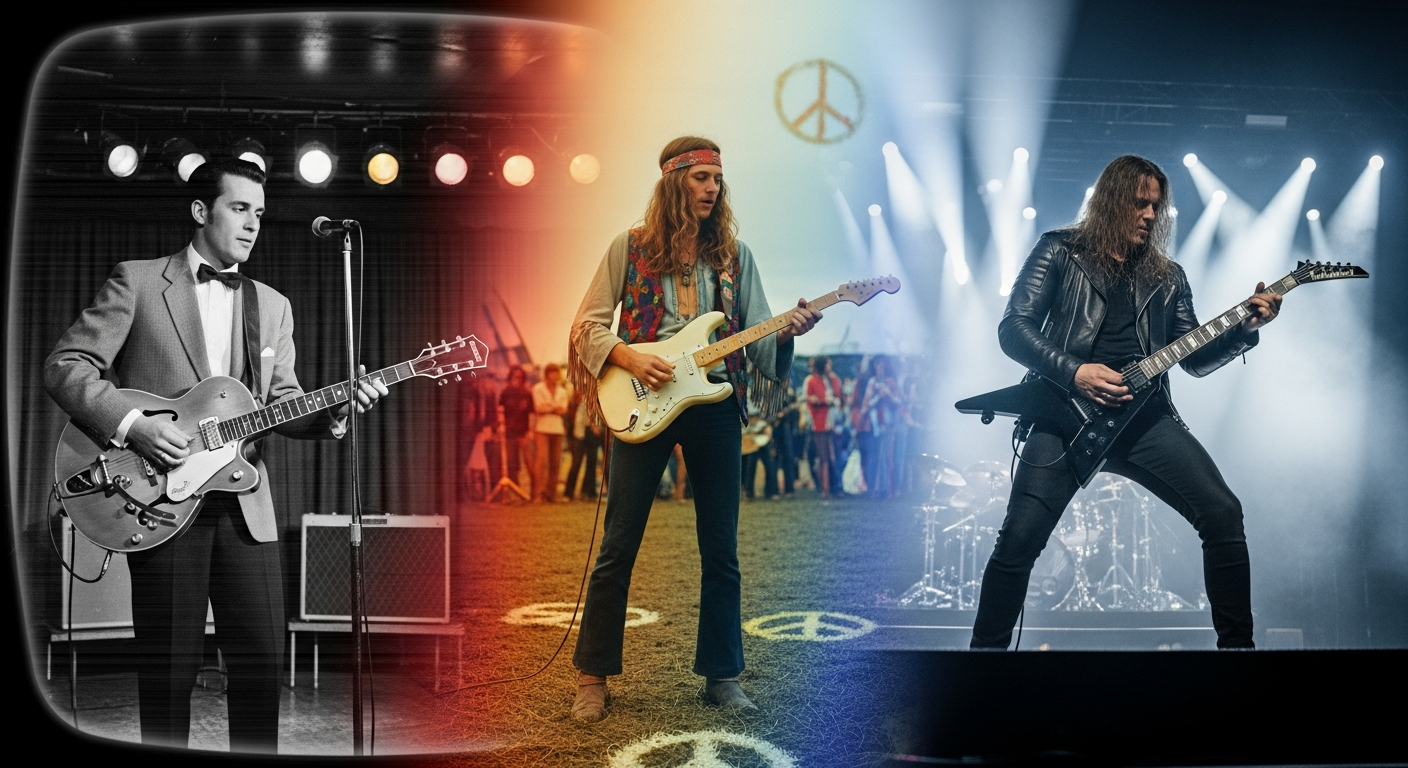
Vintage Guitars: History and Iconic Models
There is a strange, almost magnetic charm in vintage guitars. We're not just talking about collector's items worth as much as an apartment, but about those instruments that have defined an era, a sound, a way of playing. For those of us who get our hands dirty in the garage, understanding what was behind those glories of the past isn't just a historical curiosity. It's a way to understand why certain sounds have become legendary and how we can try to replicate them—or at least draw inspiration from them—with our own DIY projects.When I pick up an old axe, even a well-made reissue, I feel a bit of that history. I'm not a millionaire collector, but I've had the opportunity to get my hands on some interesting examples, and every time I ask myself: "What was the designer thinking? And whoever played it first, what effect would it have had?" It's a journey through time, and today I'm taking you with me.
L’alba dell’elettrica: Dalle hawaiian al rock’n’roll
Prima che il rock’n’roll esplodesse, la chitarra elettrica era già una realtà, anche se molto diversa da come la conosciamo. Negli anni ’20 e ’30, le orchestre di big band e i gruppi hawaiani avevano bisogno di strumenti più forti per competere con i fiati e le percussioni. Le chitarre acustiche semplicemente non ce la facevano. Fu qui che l’ingegno americano si mise in moto. I primi esperimenti con microfoni attaccati alla cassa non funzionavano bene, dando un suono debole e pieno di feedback. La soluzione arrivò con i pickup elettromagnetici, capaci di captare direttamente la vibrazione delle corde. Uno dei primi a brevettare una chitarra elettrica “solid body” – ovvero senza cassa di risonanza – fu George Beauchamp di Rickenbacker. Il suo modello A-22, soprannominato “Frying Pan” (padella) per la sua forma, debuttò nel 1931. Era una lap steel, pensata per essere suonata in orizzontale, e il suo suono era rivoluzionario per l’epoca. Gibson, dal canto suo, rispose nel 1936 con la ES-150. “ES” stava per “Electric Spanish”, indicando una chitarra pensata per essere suonata in posizione tradizionale. Era una semi-acustica, con pickup Charlie Christian, e fu la prima chitarra elettrica a raggiungere un successo commerciale significativo. Non era ancora il rock che conosciamo, ma il blues e il jazz iniziarono a sperimentare con questi nuovi suoni. Charlie Christian stesso, con il suo stile innovativo, dimostrò il potenziale espressivo della chitarra elettrificata. C’è un aneddoto famoso su Les Paul, che all’epoca si chiamava ancora Lester Polsfuss. Frustrato dal feedback delle chitarre hollow body, nel 1941 costruì “The Log”: un pezzo di legno massiccio di 4×4 pollici, con due ali di chitarra acustica attaccate ai lati solo per l’estetica. Era un prototipo rudimentale, ma dimostrava un concetto fondamentale: per un suono pulito e potente, il solid body era la strada. Questi primi esperimenti gettarono le basi per tutto quello che sarebbe venuto dopo. Capire come i pickup funzionano, come i legni reagiscono e come il design influisce sul sustain e sul tono, sono lezioni che imparo ogni volta che mi trovo a modify a guitar moderna. Le fondamenta erano già tutte lì.Fender e la rivoluzione del bolt-on: Semplice, efficace, iconica
La storia di Fender è la storia di un uomo, Leo Fender, che non suonava la chitarra ma era un genio dell’elettronica e un risolutore di problemi pragmatico. La sua visione era creare strumenti facili da produrre, da riparare e da suonare, con un suono forte e distinto. Nel 1950, Fender lanciò la Broadcaster, che poco dopo divenne la Telecaster. Era una chitarra radicale per l’epoca: un corpo solido in frassino o ontano, un manico in acero avvitato (bolt-on) e due pickup single-coil. La sua semplicità era la sua forza. Il manico bolt-on, in particolare, era una scelta rivoluzionaria. Permetteva una produzione più economica e una facile sostituzione in caso di danni o per modifiche. “Se si rompe, ne metti un altro”, sembrava dire Leo. Questa modularità è qualcosa che ancora oggi apprezziamo nel fai da te. La Fender Telecaster offriva un suono brillante, quasi metallico, con un “twang” inconfondibile che la rese subito la preferita dei chitarristi country e rockabilly. Era robusta, affidabile e tagliava il mix come nessun’altra. Ma il capolavoro di Leo arrivò nel 1954: la Stratocaster. Progettata con input di chitarristi reali, la Strat aveva un corpo più sagomato, ergonomico, e tre pickup single-coil. Questo permetteva una varietà di suoni mai sentita prima, grazie anche al selettore a 3 posizioni (che i chitarristi presto modificarono a 5). Il sistema di vibrato sincronizzato della Stratocaster, spesso chiamato “tremolo” (anche se tecnicamente è un vibrato), fu un’altra innovazione incredibile. Permetteva di abbassare l’intonazione delle corde in modo fluido, aprendo nuove possibilità espressive. Le prime Fender Stratocaster avevano un suono scintillante, vetroso, con un sustain notevole per un single-coil. Divenne la voce del surf rock, del blues di Chicago e, più tardi, del rock psichedelico e dell’hard rock. Eric Clapton, Jimi Hendrix, David Gilmour: la lista di leggende che l’hanno imbracciata è infinita. Le specifiche di base delle Strat e Tele vintage – scala da 25.5 pollici, raggio della tastiera da 7.25 pollici, legni come frassino o ontano per il corpo e acero per il manico – definirono uno standard. Nelle mie mani, una buona replica o una Strat originale di quegli anni ha sempre una risonanza particolare, una vibrazione che senti attraverso tutto il corpo dello strumento. È un’esperienza tattile quanto sonora.Gibson e l’eleganza del set-neck: Potenza e sustain
Se Fender era l’incarnazione della praticità e dell’innovazione seriale, Gibson rappresentava la tradizione, l’eleganza e la potenza. Mentre Leo Fender non suonava, la Gibson aveva una lunga storia di liutai esperti e di collaborazione con musicisti, come il leggendario Les Paul. La filosofia costruttiva di Gibson era diversa: manici incollati (set-neck) anziché avvitati, legni più densi come il mogano per corpo e manico, e una scala più corta (24.75 pollici). Questo si traduceva in un feeling diverso e, soprattutto, in un suono con più sustain e una maggiore rotondità. L’icona per eccellenza di Gibson è senza dubbio la Les Paul. Nata nel 1952 come risposta alla Telecaster, inizialmente non fu un successo clamoroso. Ma negli anni successivi, con l’introduzione dei pickup P.A.F. (Patent Applied For) progettati da Seth Lover nel 1957 – i primi humbucker al mondo – la Les Paul cambiò marcia. Gli humbucker risolsero il problema del ronzio (hum) dei single-coil e, grazie ai due avvolgimenti accoppiati in controfase, produssero un suono più grosso, più caldo e con un output maggiore. Quel “growl” inconfondibile, spesso associato al blues-rock e all’hard rock, è il suono della Les Paul con i suoi P.A.F. Le Les Paul “Burst” prodotte tra il 1958 e il 1960, con il loro top in acero fiammato e la finitura sunburst, sono oggi tra le chitarre più preziose e ricercate al mondo. Ogni venatura, ogni sfumatura di colore, è unica. Non sono semplici strumenti, sono opere d’arte che hanno fatto la storia. Non solo solid body. Nel 1958, Gibson introdusse la ES-335, una semi-hollow body con un blocco centrale in acero. Questa soluzione innovativa combinava la risonanza delle hollow body con la resistenza al feedback delle solid body. La ES-335 divenne la preferita di bluesman e jazzisti, ma trovò anche il suo posto nel rock, grazie alla sua incredibile versatilità sonora. Poi arrivò la SG nel 1961 (inizialmente chiamata Les Paul/SG), un design più leggero e radicale, con un accesso ai tasti alti senza precedenti. La SG, con il suo corpo sottile in mogano, offriva un timbro aggressivo e un grande sustain. È diventata la chitarra simbolo di artisti come Angus Young degli AC/DC. Le chitarre vintage Gibson sono spesso associate a un’estetica più lussuosa e a una lavorazione artigianale di alto livello. Il mogano, l’acero, il palissandro per le tastiere, tutto contribuiva a creare strumenti con un’anima e un carattere distintivo. Ogni volta che ne ho una tra le mani, sento il peso della storia e della qualità costruttiva.Altri giganti e le loro gemme nascoste: Gretsch, Rickenbacker, e oltre
The panorama of the vintage electric guitars non si limita ai due colossi, Fender e Gibson. Ci sono altri marchi che, con le loro idee uniche e il loro design distintivo, hanno lasciato un’impronta indelebile nella storia della musica. Prendiamo Gretsch. Conosciute per le loro hollow body e semi-hollow body, le Gretsch sono un’esplosione di stile e suono. Modelli come la White Falcon, la Duo Jet o la 6120 “Chet Atkins” sono diventati iconici. Il loro suono, spesso associato al rockabilly, al country e al surf, è brillante, arioso, con un sustain particolare dato dalle ampie casse di risonanza. Le Gretsch sono spesso equipaggiate con pickup Filter’Tron o Dynasonic, che hanno un carattere molto specifico, e sistemi di vibrato Bigsby, che aggiungono un tocco di eleganza e una modulazione sonora unica. L’estetica, con le sue finiture luccicanti, i binding elaborati e i hardware dorati, è inconfondibile. Poi c’è Rickenbacker. Dopo i pionieristici esperimenti con la “Frying Pan”, Rickenbacker continuò a innovare, soprattutto negli anni ’60. Le loro chitarre, con il design futuristico, i pickup “toaster” o “hi-gain” e il suono distintivo “jangly”, diventarono famose grazie ai Beatles. La Rickenbacker 360/12, con le sue dodici corde, è la chitarra che ha definito il suono del folk-rock e del pop psichedelico degli anni ’60, grazie a artisti come Roger McGuinn dei Byrds. Il suo suono scintillante e ricco di armonici è immediatamente riconoscibile. Le Rickenbacker hanno una scala più corta, spesso 24.75 pollici, e un feeling molto particolare. Non possiamo dimenticare altri marchi che, pur non avendo la stessa risonanza commerciale di Fender o Gibson, hanno contribuito con strumenti di carattere. Epiphone, ad esempio, per anni è stata una rivale diretta di Gibson, producendo chitarre di altissima qualità come la Casino, resa celebre da Paul McCartney e John Lennon. Anche Guild, con le sue chitarre acustiche ed elettriche, ha lasciato il segno, così come Danelectro, che negli anni ’50 e ’60 produceva chitarre economiche ma dal suono incredibile, grazie ai suoi pickup “lipstick tube” (a tubo di rossetto) e alla costruzione con body in Masonite. Queste chitarre, spesso sottovalutate, oggi sono pezzi da collezione ricercati per il loro timbro unico e il loro fascino lo-fi. Ogni marchio, ogni modello, ha la sua storia, i suoi progettisti e i musicisti che li hanno resi famosi. È un universo vastissimo, e ogni volta che scopro un dettaglio su una di queste historic guitars, mi rendo conto di quanto sia stato fertile e innovativo quel periodo.Il fascino del vintage oggi: Perché contano ancora?
Arriviamo al dunque: perché le vintage electric guitars continuano a esercitare un’attrazione così forte, al punto da giustificare prezzi spesso astronomici? Non è solo nostalgia, c’è molto di più. Innanzitutto, c’è il suono. I legni invecchiano, si stabilizzano e la loro risonanza cambia. Una chitarra di 60 anni non suona come una nuova, anche se fatta con gli stessi materiali. C’è una profondità, una complessità armonica che molti attribuiscono alla stagionatura naturale dei legni. Poi ci sono i pickup. I pickup originali dell’epoca, come i P.A.F. di Gibson o i single-coil pre-CBS di Fender, sono oggetto di venerazione. Le tecniche di avvolgimento, i materiali dei magneti (Alnico II, III, V), le tolleranze dell’epoca, tutto contribuiva a un suono unico, spesso difficile da replicare esattamente oggi. Certo, ci sono repliche eccellenti, ma il “mojo” dell’originale è inimitabile per molti. L’estetica è un altro fattore. La patina del tempo, le finiture nitrocellulosiche che si consumano e invecchiano in modo naturale, i segni di un’intera vita passata a suonare. Ogni scalfittura, ogni graffio racconta una storia. Per noi che costruiamo e ripariamo, osservare come una vernice vintage reagisce all’usura è una lezione di vita. La manifattura, in molti casi, era di altissimo livello. Certo, c’erano le “monday guitars” (chitarre del lunedì, fatte male) anche all’epoca, ma i migliori strumenti erano costruiti con una cura artigianale notevole. Le tolleranze erano spesso meno stringenti di oggi, ma l’occhio e la mano del liutaio facevano la differenza. Infine, c’è il valore di investimento. Molte historic guitars non sono solo strumenti, ma veri e propri beni rifugio. Il loro valore, soprattutto per i modelli più rari e ricercati, può aumentare nel tempo, rendendole un investimento oltre che una passione. Per chi come noi si sporca le mani, il fascino del vintage non significa per forza dover spendere una fortuna. Significa capire cosa rendeva speciali quegli strumenti, quali principi di design e di suono erano alla base del loro successo. Possiamo prendere ispirazione da quelle idee, studiare i pickup, i legni, le geometrie, e applicarle ai nostri progetti. Non tutti possono permettersi una Les Paul del ’59, ma tutti possiamo studiare le specifiche dei suoi pickup, capire come un manico di mogano con tastiera in palissandro si comporta, o come una finitura nitrocellulose invecchia. È un modo per onorare il passato e costruire il futuro della liuteria fai da te. Certo, ci sono anche le sfide: i truss rod che non funzionano più, i tasti consumati, l’elettronica ossidata. Ma è proprio qui che l’esperienza del garage diventa preziosa. Rimettere in sesto una vecchia chitarra, o anche solo una riedizione che ha bisogno di cure, è un modo per connettersi con quella storia e imparare sul campo. È un po’ come un archeologo che scava nel passato, ma con il saldatore in mano.Conclusions
Il viaggio attraverso la storia delle vintage guitars è molto più che una semplice carrellata di modelli e date. È un’immersione nelle menti creative di progettisti come Leo Fender e Les Paul, nei contesti sociali e musicali che hanno plasmato strumenti iconici, e nell’evoluzione di un suono che ha cambiato il mondo. Abbiamo esplorato l’ingegneria pratica di Fender, l’eleganza artigianale di Gibson e le eccentricità innovative di marchi come Gretsch e Rickenbacker. Per noi che amiamo sporcarci le mani, capire queste radici non è solo un esercizio accademico. È la chiave per comprendere il carattere dei legni, la magia dei pickup, la logica dietro a certe scelte costruttive. Ci permette di apprezzare il “perché” dietro al “cosa”, e di applicare queste conoscenze ai nostri esperimenti nel garage, cercando di catturare un po’ di quel “mojo” storico nei nostri progetti. La storia delle chitarre elettriche è un’inesauribile fonte di ispirazione per ogni liutaio fai da te.FAQ
Qual è la differenza principale tra le chitarre vintage Fender e Gibson?
La differenza principale risiede nella filosofia costruttiva e nel suono. Le Fender vintage sono spesso caratterizzate da manici bolt-on (avvitati), scala più lunga (25.5 pollici), legni più leggeri come ontano o frassino, e pickup single-coil, che producono un suono brillante e definito. Le Gibson vintage, invece, hanno manici set-neck (incollati), scala più corta (24.75 pollici), legni più densi come il mogano e pickup humbucker, che offrono un suono più caldo, potente e con maggiore sustain.Come si riconosce una chitarra vintage autentica da una riedizione o un falso?
Riconoscere una chitarra vintage autentica richiede esperienza e attenzione ai dettagli. Si devono controllare il numero di serie, le specifiche dei componenti (pickup, hardware, potenziometri), i legni, le finiture e le eventuali modifiche nel tempo. È fondamentale consultare guide specifiche per modello e anno, e, se possibile, farla esaminare da un esperto o da un liutaio specializzato in strumenti d’epoca. Un’ottima risorsa per la ricerca è il sito Reverb.com, che offre ampie banche dati di modelli e anni di produzione. Qui puoi trovare una guida per datare le chitarre Fender.Download the Luthier Survival Kit
Free PDF with checklist, problem-cause table and project card template.
 English
  Italiano
Stuck on your build?
If you ran into the same problem or have a question, drop it in the comments. I read and reply to every one.
Write a comment