

Evolution of guitar pickups: journey through history
Alright, guys, let's be clear. How many times have you searched for that specific sound? That extra punch, that crystal-clear transparency, or maybe that enveloping warmth you heard on a record that made you say: “Damn, I want that sound!” I have many times, I assure you. And often the answer is not just the ampli or the pedal, but it's right there, under the strings: the pickup. I'm not a luthier with a certificate to stick on the wall, you know. I'm someone who has spent hours in the garage, soldering iron in hand, disassembling, reassembling, trying different pickups on different guitars. I bought stuff I thought was a breakthrough and it left a bitter taste in my mouth, and I accidentally discovered combinations that made me soar. If I succeeded, getting my hands dirty and making quite a few mistakes, you can do it too. Today we take a leap back in time. It's not a boring history lesson, I promise. It's a journey through the brilliant minds, practical necessities and, let's face it, a bit of luck too, that gave life to the magnetic transducers that make our six strings scream today. Understanding where they come from helps us understand why they sound a certain way, and perhaps gives us some ideas for the next experiment in our home lab. Every innovation we'll see has changed music, opening new sonic paths. And I assure you that, by the end of this story, you'll have some stories to show off at the next jam session, or at least a clearer idea of what happens inside that piece of plastic and copper wire.
The first experiments: when the acoustic guitar was no longer enough
Imagine America in the '20s and '30s. Big bands were all the rage, saxophones and trumpets filled dance halls with impressive volume. Amidst all that noise, the poor acoustic guitar, no matter how passionately played, struggled to be heard. It was a bit like trying to make a gnat whistle at a rock concert. Volume was needed, projection was needed. The first attempts to amplify a guitar were, shall we say, rudimentary. They tried with carbon microphones, like those used in telephones, placed near the soundboard. It worked, yes, but the sound was distorted, unnatural, and full of feedback. A mess, in short, that made the experience more frustrating than gratifying. Then came the breakthrough, or rather, the brilliant intuition. In 1931, two brilliant minds, George Beauchamp and Adolph Rickenbacker, set to work. Beauchamp, a guitarist, desperately wanted to be heard. Rickenbacker, an engineer, had the skills to turn that idea into reality. Together they founded the Electro String Instrument Corporation. Their first success was the "Frying Pan" (pan), officially the A-22. It wasn't a guitar in the sense we know it today, but an aluminum lap steel, designed to be played on the lap. The real innovation, however, was the pickup: a gigantic "horseshoe" (horseshoe) that wrapped around the strings. This pickup was not a microphone. It was a magnetic transducer. It worked like this: there were six permanent magnets, one for each string, and a copper coil wrapped around these magnets. The strings, vibrating in the magnetic field, induced a tiny electric current in the coil. This current, amplified, became the sound of the guitar. The sound of the "Frying Pan" was something never heard before: powerful, sustained, with a metallic and penetrating character. It was perfect for blues and the first experiments with Hawaiian music, which was very popular at the time. People went wild. Finally, the guitar could compete with the brass section. This was the true genesis of the electromagnetic pickup as we know it. It was a historic moment, a point of no return for modern music.
The Gibson revolution: the P-90 and the sound of the Blues
After the first, pioneering Rickenbacker pickups, the world of the electric guitar was ready for the next step. It was the 1940s, World War II was over, and there was a great desire for new music, for fuller and warmer sounds. And this is where Gibson comes into play, a name that would write entire pages of guitar history. Gibson, already renowned for its high-quality acoustic and archtop guitars, could not stand by while music was electrifying. They needed a pickup that could capture the tonal richness of their instruments, but with the volume and sustain that musicians were beginning to desire. Thus, around 1946, the P-90. It wasn't a thin and delicate pickup like those that would come later, but a real “piece of artillery”. It was a single coil, yes, but with a different concept. Instead of individual magnets per string, the P-90 used two Alnico V magnet bars under a wide, flat coil. These bars magnetized six adjustable pole screws, which protruded through the top of the pickup. The result? An incredibly powerful sound, with a pronounced midrange and excellent attack response. It was more “chubby” and “gritty” than Rickenbacker pickups could offer, but it maintained the clarity and dynamics typical of single coils. The P-90 had a blues and rock and roll soul. Guitarists like Les Paul (who, not by chance, gave his name to the most iconic Gibson guitar) began experimenting with the P-90. It was the sound of the first Gibson Les Paul Goldtop, SG Junior, and many electrified archtops. Think of a raw blues sound that naturally dirties the amplifier, or that rock and roll growl of the early ’50s. That was the P-90. One of the things that has always fascinated me about the P-90 is its versatility, despite its apparent simplicity. It can be sweet and jazzy if played clean, but throw a good rock riff into it and it will respond with a roar that few other pickups can give. I had an Epiphone Les Paul Junior with a P-90 in the bridge, and I assure you it was a war machine for garage rock. Every time I plugged it into a small tube amp, it was an adrenaline rush. The P-90 came in different forms: the “soapbar” (saponetta), with its rectangular plastic cover screwed directly to the body, and the “dogear” (orecchio di cane), with its side wings for installation on guitars with arched or semi-hollow tops. Both had the same heart, but adapted to different aesthetics and constructions. Even today, the P-90 is a beloved pickup, a timeless classic that continues to define the sound of generations of guitarists.
The triumph of the Single Coil: Fender and crystalline clarity
While Gibson established itself with its robust P-90, on the other side of the continent, in California, another genius was about to change the landscape of the electric guitar forever. His name was Leo Fender, and his philosophy was diametrically opposed to that of traditional companies. Leo was not a musician, but an electronic engineer with a passion for practicality, modularity, and mass production. Leo Fender did not think of “sculpting” the sound of a pre-existing acoustic guitar. He wanted to create electric instruments from scratch, designed to be amplified. And his pickups reflected this vision: simple, effective, and with an unmistakable sonic character.
The Telecaster pickups: the “Twang” that made history
Fender's first successful mass-produced solid-body electric guitar was the Broadcaster (later renamed Telecaster) in 1950. Its pickups were the epitome of Leo’s philosophy: essential yet ingenious. The Telecaster’s bridge pickup was a small engineering marvel. It had six magnetic poles (Alnico III or V, depending on the period), one per string, wound with a coil of thin copper wire. It was mounted on a metal plate that helped give the sound a certain brightness and a fast attack. The sound? The famous Tele “twang”. Bright, ringing, percussive, with surprising sustain. It was the perfect sound for country, rockabilly, and the grittiest blues. The neck pickup, on the other hand, was covered by a metal cap. It was warmer and rounder, a nice contrast to the bridge’s brightness. The combination of these two pickups, with their three-position selector, offered an incredibly versatile range of sounds for the time. I spent hours trying to replicate that “in between” Tele sound, that mix of brightness and warmth that makes you want to play Keith Richards-style riffs all night long.
Stratocaster pickups: the bell and versatility
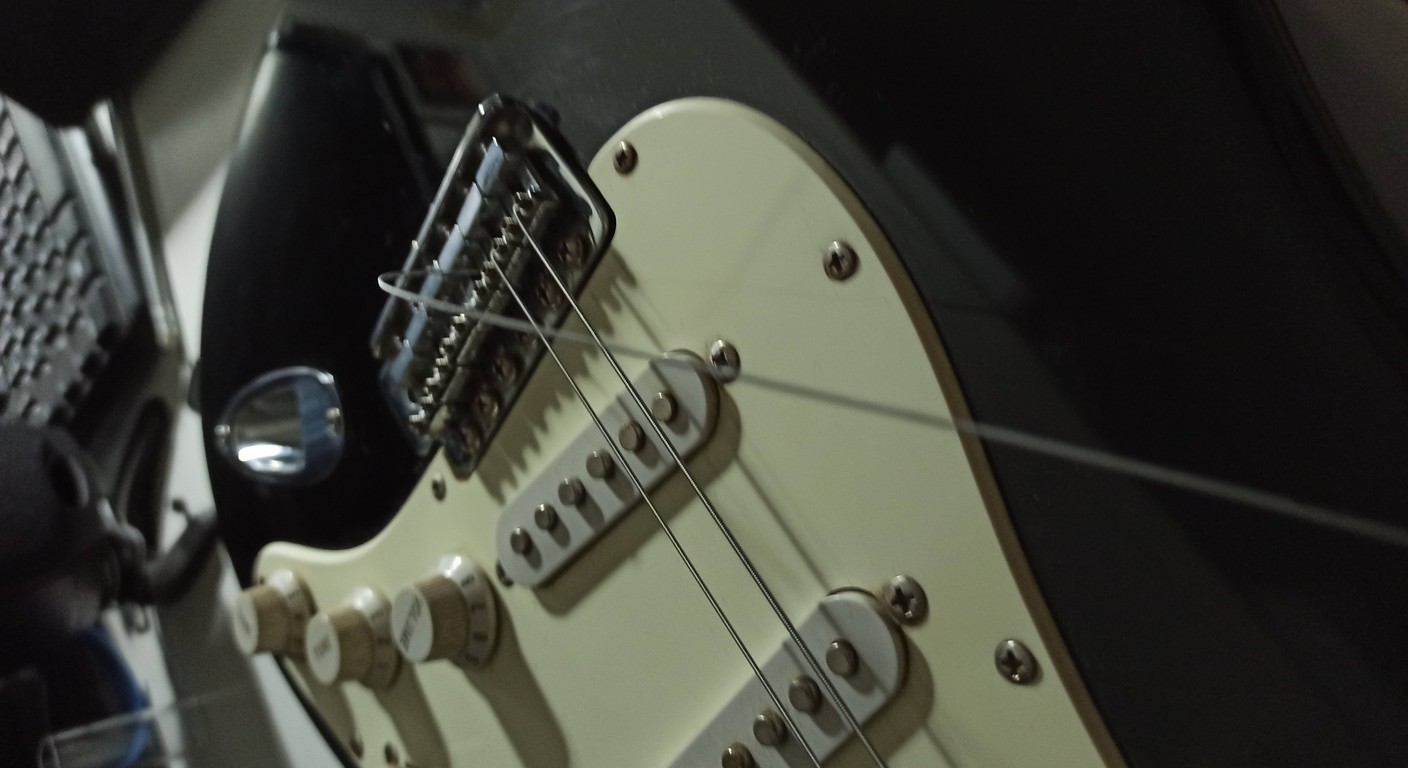
Then, in 1954, the Stratocaster arrived, and with it another significant evolution in single coil design. The Stratocaster didn't have one, not two, but three single coil pickups. This configuration, combined with a five-position selector (although initially it was three, guitarists soon learned to wedge the lever into the intermediate positions to get those “out of phase” sounds), opened up a world of sonic possibilities. The Stratocaster pickups were similar to those of the Tele, but with some key differences. They often had “staggered” poles (offset), meaning of different heights. This choice was not random: it served to balance the output of the strings, which at the time had different diameters and generated different volumes. For example, the G string, being wound, had a lower output, so the pole under it was higher. It was an ingenious solution to a practical problem. The sound of Stratocaster pickups was legendary: crystalline, “bell-like” (like a bell), with a precise attack and an almost acoustic resonance. The intermediate positions (neck+middle and bridge+middle) produced that “quacky” sound (like a duck) and slightly out of phase, loved by artists like Jimi Hendrix, Eric Clapton and Mark Knopfler. It was the sound of surf rock, psychedelic blues, progressive rock. I still remember the first time I got my hands on a real Stratocaster, not one of those cheap replicas. I plugged in the amp, selected the intermediate position between neck and middle, and played a chord. I immediately heard that “liquid” sound, that transparency that makes you hear every single note of the chord. It was a revealing moment, I understood why so many guitarists were obsessed with that instrument. Fender’s single coil pickups defined the sound of entire musical generations, demonstrating that simplicity, if well designed, can be synonymous with greatness. Their brilliance and dynamics remain a benchmark for many guitarists and producers.
The battle against noise: the invention of the Humbucker
The brilliance and clarity of Fender's single coils and Gibson's P-90s were undeniable, but they had an Achilles’ heel: the “hum” or 60-cycle buzz. That annoying background noise that intensified with increasing volume or in the presence of electromagnetic interference. In the big band era, it was tolerable. But with the advent of rock and roll and the need for more powerful and distorted sounds, the hum was becoming a serious problem. This is where another key figure comes into play, Seth Lover, a Gibson engineer. His mission, entrusted to him by Ted McCarty (the president of Gibson), was to eliminate that cursed hum. And Lover, in 1955, succeeded brilliantly, inventing the humbucker pickups.
The “Patent Applied For” (PAF): the birth of the legend
Lover's idea was as simple as it was brilliant: to use two coils instead of one. But not just any two coils. The two coils were wound identically but wired in counter-phase to each other. This meant that the 60-cycle hum, which is a phase noise, was canceled out because its sound waves canceled each other. The string vibrations, however, were captured in phase by both coils, and their signal added up. The result: a powerful, hum-free pickup with a completely new sound. Gibson's first humbuckers were hand-wound, which led to significant variability between one example and another. There was no fully automated and controlled winding process. For this reason, many of these original pickups had different resistances and, consequently, slightly different sounds. This variability, far from being a defect, became part of their charm, contributing to the myth of the "PAF". The PAF sound was fuller, thicker, and had a higher output compared to single coils. It had less brilliance in the high frequencies but a richer midrange and greater sustain. It was the perfect sound for emerging blues-rock, warmer jazz, and harder rock. Les Pauls equipped with PAFs became legendary, defining the sound of guitarists like Jimmy Page, Eric Clapton (in his Bluesbreakers phase), and Peter Green. I remember when I opened my first humbucker to understand how it worked. Seeing those two coils side by side, so different from the single coil I was used to, made me understand the elegance of that solution. I tried to measure the resistance of the two windings and compare them. It's fascinating how an innovation designed to solve a technical problem ended up creating a completely new and iconic sound.
The Gretsch Filter’Tron: a different approach to “hum-cancelling”
Almost simultaneously with Seth Lover, another engineer, Ray Butts, was working on a similar problem for Gretsch. Butts was an innovator, and his solution to hum, the Filter’Tron, debuted in 1957. The Filter’Tron was also a humbucker, but it had a slightly different design and, consequently, a distinct sound. Filter’Trons were thinner and narrower than Gibson's PAFs, and their Alnico magnets were positioned differently. The resulting sound was brighter and more transparent than a PAF, but still fuller than a single coil. It was a sound that maintained the “ring” and articulation, with a touch of that “twang” typical of single coils, but without the hum. The Filter’Tron became the distinctive sound of Gretsch guitars, loved by guitarists like Chet Atkins, Duane Eddy, and, later, Malcolm Young of AC/DC. Think rockabilly, country swing, cleaner rock and roll but with a nice bite. The Filter’Tron was there. The coexistence of PAFs and Filter’Trons demonstrates how innovation can take different paths to solve the same problem, leading to unique sonic results. Both were humbuckers, both eliminated hum, but they sounded unmistakably different, offering musicians an ever-expanding sonic palette.
The modern era: variants, innovations and the search for the perfect tone
With single coils and humbuckers now established, theevolution of guitar pickups it certainly hasn't stopped. Indeed, from the ’70s onwards, we have witnessed an explosion of variants, innovations, and an almost obsessive search for the “perfect tone”, driven by new musical needs and technological possibilities.
Active Pickups: Power, Silence, and Precision
One of the most significant innovations was the introduction of active pickups. In the ’70s, Rob Turner of EMG began experimenting with this technology. The idea was to integrate a small battery-powered preamplifier directly into the pickup itself. The main advantage of active pickups (such as the EMG 81/85 or the early models of Seymour Duncan Blackouts) is the very high output, almost non-existent background noise, and a much flatter and more defined frequency response. This translates into a more compressed sound, with a powerful attack and infinite sustain, ideal for genres like heavy metal, thrash, and modern rock, where clarity and power under distortion are fundamental. I remember installing a set of EMG 81/85 on one of my first metal guitars. The change was drastic: less hum, more gain, and that “cutting” sound that allows you to define every note even with extreme distortions. Of course, for some purists, the sound can be a bit “sterile” or “compressed”, but for those looking for that specific tone, they are irreplaceable.
Humbucker in Single Coil format: The Best of Both Worlds?
Many guitarists loved the bright sound and feel of a single coil, but hated the hum. And they didn't want to modify their Stratocaster or Telecaster to accommodate a standard-sized humbucker. The solution? Single-coil sized humbuckers. Companies like DiMarzio (with its Super Distortion S) and Seymour Duncan (with their Hot Rails or Quarter Pound) developed pickups that, while maintaining the size of a single coil, contained two small coils and functioned like a humbucker, canceling noise. These pickups offered a much higher output and a fuller sound, while fitting perfectly into existing routs. It was a godsend for those who wanted to “pump up” their Strat without drastically altering it.
Mini-Humbucker and P-90 Revisited
Even classic designs have seen evolutions. Gibson itself, with the Firebird, introduced mini-humbuckers: smaller than standard PAFs, they offered a brighter sound with a more defined attack, while maintaining hum cancellation. They were a bridge between the sound of a single coil and that of a traditional humbucker. P-90s, for their part, continued to be produced and appreciated, but “noise-cancelling” variants also emerged for those who loved their sound but not the hum. Pickups like “stacked” P-90s (with superimposed coils) or those with a “dummy” coil (fictitious) sought to emulate the original P-90 sound while eliminating hum.
Materials and Craftsmanship Boutique
Evolution has not only been technological, but also in the rediscovery and optimization of materials. The choice of magnets (Alnico II, III, IV, V, Ceramic) has become crucial, each with its tonal characteristics: Alnico II for a warmer and vintage sound, Alnico V for more power and brilliance, ceramics for high and aggressive output. Even the type of copper wire (gauge), the number of windings, and the winding technique (random vs. machine wound) have become fine-tuning elements. This is where the so-called “boutique builders” like Lollar, Fralin, Bare Knuckle come into play, specializing in faithfully replicating vintage pickups or creating unique designs with meticulous attention to detail. They are somewhat the Michelin-starred chefs of lutherie, seeking the perfect ingredient and impeccable preparation. If you are curious to experiment with these details, I recommend you take a look at our article on guitar modification. It will give you some ideas on how to intervene and customize the sound of your instrument, perhaps starting right from the pickups. The modern era is a true open-air laboratory for theevolution of pickups, where tradition meets innovation, and every guitarist can find (or create) the sound they have in mind. The variety of choice today is such that, with a bit of research and some soldering, you can truly transform a guitar into a unique and personal instrument.
The future of pickups: between tradition and technology
Where does it take us l’evolution of the sonic elements for guitar? It's a fascinating question, because the future, as often happens, seems to be a mix between a return to roots and the exploration of new technological frontiers. On one hand, there's an incessant search for vintage perfection. Many manufacturers, from big brands to small artisans, continue to study and replicate historical pickups with almost maniacal precision. Original materials, winding techniques, even the type of wire enamel are analyzed to capture that elusive "mojo" of pickups from yesteryear. This is because, let's face it, certain sounds are simply timeless. A well-made PAF or a Stratocaster single coil faithful to the original will always have their place of honor. On the other hand, technology advances. We've already seen the rise of active pickups, but innovations continue.
Digital Modeling and Emulation
Perhaps not a physical pickup, but digital modeling has a huge impact on how we perceive and manipulate pickup sound. Processors like Kemper, Axe-FX, or Neural DSP plugins are able to capture and replicate with incredible fidelity the sonic character of specific pickups, amplifiers, and cabinets. This allows guitarists to have a virtual sound library without having to physically change pickups. It's like having a sound museum at your fingertips.
Hybrid and Multimodal Pickups
We are increasingly accustomed to pickups that offer different sound modes in the same package. Coil-splitting (deactivating one coil of a humbucker to make it sound like a single coil) and coil-tapping (taking the signal from an intermediate point of the winding to reduce output) are now common. But pickups with different magnet configurations are also being explored, or those that combine magnetic sensors with piezoelectrics to offer both classic electric and acoustic sound on the same guitar.
New Materials and Design
Research into new magnetic materials, metal alloys, and winding techniques continues. Some are experimenting with coil-less pickups (like Fishman Fluence, which use multi-layer printed circuits) or with optical sensors that read string vibrations without magnetic interference. These approaches promise to completely eliminate noise and offer an even wider and more faithful frequency response.
Smart and Connected Pickups
It's not science fiction to imagine pickups that can be digitally controlled or reconfigured, perhaps via a phone app. Pickups with integrated and programmable equalization, or with the ability to change their "voice" on the fly, could become a reality. The idea of a pickup that adapts to any musical genre with the touch of a button is appealing, even if for many of us the beauty lies precisely in analog research and experimentation. In short, the future is a stimulating mix of respect for tradition and a push towards the unknown. Tomorrow's guitarist will have an even wider range of options available, but the final choice, as always, will depend on their ear and sensitivity. My advice is to keep getting your hands dirty, to experiment, because that's where true sonic gems are discovered. If you want to further explore how different types of pickups influence sound and their history, you can find excellent resources on the Seymour Duncan blog, for example: The History of Electric Guitar Pickups Part 1.
Conclusion
And so, guys, we have reached the end of our journey through theevolution of guitar pickups. From Rickenbacker's rudimentary "frying pans" to today's sophisticated active and hybrid systems, every stage of this journey has been dictated by a necessity: to make our guitar speak, and be heard. We have seen how brilliant minds, sometimes to solve a technical problem, other times to pursue a sound idea, have shaped the timbre of modern music. Understanding the history of these small but fundamental components is not just an exercise in curiosity. It helps us decipher why a certain pickup sounds a certain way, why a P-90 snarls and a humbucker roars, or why a Fender single coil sings with that crystalline transparency. And, above all, it gives us the tools to make more informed choices when we decide to modify our guitar, to find that tone that makes us vibrate. I hope this story has given you not only some extra information, but also some stories to share and, why not, inspiration for your next garage project. Because in the end, the beauty of DIY lutherie is precisely this: understanding, experimenting, and finding your own sound, one pickup at a time.
FAQ
What is the main difference between a single coil pickup and a humbucker?
The main difference lies in design and sound. A single coil has a single coil of wire wound around magnets, producing a bright and transparent sound, but it is susceptible to 60-cycle hum. A humbucker has two coils wired out of phase, which cancel out the hum and produce a fuller, warmer sound with higher output.
Are active pickups always better than passive ones?
Not necessarily. Active pickups offer high output, low noise, and a very defined sound, ideal for genres like metal. However, many guitarists prefer passive pickups for their dynamics, more "organic" attack response, and ability to interact with the amplifier in unique ways, especially with clean or slightly crunchy sounds. It's a matter of personal preference and musical genre.
Download the Luthier Survival Kit
Free PDF with checklist, problem-cause table and project card template.
 English
  Italiano
Stuck on your build?
If you ran into the same problem or have a question, drop it in the comments. I read and reply to every one.
Write a comment