

Gibson Les Paul Standard '60s review: Advantages and Disadvantages
Okay, let's put it on the table right away: who among us hasn't dreamed at least once of holding a real Gibson Les Paul? Not a copy, not a “nearly”, but that guitar. The problem, as always, is the wallet. And then, let's face it, among a thousand models, reissues, and special series, choosing the right Les Paul is a real mess. Today we're talking about a specific model that has caused and continues to cause discussion: the Gibson Les Paul Standard '60s. It's not a guitar for everyone, that much is clear from the start. It's not even the cheapest, and those on a budget know there are valid alternatives. But if you're here, it's probably because you already have a few guitars under your belt, you've learned to play them, and now you're wondering if it's time to take the plunge. You want to know if the expense is worth it, if the flaws you hear about are real, and if this Les Paul is the right one for you. Well, let's try to figure it out together, with the honesty of someone who has disassembled and reassembled guitars, not just played them.
Technical Features: What's Under the Hood?
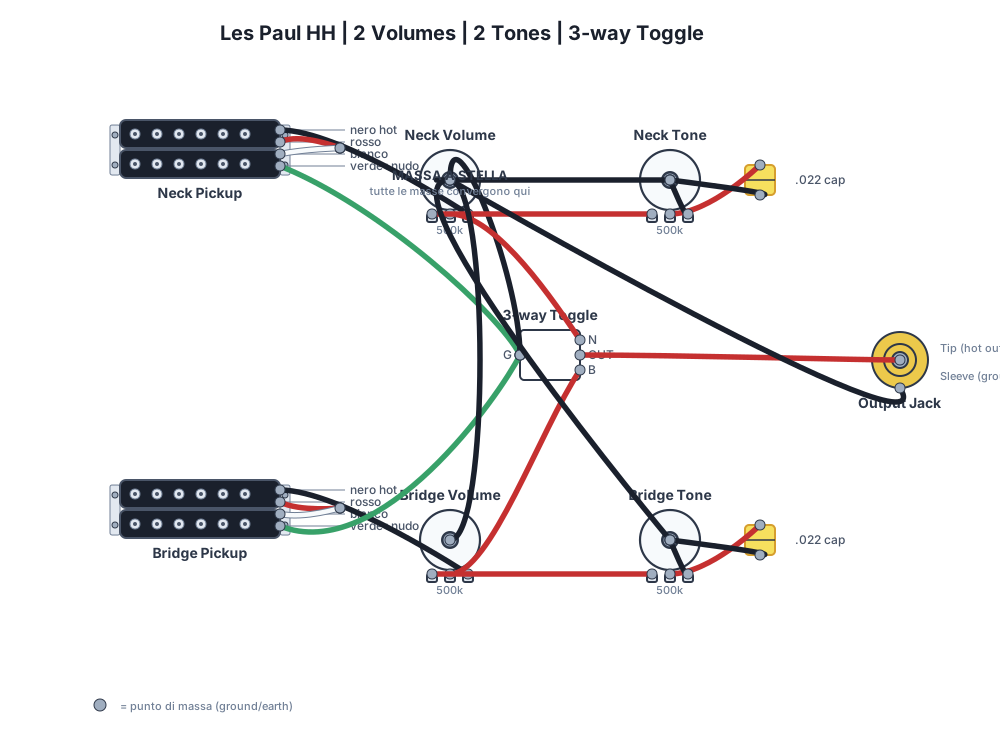
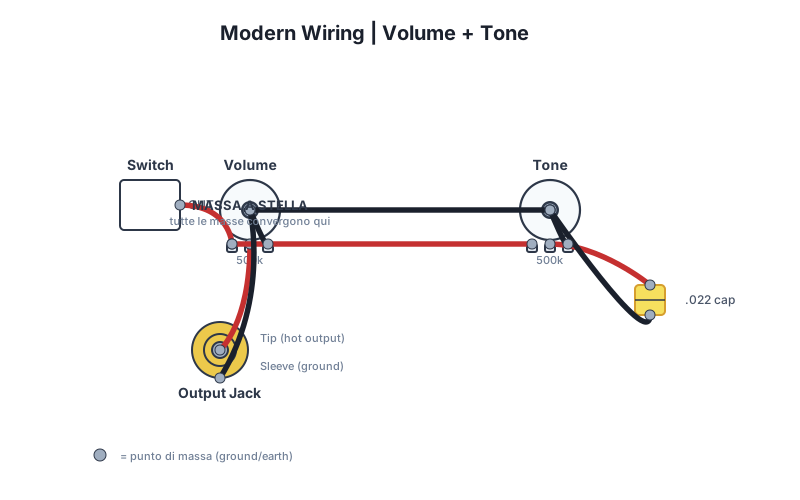
Before we get into chatter, let's take a look at what the Gibson Les Paul Standard '60s promises on paper. Specifications are fundamental to understanding the DNA of an instrument, even if the real test is always in the field. Body: Solid mahogany with figured maple top. Mahogany provides warmth, sustain, and that typical “bite”, while maple adds brightness and definition. The choice not to use tone chambers (it's not weight-relieved) means a fuller and more direct sound, but also a considerable weight. Handle: Mahogany with Slim Taper ’60s profile. This is a key point for many. Unlike the more “chunky” profiles of the ’50s, the Slim Taper is thinner, allowing for greater speed and agility. It is screwed to the body with a “long tenon” joint, which ensures excellent vibration transfer and sustain. Keyboard: Rosewood with 22 medium jumbo frets. Rosewood offers that warm and soft feel, while medium jumbo frets facilitate bending and vibrato. The fret installation (“fretwork”) is one of the aspects that most often comes under scrutiny in reviews. Stairs: Standard Gibson 24.75 inches. A shorter scale compared to Fenders, which translates into slightly lower string tension, making bends easier and contributing to a “softer” feel and a slightly warmer sound. Pick-up: Two Gibson Burstbucker 61T (bridge) and 61R (neck) humbuckers. These pickups are designed to emulate the sound of classic PAF (Patent Applied For) from the ’50s and early ’60s, with a balanced voicing, rich in harmonics, and with the right amount of “grit” for rock and blues. Electronics: ’50s style wiring with Orange Drop capacitors. This type of wiring, along with 500k ohm potentiometers, allows for more reactive tone control and a volume “roll-off” that preserves high frequencies, avoiding that “muffled” sound sometimes obtained by lowering the volume on other guitars. Hardware: Tune-o-matic bridge and Stopbar tailpiece in nickel. A timeless classic that guarantees tuning stability and excellent vibration transfer. The tuners are Grover Rotomatic, known for their precision and fluidity. Finish: Gloss nitrocellulose. A traditional, thin finish that allows the wood to “breathe” and resonate freely. It's beautiful, but also more delicate and prone to scratches compared to polyurethane finishes. * Accessories: ABS hard case included, maintenance kit and picks. [PHOTO GRID] Now that we have the specifications, let's talk about the reality in the field. The Gibson Les Paul Standard '60s It's a guitar that generates a lot of debate online, on forums, and among guitarist friends. Like all Gibsons, after all.
The Merits Recognized by Everyone (or Almost)


[AFFILIATE BOX] The first thing that strikes anyone who tries it is the sound. It's that Les Paul sound. Full, rich in harmonics, with incredible sustain. The Burstbucker 61s do an excellent job of capturing that classic tone, without being too muddy or too modern. Many call it “the Les Paul we've been waiting for” for its ability to balance vintage with modern playability. The Slim Taper neck is a huge strong point. Those who don't like the chunky necks of the ’50s Standard or R8 Custom Shop will find an ideal compromise here. It's fast, comfortable, and doesn't tire the hand even after hours of playing. I've seen friends switch from shred guitars to this Les Paul precisely because of the neck's comfort. The ’50s wiring electronics are another plus. The ability to lower the volume without losing highs is a game changer for many, allowing for more dynamic sound control directly from the guitar. It's something that, once tried, is hard to give up. Aesthetically, it's also a beauty. The figured maple, the glossy nitro finish, the traditional colors... it looks great, both on stage and hanging on your studio wall. It's a piece of furniture, as well as an instrument.
Common Flaws and Complaints
Now let's get down to business, because no guitar is perfect, and the community has no qualms about saying so. The first sore point, and perhaps the most debated, is the quality control (QC). Although Gibson has made giant strides in recent years, there are still reports, albeit less frequent, of guitars leaving the factory with minor defects. We're talking about imperfect finishes (small imperfections in the paint, less than impeccable polishing), suboptimal setup (action too high or low, intonation to be reviewed) or, in rare cases, fretwork problems requiring a small leveling. Of course, on a guitar of this price, you expect perfection, and sometimes you don't find it. It's a bit like when you assemble your first guitar: you know there will always be a small detail that only you will notice. But here we are talking about Gibson. The weight is another factor. Being a solid body and without weight relief, it can easily exceed 4 kg, even reaching 4.5 kg. For those who play standing for hours, it can be a problem. It's not a guitar to wear over your shoulder for an entire evening without feeling its weight. I've seen people, after trying it, opt for models with weight relief precisely for this reason. I, with my broken back, understand the problem very well. The Graph Tech nut, while functional, does not satisfy all purists who would prefer bone for a more “vintage” aesthetic and feel. It's a minor detail, but for some, it makes a difference. Finally, the price. It's an expensive guitar. Very expensive. And this inevitably leads to comparisons with alternatives that, for a fraction of the cost, offer surprisingly similar performance (Epiphone Les Paul Standard '60s, for example), or used guitars that, with a few scratches, can be bought for more reasonable prices. The perceived value, relative to these minor QC flaws, is a sticking point for many.
Popular Sentiment: What Do People Say?
I spent hours reading discussions on forums like The Gear Page, Reddit (r/guitar, r/lespaul) and watching reviews on YouTube. The general sentiment on the Gibson Les Paul Standard '60s is polarized, but with a positive trend, provided you know what you are buying. Many appreciate the return to a more “classic” design compared to some previous vintages. The Slim Taper neck is almost universally praised by those who prefer thinner profiles. The Burstbucker 61 pickups are seen as a clear improvement over the 490R/498T that equipped some Standard models in past years, offering a more dynamic sound and better touch response. The aesthetics, with figured maple tops and nitro finishes, are almost always a source of admiration. However, criticisms persist. Quality control is the most cited Achilles' heel. It is not uncommon to read about users who received guitars with obvious visual defects (paint smudges, difficult-to-remove stickers, uneven sanding) or minor functional problems (frets not perfectly leveled, slightly off intonation). This, on a guitar that costs a handsome sum of over 2000 euros (depending on the market and period), is unacceptable for many. Weight is another hot topic. Many appreciate the “solid body” for sustain and tone, but those who play live regularly often complain about the fatigue of carrying it around. The debate between “weight=tone” and “weight=shoulder pain” is always lively. There are also those who, while appreciating the guitar, consider it “overpriced” compared to what it offers. The comparison with high-end Epiphone models (like the Inspired by Gibson line) is inevitable, and many wonder if the price difference is justified only by the brand and minor improvements. Some experts suggest that, for a similar budget, one could find a Les Paul used of better years (perhaps from the ’90s or early 2000s) with superior finishes and, sometimes, sound, even if with a less “fresh” look. In summary, the perception is that of a guitar with enormous potential, fantastic sound and feel, but which requires a careful eye at the time of purchase and, potentially, a small setup intervention or “DIY lutherie” to be perfect. It is not a 100% “plug and play” guitar for everyone.
Pros and Cons in Relation to Price
Ok, let's put the scales on the table. Buying a Gibson Les Paul Standard '60s It's a significant investment. Let's see what you gain and what you stand to lose.
PRO
- Iconic Sound: You've got the authentic Les Paul sound in your hands. Full, powerful, with a sustain that vibrates to the bone. The Burstbucker '61s with '50s wiring are a winning combination for those seeking that tone.
- Comfortable Handle: The Slim Taper '60s profile is a pleasure to play. Fast and comfortable, it allows you to move across the entire fretboard effortlessly. If fat necks aren't your thing, this is a huge plus.
- Solid and Traditional Construction: Solid mahogany, long tenon, and nitro finish. These are all elements that contribute to the instrument's resonance and durability, following historic construction recipes. It's a guitar built to last and play well, even decades from now.
- Screaming Aesthetics: It's a beautiful guitar, with a classic aesthetic and a unique figured maple top. It won't go unnoticed.
- Long Term Value: High-end Gibsons tend to hold their value well over time, sometimes even increasing, especially if well cared for. It's an investment, not just an expense.
AGAINST
- High Price: This is the main drawback. We're talking about significant figures, which for many are simply out of budget. And at that price, expectations are very high.
- Potential QC Defects: Despite the improvements, there's still a risk of encountering small finish imperfections or a less-than-perfect setup. On a guitar costing thousands of euros, this is hard to stomach. I always say: if you buy one, get your hands on it as soon as it arrives; don't trust the 100% with its factory setup.
- Considerable Weight: The solid mahogany body makes its presence felt. If you have back problems or play for long periods standing, the weight can become a serious problem.
- Delicate Finish: Nitrocellulose is beautiful, but it scratches and dents easily. If you're obsessed with aesthetics and don't want even the slightest mark, be prepared to handle it with extreme care.
- Not for Everyone: The Les Paul sound is iconic, but it's not for all genres or tastes. If you're looking for extreme versatility or ultra-modern sounds, you might find the Burstbucker a little too "vintage" for your purposes.
Who is it suitable for / Who should avoid it?
This is the crucial part. Who should get their hands on one? Gibson Les Paul Standard '60s and who would do better to look elsewhere?
Who is it suitable for?
- The Les Paul Sound Purist: If you are looking for that If you want a warm, fat sound with endless sustain, and you don't want to compromise, this guitar is for you. It's the classic rock, blues, and hard rock sound.
- Who Loves Fast Handles: If you've always wanted a Les Paul but were scared of the fat necks, the Slim Taper '60s will change your mind. It's a modern and comfortable neck on a vintage-inspired guitar.
- The Traditional Violin Making Enthusiast: If you appreciate classic construction techniques (solid mahogany, long tenon, nitro finish), and understand the value of these details, the Standard '60s will give you great satisfaction.
- Those who have a budget and want an investment: If you have the money to spend and view the guitar not just as an instrument but also as an asset that holds value, the Gibson Les Paul Standard '60s is a solid choice.
- The Professional or Semi-Professional Musician: If you play live or in the studio and need a reliable instrument with a distinctive sound that makes a statement, this Gibson is up to the task.
For those who are best avoided
- Those on a tight budget: If every euro counts, there are fantastic alternatives that offer much better value. There's no point in spending too much if you don't appreciate every single detail that justifies the price.
- He who cannot tolerate minor flaws: If you expect the 100% to perform absolutely flawlessly on every millimeter of your guitar right out of the case, you may be disappointed by the small (and sometimes invisible to the untrained eye) QC glitches that can occur.
- Those seeking extreme lightness: If weight is a top priority for you, the solid mahogany body of this Les Paul will make you swear. Look elsewhere, perhaps at chambered models or other brands.
- Who Wants Extreme Sound Versatility: If your genre ranges from jazz fusion to extreme metal, and you need a thousand different sounds from a single guitar, the Burstbucker 61, while excellent, may not cover all your needs without the help of specific pedals.
- Who Isn't Willing to Do a Minimal DIY Setup: As I said, the factory setup may not be perfect. If you're not willing to put in the effort to fine-tune intonation, achieve optimal action, or polish the frets (things that, if you're handy, can easily be done in the garage), you may have to spend more money on a luthier.
Final Advice and Alternatives
So, the question is: do I buy it or not? Gibson Les Paul Standard '60s It's a fantastic guitar, no doubt about it. It's a piece of history, well-built, with an iconic sound. But it's also a significant investment, and it's not without those little "flaws" that sometimes turn people off. My advice, from someone who has seen and dismantled guitars: If budget is not an issue and you've long dreamed of a real Les Paul with a comfortable neck, go for it. But do one thing: as soon as it arrives, don't settle. Put it on the workbench, check the setup, intonation, pickup height. A good initial setup works wonders and allows you to make the most of the potential of such an instrument. If you find any small aesthetic imperfections, evaluate whether it's something you can live with or if it ruins the experience for you. Remember, it's an instrument, not an untouchable jewel. If, on the other hand, the budget is a bit tighter, or if you are a “DIY” enthusiast and want to challenge yourself, then the alternatives become very interesting. Thinking about being able to improve or customize a guitar is one of the greatest joys for those who love lutherie. Sometimes, with a bit of work and some targeted modifications, surprising results can be obtained, even starting from less expensive instruments. A good starting point for those who want to get their hands on it is to inform themselves about possible modifications. There are tons of online resources, tutorials, and forums dedicated precisely to how to customize your guitar to make it sound its best. For example, understanding how a pickup change or how to improve the setup can radically transform an instrument.
Alternatives to Consider
If the Gibson Les Paul Standard '60s If you're tempted but your wallet is tight, or if you want to explore other options before deciding, here are some alternatives that, with a DIY approach, can give you great satisfaction:
- Epiphone Les Paul Standard '60s (or '50s): It's the first alternative that comes to mind. At a significantly lower cost, it offers many of the aesthetic and sonic features of the Gibson. With a pickup swap (perhaps a nice set of Seymour Duncans or Bare Knuckles) and a good setup, you can get a guitar that sounds Almost at the level of your older sister. And you have a lot of money left over.
- Used Guitars: The used market is a treasure trove. You might find a Gibson Les Paul Standard from a few years ago (perhaps a Traditional, or a Standard from before the introduction of the '50s/'60s series) for a more reasonable price. Often, these guitars are already "broken in," and any minor manufacturing defects have been addressed or accepted by the previous owner.
- Other LP-Inspired Brands: Many manufacturers offer single-cut models inspired by the Les Paul. Brands like PRS (SE series), Tokai, Edwards (ESP), and Chapman Guitars offer excellent quality instruments, sometimes with a higher quality than Gibson, and often at a more affordable price. You may need to change some components (pickups, potentiometers) to get closer to the sound you're looking for, but that's part of the fun of DIY.
- DIY Kit: If you're a true DIY enthusiast, why not build one from scratch? There are excellent quality kits that let you choose the woods, pickups, hardware, and finish. It's a unique experience, you'll learn a lot, and in the end, you'll have a guitar. your, built with your own hands. The end result, with a little patience, can be surprising.
In short, the Gibson Les Paul Standard '60s It's a guitar that makes you dream, but it's important to approach it with the right perspective. It's not a magic wand that will instantly transform you into a guitar hero, and it's not exempt from criticism. It's a fantastic instrument for those who know what they're looking for, have the necessary budget, and aren't afraid to get their hands dirty to make it sound its best. To further explore the specifications and history of this model, you can consult the official page on the Gibson website. It's always useful to have the manufacturer's point of view, even if the truth is always discovered in the field, with the guitar in hand. Gibson Les Paul Standard '60s on Gibson.com I hope this honest, no-nonsense analysis helps you make your decision. Ultimately, the perfect guitar doesn't exist; only the perfect one. for you. And sometimes, to find it, you just have to try, even at the cost of making mistakes and starting over. Just like you do in the garage, after all.
See also
FAQ
The Gibson Les Paul Standard ’60s is too heavy to play live?
Weight can be a serious factor to consider. Les Paul Standard ’60s, being solid mahogany without weight relief, can weigh between 4 and 4.5 kg, sometimes even more. For those who play for long sessions standing up, this can become uncomfortable or even painful. If weight is an absolute priority, you might want to explore models with tonal chambers, or guitars from other brands designed to be lighter.
Is it worth spending so much on a Gibson when there are excellent Epiphone alternatives?
It depends on what you're looking for. The Epiphone Les Paul Standard ’60s is an excellent instrument that offers a lot for its price. However, Gibson usually offers higher quality materials (especially for the maple top), original Gibson pickups, nitrocellulose finishes, and, for many, the prestige and “feeling” of the brand. If the budget allows and one appreciates traditional lutherie and the specific sound, the Gibson can be worth the expense. Otherwise, a modified Epiphone can come very close, still offering an excellent sound experience.
Download the Luthier Survival Kit
Free PDF with checklist, problem-cause table and project card template.
 English
  Italiano
Stuck on your build?
If you ran into the same problem or have a question, drop it in the comments. I read and reply to every one.
Write a comment