

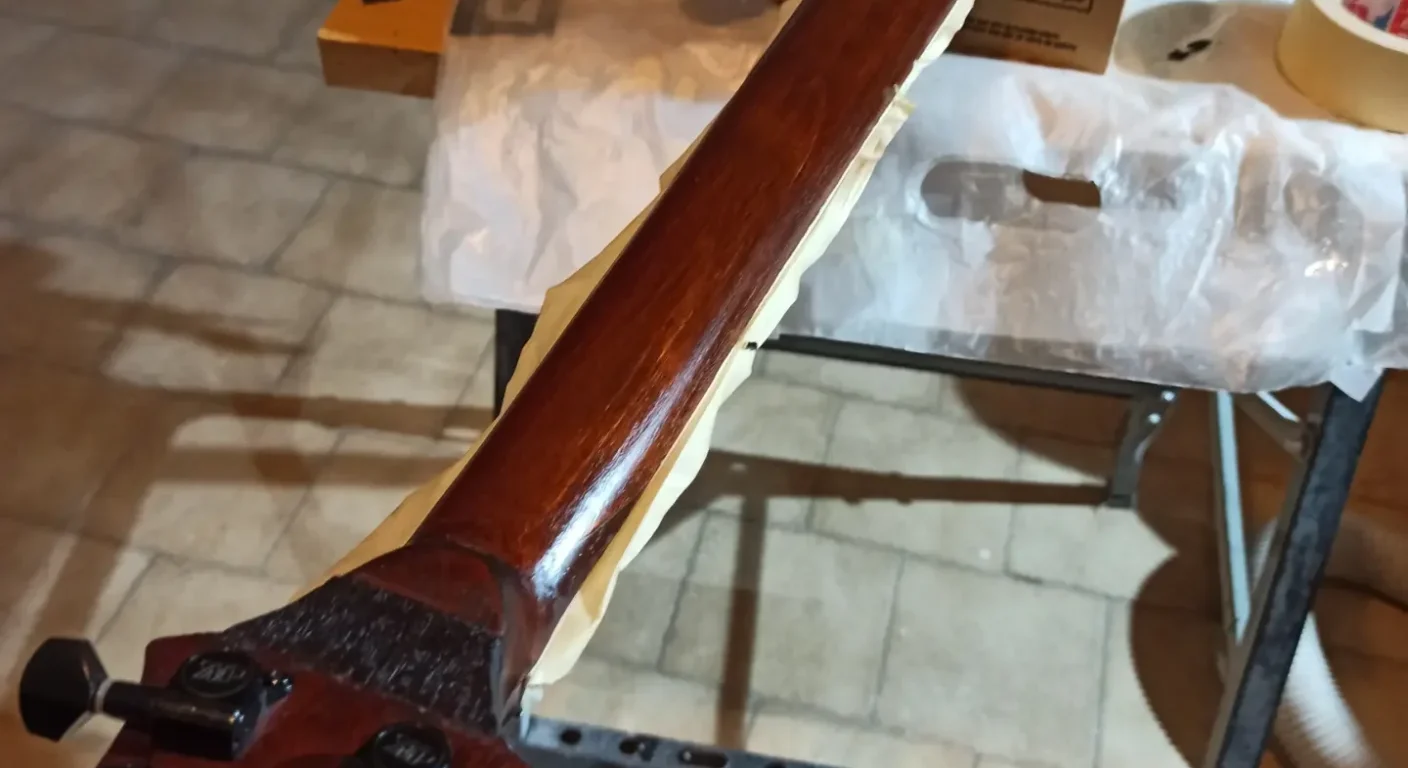
Want to Build a Double Neck Guitar? 3 Mistakes You Should Avoid
So, you've decided to jump into the fray. Your head is spinning, the idea has been buzzing around in your head for a while: a double neck guitar. A monster, a statement, a piece of rock history to hold in your hands. I understand, I’ve been there too. That iconic shape, the versatility of having a 6 and a 12-string, or maybe two different tunings, all in one instrument. You already feel a bit like Jimmy Page, don’t you? When I started my adventure in the garage, the idea of putting together a double-neck seemed like the pinnacle of DIY lutherie. An ambitious project, for sure, but I thought: “After all, they’re two guitars put together, right?”. Well, that was my first, unwitting, error in judgment. It’s not just “two guitars put together”. It’s another beast. The construction of a double-neck guitar It's an undertaking that requires patience, precision, and a good deal of planning. It's not for beginners, but if you've already worked on some projects, done your first setup, maybe assembled a kit, or made some substantial modifications (like change pickups to a Strat), then you have the basics. The point is that here, every mistake is amplified. Every wrong millimeter, every approximate calculation, can turn your dream into a nightmare of wood and metal. I've seen several double-neck projects end up forgotten, or worse, become almost unplayable instruments. Not because those who made them were incapable, but because there are traps it's very easy to fall into, especially when you go a bit ’ “winging it”. I want to tell you about the three most common mistakes I've noticed (and, yes, into which I've also fallen, at least partially) when facing the making a double-neck. If you avoid these, you've already done half the work.
1. Ergonomics and Weight: Don't Underestimate the Elephant in the Room
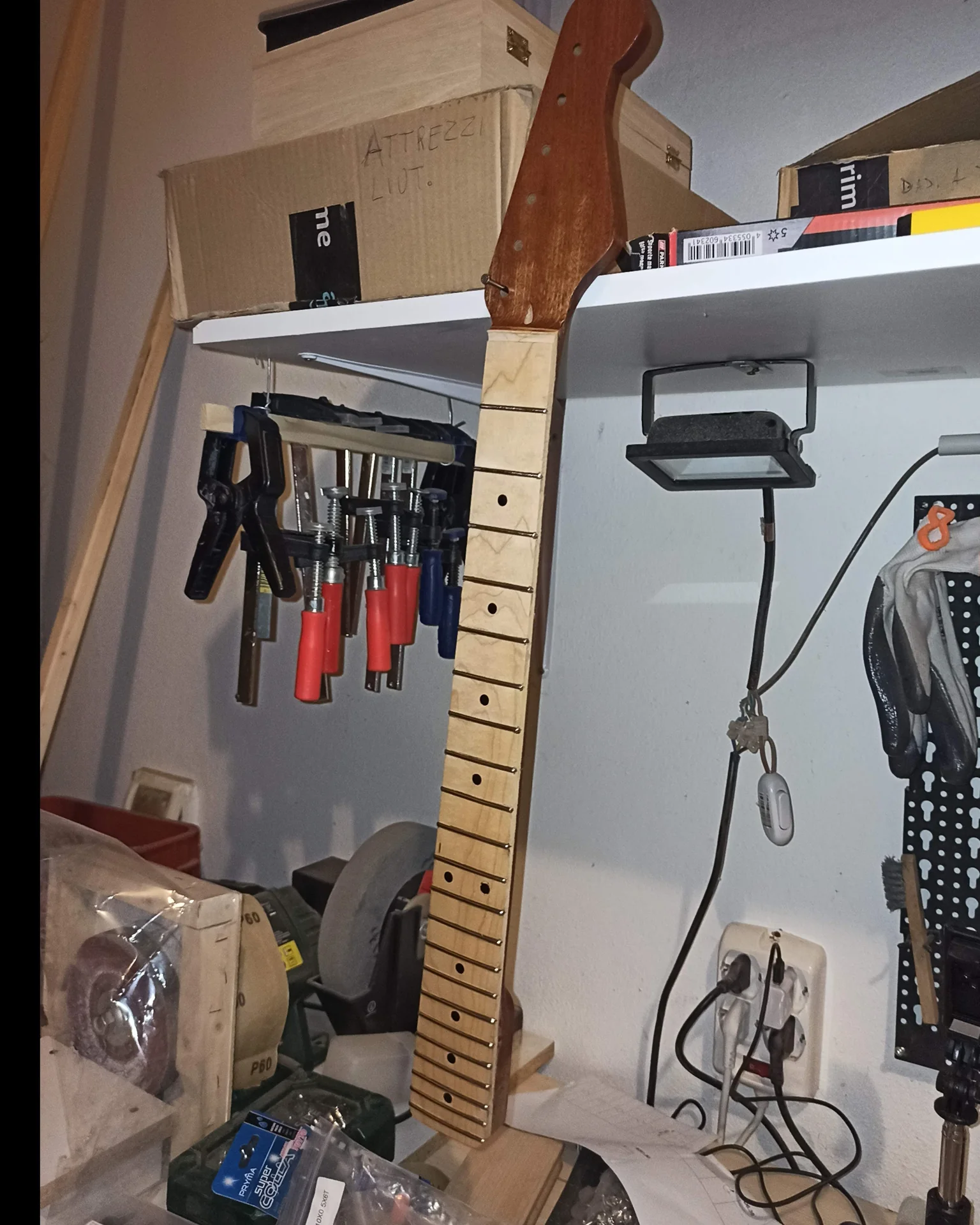
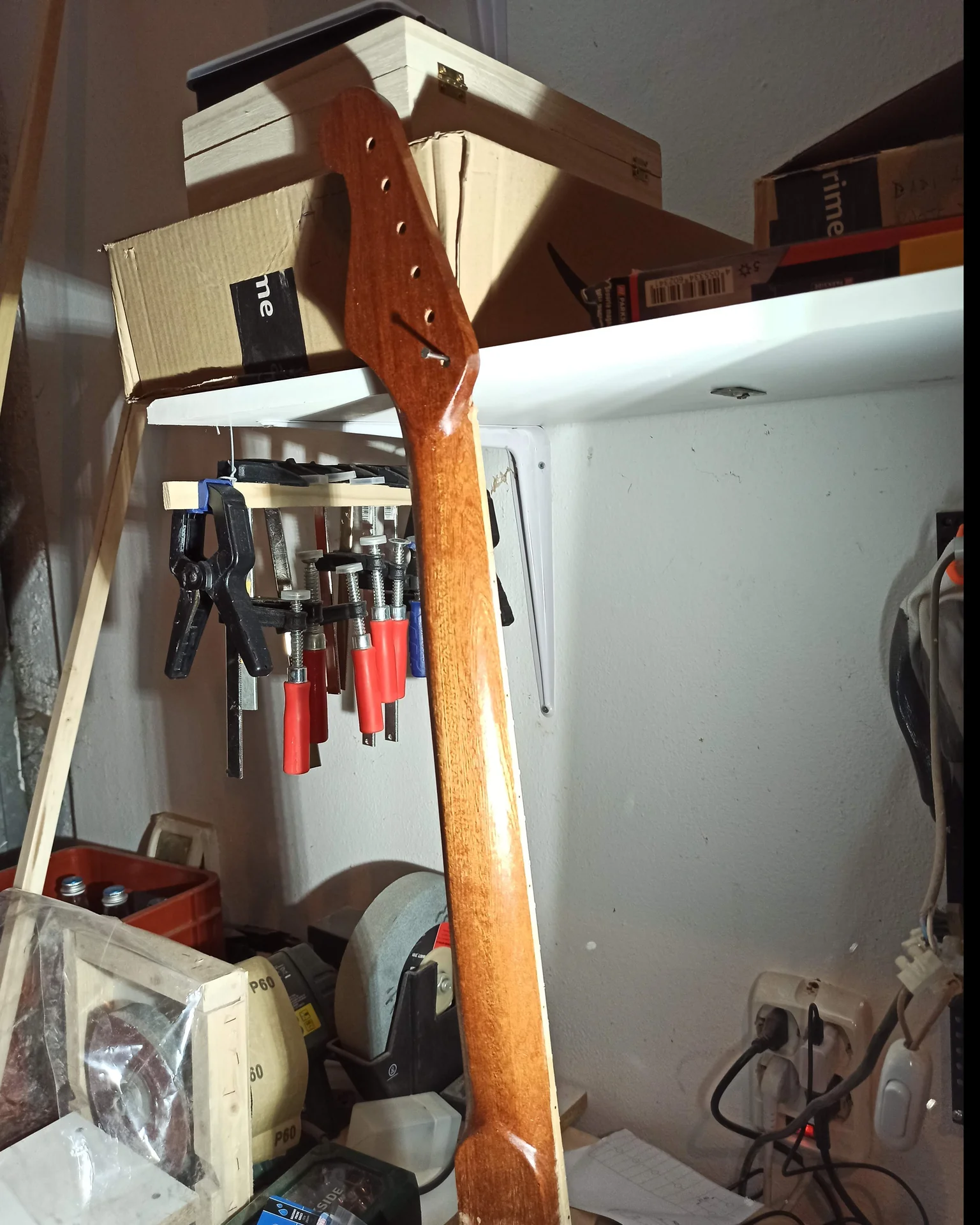
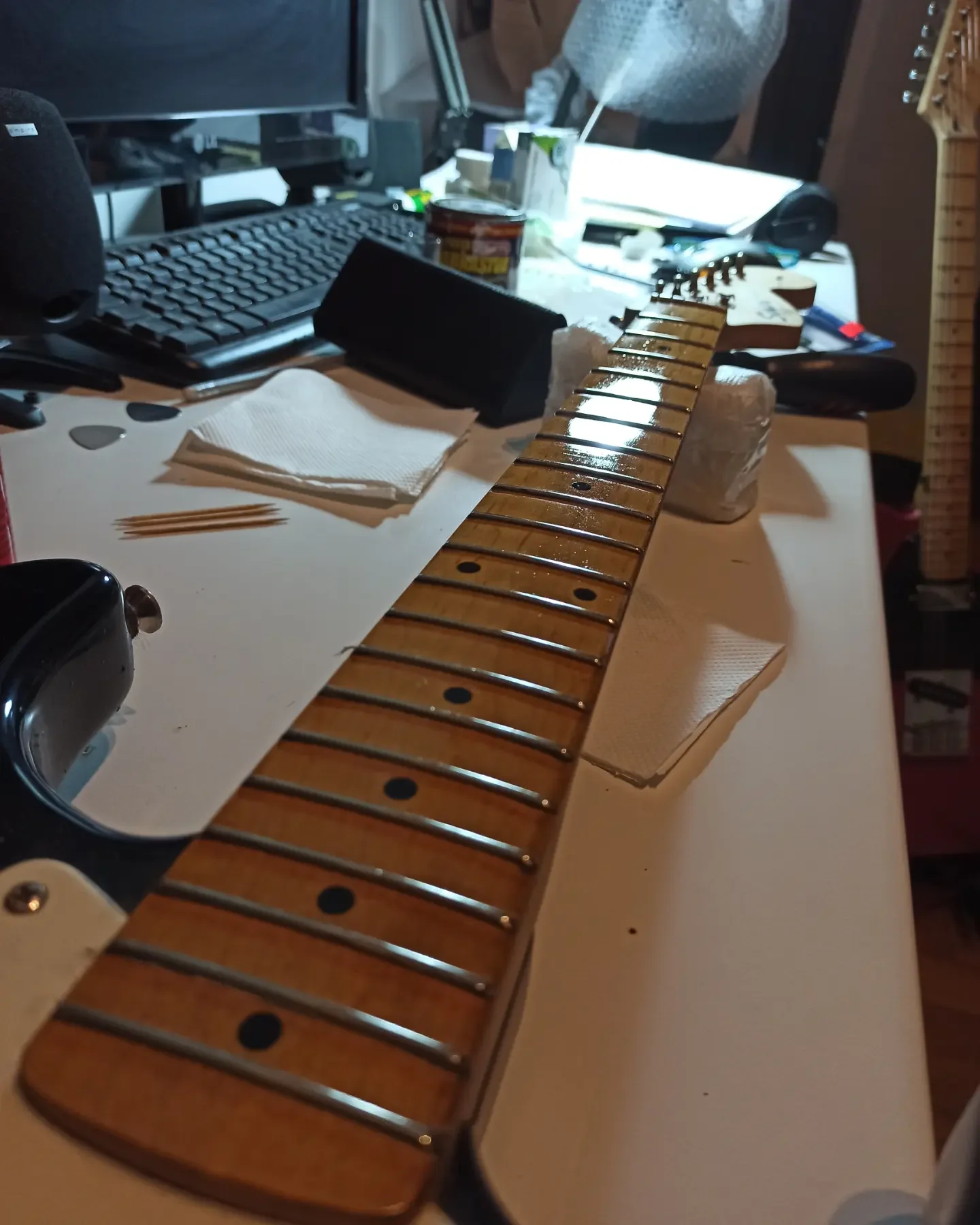
This is, without a doubt, the first obstacle that comes your way when you start thinking about a project. assembling a double-necked instrument. The initial enthusiasm makes you think only about how beautiful it will be, about how many sounds you'll be able to get out of it. Then you put it on the scale and try it standing up... and you understand. A normal guitar weighs between 3 and 4 kilos. A double-neck? It can easily reach 6, 7, even 8 kilos. The Gibson EDS-1275, the original, Page's one to be clear, is not famous for being a feather. And we're talking about an instrument made with selected woods and a studied design. Yours, made in the garage, with woods that might not be the best for lightness, risks becoming a boulder.
Mimmo's Mistake: "But yes, a one-piece bodysuit is more solid!"“


When I faced my first attempt at building a double neck guitar, I was convinced that a solid, single-piece body was the best solution for stability. I chose a nice thick mahogany, just to be safe. The result? An instrument that weighed as much as a combo amp. Standing up, after two songs, I could feel my shoulder screaming for revenge. It wasn't just heavy, it was also unbalanced. The 12-string neck, longer and with more tuners, tended to dip downwards. It was a constant struggle to keep it in place. The Pain Point: Fear of a fragile or resonant instrument pushes you to overbuild, use heavy woods, or have a body that's too thick. The result is an unplayable, uncomfortable instrument that will put you off using it. And at that point, what's the point in building it at all?
Why it's a mistake and how to avoid it:
Weight and balance are critical to playability. No matter how beautiful or good it sounds, if it breaks your back or forces you to struggle to play every chord, it'll end up hanging on the wall.
- Materials Planning:
- Light woods: This is the starting point. For the body, consider woods like poplar, alder, or basswood. They're lightweight, resonant, and easy to work. If you really want the mahogany look, consider a mahogany body with a thin maple top, or a lighter mahogany.
- Body thickness: Don't go beyond what's necessary. A thickness of 40-45 mm is already sufficient for resonance and stability. Every additional millimeter is extra weight.
- Handles: Again, be careful. A 12-string neck is inherently heavier than a 6-string. Consider maple necks with pau ferro or maple fingerboards, which are generally lighter than rosewood.
- Hardware: Lightweight tuners and aluminum bridges (if compatible with your design) can make a difference. Every gram counts.
- Design and Balance:
- Body horns (horns): Design the upper body horns so they're long enough to balance the weight of the necks. If they're too short, the guitar will tend to "head dive," meaning the neck will fall downward. This is a common mistake that makes the instrument frustrating to play while standing.
- Position of the strap buttons: Experiment with the placement of the shoulder strap attachments. It may seem like a small detail, but it can shift the center of gravity and significantly improve balance. Don't be afraid to drill a few test holes in less visible areas or on an MDF template before drilling the final body.
- Contouring: Rounding the bodysuit's corners, creating a belly cut (the chamfer on the back that rests on the belly) and an arm rest (the chamfer on the front where the arm rests) not only improves comfort, but also reduces weight a little.
- Hollow body or Semi-hollow:
- If you're brave and skilled, a semi-hollow (with tonal chambers) or even a hollow body can dramatically reduce weight. However, it requires greater construction complexity and attention to structural stability. This is a step forward, but if weight is your priority, it's an option worth exploring.
- Remember that chambering also affects resonance and sustain. It's not just a matter of weight.
Before cutting the final wood, create a body template from MDF or plywood. Secure the necks temporarily (even just with clamps) and simulate the weight by adding weights where the pickups and hardware will go. Try "wearing" it with a strap. This will give you a much clearer idea of the final balance and weight. I assure you, this small step will save you a lot of frustration.
Let's talk about material planning for a double-neck. The goal is to keep the weight under control without sacrificing too much sound. For the body, alder is a classic: resonant and not too heavy. Basswood is even lighter, but sometimes it can be a bit 'soft' in terms of attack. Poplar is an excellent middle ground, similar to alder but often more economical. If you love mahogany, look for lighter and less dense woods, or consider a laminated body with a thin flamed or quilted maple top. The ideal body thickness is around 40-45mm. Going beyond 45mm means adding considerable weight. For necks, maple is the most common choice. For fretboards, maple is light and bright, pau ferro is an excellent lightweight alternative to rosewood, which tends to be denser and heavier. Avoid overly exotic and heavy woods if weight is a primary concern. Hardware plays a role. Grover Rotomatic tuners are reliable but not super light; consider alternatives like Gotoh Delta Series or Schaller M6-IND, which are more compact and lighter. Bridges will depend on your design: a Tune-o-matic with a stopbar is classic, but you might consider aluminum bridges if available for your layout. Every gram counts, so make a list of all hardware and look for the lightest options.
Balance is another crucial aspect of design. The body's “horns”, those that house the upper neck, must be proportionate. A design inspired by the Flying V or Explorer could offer good natural balance thanks to their more extended shapes. Also think about where to place the strap buttons. Often, a strap button on the back of the body, near the upper neck attachment, can help counteract “head dive”. The theory is that the closer the strap attachment point is to the instrument's center of gravity, the better it will balance.
Regarding the body design, if you have ambitions for lightness, you could explore the concept of “chambering” or “semi-hollow”. Creating tonal chambers inside the body can significantly reduce weight and add an “acoustic” resonance component to the instrument. However, this increases the complexity of construction. You need to rout the chambers precisely, without compromising the body's load-bearing structure, especially in the areas where the necks and bridge are attached. If you are new to lutherie, I advise you to focus on a solid body but with light woods. The semi-hollow is an advanced project.
2. The Spine: Neglecting the Structural Stability of Joints
Okay, you've solved the weight problem, or at least mitigated it. Now you have two necks and a solid body (or a lightweight one, as we said). How do you join them together? It seems trivial, but the stability of the joints is the foundation of everything. If the joints aren't rock solid, you'll have problems with sustain, intonation, and resonance. And trust me, you don't want a neck to start moving or flexing after a few months.
Mimmo's Mistake: "Two neck pockets? I'll make a single groove, easier!"“
I remember my second attempt at making a double-neck guitar. To simplify, instead of creating two distinct neck pockets, I thought of making a wider groove, where both necks would fit. The idea was that, in this way, I would have a larger contact surface and therefore more stability. Brilliant, right? Wrong. The problem is that, no matter how precise you are, it's almost impossible to get a perfect contact surface on such a wide groove, for two different necks. Tolerances add up. The result was that, even though I had used nice long screws to fix the necks, there was always a slight play. One neck was perfectly aligned, the other had a slight twist or a different height. And this, for intonation and sustain, is a disaster. Not to mention that the resonance suffered quite a bit. The Pain Point: The complexity of perfectly aligning two necks and creating sturdy joints can lead to creative solutions that, in reality, compromise the stability and playability of the instrument. The fear of making mistakes when routing or gluing leads to compromises that ultimately prove unsatisfactory.
Why it's a mistake and how to avoid it:
The neck-body joints are the heart of vibration transmission. They must be flawless.
- Two Separate and Precise Neck Pockets:
- The golden rule: Treat each neck as if it were a single guitar. This means two separate neck pockets, milled with the utmost precision. Each neck pocket should be as narrow as possible, leaving just enough room for the neck, with no lateral play.
- Measurements: Measure your neck (heel width, thickness) and use a precision template to mill the pocket. The depth must be sufficient to ensure the correct angle of the neck relative to the bridge.
- Alignment: This is the most delicate step. Before final milling, draw the center lines for both necks. Use a long ruler and a set square to ensure the necks are perfectly parallel to each other and aligned with the bridges. A single millimeter error here can cause one of the necks to be crooked relative to the strings.
- Milling technique: Use a router with a straight bit and a template. Make gradual cuts; don't try to cut everything at once. A clean cut is essential for perfect contact surfaces.
- Junction Selection:
- Bolt-on (screwed): This is the most common choice and, for the hobbyist, the simplest and most forgivable. If you get the angle or height wrong, you can add shims or remake the pocket. Use four screws per neck, well anchored in the body. Pre-drill the holes in the neck heel and in the body with the right bit to avoid cracks and ensure a firm grip.
- Set-neck (glued): If you're experienced with precise gluing, a set neck offers exceptional sustain. However, it requires surgical precision when carving the mortise and tenon. Once glued, there's no going back. If you choose this route, make sure you have all the clamps, guides, and templates you need for a perfect glue fit and even pressure.
- Neck-through (neck-through): The most complex solution, but also the most stable and with the greatest sustain. The neck is a single piece that runs through the entire body. The body is made of two "wings" glued to the sides of the central neck. This design eliminates the body-neck joint and distributes the weight more evenly. However, machining a through-neck is much more demanding and requires specific tools for profiling.
- Truss Rod Anchoring:
- With two necks, you have two truss rods. Make sure they're easily accessible for adjustment. Wood has a real tendency to move with humidity and string tension, and you'll need to adjust both necks independently.
- If possible, choose double-action truss rods. They offer greater adjustment range and are easier to manage.
When working on joints, use plenty of light and take all the time you need. Measure three times, cut once. Then measure again. And don't be afraid to do some tests on scrap pieces before attaching the final body. The difference between a decent joint and an excellent one is all in the maniacal precision. If you intend to do a setup with tune-o-matic bridges, remember that the neck angle is crucial for string height. A good starting point is a 2-3 degree angle for the neck relative to the body plane, but it depends on the bridges you will use.
The precision of the neck pockets is fundamental. For a bolt-on, the ideal tolerance is minimal, just enough to allow the neck to enter without forcing it. Excessive play means that the screws will not exert uniform pressure, compromising the transfer of vibrations. When routing, use a precision template. If you don't have a commercial template, you can build one from thick MDF or plywood, based on the precise measurements of your neck heel. Draw reference lines on the body with a pencil and a metal square. The alignment between the two necks is the other critical point. Imagine a centerline that crosses the entire body, from one end to the other. Both necks must be perfectly centered on this line, and parallel to each other. A simple trick is to use a long ruler and a square to check the alignment of the neck heel edges relative to the body's centerline.
The choice of joining method (bolt-on, set-neck, neck-through) depends heavily on your skills and the tools you have available. The bolt-on is the most flexible. If the neck pocket angle isn’t perfect, you can correct it with thin wood shims (shim) placed under the heel of the neck. The set-neck requires precise and robust gluing. You will need clamps, good quality glue (like Titebond), and the ability to keep the neck and body perfectly aligned during drying. The neck-through is the most complex but offers maximum stability and sustain. In this case, the maple neck (often a single piece or laminated) runs through the entire instrument, and the body “wings” are glued to the sides. This design eliminates the traditional neck-body joint, but requires working with a very long single piece and precision in gluing the wings to maintain alignment.
An often overlooked aspect is truss rod management. With two necks, you will have two truss rods, one for each. Make sure that access for adjustment is easy. If the body is thin, you might have to mill a housing for the adjustment mechanism. A double-action truss rod is advisable because it allows correcting both excessive upward curvature (backbow) and downward curvature (relief). The tension of a 12-string neck is significantly greater than that of a 6-string, so a robust and well-installed truss rod is fundamental.
3. The Beast Brain: Overcomplicating the Wiring
You have your body, the necks are firmly in place, the woods are the right ones. Now comes the part many fear: the electronics. With two necks, two sets of pickups, the temptation to do a "space" wiring is very strong. "I'll put a selector for each neck, a kill switch, a split coil, a phase switch, and maybe an integrated preamp for the 12-string neck!". I'll stop you right there. Don't do it.
Mimmo's Mistake: "More options, more music!?"“
My first building a double neck guitar I wired it as if it had to pilot a Shuttle. I wanted all possible options: a 3-way selector for the 6-string neck, a 5-way selector for the 12-string (with split and series/parallel), a general selector to switch from one neck to the other, and then a volume and a tone for each neck. The result? A tangle of wires that looked like a giant spider's web. Not only was it a mess to solder everything and make it fit in the cavity, but once finished, every time I had to change sound, I almost had to stop and think about which switch to move. It was more of a puzzle than a musical instrument. And, obviously, with so many components, there was a background noise that I never managed to completely eliminate. The Pain Point: Fear of limiting sonic possibilities and the desire for maximum versatility lead to overly complex wiring schemes, which end up generating noise, confusion, and maintenance difficulties.
Why it's a mistake and how to avoid it:
Simplicity is key, especially with such a large project. Think about what you need. Truly on stage or in the studio.
- Define Your Real Needs:
- Do you want a master switch to switch between necks? Or two separate outputs, each for its own amp? Most double-necks use a single output and a three-way switch (neck 1, neck 2, both).
- How many volume and tone controls do you need? One per neck is the most common solution. A master volume and master tone is even simpler, but it limits versatility somewhat.
- Do you need split coil, phase switch or other electronic “mods”? If so, limit yourself to one or two per neck, and consider if they are truly indispensable for the sound you are looking for.
- Separate outputs vs. Single output: If you want to send the 6-string to one amp and the 12-string to another (like Page did), you'll need two output jacks and wiring to handle it. This is more complex, but offers greater flexibility. If you only want a single output, you'll need a 3-way selector (neck A, neck B, both) or a more elaborate system.
- Simplified (and Tested) Wiring Diagram:
- Start with the classic: For a 6-string neck, a classic 3- or 5-way switch with volume and tone is more than sufficient. For a 12-string, less aggressive pickups and similar wiring are often used.
- General Selector: The heart of the system is the selector switch that allows you to switch between the two handles. A three-way toggle switch is the most common: handle A, handle B, or both. Make sure it's of good quality to avoid noise and interruptions.
- Cavity routing: Plan a cavity large enough to accommodate all the potentiometers, switches, and tangle of wires, but not so large as to compromise the stability of the body. Shield it well with conductive paint or copper/aluminum foil to reduce noise.
- Quality components: Don't skimp on potentiometers, capacitors, and jacks. These are relatively inexpensive components, but their quality directly affects sound and reliability. A loose jack or a noisy potentiometer will ruin your experience.
- Plan the Control Layout:
- With two necks, body space is at a premium. Think about a logical, easy-to-use layout. Perhaps place the 6-string neck controls closer together, and the 12-string ones a little further apart.
- Draw the layout on paper or a template before drilling the body. Simulate the action of playing and changing the controls. It may seem trivial, but it will help you determine if the layout is ergonomic.
- Shielding and Grounding:
- With such a complex project, the risk of noise and hum is very high. Proper shielding of all cavities (pickups and controls) is essential. Use conductive paint or copper/aluminum foil.
- Make sure all metal components are properly grounded. A good common ground point is essential.
Before soldering everything into the body, test the wiring on a breadboard or a piece of plywood. Connect the pickups, potentiometers, switches, and the jack. You can use a small battery-powered amp or a multimeter to check for continuity and functionality. It will allow you to identify errors and problems before having to disassemble everything from the body. An excellent resource for wiring diagrams is the Seymour Duncan or DiMarzio page, which often offers diagrams for complex configurations. You can take inspiration from there and simplify.
The choice of pickups is fundamental. For the 6-string neck, you can opt for classic pickups you know and love: humbucker, single coil, P90, depending on the desired sound. For the 12-string, pickups with a slightly lower output or a more “open” and crystalline character are often preferred, so as not to overly weigh down the sound. Vintage humbuckers or Stratocaster-style single coils can work well. Some luthiers choose pickups with a more “acoustic” or crystalline sound for the 12-string, to accentuate the difference with the 6-string.
Consider the use of push-pull potentiometers. They can give you split coil functionality or other modifications without adding an additional switch on the body. For example, a push-pull potentiometer on the tone of the 12-string can activate the split coil, maintaining a clean look.
Cable management inside the cavity is an art. Use good quality, well-insulated cables. Fix them neatly, avoiding tangles that can create interference or make maintenance difficult. Using a small soldering iron with a fine tip and a little patience will work wonders. Make sure to make clean and robust solders.
An aspect that may seem secondary but affects sound quality is the quality of the components. Bourns or CTS potentiometers, Orange Drop or Mallory capacitors, and Neutrik jacks are a good investment. They are not excessively expensive, but their reliability and sonic transparency make a big difference, especially in a complex circuit like that of a double-neck.
If you decide on two separate outputs, you will need two jacks. You can mount them next to each other or one above the other, depending on the space available on your body. Keep in mind that using two amps simultaneously also requires good signal management and possibly a mixer or an A/B switcher to control the volumes.
Project Roadmap: From Paper to Tool
Build a double neck guitar it's a journey. Here's a roadmap to help you navigate the various stages, taking into account the potential obstacles we discussed.
Phase 1: Planning and Design (2-4 weeks)
- Concept and Specifications: Decide the type of double-neck (6+12, 6+6, 4+6, etc.), the type of pickup, the hardware, the wood of the body and necks. Draw a detailed sketch.
- Electrical Diagrams: Choose a simple and functional wiring diagram. Find diagrams online or draw your own.
- Dimensions and Tolerances: Measure precisely the necks you will use (or build). Determine the precise dimensions of the neck pockets, the bridge position, and the neck angle.
- Materials and Tools List: Compile a complete list of all the woods, hardware, pickups, electronics, and tools you will need.
Phase 2: Component Preparation (4-8 weeks)
- Material Purchase: Order woods, hardware, pickups and electronic components.
- Body Processing: Cut and shape the body. If you don't use pre-made necks, work on the necks (profiling, radius, fretting).
- Neck Pocket and Cavities Routing: Perform the routings for the necks and electronics with maximum precision.
- Joint Preparation: If bolt-on, drill the necks and body. If set-neck, carve tenon and mortise. If neck-through, prepare the center block and body wings.
Phase 3: Assembly and Construction (6-12 weeks)
- Neck-Body Joint: Glue or screw the necks to the body.
- Hardware Installation: Mount bridges, tuners, jacks, plates.
- Electrical Wiring: Install pickups, potentiometers, selectors and connect everything according to the diagram.
- Painting and Finishing: Apply the desired finish (oil, nitro lacquer, polyurethane). This is a process that requires time and patience.
Phase 4: Final Setup and Test (1-2 weeks)
- Fretting and Radius (if not done before): Install the frets and radius the fretboard.
- Truss Rod Adjustment: Tension the truss rods to get the correct relief on both necks.
- General Setup: Adjust the string height, bridge intonation, and pickup height.
- Sound Tests: Test the instrument with different amps and pedals to check everything is working and enjoy the fruit of your labor.
Key Milestone:
- Body and necks ready and perfectly aligned.
- Solid and stable neck-body joints.
- Electronics working without unwanted noise.
- General setup that allows optimal playability on both necks.
Indicative Costs and Times
The costs for a project of building a double neck guitar DIY can vary enormously.
- Woods: From 100€ (cheap alder, basswood, maple) to over 500€ (selected mahogany, exotic woods, flamed/quilted maple top). Consider that you will need woods for the body and two necks (or parts thereof).
- Hardware: Bridges, tuners, jacks, potentiometers, selectors, pickguards, etc. Prices range from 150€ for standard components to 400€+ for high-end hardware or particular specifications (e.g., locking bridges).
- Pick-up: From 100€ (cheap sets) to 400€+ (boutique pickups or complex sets).
- Electronics and Wiring: Wires, capacitors, soldering. Generally inexpensive, let's say 20-50€.
- Paints and Finishes: From 50€ (oil kit) to 200€+ (professional paints, catalysts).
- Tools and Consumables: If you don't already have them, this can be the biggest cost. A good router, saws, files, sanders can cost from a few hundred to several thousand euros.
Indicative Total Cost: Between 400€ (using cheap materials and tools you already own) and 1500€+ (with fine woods, high-end hardware and pickups).
Working Time: As mentioned, estimate at least 200-300 hours of actual work. This can translate into several months of work, dedicating a few hours a week. The finishing phase (painting) is often the one that requires the most time for drying between coats.
Beyond the Mistakes: The Charm of a Unique Creation
Build a double neck guitar it's not a walk in the park. I've told you and I'll tell you again: it's an undertaking, a challenge. But that's precisely what makes it so rewarding. Every time you pick it up, every time you play that first chord, you know it's the fruit of your labor, your mistakes, and your perseverance. If you avoid these three main mistakes – underestimating weight and ergonomics, neglecting joint stability, and overcomplicating the wiring – you're already well on your way. The rest is a mix of patience, attention to detail, and the willingness to learn as you go. Remember, you don't need a CNC router or a professional luthier's workshop. I did it in my garage, with some basic tools, a lot of dust, and a few swear words. I made mistakes, I redid things, I learned. And if I succeeded, with my means, you can succeed too. The most important thing is not to start blindly. Study, plan, and then, calmly and decisively, get your hands on the tools. Your two-headed monster awaits you.
The construction of such a particular instrument requires a deep understanding of structural and sonic dynamics. For example, the choice of woods for the body is fundamental not only for weight but also for resonance. An alder or basswood body is generally lighter and more resonant than dense mahogany. For the necks, maple is a classic choice for its stability and brightness, but woods like jatoba or roasted maple can also offer excellent performance and low weight. The length and thickness of the necks directly influence tension and balance. A 12-string neck, with more strings and tuners, is intrinsically heavier and requires greater reinforcement, often with a double-action truss rod and sometimes additional graphite reinforcement bars.
The neck-body joint is the critical point for vibration transmission. For a double-neck, it is essential that both necks are perfectly aligned with the body and with each other. An alignment error can lead to action (string height) and intonation problems on one or both necks. The use of precise templates for routing the neck pockets is almost mandatory. For bolt-on setups, the choice of screws and neck plates is important: longer and stronger screws, and thick metal plates can ensure a more solid connection. If you opt for a set-neck, precision in carving the tenon and mortise is vital, and the use of high-quality epoxy glue can offer greater strength and durability over time.
The electronics of a double-neck can quickly become a nightmare if not managed wisely. The temptation to have a switch for every possible sound combination is strong, but it leads to complex wiring, potential noise problems, and maintenance difficulties. For example, if two sets of humbucker pickups are used and the possibility of coil split on both is desired, the wires and connections multiply. A more practical solution, especially for those new to this type of project, is to have a main selector to choose which neck to use, and then separate volume and tone controls for each. For those seeking even more versatility, pickups with splittable coils via push-pull potentiometers can be considered, which maintain the clean look of the body. Cavity shielding is a non-negotiable step to minimize interference and hum, especially with a high number of pickups and cables.
The choice of bridge is another aspect to consider carefully. If you opt for a 6+12 string, the bridges must be compatible with the different string spacings. For the 12-string neck, specific bridges are often used that allow for better intonation and stability. Many luthiers choose individually adjustable bridges for each string, even on the 6-string neck, to maximize setup precision.
An aspect not to be underestimated is also the truss rod slot. With two necks, you will have two truss rods to manage. Make sure they are easily accessible for future adjustments. For a 12-string neck, the string tension is significantly higher, so a robust and well-installed truss rod is crucial to prevent neck warping problems.
The finish is the last phase, but no less important. Painting such a large and complex instrument can take a long time, especially if a high-quality finish is desired. Wood preparation is fundamental: accurate sanding, pore filling (if necessary), and application of multiple coats of primer and finish. The drying time between coats must be scrupulously respected to avoid cracks or deformations.
FAQ on the Double Handle
Is it really that difficult to build a double-neck guitar?
it's not impossible, but it requires much more planning and precision than a single guitar. Errors are amplified, both in terms of weight, balance, and structural and electronic stability. If you already have some DIY lutherie experience, it's an ambitious but achievable project, provided you avoid the most common mistakes.
How long does it take to build a double-neck guitar?
The time varies enormously based on your experience, available tools, and the complexity of the project. For a hobbyist with a good work pace, consider at least 200-300 hours of actual work. Many projects of this type extend over several months or even a year, working on them in your free time.
For further technical details you can consult this external resource.
See also
Building a double-neck guitar is an adventure that requires commitment, but one that offers immense satisfaction. By avoiding common mistakes related to weight, structural stability, and electronic complexity, you can create a truly unique instrument. Remember, patience and attention to detail are your best allies on this creative journey. If I succeeded in my garage, you can absolutely do it too, enjoying every single step of this incredible creation.
Download the Luthier Survival Kit
Free PDF with checklist, problem-cause table and project card template.
 English
  Italiano
Stuck on your build?
If you ran into the same problem or have a question, drop it in the comments. I read and reply to every one.
Write a comment